
There are many ways to nail a movie trilogy, and throughout history, there have been some masterclasses in trilogy filmmaking so exceptional that they've gone on to receive universal praise. It's hard enough for a film to be loved by pretty much everyone on the face of the planet, but for that success to transfer over to an entire trilogy? Now that's a rare and truly precious occurrence.
Over the years, ten particular movie trilogies have proven to be so exceptional in artistic quality that they've been praised pretty much all across the board for as long as they've existed. Whether it's an arthouse trilogy like the Three Colours trilogy, an animated trilogy for families like the How to Train Your Dragon trilogy, or a blockbuster trilogy like the Dark Knight trilogy, these films prove just how great movie series can get when executed the right way.
10 'Three Colours' Trilogy
 Image via mk2 Diffusion
There are not many Polish filmmakers quite like Krzysztof Kieślowski, one of the greatest European auteurs of his generation. He was the mind behind several of the greatest European films in history, three of which are contained within the Three Colours trilogy. These psychological dramas all tell standalone stories, each one examining a different ideal of the French Revolution.
If only for its thematic and artistic caliber, it's one of the most ambitious movie trilogies of all time.
Three Colours: Blue, anchored by a powerhouse Juliette Binoche performance, deals with liberty. Three Colours: White, starring Zbigniew Zamachowski and Julie Delpy at the top of their games, is all about equality. As for Three Colours: Red, arguably the best of the bunch, it delivers one of the strongest performances of Irène Jacob's career in a romantic drama about fraternity. If only for its thematic and artistic caliber, it's one of the most ambitious movie trilogies of all time, and universally loved by cinephiles as a result.
9 'The Godfather' Trilogy
 Image via Paramount Pictures
There are probably no two Hollywood classics more universally acclaimed than The Godfather and The Godfather Part II, winners of several Oscars (including Best Picture for both) and widely regarded as the two greatest crime dramas in film history. And controversial though The Godfather Part III may be, time has been kind to it, with it now being generally regarded as one of the most overhated sequels in film history.
Directed by Francis Ford Coppola, it's one of the darkest movie trilogies ever made, and though the drop in quality of its prequel undeniably makes it less universally praised than most, it's still one of the greatest film trilogies the big screen has ever seen. Impeccably written and directed, powerfully performed, and absolutely exceptional from top to bottom and from beginning to end, it's a testament to the quality of the American cinema of 20th century's latter half.
Collider Exclusive · Oscar Best Picture Quiz
Which Oscar Best Picture
Is Your Perfect Movie?
Parasite · Everything Everywhere · Oppenheimer · Birdman · No Country
Five Oscar Best Picture winners. Five completely different visions of what cinema can be — and what it can do to you. One of them is the film that was made for the way your mind works. Ten questions will figure out which one.
🪜Parasite
🌀Everything Everywhere
☢️Oppenheimer
🐦Birdman
🪙No Country for Old Men
FIND YOUR FILM →
01
What kind of film experience do you actually want? The best movies don't just entertain — they leave something behind.
ASomething that pulls the rug out — that makes me think I'm watching one kind of film and then reveals I'm watching another entirely. BSomething overwhelming — funny, sad, absurd, and genuinely moving, all at once. CSomething grand and weighty — a film that makes me feel the full scale of what I'm watching. DSomething formally daring — a film that pushes what cinema can even do. ESomething lean and relentless — pure tension with no wasted frame.
NEXT QUESTION →
02
Which idea grabs you most in a film? Great films are driven by a central obsession. What's yours?
AClass, inequality, and what people are willing to do when desperation meets opportunity. BIdentity, family, and the chaos of trying to hold your life together when everything is falling apart. CGenius, moral responsibility, and the catastrophic weight of a decision you can never take back. DEgo, legacy, and the terror of becoming irrelevant while you're still alive to watch it happen. EEvil, chance, and whether moral order actually exists or if we just tell ourselves it does.
NEXT QUESTION →
03
How do you like your story told? Form is content. The way a story is shaped changes what it means.
AGenre-twisting — I want it to start in one lane and migrate into something completely different. BMaximalist and genre-blending — comedy, action, drama, sci-fi, all in one ride. CEpic and non-linear — cutting between timelines, building a mosaic of cause and consequence. DA single unbroken flow — I want to feel like I'm living it in real time, no cuts to safety. ESpare and precise — every scene doing exactly what it needs to do and nothing more.
NEXT QUESTION →
04
What makes a truly great antagonist? The opposition defines the protagonist. What kind of opposition fascinates you?
AA system — invisible, structural, and almost impossible to fight because it has no single face. BThe self — the ways we sabotage, abandon, and fail the people we love most. CHistory — the unstoppable momentum of events that no single person can stop or redirect. DThe industry — the machinery of culture that chews up talent and spits out irrelevance. EPure, implacable evil — a force so certain of itself it becomes almost philosophical.
NEXT QUESTION →
05
What do you want from a film's ending? The final note is the one that lingers. What do you want it to sound like?
AShock and inevitability — a conclusion that recontextualises everything that came before it. BEarned emotion — I want to cry, laugh, and feel genuinely hopeful, even if the world is a mess. CDevastation and grandeur — an ending that makes me sit in silence for a few minutes after. DAmbiguity — something that leaves enough open that I'm still thinking about it days later. EBleakness — an honest refusal to pretend the world is tidier than it actually is.
NEXT QUESTION →
06
Which setting pulls you in most? Where a film takes place shapes everything — mood, stakes, what's even possible.
AA gleaming modern city with a hidden underside — beauty masking rot, wealth masking desperation. BA collapsing suburban life that opens onto something infinite — the multiverse of a single ordinary person. CThe corridors of power and science at a world-historical turning point — where decisions echo for decades. DThe grimy, alive chaos of New York and Hollywood — fame as both destination and trap. EVast, indifferent landscape — desert and highway where violence arrives without warning or reason.
NEXT QUESTION →
07
What cinematic craft impresses you most? Every great film has a signature — a technical or artistic element that makes it unmistakable.
AProduction design and mise-en-scène — every frame composed to carry meaning beneath the surface. BEditing and tonal control — the ability to move between registers without losing the audience. CScore and sound design — music that becomes inseparable from the dread and awe of what you're watching. DCinematography as performance — the camera not recording events but participating in them. ESilence and restraint — what's left unsaid and unshown doing more work than any dialogue could.
NEXT QUESTION →
08
What kind of main character do you root for? The protagonist is the lens. Who you choose to follow says something about you.
ASomeone smart and resourceful who makes increasingly dangerous decisions under pressure. BSomeone overwhelmed and ordinary who turns out to be capable of something extraordinary. CA brilliant, tortured figure whose gifts and flaws are inseparable from each other. DA self-destructive artist whose ego is both their superpower and their undoing. EA quiet, principled person trying to make sense of a world that has stopped making sense.
NEXT QUESTION →
09
How do you feel about a film that takes its time? Pace is a choice. Some films sprint; others let tension accumulate slowly, deliberately.
AI love a slow build when I know the payoff is going to be seismic — patience for a devastating reveal. BGive me relentless momentum — I want to feel breathless and emotionally spent by the end. CEpic runtime doesn't scare me — if the material demands three hours, give me three hours. DI want it to feel propulsive even when nothing is technically happening — restless energy throughout. EDeliberate and unhurried — I want dread to accumulate in the spaces between the action.
NEXT QUESTION →
10
What do you want to feel walking out of the cinema? The best films leave a mark. What kind of mark do you want?
AUnsettled — like I've just seen something I can't fully explain but can't stop thinking about. BMoved and energised — like the film reminded me what actually matters and gave me something to hold onto. CHumbled — like I've been in the presence of something genuinely important and overwhelming. DExhilarated — like I've just seen cinema doing something it's never quite done before. EHaunted — like a cold, quiet dread that stays with me for days.
REVEAL MY FILM →
The Academy Has Decided Your Perfect Film Is…
Your answers have pointed to one Oscar Best Picture winner above all others. This is the film that was made for the way your mind works.
Parasite
You are drawn to films that operate on multiple levels simultaneously — that begin in one genre and quietly, brilliantly migrate into another. Bong Joon-ho's Parasite is a film about class, desire, and the architecture of inequality that manages to be darkly funny, deeply suspenseful, and genuinely shocking across a single extraordinary running time. Your instinct is for cinema that hides its true intentions until the moment it's ready to reveal them. Parasite is exactly that — a film that rewards close attention and punishes assumptions, right up to its devastating final image.
Everything Everywhere All at Once
You want it all — and this film gives you all of it. The Daniels' Everything Everywhere All at Once is one of the most maximalist films ever made: action comedy, multiverse sci-fi, family drama, existential crisis, and a genuinely earned emotional core that sneaks up on you amid the chaos. You are someone who responds to ambition, who doesn't want cinema to choose between being entertaining and being meaningful. This film refuses that choice entirely. It is overwhelming by design, and its overwhelming nature is precisely the point — because the feeling of being crushed by infinite possibility is exactly what it's about.
Oppenheimer
You are drawn to cinema on a grand scale — films that understand history not as a backdrop but as a force, and that place their characters inside that force and watch what happens. Christopher Nolan's Oppenheimer is a film about the terrifying gap between what we can do and what we should do, told with the full weight of one of the most consequential moments in human history behind it. You want your films to feel important without feeling self-important — to earn their ambition through sheer craft and the gravity of their subject. Oppenheimer does exactly that. It is enormous, complicated, and refuses easy comfort.
Birdman
You are drawn to films that foreground their own construction — that make the how of the filmmaking part of the what it's about. Alejandro González Iñárritu's Birdman, shot to appear as a single continuous take, is cinema examining itself through the cracked mirror of a fading actor's ego. You respond to formal daring, to the feeling that a film is doing something that probably shouldn't be possible. Michael Keaton's performance and Emmanuel Lubezki's restless camera create something genuinely unlike anything else — a film that is simultaneously about creativity, relevance, self-destruction, and the impossibility of ever truly knowing if your work means anything at all.
No Country for Old Men
You are drawn to cinema that trusts silence, that refuses to explain itself, and that treats dread as a form of meaning. The Coen Brothers' No Country for Old Men is a film about the arrival of a new kind of evil — implacable, arbitrary, and utterly indifferent to the moral frameworks we use to make sense of the world. It is one of the most formally controlled films ever made, and its controlled restraint is what makes it so terrifying. You want your films to haunt you, not comfort you. You are not interested in resolution if resolution would be dishonest. No Country for Old Men is honest in a way that most cinema never dares to be.
↻ RETAKE THE QUIZ
8 'Three Flavours Cornetto' Trilogy
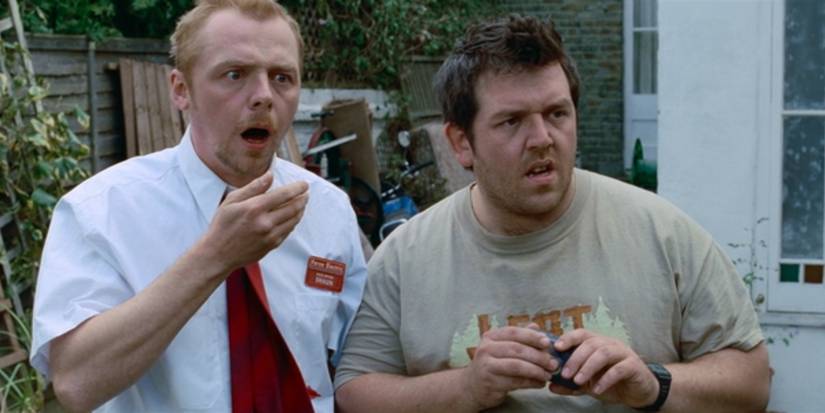 Image via Rogue Pictures
Edgar Wright is nowadays one of the most beloved mainstream filmmakers of the 21st century, and that all began back in 2004 with the release of Shaun of the Dead. This groundbreaking zombie comedy starring Simon Pegg and Nick Frost wasn't originally meant to kick off a trilogy, but it was during the promotional tour for Hot Fuzz that an interviewer pointed out an ice cream running gag that led Wright to the idea of leaning into that theme with the threequel, The World's End.
In the end, this turned out to be one of the funniest, most delightfully idiosyncratic, and most vibrantly creative comedy movie trilogies the world has ever seen. It's nearly impossible to rank the Three Flavours Cornetto movies, purely because they're all so perfectly different yet so intensely connected by the quality of the Pegg-Frost duo and the pop-off-the-screen personality of Wright's direction.
7 'The Planet of the Apes' Reboot Trilogy
 Image via 20th Century Studios
Back in 1968, The Planet of the Apes helped prove that far from being a low-brow B-picture genre, science fiction could make genuinely high-quality and seriously entertaining mainstream hits for the big screen. This was the birth of a franchise that has since seen many sequels, comics, games, TV shows, and—of course—a tremendously successful reboot trilogy led by Andy Serkis.
Rise of the Planet of the Apes introduced a perfectly fresh feel to the franchise, Dawn of the Planet of the Apes turned it post-apocalyptic with admirable ease, and War for the Planet of the Apes may very well be one of the few 2010s sci-fi movies that are true masterpieces. Praised for Serkis' masterful motion-capture performance, the groundbreaking visual effects, and Rupert Wyatt and Matt Reeves' directions, this trilogy is far more universally praised than the original Planet of the Apes franchise ever was.
6 'Back to the Future' Trilogy
 Image via Universal Pictures
Robert Zemeckis was already a well-established filmmaker before 1985, but it was Back to the Future that really established him as a blockbuster titan and a household name—and there was nowhere to go but up from there. Zemeckis has never really achieved quite the same level of perfection of history's most flawless time travel movie since 1985, but the rest of the trilogy sure did come remarkably close.
Back to the Future Part II and Part III aren't on the same level as the original, but they're every bit as nostalgic, every bit as iconic, and every bit as highly praised, making this one of the best sci-fi movie trilogies of all time. They're three of the most timeless motion pictures of the '80s and '90s, three sci-fi classics whose charm, humor, and uniquely Hollywoodesque energy simply refuses to get old.
5 'How to Train Your Dragon' Trilogy
It was in the early 2000s that DreamWorks Animation established themselves as true titans of the Hollywood animation industry, and masterpieces like How to Train Your Dragon only further enshrined them in that throne. One of the best family movies since 2000, this adaptation of Cressida Cowell's book series sparked a trilogy that's still not only DreamWorks' most consistent film franchise, but arguably even the greatest animated movie trilogy the world has ever seen.
Indeed, How to Train Your Dragon 2 is a wonderful expansion of the world established by the original, full of strong character development and emotionally stirring moments; while How to Train Your Dragon: The Hidden World serves as a perfect conclusion for the series, a gem as visually stunning as it is deeply moving. Entertaining, exciting, funny, action-packed, and elevated by three John Powell scores that are among the best Hollywood scores of the 2010s, this is one of those trilogies that are practically impossible to genuinely hate.
4 'The Dark Knight' Trilogy
 Image via Warner Bros. Pictures
People were rather skeptical about Batman Begins before it came out in 2005. Batman & Robin, the Caped Crusader's previous big screen adventure, had been an absolute disaster; and Christopher Nolan still hadn't proven that he was capable of directing huge action blockbusters. In the end, the film took the world by storm. And yet, even then, people couldn't have possibly predicted where things would go.
The film's sequel, The Dark Knight, is still widely recognized as the greatest comic book and superhero movie in history; and though The Dark Knight Rises is the most controversial of the bunch, it still receives infinitely more love than it does hate. Far more than just one of the most perfectly-directed movie trilogies of all time, the Dark Knight trilogy is the most universally beloved action thriller franchise in film history.
3 'Before' Trilogy
 Image via Columbia Pictures
It's not just huge blockbuster and genre franchises that earn universal love from audiences all across the board, as Richard Linklater, Julie Delpy, and Ethan Hawke perfectly proved with their Before trilogy. It's almost inarguably the most emotionally stirring and powerfully realistic romance movie trilogy in history, one of those franchises where every movie is a masterpiece.
Hawke himself once put it best: the absolutely magical and youthful Before Sunrise is about what could be, the beautifully poignant Before Sunset—generally regarded as the best of the three—is about what should have been, and the painfully yet movingly realistic Before Midnight is about what is. It's a masterclass in how to make a film trilogy where every chapter connects flawlessly with the others in terms of themes, narrative, and characters.
2 'Star Wars' Original Trilogy
 Image via Lucasfilm
Back when George Lucas' Star Wars came out in 1977, it's quite likely that no one involved in the movie's production could have possibly predicted just how gargantuan of a pop-cultural phenomenon they were releasing into the wild. The film became the highest-grossing film in history at the time, and the two sequels that followed it only further established this as the biggest transmedia franchise in the history of entertainment.
A New Hope is the perfect introduction to such an enrapturing world of science fantasy, The Empire Strikes Back is arguably one of the greatest sci-fi and fantasy films in history, and Return of the Jedi is a wonderful and awfully misunderstood conclusion. Of course, this Original Trilogy is but one part of a greater whole, but considering how perfectly self-contained it feels in retrospect, and the fact that it includes three of the most perfect sci-fi classics in movie history, it's impossible not to count it among the most universally beloved film trilogies of all time.
1 'The Lord of the Rings' Trilogy
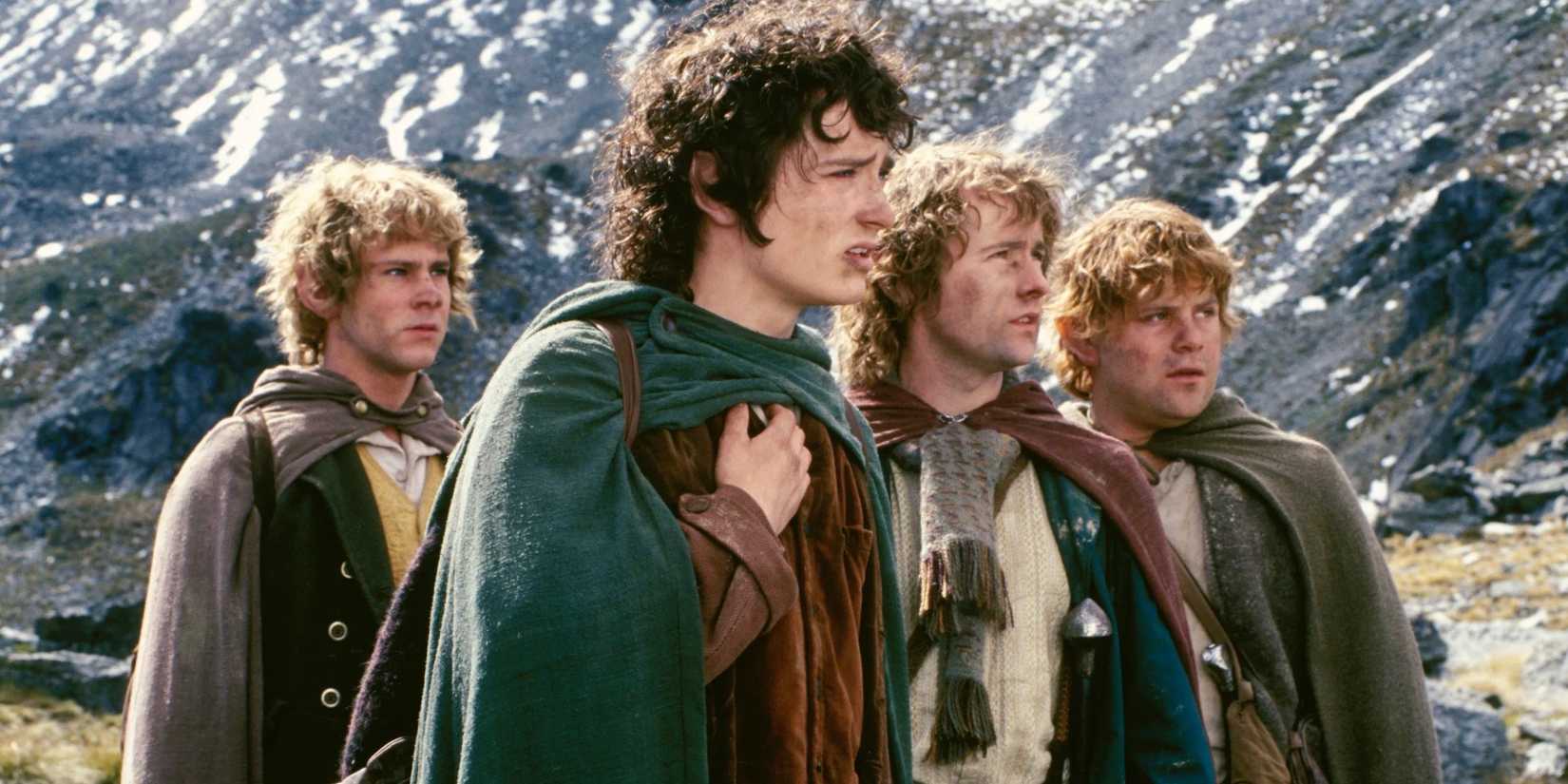 Image via New Line Cinema
There is no fantasy trilogy, no genre movie series, and perhaps even no film franchise in history more universally beloved or acclaimed than Peter Jackson's Lord of the Rings trilogy, universally regarded as a must-see for anyone who enjoys cinema. Transforming J. R. R. Tolkien's massive novel, one of the best books of the 20th century, into three films worthy of the source material's legacy was never going to be an easy task. But somehow, Jackson and his team did it better than anyone expected.
From the magic and wonder of The Fellowship of the Ring, to the many showstopping action sequences of The Two Towers, to the picture-perfect ending that is The Return of the King, this is the quintessential blockbuster film trilogy, and that's why it's the most universally adored in the history of the Seventh Art. Winner of a collective 17 Academy Awards (11 of which were for Return of the King alone), this record-breaking wonder of a trilogy is essential viewing for anyone who enjoys fantasy movies.


 English (US) ·