
Universal love is a rare thing in thrillers because thrillers are built to disturb, divide, provoke arguments, and make people uncomfortable in very specific ways. Some audiences want plot machinery. Some want dread. Some want moral rot. Some want one great twist. Some want atmosphere so thick it feels inhalable. Therefore, for a thriller to become truly beloved across generations, it has to do several jobs at once.
Firstly, for instance, it has to grip first-time viewers, deepen on rewatches, survive imitation, and keep giving people that old hungry feeling of just one more scene even when they already know exactly where the story is heading. That is what these ten films do. They keep proving that suspense can be elegant, vicious, psychologically intimate, socially observant, and emotionally devastating without ever losing momentum.
10 'Se7en' (1995)
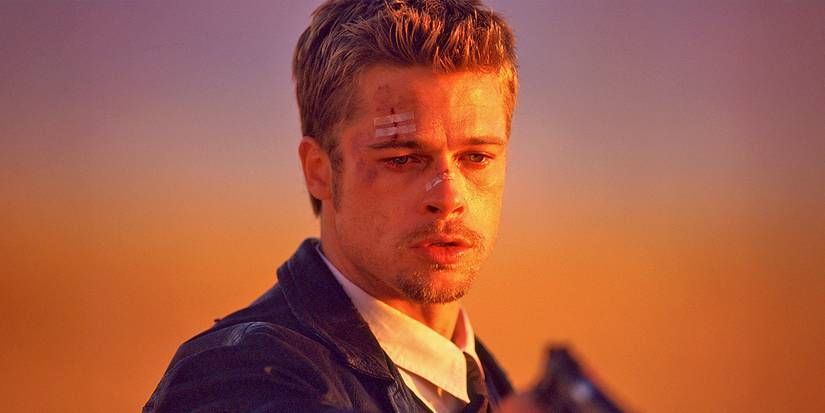 Image via New Line Cinema
People love Se7en because it commits fully to a world where moral decay has already soaked through the walls long before the killer starts writing sermons in corpses. From the first crime scene, Somerset (Morgan Freeman) and Mills (Brad Pitt) feel like two different responses to spiritual exhaustion. Somerset sees the city as an old wound that never closed. Mills still believes force, anger, and effort can push back against what’s out there. That pairing gives the movie its pulse.
Every murder then becomes more than evidence. Sloth, lust, pride, each scene leaves behind a different kind of contamination, and the film keeps using those scenes to pressure the detectives in opposite ways. Somerset grows sadder and more certain. Mills grows hotter and easier to trap. John Doe (Kevin Spacey) building toward total emotional possession of the men hunting him is excellent. The movie builds up excellently toward the ending and then culminates beautifully.
9 'North by Northwest' (1959)
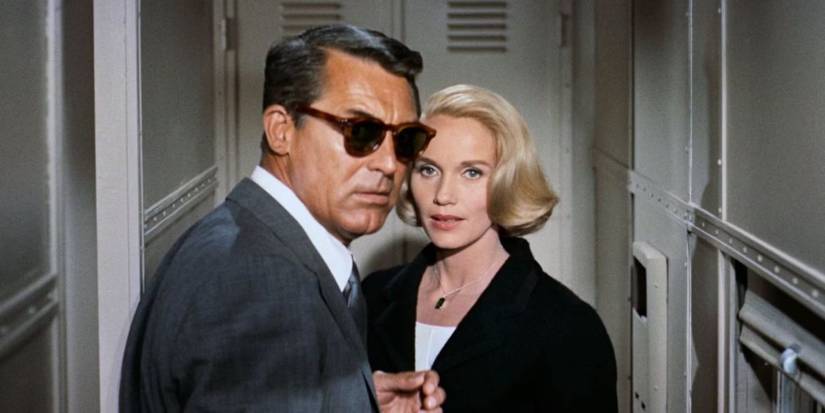 Image via MGM
North by Northwest builds suspense out of pure plot pleasure and never lets the pleasure go soft. The film follows Roger Thornhill (Cary Grant) who gets mistaken for a man who does not exist, and the brilliance of the film is how completely it turns that mistaken identity into escalating humiliation, danger, and exhilaration. Thornhill has exactly the right kind of nervous sophistication. He begins as a man whose biggest talents are charm, timing, and self-preservation. Then the movie keeps stripping away the environments where those talents usually protect him.
The UN killing traps him in public. The crop-duster scene drops him into open space with nowhere to hide and no social mask to wear. The train gives him intimacy and uncertainty through Eve Kendall (Eva Marie Saint), whose every smile keeps shifting between refuge and threat. Then Mount Rushmore arrives and the whole film cashes in its scale beautifully. I love this movie because it never stops moving and because every set piece grows out of identity instability. I believe that’s why everybody loves it for that reason. And Thornhill? He survives by learning how to become somebody under pressure.
8 'Parasite' (2019)
 Image via NEON
People love Parasite because it hooks viewers as a cunning social thriller and then keeps deepening until the suspense starts feeling moral, economic, and almost architectural. The Kim family’s infiltration of the Park household is already thrilling because every lie builds on the previous lie with such confidence. One forged document leads to one staged dismissal, one new hire creates space for the next, and suddenly the film has built an entire suspense structure out of class performance. Then it sharpens.
The house itself becomes a map of hidden hierarchy — upper level, lower level, basement, secret basement and the film uses every level of that space to reveal another layer of buried reality. The rainstorm is where Parasite turns devastating. The Parks get inconvenience. The Kims get catastrophe. Then the birthday party locks all that pressure into one final eruption of humiliation, resentment, and violence. Universal love followed Parasite because it offers twist-level excitement and leaves viewers with a social wound that keeps throbbing after the credits.
7 'Jaws' (1975)
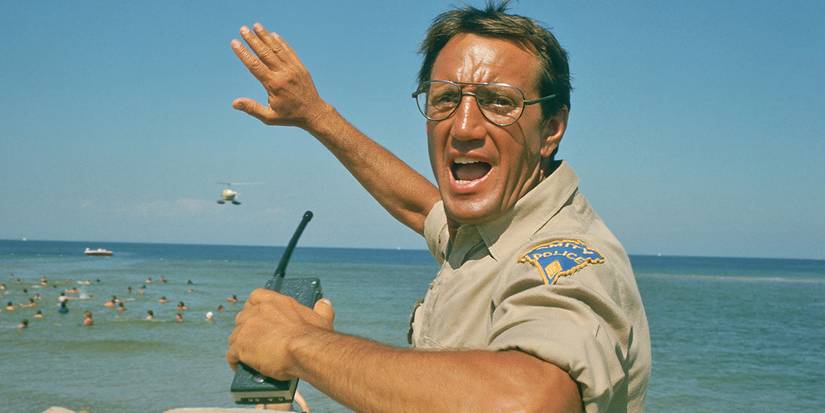 Image via Universal Pictures
Jaws became universally beloved because it understands that suspense grows strongest when three men carry three different ideas of what danger means. Brody (Roy Scheider) sees threat through responsibility. He has a town, a family, a shoreline full of swimmers, and a body count that keeps turning political cowardice into personal guilt. Hooper (Richard Dreyfuss) sees the shark through curiosity, expertise, and awe. Quint (Robert Shaw) sees it through old trauma and blood memory, which is why every scene with him carries a rougher, deeper charge.
Steven Spielberg builds the first half with almost cruel patience. Chrissie’s death gives the ocean a face before we can see it. The Kintner boy’s death destroys any illusion that this can be managed by optimism and beach-season denial. Then the Orca section changes the whole movie into a floating pressure chamber where men, ego, class, knowledge, and fear keep colliding while the shark circles below. Quint’s Indianapolis speech gives the film a haunted center, and the final attacks are so gripping. The script has already made the shark larger than an animal by this point. It becomes an appetite given shape.
6 'Black Swan' (2010)
 Image via Searchlight Pictures
People love Black Swan because it gets inside ambition at the point where perfection and self-destruction become almost impossible to separate. Nina (Natalie Portman)’s whole journey works as a thriller. Every stage of her artistic ascent intensifies her emotional exposure. Thomas (Vincent Cassel) pushes her toward sensual freedom she cannot metabolize. Lily (Mila Kunis) embodies the looseness Nina both envies and fears. Erica (Barbara Hershey) turns maternal protection into suffocating control. Every force around Nina is pulling on the same wound: she has built a life around discipline so rigid that becoming the Black Swan requires tearing through the very structure that made her good.
The body horror details matter just as much in this film. They externalize psychic fracture with frightening precision. The scratched skin, the broken nail, the feather hallucinations, the red eyes, Beth’s (Winona Ryder) self-destruction living in Nina’s head like prophecy, each one makes this film feel like full psychological emergency. Then Swan Lake becomes the perfect thriller climax because Nina finally reaches the artistic state she has been chasing at the exact moment her mind and body can no longer hold her together. It’s like Whiplash but for another artistic expression and it’s much more visually charged.
5 'Rear Window' (1954)
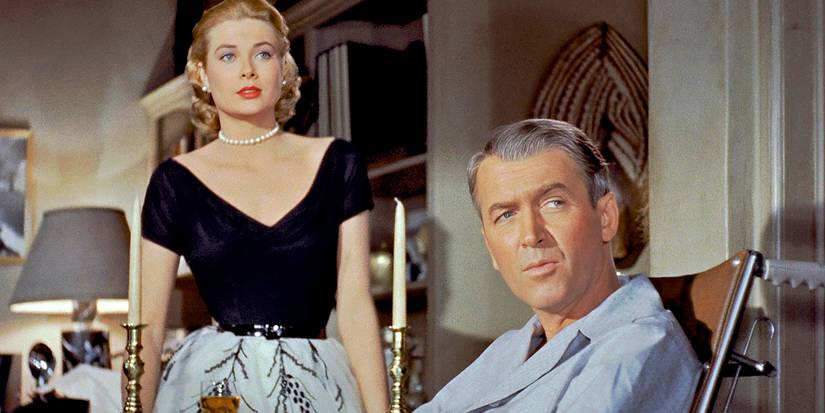 Image via Paramount Pictures
This film has universal love because Rear Window is a full suspense system. Jeff (James Stewart)’s broken leg locks him in place, and that physical confinement becomes the whole movie’s engine. He has time, boredom, curiosity, and a courtyard full of lives performing fragments of themselves inside open windows. Alfred Hitchcock lets that setup breathe just long enough for the audience to start sharing Jeff’s habits of observation. Miss Lonelyhearts matters. The songwriter matters. The dancer matters. Thorwald (Raymond Burr) matters most because his routine begins to resist ordinary explanation at exactly the pace Jeff’s suspicions sharpen.
Then Lisa (Grace Kelly) enters the mystery in a way that raises the whole film. Kelly starts as elegance and possibility, a woman Jeff isn’t fully mature enough to deserve, and then she becomes an active nerve inside the investigation. Once she crosses into Thorwald’s apartment while Jeff can only watch from a distance, the movie reaches an almost unbearable level of helplessness. That gives it a peak state of thrill but with guilt of watching. And the film understands that suspense can live inside the gap between seeing something and being able to prove what you saw.
4 'The Silence of the Lambs' (1991)
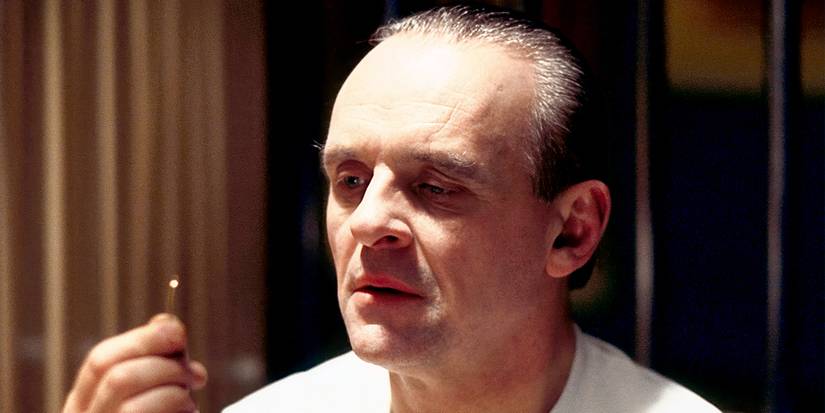 Image via Orion Pictures
The Silence of the Lambs has everything. It has procedural suspense, character intimacy, and predator logic with almost frightening confidence. The film follows Clarice Starling (Jodie Foster) as a trainee with intelligence, discipline, and ambition, and the film keeps placing her in rooms where male scrutiny tries to reduce her before she can do her work. That tension gives every investigative step more weight. She’s forcing her way into spaces built to patronize or consume women. That’s why it’s more relevant than ever today.
Lecter (Anthony Hopkins) intensifies everything because he turns conversation itself into danger. His scenes with Clarice feel charged by barter, perception, and controlled intrusion. Then Buffalo Bill (Ted Levine) gives the movie another layer of horror altogether, abduction, transformation, the pit, the dog, the house full of handmade skin-deep nightmares. The climax in the dark. Clarice earning every second of viewer investment. The Silence of the Lambs gave cinema one of the most unforgettable heroine-and-monster relationships.
3 'Chinatown' (1974)
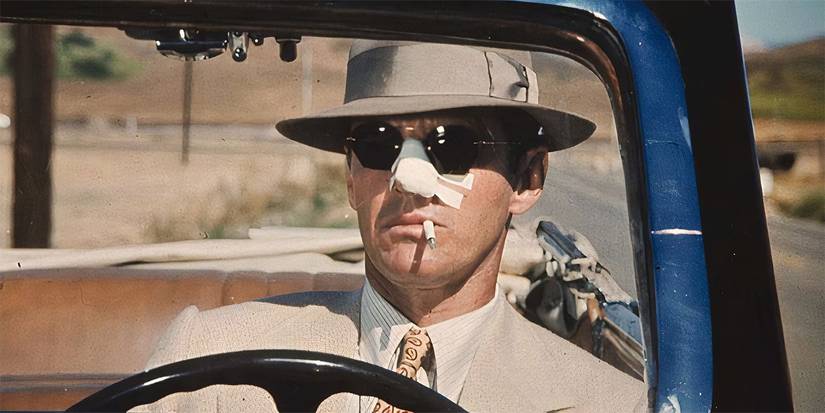 Image via Paramount Pictures
People love Chinatown because it keeps widening its conspiracy while narrowing its emotional vice. Jake Gittes (Jack Nicholson) begins in the comfortable zone of a private eye who thinks he knows the limits of corruption. He’s cocky, polished, capable, and faintly amused by the ugliness he deals in. Then Hollis Mulwray’s (Darrell Zwerling) case starts opening into water theft, land grabs, civic manipulation, and family horror so old and intimate that Jake’s usual instincts become almost pathetic beside it. That progression is everything. It’s why the movie grips so hard.
The investigation keeps paying off in concrete ways, the reservoirs, the orchards, the retirement-home scam, the glasses in the pond, and each payoff somehow makes the world feel dirtier rather than clearer. Evelyn Mulwray (Faye Dunaway) is the film’s secret wound. Her evasions create mystery, but the real tragedy arrives when the audience understands those evasions were a survival language. Noah Cross (John Huston) gives the film one of the most loathsome powers in all of thriller cinema because his authority feels effortless, inherited, and protected. The ending remains devastating because the whole story has prepared us for defeat wrapped in recognition.
2 'Psycho' (1960)
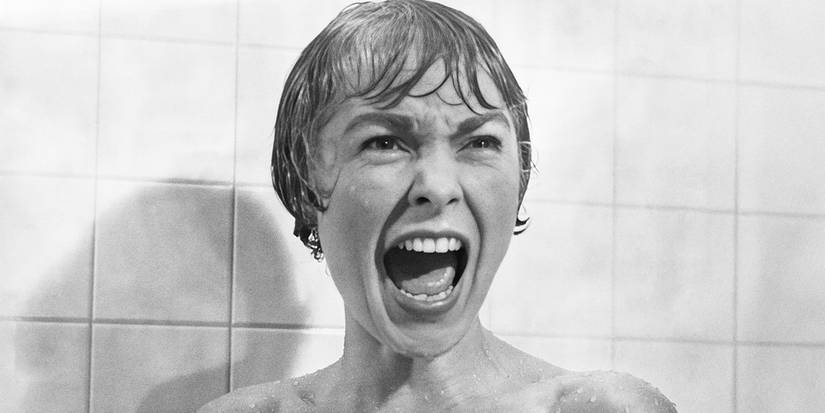 Image via Paramount Pictures
Psycho carries universal love. It does. The film follows Marion Crane (Janet Leigh) stealing money and pulls the audience into one kind of thriller — guilt, escape, nerves, possible redemption. Then the Bates Motel appears, Norman Bates (Anthony Perkins) starts talking with that shy, signature strained gentleness. The parlor scene. Norman’s lines about traps and private cruelty reshaping everything around Marion before the shower scene obliterates the original plot.
That structural violence is part of the reason the movie became legendary. The rest of the reason lives in how perfectly the film keeps going. Arbogast (Martin Balsam)’s investigation creates fresh momentum. Lila Crane (Vera Miles)’s entry into the house gives the story a new kind of fear. Mrs. Bates becomes more monstrous the longer she stays unseen. Then the cellar reveal detonates all the buried sickness at once. People keep loving Psycho because Alfred Hitchcock gives them suspense, character, shock, perversity, and one of the greatest narrative swerves in film history.
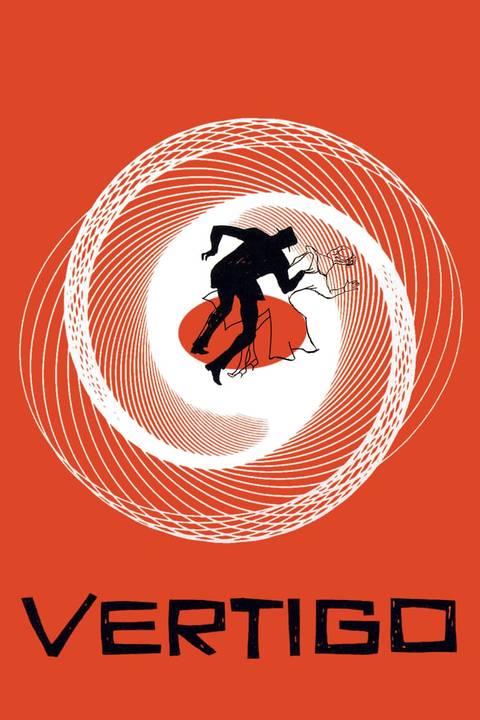
1 'Vertigo' (1958)
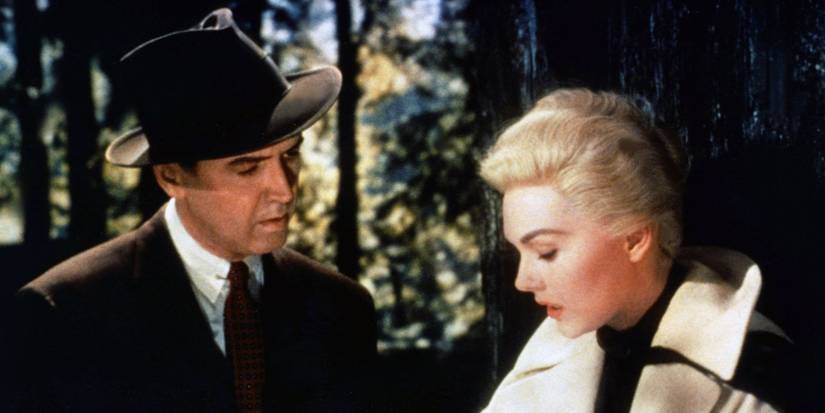 Image via Paramount Pictures
Vertigo sits at #1. And it’s mainly because it starts as great suspense and then deepens into obsession, grief, desire, performance, and self-deception so completely that viewers keep finding new reasons to be possessed by it. It hooks fiercely. Scottie (James Stewart) begins with damage already inside him. The rooftop accident leaves him with acrophobia and a shaken sense of masculine competence. Madeleine (Kim Novak) arrives as a mystery wrapped in elegance — the green car, the restaurant entrance, the cemetery, the museum, that impossible feeling that she belongs partly to the present and partly to some dead woman’s unfinished story.
Hitchcock lets Scottie’s fascination grow until surveillance becomes romance and romance becomes fixation. Then the bell tower destroys him. The second half is why the movie towers over so many other thrillers. Judy (also Kim Novak)’s entrance seems like a second chance, then gradually reveals itself as a wound reopening under worse conditions. Scottie’s attempt to remake her, detail by detail, dress by dress, hair by hair, gives the film its true horror. People love Vertigo because it starts as suspense and ends as one of cinema’s great studies of desire becoming control.
Collider Exclusive · Oscar Best Picture Quiz
Which Oscar Best Picture
Is Your Perfect Movie?
Parasite · Everything Everywhere · Oppenheimer · Birdman · No Country
Five Oscar Best Picture winners. Five completely different visions of what cinema can be — and what it can do to you. One of them is the film that was made for the way your mind works. Ten questions will figure out which one.
🪜Parasite
🌀Everything Everywhere
☢️Oppenheimer
🐦Birdman
🪙No Country for Old Men
FIND YOUR FILM →
01
What kind of film experience do you actually want? The best movies don't just entertain — they leave something behind.
ASomething that pulls the rug out — that makes me think I'm watching one kind of film and then reveals I'm watching another entirely. BSomething overwhelming — funny, sad, absurd, and genuinely moving, all at once. CSomething grand and weighty — a film that makes me feel the full scale of what I'm watching. DSomething formally daring — a film that pushes what cinema can even do. ESomething lean and relentless — pure tension with no wasted frame.
NEXT QUESTION →
02
Which idea grabs you most in a film? Great films are driven by a central obsession. What's yours?
AClass, inequality, and what people are willing to do when desperation meets opportunity. BIdentity, family, and the chaos of trying to hold your life together when everything is falling apart. CGenius, moral responsibility, and the catastrophic weight of a decision you can never take back. DEgo, legacy, and the terror of becoming irrelevant while you're still alive to watch it happen. EEvil, chance, and whether moral order actually exists or if we just tell ourselves it does.
NEXT QUESTION →
03
How do you like your story told? Form is content. The way a story is shaped changes what it means.
AGenre-twisting — I want it to start in one lane and migrate into something completely different. BMaximalist and genre-blending — comedy, action, drama, sci-fi, all in one ride. CEpic and non-linear — cutting between timelines, building a mosaic of cause and consequence. DA single unbroken flow — I want to feel like I'm living it in real time, no cuts to safety. ESpare and precise — every scene doing exactly what it needs to do and nothing more.
NEXT QUESTION →
04
What makes a truly great antagonist? The opposition defines the protagonist. What kind of opposition fascinates you?
AA system — invisible, structural, and almost impossible to fight because it has no single face. BThe self — the ways we sabotage, abandon, and fail the people we love most. CHistory — the unstoppable momentum of events that no single person can stop or redirect. DThe industry — the machinery of culture that chews up talent and spits out irrelevance. EPure, implacable evil — a force so certain of itself it becomes almost philosophical.
NEXT QUESTION →
05
What do you want from a film's ending? The final note is the one that lingers. What do you want it to sound like?
AShock and inevitability — a conclusion that recontextualises everything that came before it. BEarned emotion — I want to cry, laugh, and feel genuinely hopeful, even if the world is a mess. CDevastation and grandeur — an ending that makes me sit in silence for a few minutes after. DAmbiguity — something that leaves enough open that I'm still thinking about it days later. EBleakness — an honest refusal to pretend the world is tidier than it actually is.
NEXT QUESTION →
06
Which setting pulls you in most? Where a film takes place shapes everything — mood, stakes, what's even possible.
AA gleaming modern city with a hidden underside — beauty masking rot, wealth masking desperation. BA collapsing suburban life that opens onto something infinite — the multiverse of a single ordinary person. CThe corridors of power and science at a world-historical turning point — where decisions echo for decades. DThe grimy, alive chaos of New York and Hollywood — fame as both destination and trap. EVast, indifferent landscape — desert and highway where violence arrives without warning or reason.
NEXT QUESTION →
07
What cinematic craft impresses you most? Every great film has a signature — a technical or artistic element that makes it unmistakable.
AProduction design and mise-en-scène — every frame composed to carry meaning beneath the surface. BEditing and tonal control — the ability to move between registers without losing the audience. CScore and sound design — music that becomes inseparable from the dread and awe of what you're watching. DCinematography as performance — the camera not recording events but participating in them. ESilence and restraint — what's left unsaid and unshown doing more work than any dialogue could.
NEXT QUESTION →
08
What kind of main character do you root for? The protagonist is the lens. Who you choose to follow says something about you.
ASomeone smart and resourceful who makes increasingly dangerous decisions under pressure. BSomeone overwhelmed and ordinary who turns out to be capable of something extraordinary. CA brilliant, tortured figure whose gifts and flaws are inseparable from each other. DA self-destructive artist whose ego is both their superpower and their undoing. EA quiet, principled person trying to make sense of a world that has stopped making sense.
NEXT QUESTION →
09
How do you feel about a film that takes its time? Pace is a choice. Some films sprint; others let tension accumulate slowly, deliberately.
AI love a slow build when I know the payoff is going to be seismic — patience for a devastating reveal. BGive me relentless momentum — I want to feel breathless and emotionally spent by the end. CEpic runtime doesn't scare me — if the material demands three hours, give me three hours. DI want it to feel propulsive even when nothing is technically happening — restless energy throughout. EDeliberate and unhurried — I want dread to accumulate in the spaces between the action.
NEXT QUESTION →
10
What do you want to feel walking out of the cinema? The best films leave a mark. What kind of mark do you want?
AUnsettled — like I've just seen something I can't fully explain but can't stop thinking about. BMoved and energised — like the film reminded me what actually matters and gave me something to hold onto. CHumbled — like I've been in the presence of something genuinely important and overwhelming. DExhilarated — like I've just seen cinema doing something it's never quite done before. EHaunted — like a cold, quiet dread that stays with me for days.
REVEAL MY FILM →
The Academy Has Decided Your Perfect Film Is…
Your answers have pointed to one Oscar Best Picture winner above all others. This is the film that was made for the way your mind works.
Parasite
You are drawn to films that operate on multiple levels simultaneously — that begin in one genre and quietly, brilliantly migrate into another. Bong Joon-ho's Parasite is a film about class, desire, and the architecture of inequality that manages to be darkly funny, deeply suspenseful, and genuinely shocking across a single extraordinary running time. Your instinct is for cinema that hides its true intentions until the moment it's ready to reveal them. Parasite is exactly that — a film that rewards close attention and punishes assumptions, right up to its devastating final image.
Everything Everywhere All at Once
You want it all — and this film gives you all of it. The Daniels' Everything Everywhere All at Once is one of the most maximalist films ever made: action comedy, multiverse sci-fi, family drama, existential crisis, and a genuinely earned emotional core that sneaks up on you amid the chaos. You are someone who responds to ambition, who doesn't want cinema to choose between being entertaining and being meaningful. This film refuses that choice entirely. It is overwhelming by design, and its overwhelming nature is precisely the point — because the feeling of being crushed by infinite possibility is exactly what it's about.
Oppenheimer
You are drawn to cinema on a grand scale — films that understand history not as a backdrop but as a force, and that place their characters inside that force and watch what happens. Christopher Nolan's Oppenheimer is a film about the terrifying gap between what we can do and what we should do, told with the full weight of one of the most consequential moments in human history behind it. You want your films to feel important without feeling self-important — to earn their ambition through sheer craft and the gravity of their subject. Oppenheimer does exactly that. It is enormous, complicated, and refuses easy comfort.
Birdman
You are drawn to films that foreground their own construction — that make the how of the filmmaking part of the what it's about. Alejandro González Iñárritu's Birdman, shot to appear as a single continuous take, is cinema examining itself through the cracked mirror of a fading actor's ego. You respond to formal daring, to the feeling that a film is doing something that probably shouldn't be possible. Michael Keaton's performance and Emmanuel Lubezki's restless camera create something genuinely unlike anything else — a film that is simultaneously about creativity, relevance, self-destruction, and the impossibility of ever truly knowing if your work means anything at all.
No Country for Old Men
You are drawn to cinema that trusts silence, that refuses to explain itself, and that treats dread as a form of meaning. The Coen Brothers' No Country for Old Men is a film about the arrival of a new kind of evil — implacable, arbitrary, and utterly indifferent to the moral frameworks we use to make sense of the world. It is one of the most formally controlled films ever made, and its controlled restraint is what makes it so terrifying. You want your films to haunt you, not comfort you. You are not interested in resolution if resolution would be dishonest. No Country for Old Men is honest in a way that most cinema never dares to be.
↻ RETAKE THE QUIZ
Vertigo
Release Date May 28, 1958
Runtime 128 minutes
Writers Alec Coppel, Samuel A. Taylor
-

James Stewart
Det. John 'Scottie' Ferguson
-

Kim Novak
Madeleine Elster / Judy Barton





 English (US) ·