
 Image via Universal Pictures

Published Apr 7, 2026, 5:42 AM EDT
Sign in to your Collider account
World War I movies are made because they highlight the conflict that was a turning point in modern history. It was the time we saw machines and factories being used to fight, and it changed how people lived and thought. Those movies give you a glimpse into the Great War through battles and personal struggles.
There were fears at the beginning of the war that the film industry would not be able to operate amidst the conflict, but in fact, the cinema was more popular than ever. As the war went on, the governments saw that they could use films and theater to spread its message. The director Sam Fuller defined the genre by saying that "a war film's objective, no matter how personal or emotional, is to make a viewer feel war." So I made a list of 10 World War I movies that are perfect, below. Lock in.
10 ‘The Water Diviner’ (2014)
 Image via Warner Bros.
In the aftermath of World War I, The Water Diviner tells the story of Joshua Connor (Russell Crowe), an Australian farmer who travels to Turkey in 1919 to search for his three sons, all reported missing after the Battle of Gallipoli. Connor is haunted by a lot of grief and is trying to find his way through this place, and hope is what keeps him going. His journey becomes both a quest for closure and a reflection on reconciliation between former enemies.
The movie is special because it shows what happened at Gallipoli from the Australian side and also from the Turkish side. The best parts of the movie are when it shows how both sides suffered and how they could feel sorry for each other, even though they were fighting. A story about getting better after something very bad happens. Crowe's movie shows that in a war, like Gallipoli, people can feel the same emotions, and that is what makes it so powerful
9 ‘Flyboys’ (2006)
 Image via MGM
Inspired by true events, Flyboys dramatizes the story of the Lafayette Escadrille, a squadron of young American volunteers who joined the French Air Service before the United States officially entered World War I. (James Franco) stars as Blaine Rawlings, a Texas rancher who finds purpose in the skies, alongside fellow recruits from diverse backgrounds. The film follows their training, friendships, romances, and dangerous dogfights against German pilots, highlighting both the exhilaration and the devastating losses in battles.
The movie takes some freedom with what really happened and does a good job of showing the flying scenes with visual effects that make them very thrilling. What is really cool about this movie is that it tries to pay respect to the Lafayette Escadrille. This group of people showed that countries could work together and be brave. For all its glossy presentation, the film reminds viewers of the fragility of life in the skies, where heroism and tragedy were inseparable.
8 ‘Testament of Youth’ (2014)
 Image via Lionsgate
Based on Vera Brittain’s acclaimed memoir, Testament of Youth is a sweeping drama that chronicles her journey from an ambitious young woman at Oxford to a volunteer nurse during World War I. Brittain’s (Alicia Vikander) life is overturned when her fiancé, brother, and close friends enlist and are drawn into the horrors of the front. The film captures her transformation from an idealistic student to a voice of pacifism, shaped by grief and the devastating human cost of war.
This movie is an emotional rollercoaster that balances romance with the realities of war. Vikander's performance was amazing throughout; she really showed how Brittain felt, strong and sad. It’s a movie about battles, about thinking about what was lost, what people remembered, and how it made them want peace. By doing that, the film shows how the First World War changed countries and people’s lives and affected women who were left behind, those who saw what happened after it ended.
7 ‘Joyeux Noël’ (2005)
 Image via Sony Pictures Classics
This Franco-German-British drama is based on the extraordinary true story of the Christmas Truce of 1914. On Christmas Eve, French, Scottish, and German soldiers, exhausted by months of fighting, lay down their arms and crossed enemy lines to share carols, food, and fleeting moments of humanity. The film follows several characters, including a Scottish priest, a French lieutenant, and a German opera singer, whose lives intertwine during this brief pause in the fighting.
The film is a reminder that even in the darkest of wars, compassion and solidarity can break through. Critics praised its emotional quality and historical reality, though some noted its corniness. What makes it powerful is its depiction of soldiers as ordinary men. The ones yearning for peace, rather than faceless soldiers. By dramatizing the Christmas Truce, Joyeux Noël highlights the irrationality of war and the universal desire for connection, making it one of the most humane portrayals of World War I on screen.
6 ‘Paths of Glory’ (1957)
 Image via United Artists
Paths of Glory is a searing anti-war drama, directed by Stanley Kubrick, set during World War I. The story follows Colonel Dax (Kirk Douglas), a French officer ordered to lead his men in a suicidal assault on a heavily fortified German position. When the attack inevitably fails, the army’s high command scapegoats three soldiers, accusing them of cowardice and sentencing them to execution. Dax is really angry about what happened and decided to defend them in a trial. This trial shows how corrupt and cruel the system is.
Kubrick’s film is widely regarded as one of the greatest war movies because it tells the truth about the military and the people in charge. It shows how they can be hypocritical. The parts in the courtroom, especially, are very tough to watch. These scenes show how regular soldiers get hurt by the system. The movie is black and white, which makes it feel more real according to its time. Douglas makes us feel the sadness and the anger, and the film shows how war can make people less human.
5 ‘All Quiet on the Western Front’ (2022)
 Image via Netflix
This German-language adaptation of Erich Maria Remarque’s classic novel, All Quiet on the Western Front, offers a harrowing modern retelling of World War I from the perspective of young German soldier Paul Bäumer (Felix Kammerer). Paul really wants to do something for his country, so he joins the army with the guys he goes to school with. Then he finds out what war is really like. The film follows Paul Bäumer's descent from youthful idealism into despair as he witnesses the relentless slaughter, the ineffectiveness of orders from distant commanders, and the collapse of his comrades’ spirits.
The 2022 version shows war in a real way without making it look exciting or heroic. The film focuses on the politics behind Germany's surrender, and highlights how different the soldiers fighting on the front lines are from the leaders who are negotiating in comfort. It's a sad reminder of how quickly young people’s dreams can be destroyed.
4 ‘A Very Long Engagement’ (2004)
 Image via Warner Bros. Pictures
A Very Long Engagement is a romantic mystery set in the aftermath of World War I. Audrey Tautou stars as Mathilde, a young French woman who refuses to believe that her fiancé, Manech, has died after being court-martialed and sent to the front lines. Convinced he is still alive, she sets out on a relentless investigation and pieces together clues from soldiers, letters, and witnesses. The film mixes the brutality of war with a tender love story, pointing to themes of hope, resilience, and the search for truth.
Jeunet’s film makes you feel a lot of emotions. Tautou does a wonderful job of acting and tells the story quietly and strongly. This movie is different from other movies about World War I because it does not just show fighting vividly. It shows how war can hurt people for a time and how they try to deal with what happened. Jeunet's film is about love that does not give up even when things are very hard, and shows how remembering someone and loving them can make death not seem final.
3 ‘Lawrence of Arabia’ (1962)
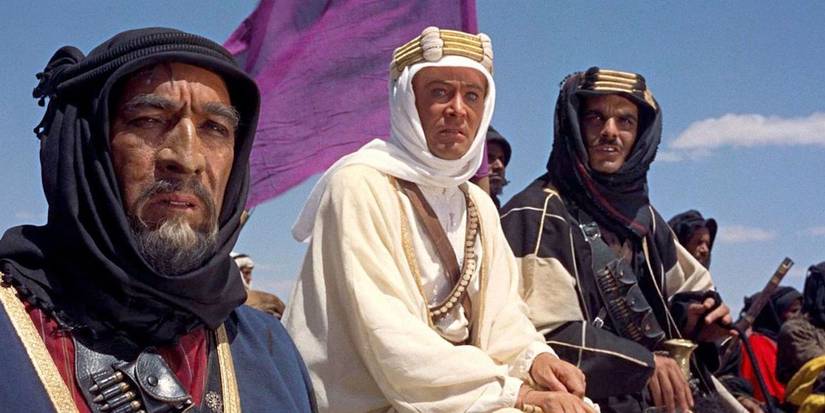 Image via Columbia Pictures
David Lean’s epic masterpiece tells the story of T.E. Lawrence (Peter O'Toole), a British officer whose complex personality and daring exploits helped shape the Arab Revolt against the Ottoman Empire during World War I. O’Toole portrays Lawrence as both a visionary and a deeply conflicted man, who is torn between loyalty to the British Empire and sympathy for Arab independence. The film follows his journey across the desert, his alliances with Arab leaders, and the psychological toll of becoming a legend in his own lifetime.
Lawrence of Arabia is one of the best war films ever made. It talks about who we are when different countries take over our lands. The movie shows the worst things about being a hero. Lawrence is a man whom people admire and question. He has a story, but sometimes everyone seems to forget that he is also human. All in all, it is a film that shows how history is made and how people get caught between different worlds and countries.
2 ‘1917’ (2019)
 Image via Dreamworks Pictures
1917 is an immersive World War I drama, directed by Sam Mendes, that unfolds in near real-time. The story follows two young British soldiers, Schofield (George MacKay) and Blake (Dean-Charles Chapman), who are tasked with delivering a critical message across enemy territory to prevent a battalion from walking into a deadly ambush. Shot to appear as one continuous take, the film thrusts viewers into the soldiers’ perilous journey through trenches, battlefields, and ruined villages, capturing both the chaos and quiet moments of war.
Praised for its brilliance, 1917 is a real cinematic experience, not just a war story. The cinematography by Roger Deakins also won an Oscar, and the score by Thomas Newman really adds to the tension of the entire story. The way Mendes chose to film it, using the "one-shot" trick, makes it feel urgent and intimate throughout. With just two soldiers, who are on a mission trying to hold on to their humanity when everything seems stacked against them, the film leaves a mark on you.
1 ‘All Quiet on the Western Front’ (1930)
 Image via Universal Pictures
Lewis Milestone’s adaptation of Erich Maria Remarque’s novel remains one of the most influential anti-war films ever made. Told from the perspective of Paul Bäumer (Lew Ayres), a young German soldier’s journey from patriotic enthusiasm to disillusionment as he experiences the horrors of fighting. With stark realism, it depicts the futility of battle, the loss of innocence, and the devastating toll of war on an entire generation.
This movie came out about 10 years after the war, and it surprised people with its perspective. Mud, blood, and sadness made people question what they thought about honor and what it means to be a hero. The last scene of Paul reaching for a butterfly before he gets shot is haunting in film history, and it is still talked about almost a century later. All Quiet on the Western Front has set an example for anti-war films.
Collider Exclusive · Oscar Best Picture Quiz
Which Oscar Best Picture
Is Your Perfect Movie?
Parasite · Everything Everywhere · Oppenheimer · Birdman · No Country
Five Oscar Best Picture winners. Five completely different visions of what cinema can be — and what it can do to you. One of them is the film that was made for the way your mind works. Ten questions will figure out which one.
🪜Parasite
🌀Everything Everywhere
☢️Oppenheimer
🐦Birdman
🪙No Country for Old Men
FIND YOUR FILM →
01
What kind of film experience do you actually want? The best movies don't just entertain — they leave something behind.
ASomething that pulls the rug out — that makes me think I'm watching one kind of film and then reveals I'm watching another entirely. BSomething overwhelming — funny, sad, absurd, and genuinely moving, all at once. CSomething grand and weighty — a film that makes me feel the full scale of what I'm watching. DSomething formally daring — a film that pushes what cinema can even do. ESomething lean and relentless — pure tension with no wasted frame.
NEXT QUESTION →
02
Which idea grabs you most in a film? Great films are driven by a central obsession. What's yours?
AClass, inequality, and what people are willing to do when desperation meets opportunity. BIdentity, family, and the chaos of trying to hold your life together when everything is falling apart. CGenius, moral responsibility, and the catastrophic weight of a decision you can never take back. DEgo, legacy, and the terror of becoming irrelevant while you're still alive to watch it happen. EEvil, chance, and whether moral order actually exists or if we just tell ourselves it does.
NEXT QUESTION →
03
How do you like your story told? Form is content. The way a story is shaped changes what it means.
AGenre-twisting — I want it to start in one lane and migrate into something completely different. BMaximalist and genre-blending — comedy, action, drama, sci-fi, all in one ride. CEpic and non-linear — cutting between timelines, building a mosaic of cause and consequence. DA single unbroken flow — I want to feel like I'm living it in real time, no cuts to safety. ESpare and precise — every scene doing exactly what it needs to do and nothing more.
NEXT QUESTION →
04
What makes a truly great antagonist? The opposition defines the protagonist. What kind of opposition fascinates you?
AA system — invisible, structural, and almost impossible to fight because it has no single face. BThe self — the ways we sabotage, abandon, and fail the people we love most. CHistory — the unstoppable momentum of events that no single person can stop or redirect. DThe industry — the machinery of culture that chews up talent and spits out irrelevance. EPure, implacable evil — a force so certain of itself it becomes almost philosophical.
NEXT QUESTION →
05
What do you want from a film's ending? The final note is the one that lingers. What do you want it to sound like?
AShock and inevitability — a conclusion that recontextualises everything that came before it. BEarned emotion — I want to cry, laugh, and feel genuinely hopeful, even if the world is a mess. CDevastation and grandeur — an ending that makes me sit in silence for a few minutes after. DAmbiguity — something that leaves enough open that I'm still thinking about it days later. EBleakness — an honest refusal to pretend the world is tidier than it actually is.
NEXT QUESTION →
06
Which setting pulls you in most? Where a film takes place shapes everything — mood, stakes, what's even possible.
AA gleaming modern city with a hidden underside — beauty masking rot, wealth masking desperation. BA collapsing suburban life that opens onto something infinite — the multiverse of a single ordinary person. CThe corridors of power and science at a world-historical turning point — where decisions echo for decades. DThe grimy, alive chaos of New York and Hollywood — fame as both destination and trap. EVast, indifferent landscape — desert and highway where violence arrives without warning or reason.
NEXT QUESTION →
07
What cinematic craft impresses you most? Every great film has a signature — a technical or artistic element that makes it unmistakable.
AProduction design and mise-en-scène — every frame composed to carry meaning beneath the surface. BEditing and tonal control — the ability to move between registers without losing the audience. CScore and sound design — music that becomes inseparable from the dread and awe of what you're watching. DCinematography as performance — the camera not recording events but participating in them. ESilence and restraint — what's left unsaid and unshown doing more work than any dialogue could.
NEXT QUESTION →
08
What kind of main character do you root for? The protagonist is the lens. Who you choose to follow says something about you.
ASomeone smart and resourceful who makes increasingly dangerous decisions under pressure. BSomeone overwhelmed and ordinary who turns out to be capable of something extraordinary. CA brilliant, tortured figure whose gifts and flaws are inseparable from each other. DA self-destructive artist whose ego is both their superpower and their undoing. EA quiet, principled person trying to make sense of a world that has stopped making sense.
NEXT QUESTION →
09
How do you feel about a film that takes its time? Pace is a choice. Some films sprint; others let tension accumulate slowly, deliberately.
AI love a slow build when I know the payoff is going to be seismic — patience for a devastating reveal. BGive me relentless momentum — I want to feel breathless and emotionally spent by the end. CEpic runtime doesn't scare me — if the material demands three hours, give me three hours. DI want it to feel propulsive even when nothing is technically happening — restless energy throughout. EDeliberate and unhurried — I want dread to accumulate in the spaces between the action.
NEXT QUESTION →
10
What do you want to feel walking out of the cinema? The best films leave a mark. What kind of mark do you want?
AUnsettled — like I've just seen something I can't fully explain but can't stop thinking about. BMoved and energised — like the film reminded me what actually matters and gave me something to hold onto. CHumbled — like I've been in the presence of something genuinely important and overwhelming. DExhilarated — like I've just seen cinema doing something it's never quite done before. EHaunted — like a cold, quiet dread that stays with me for days.
REVEAL MY FILM →
The Academy Has Decided Your Perfect Film Is…
Your answers have pointed to one Oscar Best Picture winner above all others. This is the film that was made for the way your mind works.
Parasite
You are drawn to films that operate on multiple levels simultaneously — that begin in one genre and quietly, brilliantly migrate into another. Bong Joon-ho's Parasite is a film about class, desire, and the architecture of inequality that manages to be darkly funny, deeply suspenseful, and genuinely shocking across a single extraordinary running time. Your instinct is for cinema that hides its true intentions until the moment it's ready to reveal them. Parasite is exactly that — a film that rewards close attention and punishes assumptions, right up to its devastating final image.
Everything Everywhere All at Once
You want it all — and this film gives you all of it. The Daniels' Everything Everywhere All at Once is one of the most maximalist films ever made: action comedy, multiverse sci-fi, family drama, existential crisis, and a genuinely earned emotional core that sneaks up on you amid the chaos. You are someone who responds to ambition, who doesn't want cinema to choose between being entertaining and being meaningful. This film refuses that choice entirely. It is overwhelming by design, and its overwhelming nature is precisely the point — because the feeling of being crushed by infinite possibility is exactly what it's about.
Oppenheimer
You are drawn to cinema on a grand scale — films that understand history not as a backdrop but as a force, and that place their characters inside that force and watch what happens. Christopher Nolan's Oppenheimer is a film about the terrifying gap between what we can do and what we should do, told with the full weight of one of the most consequential moments in human history behind it. You want your films to feel important without feeling self-important — to earn their ambition through sheer craft and the gravity of their subject. Oppenheimer does exactly that. It is enormous, complicated, and refuses easy comfort.
Birdman
You are drawn to films that foreground their own construction — that make the how of the filmmaking part of the what it's about. Alejandro González Iñárritu's Birdman, shot to appear as a single continuous take, is cinema examining itself through the cracked mirror of a fading actor's ego. You respond to formal daring, to the feeling that a film is doing something that probably shouldn't be possible. Michael Keaton's performance and Emmanuel Lubezki's restless camera create something genuinely unlike anything else — a film that is simultaneously about creativity, relevance, self-destruction, and the impossibility of ever truly knowing if your work means anything at all.
No Country for Old Men
You are drawn to cinema that trusts silence, that refuses to explain itself, and that treats dread as a form of meaning. The Coen Brothers' No Country for Old Men is a film about the arrival of a new kind of evil — implacable, arbitrary, and utterly indifferent to the moral frameworks we use to make sense of the world. It is one of the most formally controlled films ever made, and its controlled restraint is what makes it so terrifying. You want your films to haunt you, not comfort you. You are not interested in resolution if resolution would be dishonest. No Country for Old Men is honest in a way that most cinema never dares to be.
↻ RETAKE THE QUIZ

All Quiet on the Western Front
Release Date August 24, 1930
Runtime 152 Minutes
Director Lewis Milestone
Writers Erich Maria Remarque, Maxwell Anderson, George Abbott, Del Andrews
-

-
Louis Wolheim
Stanislas 'Kat' Katczinsky








 English (US) ·