
 Image via DreamWorks Pictures

Published May 24, 2026, 5:55 PM EDT
Diego Pineda has been a devout storyteller his whole life. He has self-published a fantasy novel and a book of short stories, and is actively working on publishing his second novel.
A lifelong fan of watching movies and talking about them endlessly, he writes reviews and analyses on his Instagram page dedicated to cinema, and occasionally on his blog. His favorite filmmakers are Andrei Tarkovsky and Charlie Chaplin. He loves modern Mexican cinema and thinks it's tragically underappreciated.
Other interests of Diego's include reading, gaming, roller coasters, writing reviews on his Letterboxd account (username: DPP_reviews), and going down rabbit holes of whatever topic he's interested in at any given point.
Sign in to your Collider account
Over the course of the last four decades, filmmakers around the world have gifted cinephiles with some of the greatest films that the war genre has ever seen. From slow-burning anti-war masterpieces like The Zone of Interest to war biopics like The Pianist, these movies are the peak of what this genre is capable of achieving.
From 1986 to the present, we've had war movies that show war as hell through their showstopping combat sequences; war movies that explore the irrational nature of war through an arthouse tone; and war movies which show that it's not only Hollywood that excels in this genre. These movies are about as close as a film can possibly come to true perfection, proof that modern cinema has more to offer than it's often given credit for.
10 'The Thin Red Line' (1998)
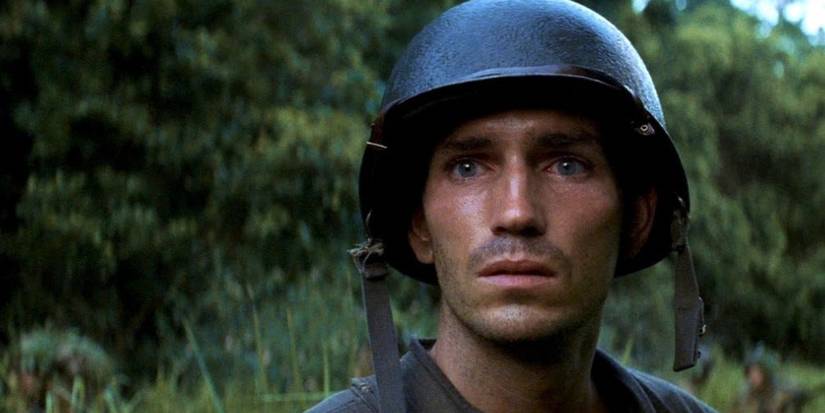 Image via 20th Century Studios
Terrence Malick is a bit of an acquired taste, his highly abstract and philosophically moody style alienating most audiences that aren't used to the way arthouse films tend to flow. Even still, he's an absolute master of his craft. Who, if not a master filmmaker, could have possibly made The Thin Red Line, one of the most powerful anti-war movies ever made?
With its incredibly stacked cast and its boldly philosophical approach to its story, Thin Red Line is exactly what anyone familiar with Malick would expect from a war film made by him. It's a slow-burn, that's for sure; and at nearly three hours in length, it's definitely not for everyone. But patient viewers will be treated to one of the most beautiful, profoundly resonant anti-war masterpieces ever made; a magnificent work of art that highlights the contradiction between war's destructive nature and the beauty of the natural world.
 Image via Warner Bros. Pictures
Stanley Kubrick is regarded by many as the greatest filmmaker that's ever lived, and like any great filmmaker, he was a hugely versatile artist who dipped his toes in many genres over the course of his career. One that he kept coming back to, however, was the war genre. His penultimate film ever was the Vietnam War epic Full Metal Jacket, and in many ways, it feels like the perfect culmination of Kubrick's work across the war genre.
It's one of the best American war movies ever made, a diptych that masterfully contrasts its two halves—one, a boot camp manufacturing killing machines; the other, the actual ever-dehumanizing war—to really show the senselessness of the Vietnam War and war as a whole. Impeccably acted, visually striking, flawlessly paced, and with an airtight structure, it's undoubtedly one of the greatest Vietnam War films in history.
8 'Au revoir les enfants' (1987)
 Image via MK2 Diffusion
Directed by Louis Malle, one of the greatest French filmmakers of all time, Au revoir les enfants is an autobiographical film following his experiences in the Catholic boarding school of Père Jacques, a French priest who attempted to shelter Jewish children during the Holocaust. It's one of the best international coming-of-age movies ever made, considreed one of the most important films of all time by the Vatican.
This is no traditional war film, but rather a deeply moving portrait of the vulnerability and innocence of youth and war's destruction of childhood. Profoundly complex, emotionally stirring, and imbued with an unsurprisingly intimate feel from start to finish, this masterpiece is proof of just how powerful of a vehicle the cinematic medium can be for autobiographies.
7 'Saving Private Ryan' (1998)
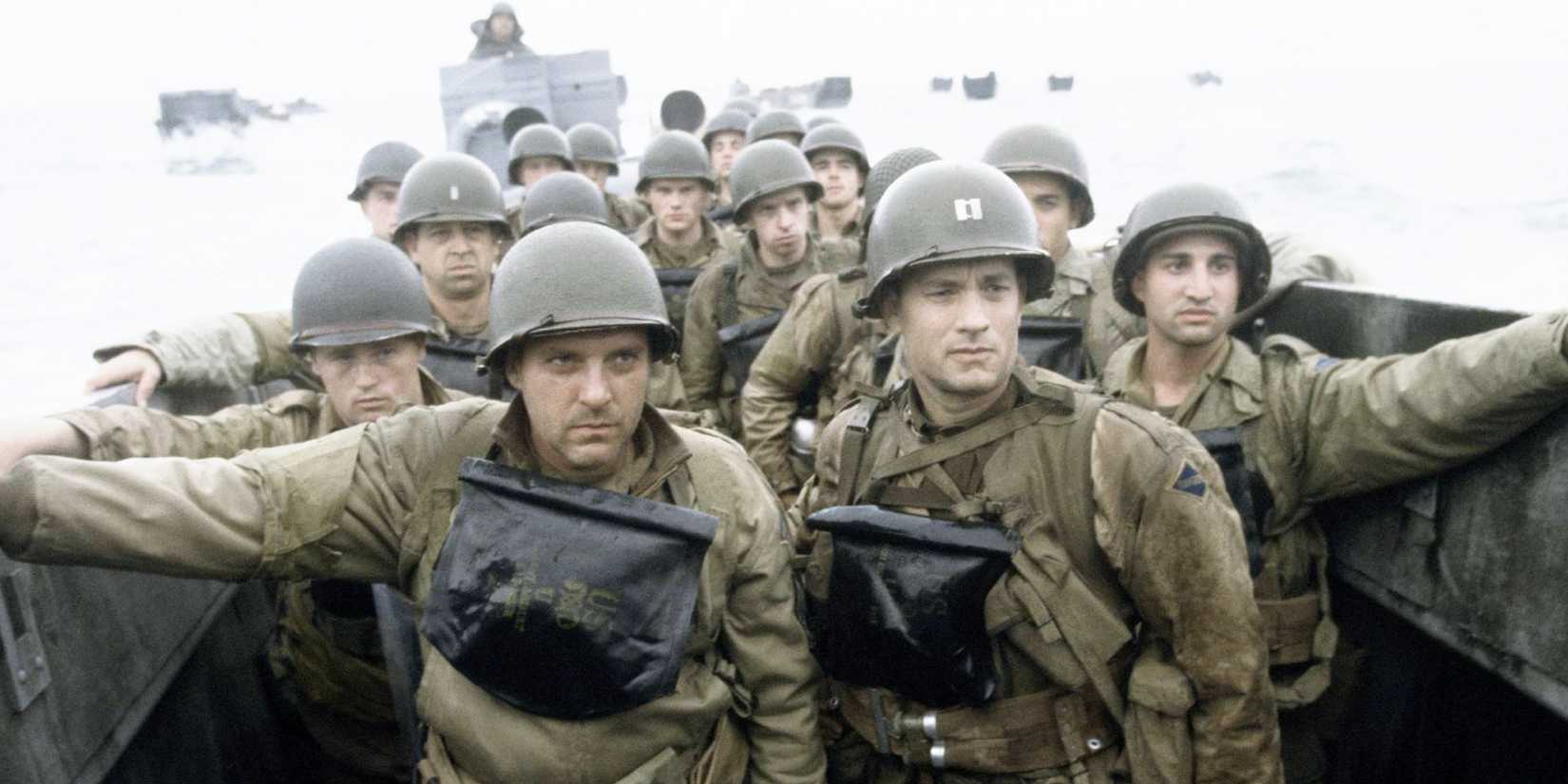 Image via DreamWorks Pictures
He's the father of blockbusters and perhaps the most important popcorn filmmaker in history, but Steven Spielberg is also perfectly capable of making more serious, elevated art. Case in point: Saving Private Ryan, one of the most universally acclaimed war movies of all time, which Spielberg deliberately wanted to make as one of the most authentic war films of all time.
He succeeded. What follows the opening D-Day landing sequence, almost inarguably the greatest opening scene in war movie history, is a film whose relentless pacing and violent brutality never let up. Renewing academic interest in World War II going into the turn of the century, Saving Private Ryan showed just how soul-shaking the war genre could be in the environment of big-studio '90s Hollywood.
6 'The Zone of Interest' (2023)
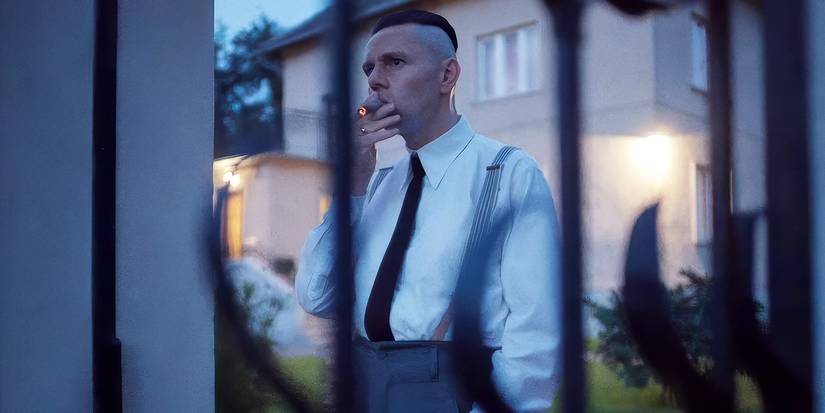 Image via A24
A very valid criticism that's often directed at even the greatest of war movies is that, even if they deliberately try not to, their reliance on combat scenes can make war seem thrilling and fun. Jonathan Glazer's The Zone of Interest, one of the most depressing movies of the last 10 years, feels like a very intentional subversion of that criticism. This is a masterpiece that those without a taste for arthouse dramas may not be big fans of, because it's a film that's purposely and meticulously designed to be boring.
Through that boring tone, following the daily lives of SS officer Rudolf Höss and his family in Auschwitz while the horrors of the extermination camp play out in the far distance, The Zone of Interest serves as the definitive cinematic treatise on the banality of evil. Full of haunting sounds and images that Glazer very artfully keeps always as part of the background, never the foreground, this A24 masterpiece is war filmmaking at its most artsy.
5 'Oppenheimer' (2023)
For years, fans of Hollywood blockbusters had been clamoring for the Academy to finally give Christopher Nolan his well-earned and long-overdue flowers. This couldn't have happened in a fashion more spectacular than with Oppenheimer, whose seven Oscar victories (including Best Picture) were all well-deserved. There's a good reason why it's one of the highest-rated movies of the 2020s on IMDb.
Bolstered by an incredibly stacked cast, Nolan's perfect sense of pacing and structure, and what's undoubtedly the best screenplay he has written since Memento, Oppenheimer is a World War II and Cold War biopic like no other. The way it delves into the psyche of J. Robert Oppenheimer is the kind of depth that you wouldn't typically expect to see in a Hollywood blockbuster, which only goes to demonstrate why Nolan is still the legend that he is.
4 'Underground' (1995)
 Image via Ciby 2000
There are plenty of great movies from countries that no longer exist, and Yugoslavia was a country with a particularly strong national filmography. There's really no question as to who the greatest Yugoslav auteur of all time was: It has to be Emir Kusturica, whose three-hour absurdist satire epic Underground is far and away one of the most underrated war films of the 20th century.
Blending several genres in all sorts of exciting ways, Underground is an unforgettable work of art which mixes its sense of humor with an undeniably heartbreaking tale about Yugoslavia's history with unexpected mastery. It's a bleak yet mesmerizingly energetic work of art, one that revels on borderline-psychedelic creative excesses in ways that never cease to be enchanting.
3 'The Pianist' (2002)
 Image via Focus Features
The Pianist is perhaps best remembered for Adrien Brody's Oscar-winning performance, one of those Best Actor Oscar winners that actually deserved it. It is, indeed, one of the most admirably transformational and absolutely harrowing pieces of acting in film history, but this biopic about Polish Jewish pianist Władysław Szpilman also has much more to offer.
It's a masterpiece so emotionally devastating that it's definitely not for the faint of heart, but those with the stomach for deeply harrowing character drama that runs for almost two and a half hours ought to check out this gem of the war genre. Visually striking, perfectly paced, and absolutely devastating without ever feeling exploitative, it's easily one of the strongest films ever made about a Holocaust survivor. It's definitely the most perfect.
2 'Incendies' (2010)
 Image via Entertainment One
Based on the Canadian play of the same name, itself inspired by the life of the Lebanese communist militant Souha Bechara, Incendies is the film that really showed the world what cinematic marvels Denis Villeneuve was capable of. It's one of the best Canadian movies of all time, a war tragedy so visceral and profoundly gut-wrenching that it's genuinely difficult to watch.
Nevertheless, it's very much worth it, because this really is one of the most perfect war masterpieces of the last four decades. Anchored by Lubna Azabal's powerhouse performance, it's a stirring melodrama that at times plays out more like a Greek tragedy than a proper war film—and that's definitely a compliment. It may not be his most mainstream work, but Incendies might still be Villeneuve's best movie.
1 'Schindler's List' (1993)
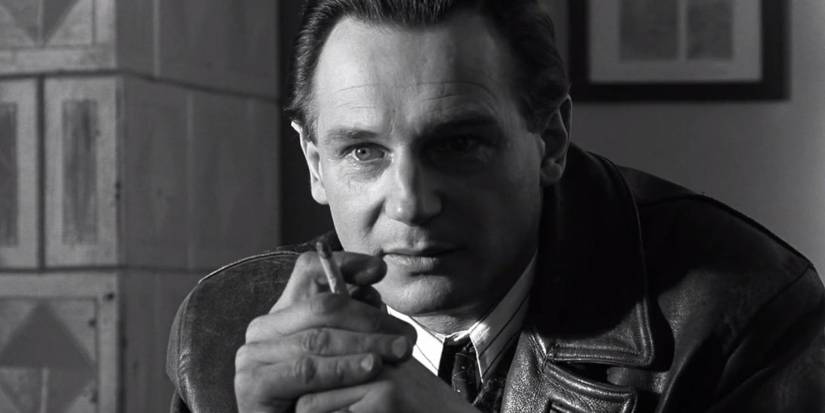 Image via Universal Pictures
It's deeply admirable that a filmmaker as well-known for his popcorn blockbusters as Steven Spielberg is can call a war biopic like Schindler's List his magnum opus. Easily the artsiest movie Spielberg has ever directed, this account of German businessman Oskar Schindler's campaign to save the lives of around 1,200 Jews during the Holocaust is as poignant as it is beautifully hopeful.
It is, indeed, one of the most emotionally stirring war films ever made, as well as one of the best biopics of all time. From Janusz Kamiński's gorgeous black-and-white cinematography to John Williams' haunting score to Spielberg's uniquely humanist direction, Schindler's List is the most faultless war film that the last four decades have seen.
Collider Exclusive · Oscar Best Picture Quiz
Which Oscar Best Picture
Is Your Perfect Movie?
Parasite · Everything Everywhere · Oppenheimer · Birdman · No Country
Five Oscar Best Picture winners. Five completely different visions of what cinema can be — and what it can do to you. One of them is the film that was made for the way your mind works. Ten questions will figure out which one.
🪜Parasite
🌀Everything Everywhere
☢️Oppenheimer
🐦Birdman
🪙No Country for Old Men
FIND YOUR FILM →
01
What kind of film experience do you actually want? The best movies don't just entertain — they leave something behind.
ASomething that pulls the rug out — that makes me think I'm watching one kind of film and then reveals I'm watching another entirely. BSomething overwhelming — funny, sad, absurd, and genuinely moving, all at once. CSomething grand and weighty — a film that makes me feel the full scale of what I'm watching. DSomething formally daring — a film that pushes what cinema can even do. ESomething lean and relentless — pure tension with no wasted frame.
NEXT QUESTION →
02
Which idea grabs you most in a film? Great films are driven by a central obsession. What's yours?
AClass, inequality, and what people are willing to do when desperation meets opportunity. BIdentity, family, and the chaos of trying to hold your life together when everything is falling apart. CGenius, moral responsibility, and the catastrophic weight of a decision you can never take back. DEgo, legacy, and the terror of becoming irrelevant while you're still alive to watch it happen. EEvil, chance, and whether moral order actually exists or if we just tell ourselves it does.
NEXT QUESTION →
03
How do you like your story told? Form is content. The way a story is shaped changes what it means.
AGenre-twisting — I want it to start in one lane and migrate into something completely different. BMaximalist and genre-blending — comedy, action, drama, sci-fi, all in one ride. CEpic and non-linear — cutting between timelines, building a mosaic of cause and consequence. DA single unbroken flow — I want to feel like I'm living it in real time, no cuts to safety. ESpare and precise — every scene doing exactly what it needs to do and nothing more.
NEXT QUESTION →
04
What makes a truly great antagonist? The opposition defines the protagonist. What kind of opposition fascinates you?
AA system — invisible, structural, and almost impossible to fight because it has no single face. BThe self — the ways we sabotage, abandon, and fail the people we love most. CHistory — the unstoppable momentum of events that no single person can stop or redirect. DThe industry — the machinery of culture that chews up talent and spits out irrelevance. EPure, implacable evil — a force so certain of itself it becomes almost philosophical.
NEXT QUESTION →
05
What do you want from a film's ending? The final note is the one that lingers. What do you want it to sound like?
AShock and inevitability — a conclusion that recontextualises everything that came before it. BEarned emotion — I want to cry, laugh, and feel genuinely hopeful, even if the world is a mess. CDevastation and grandeur — an ending that makes me sit in silence for a few minutes after. DAmbiguity — something that leaves enough open that I'm still thinking about it days later. EBleakness — an honest refusal to pretend the world is tidier than it actually is.
NEXT QUESTION →
06
Which setting pulls you in most? Where a film takes place shapes everything — mood, stakes, what's even possible.
AA gleaming modern city with a hidden underside — beauty masking rot, wealth masking desperation. BA collapsing suburban life that opens onto something infinite — the multiverse of a single ordinary person. CThe corridors of power and science at a world-historical turning point — where decisions echo for decades. DThe grimy, alive chaos of New York and Hollywood — fame as both destination and trap. EVast, indifferent landscape — desert and highway where violence arrives without warning or reason.
NEXT QUESTION →
07
What cinematic craft impresses you most? Every great film has a signature — a technical or artistic element that makes it unmistakable.
AProduction design and mise-en-scène — every frame composed to carry meaning beneath the surface. BEditing and tonal control — the ability to move between registers without losing the audience. CScore and sound design — music that becomes inseparable from the dread and awe of what you're watching. DCinematography as performance — the camera not recording events but participating in them. ESilence and restraint — what's left unsaid and unshown doing more work than any dialogue could.
NEXT QUESTION →
08
What kind of main character do you root for? The protagonist is the lens. Who you choose to follow says something about you.
ASomeone smart and resourceful who makes increasingly dangerous decisions under pressure. BSomeone overwhelmed and ordinary who turns out to be capable of something extraordinary. CA brilliant, tortured figure whose gifts and flaws are inseparable from each other. DA self-destructive artist whose ego is both their superpower and their undoing. EA quiet, principled person trying to make sense of a world that has stopped making sense.
NEXT QUESTION →
09
How do you feel about a film that takes its time? Pace is a choice. Some films sprint; others let tension accumulate slowly, deliberately.
AI love a slow build when I know the payoff is going to be seismic — patience for a devastating reveal. BGive me relentless momentum — I want to feel breathless and emotionally spent by the end. CEpic runtime doesn't scare me — if the material demands three hours, give me three hours. DI want it to feel propulsive even when nothing is technically happening — restless energy throughout. EDeliberate and unhurried — I want dread to accumulate in the spaces between the action.
NEXT QUESTION →
10
What do you want to feel walking out of the cinema? The best films leave a mark. What kind of mark do you want?
AUnsettled — like I've just seen something I can't fully explain but can't stop thinking about. BMoved and energised — like the film reminded me what actually matters and gave me something to hold onto. CHumbled — like I've been in the presence of something genuinely important and overwhelming. DExhilarated — like I've just seen cinema doing something it's never quite done before. EHaunted — like a cold, quiet dread that stays with me for days.
REVEAL MY FILM →
The Academy Has Decided Your Perfect Film Is…
Your answers have pointed to one Oscar Best Picture winner above all others. This is the film that was made for the way your mind works.
Parasite
You are drawn to films that operate on multiple levels simultaneously — that begin in one genre and quietly, brilliantly migrate into another. Bong Joon-ho's Parasite is a film about class, desire, and the architecture of inequality that manages to be darkly funny, deeply suspenseful, and genuinely shocking across a single extraordinary running time. Your instinct is for cinema that hides its true intentions until the moment it's ready to reveal them. Parasite is exactly that — a film that rewards close attention and punishes assumptions, right up to its devastating final image.
Everything Everywhere All at Once
You want it all — and this film gives you all of it. The Daniels' Everything Everywhere All at Once is one of the most maximalist films ever made: action comedy, multiverse sci-fi, family drama, existential crisis, and a genuinely earned emotional core that sneaks up on you amid the chaos. You are someone who responds to ambition, who doesn't want cinema to choose between being entertaining and being meaningful. This film refuses that choice entirely. It is overwhelming by design, and its overwhelming nature is precisely the point — because the feeling of being crushed by infinite possibility is exactly what it's about.
Oppenheimer
You are drawn to cinema on a grand scale — films that understand history not as a backdrop but as a force, and that place their characters inside that force and watch what happens. Christopher Nolan's Oppenheimer is a film about the terrifying gap between what we can do and what we should do, told with the full weight of one of the most consequential moments in human history behind it. You want your films to feel important without feeling self-important — to earn their ambition through sheer craft and the gravity of their subject. Oppenheimer does exactly that. It is enormous, complicated, and refuses easy comfort.
Birdman
You are drawn to films that foreground their own construction — that make the how of the filmmaking part of the what it's about. Alejandro González Iñárritu's Birdman, shot to appear as a single continuous take, is cinema examining itself through the cracked mirror of a fading actor's ego. You respond to formal daring, to the feeling that a film is doing something that probably shouldn't be possible. Michael Keaton's performance and Emmanuel Lubezki's restless camera create something genuinely unlike anything else — a film that is simultaneously about creativity, relevance, self-destruction, and the impossibility of ever truly knowing if your work means anything at all.
No Country for Old Men
You are drawn to cinema that trusts silence, that refuses to explain itself, and that treats dread as a form of meaning. The Coen Brothers' No Country for Old Men is a film about the arrival of a new kind of evil — implacable, arbitrary, and utterly indifferent to the moral frameworks we use to make sense of the world. It is one of the most formally controlled films ever made, and its controlled restraint is what makes it so terrifying. You want your films to haunt you, not comfort you. You are not interested in resolution if resolution would be dishonest. No Country for Old Men is honest in a way that most cinema never dares to be.
↻ RETAKE THE QUIZ

Schindler's List
Release Date December 15, 1993
Runtime 195 Minutes
Writers Thomas Keneally, Steven Zaillian





 English (US) ·