
Alfred Hitchcock is undoubtedly one of the most influential directors to have ever lived. With more than 50 films to his name, he helped shape the thriller genre as it exists today and earned the title of the Master of Suspense. Hitchcock pioneered visual storytelling techniques that allowed him to manipulate audience emotion with incredible precision, and his brand of cinema has been so influential that “Hitchcockian” became a term widely used to describe films that emulate his style of suspenseful storytelling.
Hitchcockian movies are usually built around ordinary people who suddenly find themselves in extremely dangerous situations. They often involve cases of mistaken identity or protagonists who are not entirely trustworthy, which keeps the audience constantly on edge. These films are also deeply rooted in themes of guilt, voyeurism, and lingering paranoia, where simply watching someone or something can feel just as tense as any action scene. In this article, we are ranking the most perfect Hitchcockian thrillers ever made that were not actually directed by Hitchcock himself.
10 ‘Disturbia’ (2007)
 Image via DreamWorks
Disturbia is essentially a modern reimagining of one of Hitchcock’s most iconic films, Rear Window. The film plays on the same sense of paranoia and voyeurism as Hitchcock’s classic mystery, but it filters those ideas through a teen thriller lens and adds plenty of jump scares. The plot centers around Kale (Shia LaBeouf), a troubled high school kid who ends up on house arrest after assaulting a teacher, much like Jeff Jeffries (James Stewart) from Rear Window, who gets confined to his apartment due to a broken leg.
Stuck at home and desperate to kill time, Kale starts spying on his neighbors through binoculars and slowly becomes convinced that one of them is a serial killer on the run from authorities. He ropes in his best friend and his next-door neighbor, and together, the trio tries to prove the man’s guilt from the safety of Kale’s bedroom. However, things take a much darker turn once the man realizes he’s being watched, and he begins actively stalking the teens.
9 ‘The Outfit’ (2022)
 Image via Focus Features
Hitchcock mastered the single-location movie with Rope, Lifeboat, and Rear Window, and The Outfit is one of the best modern noir thrillers to use that premise to its full advantage. The entire film takes place almost entirely inside a small tailor shop in 1950s Chicago. Mark Rylance stars as Leonard, a soft-spoken English tailor whose shop is regularly used by the Irish mob for secret meetings and drop-offs.
One night, a deal goes bad, and the mobsters hole up inside Leonard’s shop, and they force him to stitch their wounds and hide a mysterious briefcase. What follows is a tightly wound script dealing with power plays, manipulation, and constant suspicion as the mobsters try to figure out who is the rat amongst them that caused the deal to go wrong. Leonard also fits a classic Hitchcock type. He appears harmless and ordinary, but as the night goes on, it becomes clear that he is far more dangerous than anyone realizes.
8 ‘Phone Booth’ (2002)
 Image via 20th Century Studios
In this claustrophobic high-concept thriller, Colin Farrell plays Stu Shepard, a fast-talking publicist who answers a ringing phone in a public booth. Once he does, the voice on the other end threatens to kill him with a sniper rifle if he hangs up or steps outside. To prove he is not bluffing, the caller starts shooting people nearby. Within minutes, police surround the area, and the situation spirals into a public spectacle where Stu must convince the police that his story is real before they shoot him or drop the phone and be killed by the sniper.
This feels Hitchcockian for a few reasons. First, the film turns a tiny everyday space into a nightmare, and Hitchcock loved that kind of setup. Second, Stu is morally messy. He is not innocent, and the film punishes him by forcing him to confront his own lies in public. There is also a fun bit of history here. Screenwriter Larry Cohen originally pitched this idea to Hitchcock in the 60s, who loved the concept, but they could not figure out a believable reason to keep the character trapped in the phone booth for the length of an entire feature film. Cohen finally cracked it years later by coming up with the concept of an unseen sniper holding the protagonist hostage.
7 ’10 Cloverfield Lane’ (2016)
 Image via Paramount Pictures
10 Cloverfield Lane starts with a woman driving down the road when her car suddenly crashes, and she wakes up chained to a pipe inside an underground bunker. The man who put her there claims the outside world has ended and that everyone is dead. He is one of those doomsday prepper types, and he insists he rescued her after the crash and brought her to safety. At the same time, he makes it clear that she is not allowed to leave under any circumstances.
The entire film is set inside the bunker and steadily grows more intense as the woman keeps planning her escape and the man keeps thwarting her plans time and time again. And the entire time, you're not really sure if the real danger is inside the bunker or waiting just beyond its doors. The movie drops just enough clues to make you wonder if the man might be right, but his behavior is filled with glaring red flags to make you doubt him completely.
6 ‘Anatomy of a Fall’ (2023)
 Image via Neon
Anatomy of a Fall has a killer setup that feels straight out of Hitchcock’s best mysteries, like Shadow of a Doubt and Dial M for Murder. The film follows Sandra (Sandra Hüller), a German writer living in France, who becomes the prime suspect after her husband is found dead outside their remote mountain chalet, and their partially blind son is the only witness. What follows is a sensational trial that slowly pulls apart their marriage to figure out whether the husband was murdered, took his own life, or died in a tragic accident.
Like Dial M for Murder, the case hinges on the smallest details. In Hitchcock’s film, it is something as trivial as the location of a key. In Anatomy of a Fall, it is details like the dog’s illness or the angle of the blood splatter. And just like many Hitchcock stories, it isn’t a simple whodunit; the real question is not “who” did it, but “what” actually happened. The trial presents conflicting versions of the truth and never settles on a single clear answer, which leaves the audience to decide what they want to believe.
5 ‘Barbarian’ (2022)
 Image via 20th Century Studios
In June 2025, Netflix added a special Hitchcock collection of movies that included the legendary director's finest works, along with more modern thrillers that clearly carry his influence in their DNA. One of those standouts was Zach Cregger’s Barbarian, and it is not hard to see why it made the cut. Hitchcock’s fingerprints are all over the story, especially in how it plays with audience expectations. The film begins with a straightforward horror setup. A woman arrives at an Airbnb late at night and discovers it is already occupied by a stranger. With nowhere else to go, she reluctantly agrees to stay the night. The house is creepy, the guy is awkward, and everything points toward a predictable psychopathic murderer flick.
That is where Barbarian pulls its trick. Cregger uses all the usual horror tropes to make you think you know exactly what kind of movie this is. Then, just as you get comfortable, it swerves hard and turns into a very different kind of nightmare. Much like Psycho, the film spends a long time setting up one story before it abruptly shifts focus to a completely different character.
4 ‘One Hour Photo’ (2002)
 Image via Fox Searchlight
This equal parts Kubrickian and Hitchcockian thriller is one of the rare times you get to see the usually wholesome Robin Williams in a genuinely unsettling role. He plays Sy Parrish, a lonely man who works at a one-hour photo lab in a small suburban mall. Sy lives alone with his pet hamster, has no real friends, and no romantic life to speak of. His entire existence revolves around his routine and his job.
Sy’s favorite customers are the Yorkin family, whose photos he has developed for years, and over time, he comes to believe that he is part of their family. He secretly copies their pictures and covers his home with them, and the film truly makes you complicit in his disturbing gaze, much like Vertigo or Psycho did. But when Sy notices signs that the husband may be cheating, his image of the perfect family shatters, and that break pushes his already fragile mental state into something far more dangerous.
3 ‘Juror #2’ (2024)
 Image via Warner Bros.
This is a courtroom drama that feels like a Hitchcockian version of 12 Angry Men. The film follows Justin (Nicholas Hoult), who is called for jury duty in the trial of a boyfriend accused of murdering his girlfriend. As he listens to the case, Justin begins to notice unsettling similarities between the victim and someone he may have accidentally hit months earlier. At the time, he thought it was just a deer and drove away, never considering the possibility that it was a person.
What makes the film so compelling is that Justin is fundamentally a decent man, caught in an impossible moral dilemma. Hitchcock often placed ordinary people in extreme ethical predicaments, like in Strangers on a Train, and here Justin faces the same kind of conflict. He must figure out how to prevent an innocent man from going to prison without exposing his own possible involvement. The film has also drawn comparisons to an episode of The Alfred Hitchcock Hour called “The Star Juror,” where a mild-mannered man accidentally kills a woman and then ends up on the jury for a man wrongly accused of her murder.
2 ‘Parasite’ (2019)
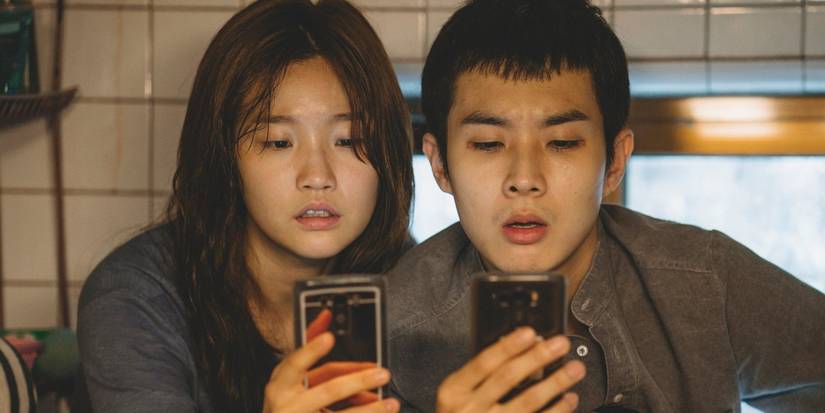 Image via NEON
This South Korean Best Picture winner is undoubtedly Bong Joon Ho’s magnum opus. Parasite follows the poor Kim family as they slowly infiltrate the wealthy Park household by posing as tutors, drivers, and housekeepers. At first, it feels like a dark comedy heist movie, full of clever schemes and social satire. But as it goes on, it gradually crawls under your skin and mutates into something far darker and more unpredictable.
Bong has cited Hitchcock’s Psycho as a major inspiration for Parasite, particularly the Bates house. Much of Parasite’s tension is contained within the sleek, intricately designed Park house, and the film uses vertical space in a way reminiscent of Hitchcock. Staircases are a recurring motif in most Hitchcock films, and in Parasite, the structure of the house and one staircase in particular suddenly become the turning point of the movie.
1 ‘Charade’ (1963)
 Image via Universal Pictures
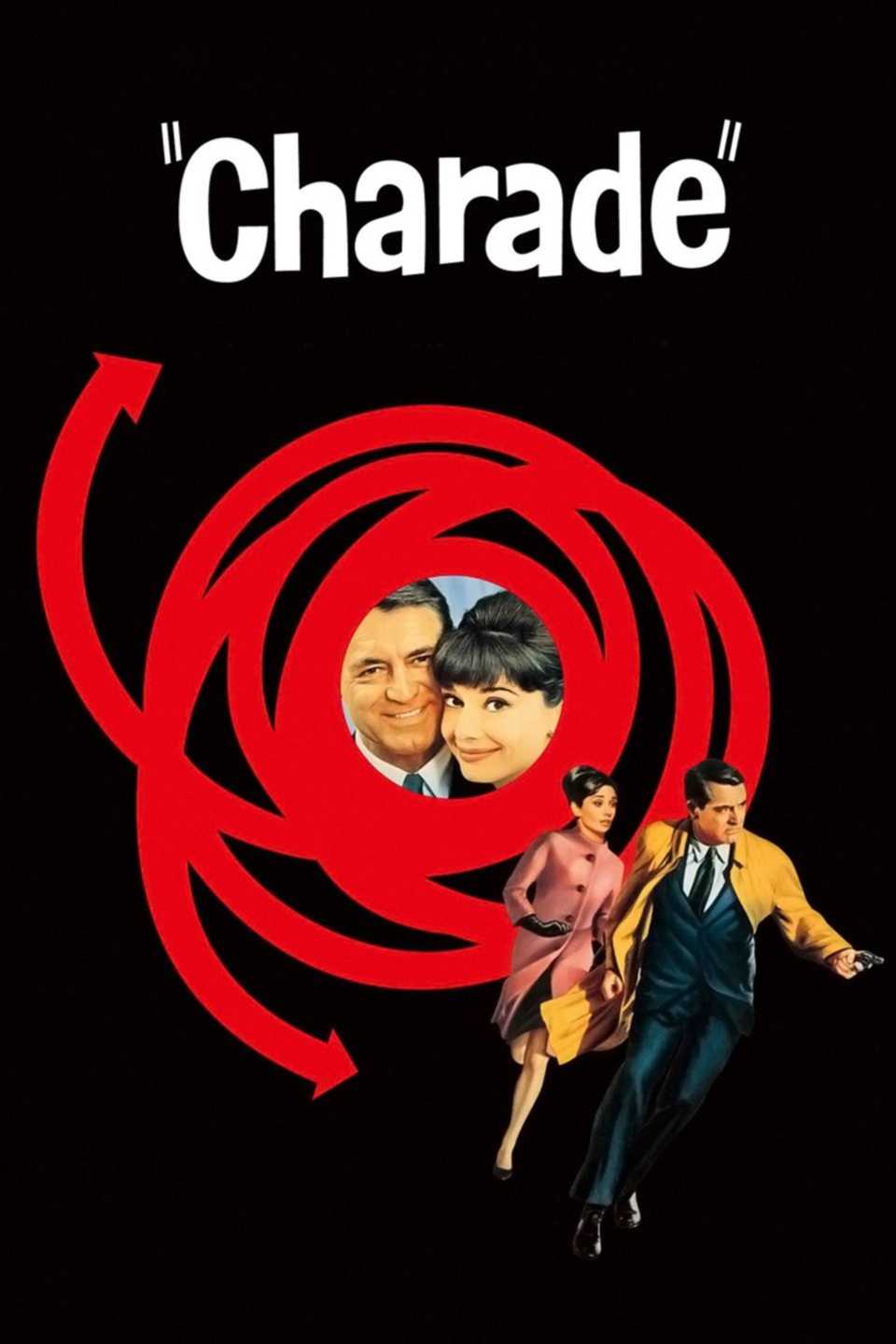
Charade is often cited as the best Hitchcock film Hitchcock never made. It’s basically a screwball comedy version of North by Northwest, and stars the timeless Audrey Hepburn alongside Cary Grant. Grant was Hitchcock’s favorite actor, and he’d previously collaborated with Hitchcock on four films, including the aforementioned North by Northwest.
Hepburn plays Regina “Reggie” Lampert, a woman who comes back from vacation to find her husband murdered and her apartment stripped bare. She is soon threatened by three dangerous men who believe she has the $250,000 her husband stole from them during WWII. The stolen money drives the entire plot, kind of like the microfilm in North by Northwest. Reggie’s only hope of survival lies with the enigmatic Peter Joshua (Grant), a charming stranger with a talent for aliases and a penchant for causing confusion.
Charade
Release Date December 5, 1963
Runtime 113 minutes
Director Stanley Donen
Writers Peter Stone, Marc Behm





 English (US) ·