
 Image via FOX
Published Aug 8, 2026, 9:03 PM EDT
Dyah (pronounced Dee-yah) is a Senior Author at Collider, responsible for both writing and transcription duties. She joined the website in 2022 as a Resource Writer before stepping into her current role in April 2023. As a Senior Author, she writes Features and Lists covering TV, music, and movies, making her a true Jill of all trades. In addition to her writing, Dyah also serves as an interview transcriber, primarily for events such as San Diego Comic-Con, the Toronto International Film Festival, and the Sundance Film Festival.
Dyah graduated from Satya Wacana Christian University in October 2019 with a Bachelor's degree in English Literature, concentrating on Creative Writing. She is currently completing her Master's degree in English Literature Studies, with a thesis on intersectionality in postcolonial-feminist studies in Asian literary works, and is expected to graduate in 2026.
Born and raised between Indonesia and Singapore, Dyah is no stranger to different cultures. She now resides in the small town of Kendal with her husband and four cats, where she spends her free time cooking or cycling.
Sign in to your Collider account
Many can make a sci-fi show, but only a few can make perfect ones. The art of sci-fi isn't new. Dating back to the 2nd century AD with A True Story, one of the earliest recorded works about an intergalactic war, the genre has spent centuries imagining what humankind could achieve through scientific pursuit. But the moral implications that come with those discoveries are another matter. For all of science's noble pursuit of knowledge, not everyone intends to use it for good, and that's where the best sci-fi stories prosper.
Over the past three decades, sci-fi has continued to reinvent itself, from the craftsmanship of building practical sets when CGI was still in its infancy to imagining alternate versions of Earth where technology has gained the upper hand over society. From a hive mind that sparks an existential crisis to an animated series written by Harvard graduates, here are the most perfect sci-fi shows of the last 30 years, ranked.
10 'Pluribus' (2025–Present)
 Image via Apple TV
From the mind behind Breaking Bad and Better Call Saul, there's a mind-controlling apocalypse brewing in Pluribus. When a viral RNA blueprint infects the world, nearly everyone is absorbed into a hive mind known as "the Joining"—except cynical romance writer Carol Sturka (Rhea Seehorn). As one of only 13 people on Earth immune to the virus, Carol finds herself stuck in an existential limbo.
Traditionally, dystopian societies are portrayed as destructive, but Pluribus flips that idea on its head. The hive mind is productive and only seeks collective happiness. While some survivors are tempted by the promise of joining "the Others," Carol questions whether this untied happiness can truly be real if it's under dictator-like control.
9 'Lost' (2004–2010)
 Image via ABC
Everyone's worst fear is an airplane crash, but for the 48 survivors of Oceanic Flight 815 in Lost, the crash is just the beginning of their problems. Stranded on an island in the South Pacific with no sign of rescue, every passing day brings more uncertainty. Just when they think they're alone, they discover the island has mysteries of its own.
The genius of Lost is how it combines something as natural as Mother Nature with the artificial, man-made world of science, creating a blurry line between what's real, fake, and even supernatural. As the survivors encounter temporal anomalies, out-of-body experiences, and other impossible phenomena, the island becomes far stranger than it first appears.
8 'Fringe' (2008–2013)
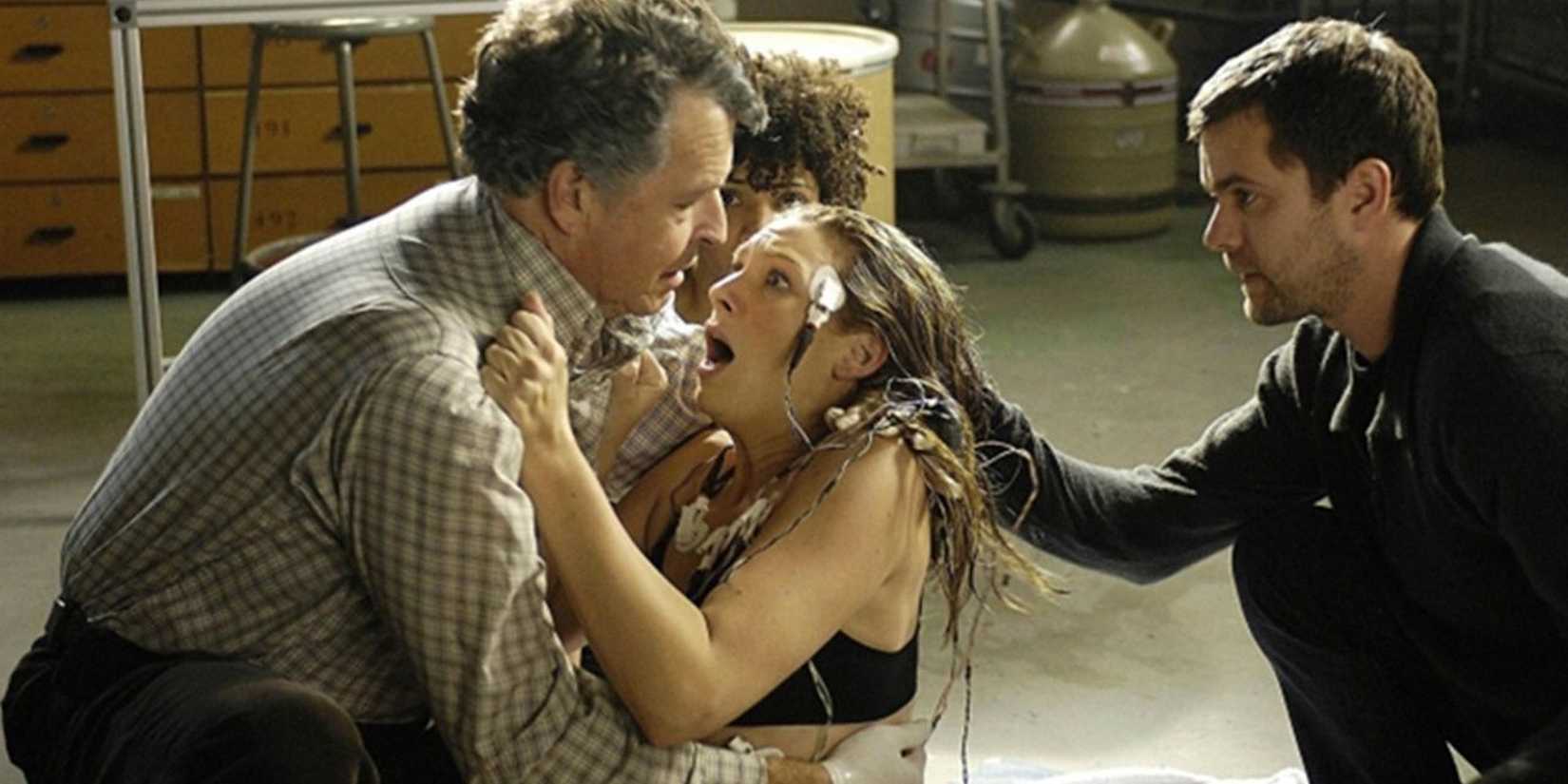 Image via FOX
Fringe follows FBI agent Olivia Dunham (Anna Torv) as she joins the Fringe Division to investigate a series of bizarre, coordinated fringe-science events threatening Earth. To uncover the truth, she teams up with eccentric scientist Dr. Walter Bishop (John Noble) and his son, Peter Bishop (Joshua Jackson), whose expertise proves essential in stopping increasingly dangerous phenomena.
No amount of FBI training could prepare anyone for destructive parallel universes. For all its blockbuster spectacle, Fringe is built around an endless stream of borderline unsafe scientific experiments. From seemingly harmless ideas like teleportation to more disturbing concepts such as mind-melding and genetic mutation, these experiments become the key to connecting two parallel Earths—even if every breakthrough comes with consequences.
7 'Futurama' (1999–Present)
 Image via Hulu
Don't be fooled by its kitschy cartoon aesthetic—Futurama has sci-fi credentials worth bragging about. Pizza delivery boy Philip J. Fry (Billy West) is accidentally frozen in 1999 and only thawed out on New Year's Eve 2999. The world has changed drastically since then, but one thing hasn't: he ends up working for the futuristic delivery company Planet Express.
While Futurama is packed with laughs, its writing staff is no joke. Together, the team boasts three Ph.D.s, seven master's degrees, and more than 50 years of combined education at Harvard University. From time travel to advanced robotics, the show's sci-fi ideas are grounded in real science, with writer Ken Keeler even creating the famous body-switching Futurama theorem.
Collider Exclusive · Sci-Fi Survival Quiz Which Sci-Fi World Would You Survive? The Matrix · Mad Max · Blade Runner · Dune · Star Wars
Five universes. Five completely different ways the future went wrong — or sideways, or up in flames. Only one of them is the world your instincts were built for. Eight questions will figure out which dystopia, galaxy, or desert wasteland you'd actually make it out of alive.
💊The Matrix
🔥Mad Max
🌧️Blade Runner
🏜️Dune
🚀Star Wars
TEST YOUR SURVIVAL →
01
You sense something is deeply wrong with the world around you. What do you do? The first instinct is often the truest one.
APull on every thread until I understand the system — then figure out how to break it. BStop asking questions and start stockpiling — food, fuel, weapons. Questions don't keep you alive. CKeep my head down, observe carefully, and trust no one until I know who's pulling the strings. DStudy the patterns. Every system has a rhythm — learn it, and you learn how to survive it. EFind the people fighting back and join them. You can't fix a broken galaxy alone.
NEXT QUESTION →
02
In a world of scarcity, what resource do you guard most fiercely? What we protect reveals what we believe survival actually requires.
AKnowledge. If you understand the system, you don't need resources — you can generate them. BFuel. Everything else — movement, power, escape — runs on it. CTrust. In a world of fakes and informants, a truly reliable ally is rarer than any commodity. DWater. And after water, information — the two things empires are truly built on. EShips and credits. The galaxy is big — you survive it by being able to move through it freely.
NEXT QUESTION →
03
What kind of threat keeps you up at night? Fear is useful data — if you're honest about what you're actually afraid of.
AThat reality itself is a lie — that everything I experience has been constructed to keep me compliant. BA raid. No warning, no mercy — just the roar of engines and then nothing left. CBeing identified. Once someone with power decides you're a problem, you're already out of time. DBeing outmanoeuvred — losing a political game I didn't even know I was playing. EThe Empire tightening its grip until there's nowhere left to run.
NEXT QUESTION →
04
How do you deal with authority you don't trust? Every dystopia has a power structure. Your approach to it determines everything.
ASubvert it from the inside — learn its rules well enough to weaponise them against it. BIgnore it and stay out of its reach. The further from any power structure, the better. CAppear to comply while doing exactly what I need to do. Visibility is the enemy. DManoeuvre within it carefully. You can't beat a system you refuse to understand. EResist openly when I have to. Some things are worth the risk of being seen.
NEXT QUESTION →
05
Which environment could you actually endure long-term? Survival isn't just tactical — it's physical, psychological, and very much about where you are.
AUnderground bunkers and server rooms — cramped, artificial, but with access to everything that matters. BOpen wasteland — brutal sun, no shelter, constant movement. At least the threat is honest. CA dense, rain-soaked city where you can disappear into the crowd and nobody asks questions. DMerciless desert — extreme heat, no water, and something enormous living beneath the sand. EThe fringe — backwater planets and busy spaceports where the Empire's attention rarely reaches.
NEXT QUESTION →
06
Who do you want in your corner when things fall apart? The company you keep is the clearest signal of who you actually are.
AA tight crew of believers who've seen behind the curtain and have nothing left to lose. BOne or two people I'd trust with my life. Any more than that and someone talks. CNobody, ideally. Alliances are liabilities. I work alone unless I have no choice. DA community bound by shared hardship and mutual survival — people who need each other to last. EA ragtag team with wildly different skills and total commitment when it counts.
NEXT QUESTION →
07
Where do you draw the line — if you draw one at all? Every survivor eventually faces a moment that tests what they're actually made of.
AI won't harm the innocent — even the ones who'd report me without hesitation. BI do what I have to to protect the people I've chosen. Everything else is negotiable. CThe line shifts depending on who's asking and what's at stake. DI draw a long-term line — nothing that compromises my people's future, even if it'd help now. ESome lines, once crossed, can't be uncrossed. I know which ones they are.
NEXT QUESTION →
08
What would actually make survival worth it? Staying alive is one thing. Having a reason to is another.
AWaking others up — dismantling the illusion so no one else has to live inside it. BFinding somewhere — or someone — worth protecting. A reason to keep moving. CAnswers. Understanding what I am, what any of this means, before time runs out. DLegacy — shaping the future in a way that outlasts me by generations. EFreedom — for myself, for others, for every world still living under someone else's boot.
REVEAL MY WORLD →
Your Fate Has Been Calculated You'd Survive In…
Your answers point to the world your instincts were built for. This is the universe your temperament, your survival instincts, and your particular brand of stubbornness were made for.
The Matrix
You took the red pill a long time ago — probably before anyone offered it to you. You're a systems thinker who can't help but notice the seams in things.
- You're drawn to understanding how the system works before figuring out how to break it.
- You'd find the Resistance, or it would find you — your instinct for spotting constructed realities is the machines' worst nightmare.
- You function best when you have access to information and the freedom to act on it.
- The Matrix built an airtight prison. You'd be the one probing the walls for the door.
Mad Max
The wasteland doesn't reward the clever or the well-connected — it rewards those who are hard to kill and harder to break. That's you.
- You don't need comfort, community, or a cause larger than the next horizon.
- You need a vehicle, a clear threat, and enough fuel to outrun it — and you're good at all three.
- You are unsentimental enough to survive that world, and decent enough — just barely — to be something more than another raider.
- In the wasteland, that distinction is everything.
Blade Runner
You'd survive here because you know how to exist in moral grey areas without losing yourself completely.
- You read people accurately, keep your circle small, and ask the questions others prefer not to answer.
- In a city where humanity is a legal designation rather than a feeling, you hold onto something that keeps you functional.
- You're not a hero. But you're not lost, either.
- In Blade Runner's world, that distinction is everything.
Dune
Arrakis is the most hostile environment in the known universe — and you are precisely the kind of person it rewards.
- Patience, discipline, and political awareness are your core strengths — and on Arrakis, they're survival tools.
- You understand that the long game matters more than any single victory.
- Others come to Dune and are consumed by it. You'd learn its logic and earn its respect.
- In time, you wouldn't just survive Arrakis — you'd begin to reshape it.
Star Wars
The galaxy far, far away is vast, loud, and in a constant state of violent political upheaval — and you wouldn't have it any other way.
- You find meaning in being part of something larger than yourself — a cause, a crew, a rebellion.
- You'd gravitate toward the Rebellion, or the fringes, or whatever pocket of the galaxy still believes the Empire's grip can be broken.
- You fight — not because you have to, but because standing aside isn't something you're capable of.
- In Star Wars, that willingness is what makes all the difference.
↻ RETAKE THE QUIZ
6 'Firefly' (2002–2003)
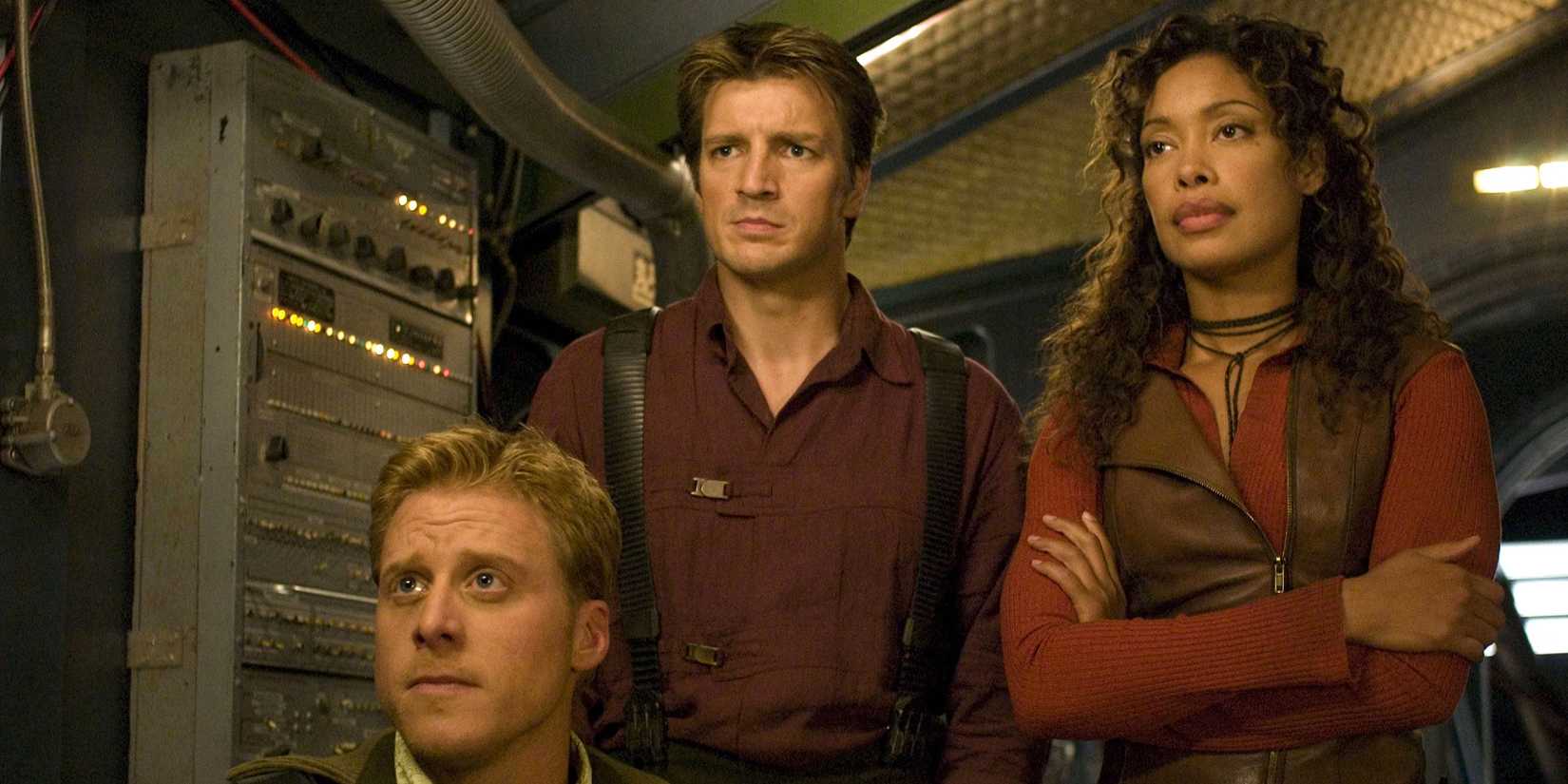 Image via FOX
Years before the sleek, high-tech world of The Expanse, there was the rugged, dusty frontier of Firefly. Set in 2517, the series follows veteran soldier Malcolm "Mal" Reynolds (Nathan Fillion), who fought on the losing side of a civil war and now scrapes by on the fringes of Alliance-controlled space aboard his aging Firefly-class transport ship, Serenity.
Joined by a crew of smugglers, mechanics, mercenaries, and fellow outcasts, Mal takes whatever jobs keep food on the table. In true space cowboy fashion, Firefly delivers one of sci-fi's earliest looks at a gritty, lived-in galactic future, with rich world-building that combines American Western aesthetics with Mandarin Chinese culture following the Alliance's merger of the United States and China.
5 'For All Mankind' (2019–Present)
 Image via Apple TV
In For All Mankind, it is the Soviet Union that reaches the moon first in 1969 instead of America. However, in this alternate take on space history, the Space Race is only just beginning. Unwilling to accept defeat, some of NASA's brightest astronauts, engineers, and leaders must stay two steps ahead of their Soviet counterparts to keep the dream of space exploration alive.
Nobody does space exploration like For All Mankind. Beyond the moon and the possibility of life on Mars, each season jumps to a new decade, forcing the creators to continually build an alternate history inspired by real events. The series imagines an accelerated Space Race fueled by technological breakthroughs, from asteroid mining for clean energy to building permanent settlements on Mars.
4 'Farscape' (1999–2003)
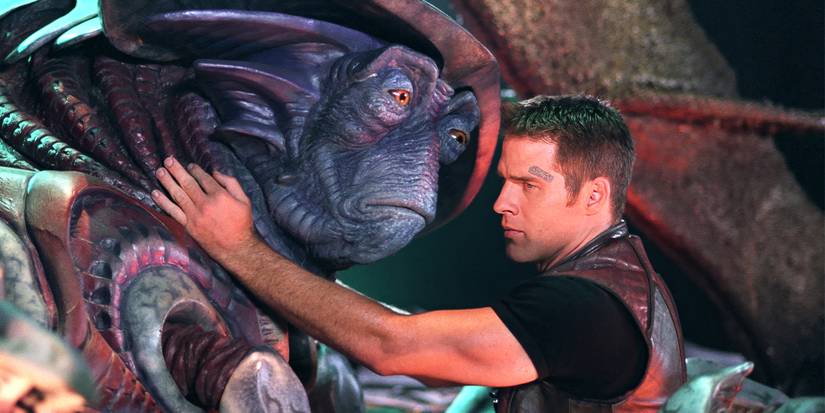 Image via Sci-Fi Channel
Usually, it's the aliens who make first contact with humans. In Farscape, it's the other way around. Human astronaut John Crichton (Ben Browder) is accidentally pulled through a wormhole during an experimental space flight and ends up aboard Moya, a living spaceship carrying a group of fugitives on the run from the militaristic Peacekeepers.
Farscape helped set the standard for what great intergalactic sci-fi could look like. Partnering with The Jim Henson Company, the series is a visual feast, packed with practical sets, elaborate alien makeup, detailed prosthetics, and impressive animatronics. While many sci-fi shows are remembered for their complex plots, Farscape is a love letter to the artistry and craftsmanship of sci-fi world-building itself.
3 'Dark' (2017–2020)
 Image via Netflix
In the small town of Winden, Germany, Dark immediately throws the community into unease following the disappearance of a young boy. As a group of local teenagers searches for him near the town's nuclear power plant and cave system, they stumble into a wormhole that sends them across time.
Dark earns its praise for being immensely intricate despite the massive scale of its story. Not only does it have to connect the dots between four families, but also three generations of each. The show's 33-year time-travel cycle slowly reveals unsavory truths about their intertwined histories. No matter how hard the characters try to change their fate, every outcome seems to make things even worse.
2 'The Expanse' (2015–2022)
 Image via Prime Video
Set hundreds of years in the future, The Expanse takes place in a colonized Solar System where the United Nations on Earth and the militarized government of Mars have long been suspicious of each other's motives. Caught between them is the Asteroid Belt, where much of humanity's working class labors to extract the natural resources that keep both planets running.
The meticulous world-building in The Expanse becomes a character in its own right, showing how life differs depending on which celestial body people call home and the systems they live under. The series may be epic in scale, but it never loses sight of the fact that power, inequality, and control remain the same, no matter how advanced technology becomes.
1 'Severance' (2022–Present)
Everyone wants the perfect work-life balance, and Severance shows it is possible—at a very intrusive cost. The corporate cult sci-fi series takes the mundaneness of bleak cubicles and fluorescent-lit ceilings and gives it an unnerving twist. To improve office efficiency, Lumon Industries creates the severance chip, a surgical brain implant designed to divide a person's consciousness.
The device creates two personalities: the "innie," who exists only in the workplace with no recollection of the outside world, and the "outie," who gets to live a normal life. In theory, it sounds like the perfect solution. In practice, Severance exposes the inhumane lengths corporations are willing to go to in the name of productivity—a premise that doesn't feel entirely fictional.

Severance
Release Date February 17, 2022
Network Apple TV
Showrunner Dan Erickson, Mark Friedman







 English (US) ·