
An opening shot doesn't have to be flawless to make the film you're about to watch perfect, but a perfect opening shot will typically mean that a movie means business. A great opening shot is usually observed within context, such as the ones below. However, what each has in common is being beautiful, no, perfect, even out of context.
If the first thing we see establishes the scene, the plot, or the protagonist, the filmmakers know that their task is to do something simple and effective. No matter how complex the narrative is, a perfect opener will set the tone and help the viewers settle in for the ride. Here are the ten most perfect opening shots in the 21st century—and no, not scenes, but the very first thing we see after the screen fades in.
10 'The Substance' (2024)
 Image via Mubi
This may feel like an outlandish choice, but The Substance is the single most important film of 2024, regardless of what else came out during the same year and how gory it becomes. The Substance is a dissection of the identity of a woman in the public eye that examines how aging is treated in the celebrity industrial complex and how the superficial nature of it all creates a monster. Thematically layered, Coralie Fargeat's Oscar-nominated film follows TV fitness star Elisabeth Sparkle (Demi Moore), who is fired due to her age; she takes a black market drug, which gives her the chance to step out as a younger version of herself named Sue (Margaret Qualley), staying in rotation as a star.
The drug that Elisabeth takes is called the "Substance," and the movie opens with a very straightforward shot that actually introduces its function. The opening shot is a raw egg on a light blue surface; a hand emerges and injects the egg yolk with the substance, and we notice the egg does nothing at first. Then, the yolk shakes, and a smaller, brighter yellow yolk comes out from it. It's simple—this egg depiction establishes the plot; even if you don't get all the steps of the substance's maintenance part, remember the egg and you'll get it. It also shows how, essentially, Sue is created, leaving to the imagination the magnitude of pain a human must feel when the same thing happens to them. The things we do for beauty and youth remain unmatched, and Fargeat's story is as simple as it is complex.
9 'No Country for Old Men' (2007)
 Image via Paramount Pictures
The Coen Brothers' magnum opus, No Country for Old Men, is often cited as the greatest film of the 21st century. It's an adaptation of Cormac McCarthy's dark novel of the same name, but where it exceeds the novel is its visual identity and performances of the main cast. From Josh Brolin's perpetually troubled Llewelyn Moss to Javier Bardem's calculated, emotionless Anton Chigurh, the movie is a tragic epic dressed in a neo-Western thriller coat. And just as it goes, so it begins, with a stunning opening shot and a voiceover by the indomitable Tommy Lee Jones, who plays the sheriff Ed Tom Bell, a force between Brolin's hunted and Bardem's hunter.
No Country for Old Men opens with a stunning sunrise shot. It's simple, but meaningful for the story. The desolate mountainside is pitch black against the sunrise that drips from dark hues of blue into yellowish and then bright orange. This gorgeous shot repeats as it shows the silence and isolation of the landscape where the story takes place. Ed Tom Bell says, in a voiceover, "I was sheriff of this county when I was 25 years old. Hard to believe." He proceeds to describe his career in law enforcement as every new shot reveals that the sun has fully risen. This sequence ushers us straight into the moment when Anton Chigurh is arrested, though he doesn't stay booked for long.
8 'Oldboy' (2003)
 Image via CJ Entertainment
Adapted from a manga of the same name, Park Chan-wook's history-making film Oldboy became one of the films that sparked an interest in South Korean film in the 2000s; today, it's a staple of world cinema, cited among the greats, and often imitated, especially for its memorable corridor fight scene. Without exaggeration, Oldboy is perfect from its first to its final frame, and while the film takes on a shape of a dreamlike state as it goes, its opening scene is very manga-coded. Oldboy is about Dae-su (Choi Min-sik), a brash businessman who gets captured and spends 15 years in solitary confinement; after getting released, he is given a task to find his captor.
The first shot of Oldboy is a shadowed fist holding onto something with all its might. The camera pans up, showing a dark figure of a man, concealed in the shadow, with the intense sun blaring into the back of his head, hiding his face and thus his identity. With a fast-paced string soundtrack blasting through, we're introduced to this man who, without remorse, uses violence and force to get his answers. While it's incredibly cool to witness this as an opening to any film, what we see as the image cuts away from the shadow is even cooler—this man is holding onto someone only by their tie as they swing above the buildings and streets below, holding a small white dog. Dae-su is relentless and wants revenge so badly, and we see from this small excerpt just how volatile and determined he truly is.
7 'Memento' (2000)
 Image via Summit Entertainment
An opening shot, if we’re lucky, tells us exactly what the film is going to be about. Christopher Nolan takes a spot on this list with an early film—Memento—which is a masterclass in presenting the main plot point within its opening frames. Memento stars Guy Pearce and was based on Nolan's brother Jonathan's short story called Memento Mori. It revolves around a man who suffers from a condition called anterograde amnesia that prevents him from forming new long-term memories. He uses Polaroid photography, handwritten notes, and tattoos across his body to take notes of events, finding himself caught up in a murder mystery.
Before mentioning the first shot, it's important to note one important thing: Memento takes place across two interwoven narratives, one in black and white, which is linear, and one in color, which is non-linear. The movie opens with Pearce holding a Polaroid picture of a man lying on the floor with his blood splattered all over the floor and walls; this shot is presented in full color, meaning that we're being thrown in the middle of the story (which we don't know yet at this point in the film). This mimics the protagonist's constant confusion about his own timeline and string of events, and with this being our—and his—starting point, the movie plans to take us on a wild puzzle ride. Memento is truly a work of art, if perhaps a bit misunderstood—though that seems common for Nolan and his elaborate filmography.
6 'The Fall' (2006)
 Image via Summit Entertainment
The Fall is Tarsem Singh’s most recognizable film, starring Lee Pace in a dreamlike, arthouse fantasy about a storytelling stuntman and a little girl. The Fall is often recommended in art circles because of its intensely beautiful color grading, framing, and reliance on visual storytelling. Pace stars as a wounded stuntman, Roy, who finds himself in the same hospital as a little girl, Alexandria (Catinca Untaru). They get to know each other, and he tells her stories of five heroes who traverse a fantastical landscape to seek revenge against a person who wronged them. The Fall's opening credits include "David Fincher and Spike Jonze present," and it’s a triumph of epic adventure films.
The Fall opens very simply, with a body of water shot in glistening black and white. A man emerges in slow motion, rising above the surface of the water with his head and spitting out water. The screen immediately cuts to the title, "The Fall," and this first frame shows us the beginning of Roy’s story. As he emerges, Beethoven's Symphony No. 7 starts playing; this somber, repetitive, and fantastical piece, together with the black and white imagery, signals a fall, literal and spiritual, that opens the story and helps it grow further. We’re told what had happened to Roy solely through images in slo-mo, making The Fall a mirror to the silent film Roy was making when he got injured. This beginning shot pulls us immediately in, and you simply must pay attention.
5 'Gladiator' (2000)
 Image via DreamWorks Pictures
Ridley Scott’s masterpiece, Gladiator, was truly one of the best movies to usher in a new millennium. This historical action epic swept the world by storm, showing why Scott is one of the greatest filmmakers of our time. Stunningly shot with exciting action sequences, Gladiator is a story of Maximus (Russell Crowe), a Roman general-turned-slave forced to fight in the deadly arena of the emperor Commodus (Joaquin Phoenix). The film shows his struggle and rise to leadership, as well as his love story with Commodus' sister, Lucilla (Connie Nielsen), which set up the sequel pretty well.
Gladiator opens with a gorgeously color-graded and framed shot of Maximus’ hand gently caressing golden strands of wheat and grass. His silver ring signals his status, and the gentle touch of the grass symbolizes the beginning of the end of Maximus’ life as he knows it. It’s the last time he touches this very grass. However, once we know the ending, we realize that this is a full-circle moment and that this was the ending the entire time. Maximus touches the wheat field again at the end, symbolizing his departure to the afterlife. Layered, beautiful, and mesmerizing, Gladiator stands the test of time and feels like film school curriculum.
4 'Gone Girl' (2014)
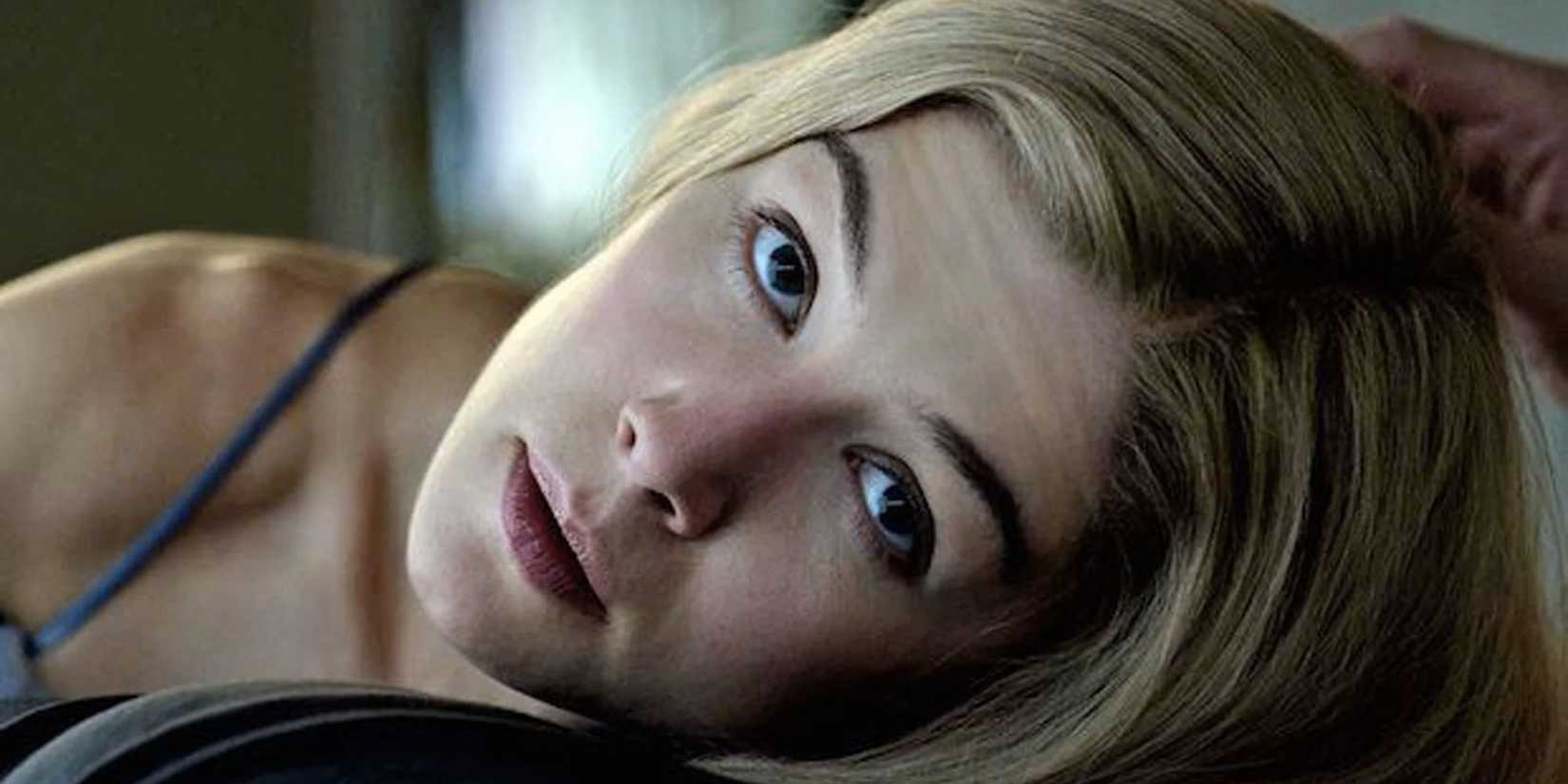 Image via 20th Century Studios
If Gillian Flynn can write it, David Fincher can direct it. Though Fincher works well with most writers, when his dark hues and clean aesthetic combined with the messiness and sinister nature of Flynn's best-selling novel, something beautiful came out, and it was Gone Girl. It's like understanding the story from A to Z and giving it a necessary look and feel; with Fincher, the vision is clear, and this incredible thriller with a stunning, almost unbelievable plot twist will leave anyone speechless. Rosamund Pike and Ben Affleck give intense energy that grows hot and cold with each scene, and we're left wondering if the love between their characters has ever felt genuine. Maybe it was always self-serving for at least one of the two.
Gone Girl opens with Amy (Pike) lying on Nick's lap, with just the shot of her blonde hair from the back. Nick strokes her hair, and a voiceover says, "When I think of my wife, I always think of her head. I picture cracking her lovely skull, unspooling her brains, trying to get answers. The primal questions of any marriage, "What are you thinking?" Just as he speaks and strokes her hair, she looks up at him. If you're watching the film for the first time, her gaze is romantic; upon a rewatch, it's a cold, detached one.
3 'Parasite' (2019)
 Image via CJ Entertainment
What is there to say about Parasite that hasn't been said already? This Bong Joon-ho masterpiece became a fast entry into South Korean cinema, prompting a unique Korean Wave, and it's a rare film that is a masterpiece from start to finish. This psychological thriller follows a poor family infiltrating the life and home of a wealthy family in Seoul, showing the disparity between their lifestyles, ways of thinking, and attitudes. The house also hides many interesting but sinister rooms, whose discovery can only bring tragedy.
Parasite is a layered anti-capitalist thriller, but its opening shot somewhat hides that aspect of it. Instead, it places us at the beginning, below ground, showing a pair of socks on a round, plastic laundry hanger, set beside a small, rectangular window like the ones we see peeking into basement rooms. From that window, we look to the street, where commotion takes place at (our) eye level; this opening shot signals the beginning of the fantasy, a fantasy of finally getting out of the gutter, of finally becoming rich and carefree, never having to look back onto a fearful existence. The film's ending is the culmination of the fantasy, closing the circle fully.
Collider Exclusive · Oscar Best Picture Quiz
Which Oscar Best Picture
Is Your Perfect Movie?
Parasite · Everything Everywhere · Oppenheimer · Birdman · No Country
Five Oscar Best Picture winners. Five completely different visions of what cinema can be — and what it can do to you. One of them is the film that was made for the way your mind works. Ten questions will figure out which one.
🪜Parasite
🌀Everything Everywhere
☢️Oppenheimer
🐦Birdman
🪙No Country for Old Men
FIND YOUR FILM →
01
What kind of film experience do you actually want? The best movies don't just entertain — they leave something behind.
ASomething that pulls the rug out — that makes me think I'm watching one kind of film and then reveals I'm watching another entirely. BSomething overwhelming — funny, sad, absurd, and genuinely moving, all at once. CSomething grand and weighty — a film that makes me feel the full scale of what I'm watching. DSomething formally daring — a film that pushes what cinema can even do. ESomething lean and relentless — pure tension with no wasted frame.
NEXT QUESTION →
02
Which idea grabs you most in a film? Great films are driven by a central obsession. What's yours?
AClass, inequality, and what people are willing to do when desperation meets opportunity. BIdentity, family, and the chaos of trying to hold your life together when everything is falling apart. CGenius, moral responsibility, and the catastrophic weight of a decision you can never take back. DEgo, legacy, and the terror of becoming irrelevant while you're still alive to watch it happen. EEvil, chance, and whether moral order actually exists or if we just tell ourselves it does.
NEXT QUESTION →
03
How do you like your story told? Form is content. The way a story is shaped changes what it means.
AGenre-twisting — I want it to start in one lane and migrate into something completely different. BMaximalist and genre-blending — comedy, action, drama, sci-fi, all in one ride. CEpic and non-linear — cutting between timelines, building a mosaic of cause and consequence. DA single unbroken flow — I want to feel like I'm living it in real time, no cuts to safety. ESpare and precise — every scene doing exactly what it needs to do and nothing more.
NEXT QUESTION →
04
What makes a truly great antagonist? The opposition defines the protagonist. What kind of opposition fascinates you?
AA system — invisible, structural, and almost impossible to fight because it has no single face. BThe self — the ways we sabotage, abandon, and fail the people we love most. CHistory — the unstoppable momentum of events that no single person can stop or redirect. DThe industry — the machinery of culture that chews up talent and spits out irrelevance. EPure, implacable evil — a force so certain of itself it becomes almost philosophical.
NEXT QUESTION →
05
What do you want from a film's ending? The final note is the one that lingers. What do you want it to sound like?
AShock and inevitability — a conclusion that recontextualises everything that came before it. BEarned emotion — I want to cry, laugh, and feel genuinely hopeful, even if the world is a mess. CDevastation and grandeur — an ending that makes me sit in silence for a few minutes after. DAmbiguity — something that leaves enough open that I'm still thinking about it days later. EBleakness — an honest refusal to pretend the world is tidier than it actually is.
NEXT QUESTION →
06
Which setting pulls you in most? Where a film takes place shapes everything — mood, stakes, what's even possible.
AA gleaming modern city with a hidden underside — beauty masking rot, wealth masking desperation. BA collapsing suburban life that opens onto something infinite — the multiverse of a single ordinary person. CThe corridors of power and science at a world-historical turning point — where decisions echo for decades. DThe grimy, alive chaos of New York and Hollywood — fame as both destination and trap. EVast, indifferent landscape — desert and highway where violence arrives without warning or reason.
NEXT QUESTION →
07
What cinematic craft impresses you most? Every great film has a signature — a technical or artistic element that makes it unmistakable.
AProduction design and mise-en-scène — every frame composed to carry meaning beneath the surface. BEditing and tonal control — the ability to move between registers without losing the audience. CScore and sound design — music that becomes inseparable from the dread and awe of what you're watching. DCinematography as performance — the camera not recording events but participating in them. ESilence and restraint — what's left unsaid and unshown doing more work than any dialogue could.
NEXT QUESTION →
08
What kind of main character do you root for? The protagonist is the lens. Who you choose to follow says something about you.
ASomeone smart and resourceful who makes increasingly dangerous decisions under pressure. BSomeone overwhelmed and ordinary who turns out to be capable of something extraordinary. CA brilliant, tortured figure whose gifts and flaws are inseparable from each other. DA self-destructive artist whose ego is both their superpower and their undoing. EA quiet, principled person trying to make sense of a world that has stopped making sense.
NEXT QUESTION →
09
How do you feel about a film that takes its time? Pace is a choice. Some films sprint; others let tension accumulate slowly, deliberately.
AI love a slow build when I know the payoff is going to be seismic — patience for a devastating reveal. BGive me relentless momentum — I want to feel breathless and emotionally spent by the end. CEpic runtime doesn't scare me — if the material demands three hours, give me three hours. DI want it to feel propulsive even when nothing is technically happening — restless energy throughout. EDeliberate and unhurried — I want dread to accumulate in the spaces between the action.
NEXT QUESTION →
10
What do you want to feel walking out of the cinema? The best films leave a mark. What kind of mark do you want?
AUnsettled — like I've just seen something I can't fully explain but can't stop thinking about. BMoved and energised — like the film reminded me what actually matters and gave me something to hold onto. CHumbled — like I've been in the presence of something genuinely important and overwhelming. DExhilarated — like I've just seen cinema doing something it's never quite done before. EHaunted — like a cold, quiet dread that stays with me for days.
REVEAL MY FILM →
The Academy Has Decided Your Perfect Film Is…
Your answers have pointed to one Oscar Best Picture winner above all others. This is the film that was made for the way your mind works.
Parasite
You are drawn to films that operate on multiple levels simultaneously — that begin in one genre and quietly, brilliantly migrate into another. Bong Joon-ho's Parasite is a film about class, desire, and the architecture of inequality that manages to be darkly funny, deeply suspenseful, and genuinely shocking across a single extraordinary running time. Your instinct is for cinema that hides its true intentions until the moment it's ready to reveal them. Parasite is exactly that — a film that rewards close attention and punishes assumptions, right up to its devastating final image.
Everything Everywhere All at Once
You want it all — and this film gives you all of it. The Daniels' Everything Everywhere All at Once is one of the most maximalist films ever made: action comedy, multiverse sci-fi, family drama, existential crisis, and a genuinely earned emotional core that sneaks up on you amid the chaos. You are someone who responds to ambition, who doesn't want cinema to choose between being entertaining and being meaningful. This film refuses that choice entirely. It is overwhelming by design, and its overwhelming nature is precisely the point — because the feeling of being crushed by infinite possibility is exactly what it's about.
Oppenheimer
You are drawn to cinema on a grand scale — films that understand history not as a backdrop but as a force, and that place their characters inside that force and watch what happens. Christopher Nolan's Oppenheimer is a film about the terrifying gap between what we can do and what we should do, told with the full weight of one of the most consequential moments in human history behind it. You want your films to feel important without feeling self-important — to earn their ambition through sheer craft and the gravity of their subject. Oppenheimer does exactly that. It is enormous, complicated, and refuses easy comfort.
Birdman
You are drawn to films that foreground their own construction — that make the how of the filmmaking part of the what it's about. Alejandro González Iñárritu's Birdman, shot to appear as a single continuous take, is cinema examining itself through the cracked mirror of a fading actor's ego. You respond to formal daring, to the feeling that a film is doing something that probably shouldn't be possible. Michael Keaton's performance and Emmanuel Lubezki's restless camera create something genuinely unlike anything else — a film that is simultaneously about creativity, relevance, self-destruction, and the impossibility of ever truly knowing if your work means anything at all.
No Country for Old Men
You are drawn to cinema that trusts silence, that refuses to explain itself, and that treats dread as a form of meaning. The Coen Brothers' No Country for Old Men is a film about the arrival of a new kind of evil — implacable, arbitrary, and utterly indifferent to the moral frameworks we use to make sense of the world. It is one of the most formally controlled films ever made, and its controlled restraint is what makes it so terrifying. You want your films to haunt you, not comfort you. You are not interested in resolution if resolution would be dishonest. No Country for Old Men is honest in a way that most cinema never dares to be.
↻ RETAKE THE QUIZ
2 'Mad Max: Fury Road' (2015)
 Image via Warner Bros. Pictures
A wasteland, shown in vivid colors. When there's nothing but sand and sky and people live in a post-apocalyptic society without water—which is turning out to be a more and more realistic premise in today's world—it makes sense that everything will feel grimy and dirty. Mad Max: Fury Road in its entirety feels like a well-built world where water is a luxury; it's a masterpiece of filmmaking and editing, often hailed as the greatest action movie (and movie in general) of the 21st century. Starring Tom Hardy and Charlize Theron, and including a stunning ensemble of actors and stuntpeople, Fury Road is a relentless car chase of a film that rarely takes a breather, explaining the lore and the stakes to us along the way.
The opening shot of Fury Road is just as spectacular as the rest of the film—it throws us directly into that world, depicting Max Rockatansky (Hardy) standing next to a car on a sandy hill, overlooking a landscape that is obviously empty and vast. The yellowish hues of the sand clash with the rusty browns of the silhouettes of Max and his car, while the grayish cloudy sky above him signals impending chaos. The intro is simple, and the voiceover of Max saying, "It was hard to know who was more crazy—me, or everyone else?" feels like the perfect overture. There is a brief scene before Max appears of trees bending in a gust of dusty wind, shown in grainy black and white; it's not exactly the film's opening shot, but it is the first visual of the film, a brief but sufficient explanation of how this wasteland came to be.
1 'Blade Runner 2049' (2017)
 Image via Warner Bros.
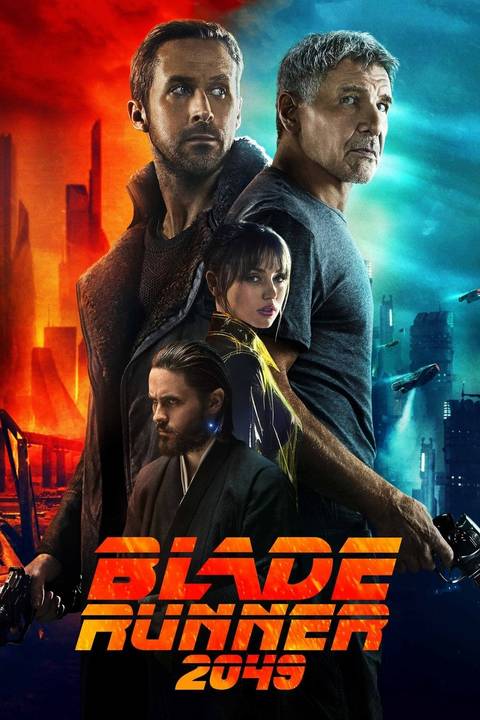
Denis Villeneuve is one of the unmistakable directors out there, carefully crafting each film as a precious work of art; this might be why most of his films continuously receive accolades and high praise. When the sequel to the original Blade Runner from 1982 was announced, with Villeneuve as director, many fans of the original feared it would be a blasphemous interpretation. However, after watching the film, people unanimously agreed that Blade Runner 2049 is one of the best films of the 21st century, with many hailing it as a worthy successor to the previous film.
As an homage to the original, Blade Runner 2049 opens with a tight close-up of a closed eye with white eyelashes, opening to reveal a greenish-blue eye color. The eye feels surreal, and just like in the first film, it reflects the scene that it cuts to. Both eyes in both films serve as a reflection of a desolate, tech-riddled, dystopian landscape. There are numerous interpretations as to whose eye it truly is—some say it is K's (Ryan Gosling), who is the replicant protagonist, while others find it more believable to be of Dr. Ana Stelline (Carla Juri), who makes memories for replicants. Moreover, Blade Runner overall heavily uses the symbolism of eyes, which are "windows of the soul" and which carry deeper symbolism of memory and humanity. This is why Wallace (Jared Leto) cannot see and why Deckard (Harrison Ford) desperately proclaims that Rachel's eyes were green when a replica of her appears before him.
Blade Runner 2049
Release Date October 4, 2017
Runtime 164 minutes
Director Denis Villeneuve
Writers Michael Green, Hampton Fancher







 English (US) ·