


Published Jun 2, 2026, 8:00 PM EDT
Ambrose Tardive is an editor on ScreenRant's Comics team. Over the past two years, he has developed into the internet's foremost authority on The Far Side. Outside of his work for ScreenRant, Ambrose works as an Adjunct English Instructor.
Sign in to your ScreenRant account
What do Of Mice and Men, Bridge to Terabithia, and Scary Stories to Tell in the Dark all have in common? They're all among the ten most "challenged" books of the 1990s, the books that parents, teachers, and librarians tried to keep out of the hands of young readers more than any other in the decade.
What is a "challenged" book? It's one that someone tried to pull out of a local library, or get nixed from a school curriculum. Keep in mind, these challenges often failed, but in some cases they did result in books being taken off shelves. This list is taken from the American Library Association's ranking of the 100 most challenged books of the 1990s.
Some titles from higher up on the list include The Giver, Goosebumps, Go Ask Alice, and many more classics. However, below are the books that came in at the top of the list, what they're about, and why some people took issue with them.
10 The Catcher In The Rye
Written By J.D. Salinger; Published In 1951
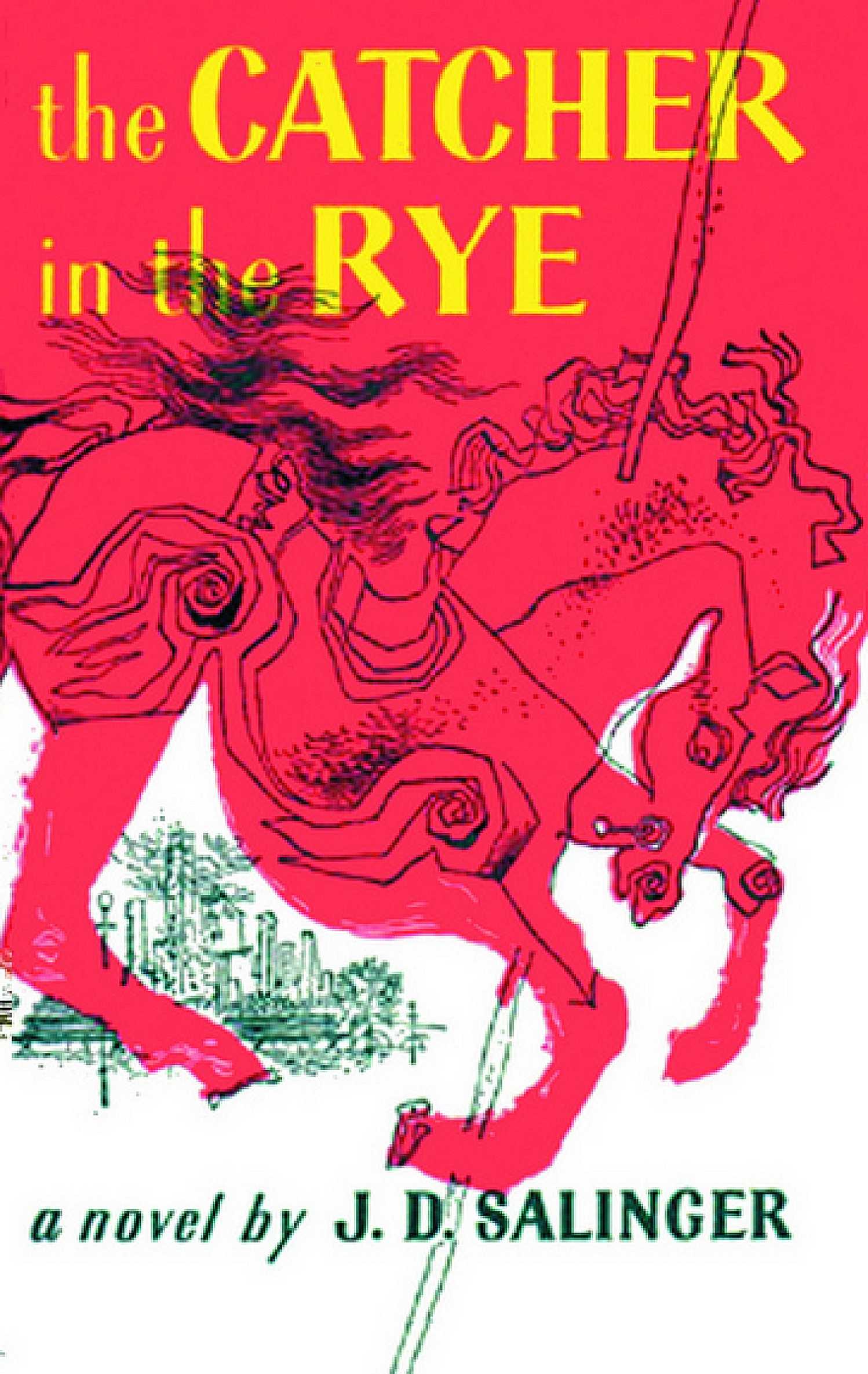
The Catcher in the Rye shows up on its share of "best novels of the 20th century" lists. Catcher is author J.D. Salinger's opus of disaffected youth. There are plenty of reasons to call the book a literary masterpiece, but there's really just one reason so many parents and school boards reject the book: it glorifies skepticism of authority figures.
Yes, there's coarse language in Cacher in the Rye, and there's sexual content, but it's really protagonist Holden Caulfield's proto-punk rock attitude toward society that makes Salinger's novel so frequently challenged. Caulfield spends Catcher wandering late 1940s New York City and ranting about "phonies," but it's easy enough to imagine him on the Lower East Side 30 years later, wearing a ripped t-shirt and jeans and complaining about "posers."

Catcher in the Rye is a coming-of-age story, and reading it has become a rite of passage for young people in every generation since its publication. It has also become increasingly less challenged over the past 2.5 decades, but in the 1990s, it rounded out the top 10 most commonly challenged books in the U.S.
9 Heather Has Two Mommies
Written By Lesléa Newman; Published In 1989

Heather Has Two Mommies is a pioneering work of LGBTQIA+ children's literature, first published in 1989. It's the story of a lesbian couple's daughter, the eponymous Heather, who learns about her own family unit, along with the other members of her playground, and by extension, the reader of the book.
The book's depiction of a modern, non-traditional family made it heavily challenged in the years following its publication. Conservative institutions banned the book for "promoting" homosexuality, but Heather Has Two Mommies still managed to have a significant impact. Heather Has Two Mommies also garnered significant praise at the time of its release; notably, for being the first children’s' book to tackle the topic of artificial insemination.
Heather Has Two Mommies was often challenged in the 1990s, but interestingly, it dropped out of the top 100 most challenged entirely in the aughts, before returning at #87 in the 2010s.
8 Bridge To Terabithia
Written By Katherine Paterson; Published In 1979

Bridge to Terabithia is classified as children's novel, but like so many of the titans of the genre, there's a mature weight to the book. Readers who grew up with the book know it is an emotional gut-punch. And readers who didn't might have their local school board or librarian to blame. Because the novel was routinely challenged in the '90s and 2000s, largely on the grounds that young readers weren't ready for it.
It's impossible to talk about why without spoiling the shocking plot pivot Terabithia is built around. At first, the novel is the story of a friendship and the power of imagination. Lonely protagonist Jess befriends his new neighbor, Leslie, another loner, and they bond by going into the woods and imagining the titular fantasy world of Terabithia. Except reality hits hard when Leslie is killed trying to "go to" Terabithia in bad weather. From there, the novel turns into a story of learning how to grieve.
It's a heavy novel, and it has had a profound effect on generations of readers. It might have scarred some, sure, but it helped teach many more a necessary life lesson. Bridge to Terabithia dropped from the 8th most challenged book of the '90s to the 28th in the 2000s, before falling out of the Top 100. Perhaps because by the 2010s more kids who had a positive experience with Terabithia had grown up to be teachers, and parents who shared it with their kids.
7 Forever...
Written By Judy Blume; Published In 1975

Most readers probably expected Judy Blume to be on this list, but it'd be fair if they assumed the book would be Blume's 1970 Young Adult classic Are You There God? It's Me, Margaret. Actually, though, it's one of her YA follow-ups, Forever, published five years later. Forever caused a stir due to its focus on a teenage sexual relationship.
Blume's book is realistic, which is why it was so commonly banned in the decades following its release. Forever... tells the story of Katherine and Michael, high school seniors who start dating and then have to navigate the progression of their physical relationship. Blume's prose isn't graphic, but it is explicit enough to cause widespread challenges to the book's inclusion in school and public libraries.
Spoilers, but the teenage love between Michael and Katherine does not last "forever," as they initially expect when they hook up. Instead, like so many young adult relationships, geographical distance intervenes: they spend the summer apart, and their love doesn't survive it. 50+ years after its release, Forever... has been eclipsed by other Judy Blume books in terms of pop culture significance, but it's also dropped off the censors' radar, going from 7th most banned of the 1990s to not even in the top 100 of the 2010s.
6 Of Mice And Men
Written By John Steinbeck; Published In 1937

Of Mice and Men is another book that regularly ranks as one of the greatest works of 20th century literature. It's widely used in English curriculums across the U.S., usually at the high school level. Yet it's on the "no fly" list for seemingly just as many schools for its portrayal of racism, sexuality, and violence.
Of Mice and Men is about itinerant farm workers Lennie and George. Lennie is intellectually disabled, and George has reluctantly become his keeper, despite the fact that Lennie keeps causing trouble for the pair everywhere they go. The novel is the story of how trouble turns into tragedy. It infamously ends with George shooting Lennie after he accidentally kills a woman; George gains freedom from his responsibility, but at the most terrible price possible.
Steinbeck's novel is a curious case, in that it's only one of two books on this list that actually moved up a spot in the following decade. It was the 6th most challenged book of the '90s, and fifth in the 2000s, before dropping to 28 in the 2010s. Of Mice and Men is still considered a masterpiece, but it still has numerous critics today, just like it has for nearly a century.
5 Adventures Of Huckleberry Finn
Written By Mark Twain; Published In 1885

The Adventures of Huckleberry Finn is on this list because it contains racially offensive language and racial stereotypes. Although author Mark Twain was trying to write an anti-racist novel, he fell prey to his era as much as he succeeded. Huck Finn's vulgar use of slurs makes it a tough read for modern audiences; moreover, it makes it virtually impossible to read as a group in school.
That isn't to say that The Adventures of Huckleberry Finn doesn't have literary and cultural significance. Just that it needs to be read more as a historical artifact, with a certain baseline understanding of the time, place, and context of its creation. That is, the proto-"road story" starring a runaway kid and an enslaved man heading for freedom has become more of a book that more mature students of American literature, or children's fiction, read, rather than for children themselves.
That said, Huck Finn has been less commonly challenged since peaking at the 5th most banned book of the 1990s. It dropped to 14 in the 2000s and 33 in the 2010s.
4 The Chocolate War
Written By Robert Cormier; Published In 1974

Robert Cormier's The Chocolate War was one of those Young Adult novels of the 1970s, like the work of Judy Blume, that pushed the envelope of what YA could be. The Chocolate War is complex, and mature, and most importantly, it doesn't write down to its YA audience. Cormier treats young adulthood with the gravity that it feels like it has when teenagers are going through it, even if those trials and tribulations often seem frivolous later on from an adult perspective.
The Chocolate War is set at a Catholic school, which is beset by a "secret society" who pull practical jokes on the rest of the study population. The book's protagonist, Jerry, takes a stand against the group, known as the Vigils, and the larger institution of the school, and beyond that the Church, and beyond that the world. It ultimately proves to be futile, and painful, even, for Jerry, but it solidifies him as a nonconformist hero in the vein of Holden Caulfield.
Like Of Mice and Men, The Chocolate War rose in the "most challenged" ranking in the 2000s, going from 4th to 3rd. Yet by the 2010s, it didn't even rank in the top 100 at all. Perhaps that's because the novel's legacy was thoroughly quashed by its critics in the '90s and aughts; or, possibly, it's because the book's adult themes and content came to be seen as less egregious over time.
3 I Know Why The Caged Bird Sings
Written By Maya Angelou; Published In 1969

I Know Why the Caged Bird Sings is Maya Angelou's debut, an autobiography tracing her life from adolescence through high school. It ends with her teenage pregnancy and her son's birth. The book also frankly deals with childhood sexual assault, which Angelou experienced at eight years old.
Caged Bird is a beautifully written memoir, one of the defining works of the literary genre. It also confronts the racism and inequity Angelou faced as a young black woman in the 1930s and '40s. What makes I Know Why the Caged Bird Sings a masterpiece is how Maya Angelou bent the genre to her will, making it a process of literary healing as much as an art form.
And today, the book is much more commonly celebrated than challenged. Caged Bird peaked at the 3rd most banned book of the 1990s, but by the 2010s it ranked 88th. That shows that its recognition as an essential American text, and Maya Angelou's legacy as one of American's greatest writers, has become more universal over the past 30 years.
2 Daddy's Roommate
Written By Michael Willhoite; Published In 1990

Daddy's Roommate is similar to Heather Has Two Mommies, except it was even more frequently banned during the 1990s. It's an illustrated children's book narrated by a boy who learns about his father's sexuality. At first, the narrator doesn't understand the true nature of his father's relationship with his new "roommate," until his mother explains that his dad is a gay man.
Author and illustrator Michael Willhoite was praised for raising the complexities of a divorced family, where one parent has come out as gay, in an easily understandable way for the book's intended age group. Yet that intended readership also caused the stream of challenges to the book's inclusion in libraries and school curriculums that made it the second most challenged book of the 1990s.
Notably, Daddy's Roommate dropped off most book banners' radar after the 1990s. It didn't make the top 100 for either the 2000s or 2010s, though it did come up during the 2008 presidential campaign, when it was revealed Republican Vice Presidential candidate Sarah Palin tried to have the book banned from an Alaskan library. Daddy's Roommate was most recently in the news in 2023 when a Miami library pulled it from shelves, showing it still can be the source of controversy.
1 Scary Stories To Tell In The Dark
Written By Alvin Schwartz; Published In 1981
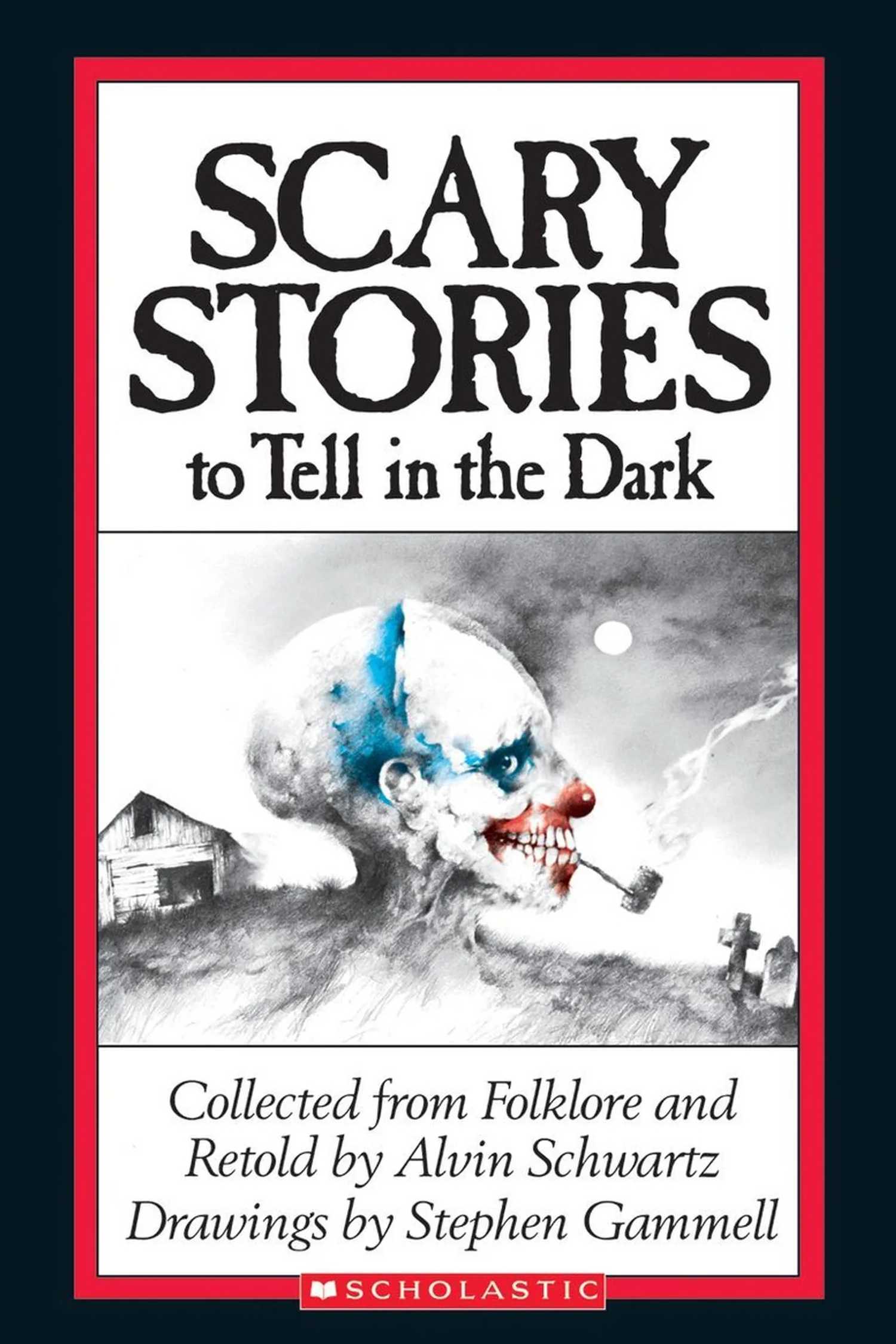
Yes, it might seem hard to believe, but Scary Stories to Tell in the Dark was the #1 most challenged book of the 1990s. Specifically, the entire Scary Stories anthology was often banned from libraries, a result of its frightening and occasionally violent content. Despite the ban, though, the Scary Stories books became a phenomenon.
Scary Stories to Tell in the Dark introduced generations of readers to horror fiction, urban legends, and even the concept of grim irony. Kids who read Scary Stories at an impressionable age will still get chills thinking of certain stories to this day. The anthology books, with terrifying art by Stephen Gammell, was more controversial, or at least, more commonly objected to, than any other book in the '90s.
A 2019 movie adaptation tried to capitalize on the love '90s kids have for Scary Stories, but nothing will compare to nights spent under the covers with a flashlight reading those nightmare-fueled books. And Scary Stories to Tell in the Dark is still routinely challenged now, having dropped to 24 on the top 100 in the 2010s, but still routinely freaking out people of all ages.

Release Date August 9, 2019
Runtime 108minutes
Director André Øvredal
Writers Dan Hageman, Kevin Hageman, John August, Patrick Melton, Guillermo del Toro, Marcus Dunstan





 English (US) ·