
The most ambitious Stephen King books are not necessarily the best ones, nor even the longest ones, though some worth noting here are indeed very good, and sometimes very long. He’s got a knack for taking strange ideas and just running with them, and sure, sometimes you get something messy, like The Tommyknockers or Dreamcatcher, but then at other times, you get genuinely great/weird/interesting books.
These novels all represented big swings, and most delivered. A few are indeed imperfect, and have some notable flaws, but if they're brazen or unusual enough and more or less worked, then they're worth including. Also, by no means are these Stephen King’s only ambitious books, and there is also a fair argument to be made that starting and completing any book is ambitious in itself (with King doing that dozens upon dozens of times, too).
10 'Under the Dome' (2009)
 Image via Charles Scribner's Sons
There are similarities to Needful Things and The Mist when it comes to Under the Dome, since those ones were confined to small towns and just had chaos sort of continually unraveling, and destruction/death were pretty much inevitable. But Under the Dome has its characters trapped to an even greater extent, because of the dome and everything, and it’s also one of King’s longest books.
It’s long without covering a good deal of ground in the physical sense, and then Under the Dome also takes place within a surprisingly short timeframe. It’s further unusual for being less about survival than you might expect, or at least having lots of the conflict having begun before the dome comes down. Chester's Mill was already falling apart, or imploding, and then the dome incident that happens right at the start (things hit the ground running, in typical King fashion) just accelerates/worsens it all.
9 'Insomnia' (1994)
 Image via Viking
With Insomnia, there’s so much going on that it could well be impossible for it to ever get a movie adaptation, or at least an accurate/comprehensive one. The length plays a part there, sure, but so too does the fact that Insomnia crosses over with so many other Stephen King novels, and is a vital piece of the overall series that is The Dark Tower, even if it’s not officially a Dark Tower book.
It’s all the crossover stuff that would make Insomnia difficult to make, because no single production company owns all the rights to the works of Stephen King, meaning certain things would have to be avoided or worked around. The thing also (arguably) barely holds together as a novel, yet it’s nonetheless interesting, and inevitably quite necessary to read if you're invested in King’s whole multiverse.
8 'The Long Walk' (1979)
 Image via Signet Books
Though not a long novel, The Long Walk does keep a fairly simple premise going for a fairly decent length of time, and manages to keep things intense throughout, too. There’s a risk of things feeling repetitive when the premise involves a bunch of teenage boys taking part in a competition that involves them walking endlessly, with the last person standing being the winner, but King avoided such issues remarkably well.
The high stakes likely help, in that regard. Anyone who stops walking is executed, and so the winner is the last person living, basically. It’s naturally bleak, and quite visceral, even by the standards of stories about deadly competitions that people in dystopian societies take part in. The Long Walk isn't a fun read, though it is a very compelling one, and the best of the Richard Bachman books, too.
7 'The Talisman' (1984)
 Image via Viking Press/Stephen King/Peter Straub
The Talisman marked the first time Stephen King co-authored a book, doing so here with Peter Straub, and they'd later collaborate in 2001 for the sequel to The Talisman, Black House. The Talisman, though, is probably a little stronger overall quality-wise, and it stands out for being an early King epic about a young boy going on a journey to save his mother that involves going through a parallel world.
So, once more, that makes The Talisman a book that intersects with The Dark Tower, because that series is all about different dimensions, journeying, and going to great lengths to find fantastical things. It’s a long book, a significant one for the Stephen King multiverse, a largely compelling read, and perhaps the best book King ever co-authored with another writer, so all those reasons make The Talisman worthy of mention here.
6 'Gerald's Game' (1992)
 Image via Viking Press
There are some similarities between Lisey’s Story (King’s favorite novel of his) and Gerald’s Game, and so too can you kind of link Gerald’s Game to Misery. Both Lisey’s Story and Misery are ambitious too, but Gerald’s Game goes one step further than either by more or less being a story with just one character at the center of it all, and confined to a bed for almost the whole thing.
She battles personal demons and troubling memories (plus some other things) after she’s handcuffed to a bed and her abusive husband has a fatal heart attack. Eventually, she has to figure out a way to escape the whole situation, too. That’s the whole book, and it’s not exactly amazing, but King did tackle something so restrictive in terms of characters and setting, and indeed get it to novel length.
5 'The Green Mile' (1996)
 Image via Signet Books
Even if the movie adaptation might've been slightly better, The Green Mile (1996) is still a remarkable novel, and one of the more emotional ones King’s written, too. It’s being included here because of the unique way it was written and released, as The Green Mile was a serial novel split into six parts, and throughout 1996, one got released every month or so.
This resulted in a little repetition, and a sense of some things being made up as King went along to a perhaps greater extent than in some of his other books, but still, The Green Mile largely worked. The experiment, so to speak, paid off, and if you were to count each part as its own thing, then this would be King’s second-longest series, just based on the number of installments (second to The Dark Tower, of course).
4 '11/22/63' (2011)
 Image via Charles Scribner's Sons
There are some parts of 11/22/63 that feel at least a little frightening, and King had written works of science fiction before this novel, but still, 11/22/63 felt like something different and particularly ambitious for the author. The type of science fiction (time travel) has something to do with that, and it’s further quite different from other time travel-related stories, at least in terms of the mechanics and how the time travel works (or doesn’t work).
King also recreates the late 1950s and early 1960s well, and there’s naturally a good deal more historical stuff packed into this than what you might usually expect from a Stephen King novel. 11/22/63 also has a premise that sounds outlandish (time travel being used to stop an assassination), yet it works surprisingly well and proves continually tense for what ends up being a rather long book.
3 'The Dark Tower VII: The Dark Tower' (2004)
 Image via Donald M. Grant, Publisher, Inc.
You could put all the books in The Dark Tower series here, since the whole series is a remarkable accomplishment, and one worth getting through in the end, even if you might find a couple of the books in said series a little disappointing or long-winded. It’s all about getting to the titular destination, plus some other things, and as mentioned before, when talking about Insomnia, The Dark Tower does tie together plenty of other Stephen King stories.
If you can only select one book of the seven main ones, it’s probably easiest to single out the final one, The Dark Tower VII, as the most ambitious.
If you were to count the whole series as one, it’d be King’s most ambitious work, but if you can only select one book of the seven main ones, it’s probably easiest to single out the final one, The Dark Tower VII, as the most ambitious. He went big here in many ways, with this ending, and though not everyone loves everything done here, you do sort of have to admire some of the bolder decisions made here (frustrating as some may find them).
2 'It' (1986)
You could call It the best thing Stephen King wrote in the 1980s, and maybe also go one step further by saying it’s his best single book overall. It takes some massive swings, and most (though perhaps not all) pay off, so the ambition here is a massive factor as to why It is so beloved. It might well also be King’s scariest book to date, and considering how much horror he’s written, that’s really saying something.
A simple and pretty much misleading synopsis of It might tell you that it’s about kids taking on a monstrous entity that often looks like a clown, and then taking said entity on again as adults. It’s also about much more than just that, painting an interesting portrait of Derry and its history, as a town, all the while doing surprising and engrossing things when it comes to the story’s structure.
1 'The Stand' (1978)
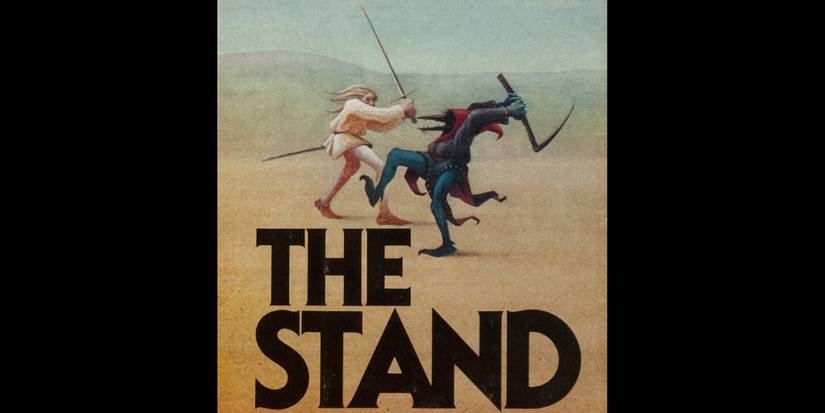 Image via Doubleday
In its original form, The Stand was already massive, and then it got an uncut and revised edition in 1990, and that one is King’s single biggest story, and also about as big as a mass-published book can be, in terms of page count, and without splitting things into different volumes with different bindings. Either way, the pages are needed, because The Stand is an epic. It’s just one version of said epic is more, well, epic.
King cited The Lord of the Rings as an inspiration when writing The Stand, and you can see why, because there are a lot of characters, a good deal of ground covered setting-wise, and a story with high stakes, what with the main conflict here involving a battle over the fate of the world, following the outbreak of a highly deadly flu. The Stand gets weird, disturbing, and fantastical in parts, but it’s always incredibly compelling and very much worth devoting a good deal of time to.

The Stand
Release Date 1994 - 1994-00-00
Directors Mick Garris







 English (US) ·