
 Image via Columbia Pictures

Published Feb 14, 2026, 12:19 PM EST
Jeremy has more than 2300 published articles on Collider to his name, and has been writing for the site since February 2022. He's an omnivore when it comes to his movie-watching diet, so will gladly watch and write about almost anything, from old Godzilla films to gangster flicks to samurai movies to classic musicals to the French New Wave to the MCU... well, maybe not the Disney+ shows.
His favorite directors include Martin Scorsese, Sergio Leone, Akira Kurosawa, Quentin Tarantino, Werner Herzog, John Woo, Bob Fosse, Fritz Lang, Guillermo del Toro, and Yoji Yamada. He's also very proud of the fact that he's seen every single Nicolas Cage movie released before 2022, even though doing so often felt like a tremendous waste of time. He's plagued by the question of whether or not The Room is genuinely terrible or some kind of accidental masterpiece, and has been for more than 12 years (and a similar number of viewings).
When he's not writing lists - and the occasional feature article - for Collider, he also likes to upload film reviews to his Letterboxd profile (username: Jeremy Urquhart) and Instagram account.
He has achieved his 2025 goal of reading all 13,467 novels written by Stephen King, and plans to spend the next year or two getting through the author's 82,756 short stories and 105,433 novellas.
Sign in to your Collider account
It’s always nice to see ambition front and center in a movie; like, when a film goes above and beyond, since the undertaking of any film – and finishing it – is undeniably ambitious. Even most small-scale or indie films will have a large number of people working tirelessly in front of and behind the camera throughout, or at least the good ones will probably have people working tirelessly. But then again, some less-than-great movies had quite a bit of effort put into them, even (you could argue) The Room and Cats.
In the interest of highlighting those movies that did go above and beyond, while being much better than The Room and Cats, here’s a rundown of some of the most ambitious movies of the 20th century, including a couple of silent films and also going as far as the tail end of the century: the 1990s. There’s some subjectivity involved here, and it’s hard to do a ranking when, again, most movies are ambitious to some extent, but an attempt was made. It’s itself an ambitious undertaking, so there, it’s done. There we go.
10 'The General' (1926)
 Image via United Artists
Considering it’s now a century old and it still holds up remarkably well as an action movie, it feels fair to call The General an all-timer as far as influential and ambitious cinema’s concerned. If it didn’t invent the action movie as it’s now understood, then it kind of defined it and maybe even proved so ahead of its time that it would take almost three decades (foreshadowing for the seventh movie in this ranking) for something else definable as an action movie to top it.
The General manages to feel like one extended chase that’s thrilling and surprisingly funny throughout.
Also, The General does a lot with a short runtime, and manages to feel like one extended chase that’s thrilling and surprisingly funny throughout. It might be a tired observation to make, but you can see how The General might well have influenced Mad Max: Fury Road, which is up there among the most ambitious movies of the 21st century so far.
9 'Pulp Fiction' (1994)
 Image via Miramax Films
A movie you probably loved as a teenager, then maybe cautiously re-approached once you got a bit older, fearing it would be immature or something, but nah, you realized it was still pretty amazing, here’s Pulp Fiction. This one’s admittedly got a whole lot less by way of spectacle than most of the other movies here, but its ambition comes from what it does screenplay-wise.
It takes a few different stories that might seem pretty by-the-numbers on their own, but each story does at least one thing that’s strange or unexpected, and then the way all the stories interweave within a non-chronological narrative serves to make them all even more interesting. Pulp Fiction gets the balance right between feeling innovative and approachable/easy-to-like, and yes, it’s endlessly popular and quoted in ways that might sometimes get grating, but you could also take those things as a sign that it was very much doing something (or a bunch of things) right.
8 'The Good, the Bad and the Ugly' (1966)
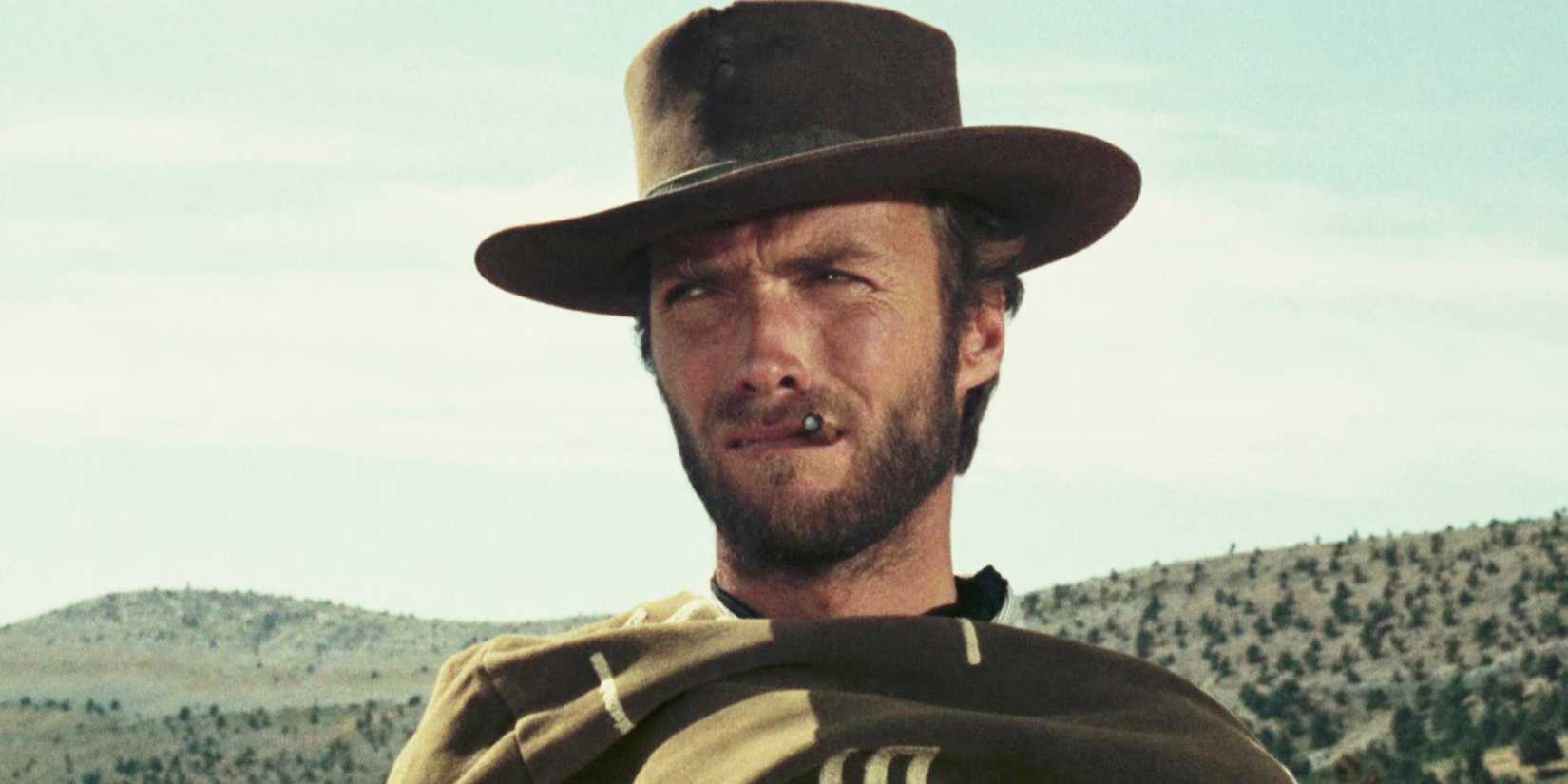 Image via Produzioni Europee Associati
The biggest and best film in the overall very strong and striking Dollars trilogy, The Good, the Bad and the Ugly is about as good as Westerns get, and it was one of the spaghetti ones, not made in the good old U.S. But it had some American stars, including Clint Eastwood, of course, but it was tonally and stylistically a bit bolder than most Westerns made in the U.S. up until that point.
The scale here is the selling point, since it takes a simple adventure sort of story, places it in the middle of the Civil War, obviously maintains the feeling of a Western, and then just has a lot of fun with all the pieces it has to play around with. Also, the escalation of The Good, the Bad and the Ugly is pretty much unbeatable, and it passes by incredibly fast for something that’s almost three hours long.
7 'Seven Samurai' (1954)
 Image via Toho
Even more recognizably impactful and influential for the action genre than The General is Seven Samurai, which was a film that showed how something massive, broadly appealing, and lengthy could indeed be perfect on a narrative and technical front, with enough care put in. The story, about assembling a group of warriors to defend a town from aggressive bandits, might sound familiar, but that’s probably because this kind of story, structured the way it is here, has become so reliable and influential.
Seven Samurai was a mammoth production, and yet it’s all pulled off in a way that makes the creation of a film like this look like a smooth and rather easy process. Very little here feels dated or even close to slow or clunky, and so whenever Seven Samurai shows up right near the top of just about any “best films of all time” list, it feels deserved.
6 'Metropolis' (1927)

Image via Parufamet
Like The General, Metropolis was a movie released about a century ago that did so much for the genre it belonged to going forward. Here, it’s the sci-fi genre more broadly, with it tackling some lofty social commentary for its time (it does feel broad nowadays, but some slack can be cut, considering the age), and more specifically, it helped define what dystopian fiction in cinema could be.
It’s something of an epic about a futuristic organization divided between the upper and lower classes to a literal extent, since the rich live up high and the poor live below. Also, the poor in society don’t get much of anything, and are used by the rich so the rich can thrive, leading to inevitable class conflict and revolution. There is also a robot. It makes sense, you just have to go with it. Metropolis is honestly pretty awesome and entertaining, almost as much in the 2020s as it surely would've been way back in the 1920s.
5 'Apocalypse Now' (1979)
 Image via United Artists
Most Vietnam War movies make the conflict look hellish, and take an anti-war sort of approach to the whole thing, but not many go as far with that as Apocalypse Now does. This one also does that while being more broadly about the impact and effects of war generally, not just the Vietnam War, and it unfolds in a way that moves away from the iconography associated with films about such a war more and more as it goes along.
Also, as it progresses, it gets stranger and maybe a bit slower, too, but not slower in a way that gets boring. Apocalypse Now succeeds in making you feel like you're going a little mad alongside the main character as he makes his whole journey, and it does all that while impressing as an epic and managing to feel confronting in a rather timeless way, too. It hasn’t lost much, if anything, of what made it eerie and intense, even all these decades on from its release.
4 'Lawrence of Arabia' (1962)
 Image via Columbia Pictures
It’s hard to know what else to say about Lawrence of Arabia that hasn’t already been said, so apologies for about 140-ish words of stuff you’ve already heard before, but here we go. This is the definitive World War I epic, or maybe even up there as a contender for the title of the definitive war epic, as in any epic about any war.
It’s also more than a war movie, even though if it were just a war movie, it would still be incredible. Lawrence of Arabia is also everything a biographical film should be and more, all the while also feeling unique as an adventure movie, too. Throw in perfect performances, some of the best cinematography of all time, an all-timer of a score, and all the other things, blah-blah-blah, ideal movie, it’s everything, it’s great, it’s Lawrence of Arabia.
3 'The Human Condition' (1959–1961)
 Image via Shochiku
At the risk of going on too much about epic-length war movies, here’s another. It’s The Human Condition, and while it is technically a trilogy, it tells one continuous story and was helmed as one massive production. It’s really just split into three parts to make it more digestible, and even then, each part on its own is between three and three and a half hours, meaning the entire thing comes close to taking 10 hours to watch in its entirety.
And then narratively, The Human Condition is about the lead-up to, the fighting during, and then the aftermath of World War II, all seen from the perspective of a pacifist who, despite his efforts not to end up in the war, does. It’s gruelling and ultimately feels quite hopeless throughout, so you need a little ambition of your own if you set out to watch The Human Condition, but it is very rewarding and impressive, alongside being extremely challenging.
2 '2001: A Space Odyssey' (1968)
The easiest thing to point to as something ambitious with 2001: A Space Odyssey is the fact that it’s about humanity’s past, its near future, and then its distant future, all within a single movie. It wants to be about existence and evolution and where things might eventually go well beyond where most science fiction ever goes, and it does all that while being patiently paced; maybe even slow, if you're not expecting something methodical.
It’s slower than most Stanley Kubrick movies (though just as eye-catching as most), but it could well be his most rewarding film to revisit and analyze. 2001: A Space Odyssey is easy to over-hype, and maybe some of what was just said sounded like hyperbole, but it really is next-level as far as science fiction movies go, even if you compare it to some of the grandest and most expansive within said genre.
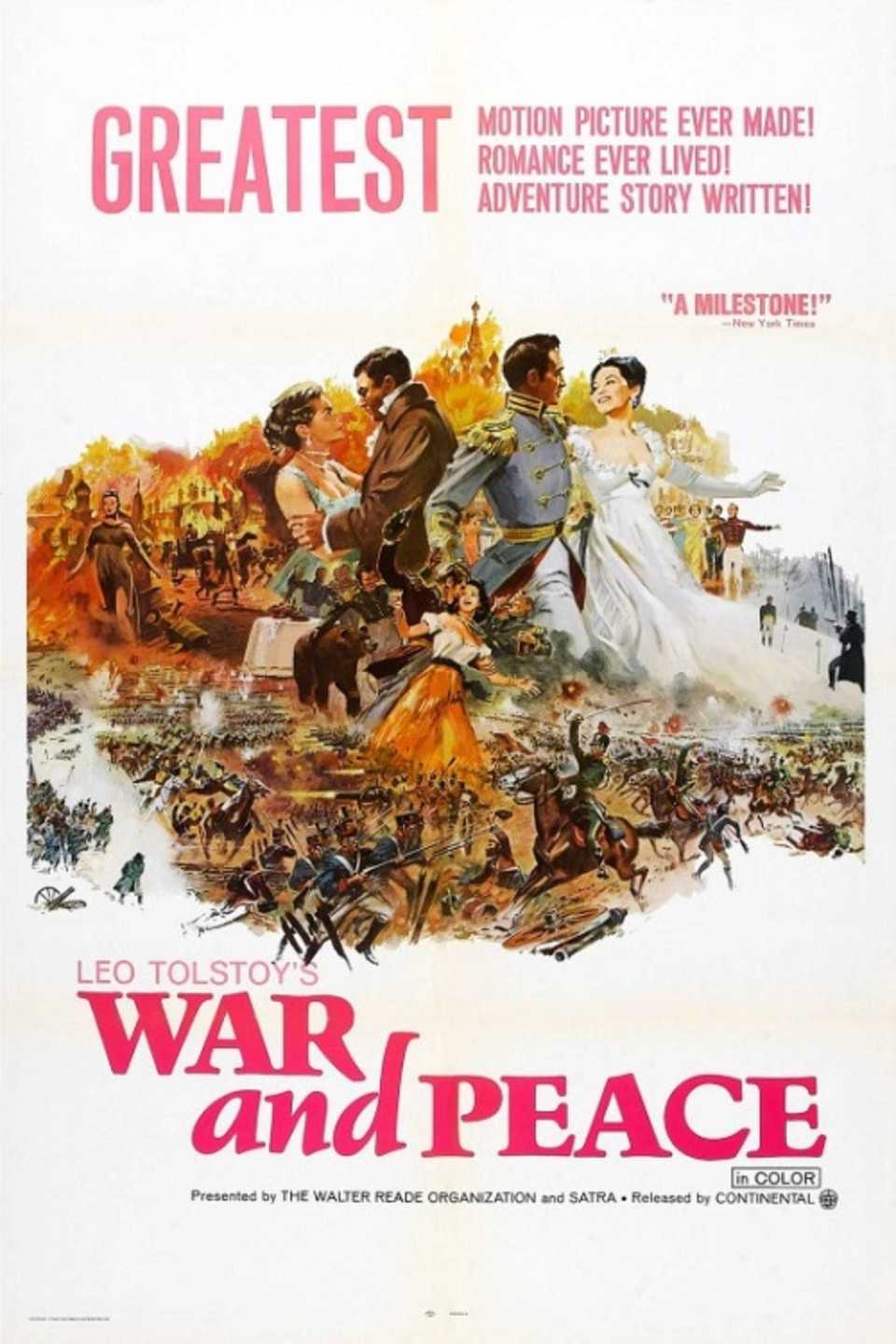
1 'War and Peace' (1965–1967)
 Image via Mosfilm
Like with 2001: A Space Odyssey, it’s easy to point out what makes War and Peace right up there as one of the most ambitious films of the 20th century. It’s an adaptation of War and Peace, the epic novel, that feels largely complete, or overall surprisingly faithful to the text, even if parts of it are ultimately streamlined or cut out.
And then it’s worth highlighting how it’s similar to The Human Condition, being one huge film split into a few different parts (four, in this instance), since asking an audience to sit down for seven hours, even if there was an intermission or two, is a bit much. You will wear yourself out if you try to watch War and Peace all in one go, but it is worth eventually digesting the whole thing over maybe a couple of days, since the spectacle here is honestly unmatched, with the battle sequences in particular being the sort of thing you need to see to believe.
War and Peace
Release Date March 14, 1966
Runtime 393 Minutes
Director Sergey Bondarchuk
Writers Sergey Bondarchuk, Vasiliy Solovyov, Leo Tolstoy






 English (US) ·