
 Image via A24
Published Jun 23, 2026, 5:42 PM EDT
Sign in to your Collider account
Horror fans do not come to the genre for one flavor of fear. Sometimes you want a haunted house to squeeze the air out of a room and sometimes you want a monster that should not exist. At other times, perhaps something else, perhaps a Michael Myers staring eerily in odd spots.
The movies in this list, however, deliver the full horror feast. They give atmosphere, iconic images, unbearable suspense, nasty violence, emotional damage, creature terror, demonic fear, survival panic, and that beautiful aftershock where a hallway, a basement, a forest, or a sleeping child suddenly feels unsafe. So they might not be niche but they’re definitely complete.
10 'The Descent' (2005)
 Image via Pathé Distribution
A cave system is already a perfect horror location before anything with teeth shows up. Neil Marshall understands that, which is why The Descent spends so much time letting the dark do damage first. Sarah (Shauna Macdonald) is still grieving a devastating loss when she joins her friends on a spelunking trip meant to help the group reconnect. Then the route becomes uncertain, the rock starts closing around them, and every friendship tension they brought underground suddenly has nowhere to escape.
The monsters are terrifying, but the claustrophobia is the real knife twisting early on. Crawling through tight stone, losing light, hearing breath bounce off walls, and realizing nobody knows the way out all create panic that feels physical. Sarah’s grief-struck desperation slowly hardens into survival instinct, while Juno’s (Natalie Jackson Mendoza) guilt and recklessness make the group drama just as dangerous as the creatures. The film delivers blood, monsters, betrayal, darkness, and primal panic with almost no wasted space. It is horror as a pressure chamber.
9 'The Conjuring' (2013)
 Image via Warner Bros. Pictures
The Conjuring is the kind of haunted-house movie that remembers fear can be fun before it becomes unbearable. And it’s perhaps the horror film that has the most real-life backing than any other. The film follows the Perron family that moves into a Rhode Island farmhouse, and the place begins turning ordinary domestic life into a threat: clocks stopping, bruises appearing, doors opening, children staring into corners, and that horrible clapping game making empty space feel occupied. And it happens because of the notorious Anabelle doll.
Ed Warren (Patrick Wilson) and Lorraine Warren (Vera Farmiga) enter as paranormal investigators, and the film’s real strength is how carefully it makes the family feel worth protecting. James Wan stages scares with beautiful old-school patience. The camera holds on doorways long enough for your brain to start inventing movement. The basement feels wrong before anything fully declares itself. The wardrobe, the sheet on the clothesline, the hands in the dark, the chair, the possessed mother, all of it builds a haunted-house machine with actual emotional stakes inside it. The Warrens bring warmth instead of smug expertise, which matters when the movie turns spiritual warfare into family rescue. It delivers the ghost story, the jump scares, the lore, and the human heart.
8 'Dawn of the Dead' (1978)
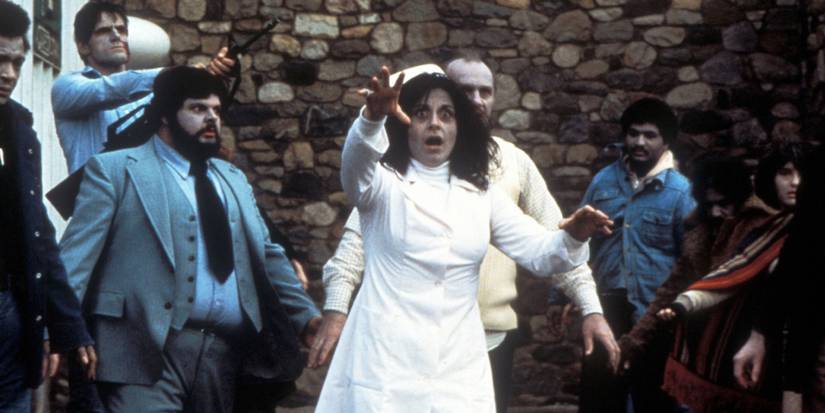 Image via United Film Distribution Company
Dawn of the Dead follows a small group of survivors hiding inside a shopping mall while the dead crowd the world outside, and for a while, the place looks like the fantasy version of apocalypse. Food, clothes, furniture, guns, space, distraction; civilization has collapsed, yet consumer comfort is still glowing under fluorescent lights.
That is the sick joke that keeps the movie alive decades later. The survivors can block doors, raid stores, play house, and pretend the mall belongs to them, but the dead keep pressing against the glass like a reminder that appetite never really left. Peter (Ken Foree), Fran (Gaylen Ross), Stephen (David Emge), and Roger (Scott Reiniger) each respond differently to the illusion of safety, and the film gives them enough personality that the gore never feels empty. The biker raid, the escalators, the helicopter blade, the blue-gray zombie faces, the blood squibs, the Muzak calm against carnage; everything carries Romero’s bitter humor. Dawn of the Dead basically delivers horror spectacle and social diagnosis in the same bite.
7 'The Blair Witch Project' (1999)
 Image via Artisan Entertainment
The Blair Witch Project understands a truth too many louder horror films forget: the scariest thing in the woods is often the moment nobody answers back. Heather Donahue, Michael C. Williams, and Josh Leonard head into the Maryland forest to shoot a documentary about the Blair Witch legend, and their confidence starts shrinking as the map fails them, strange sounds circle the tent, and little piles of sticks begin feeling like a language meant only for them.
The roughness is the power. The shaky footage, ugly crying, bad decisions, exhaustion, and arguments make it feel like all that panic was accidentally captured on tape. At one point, there’s even that Heather’s apology into the camera. It’s painful. It’s raw and humiliating. The film barely shows anything, yet every snapped branch becomes an event. Josh’s disappearance, the voices in the dark, the bundle outside the tent, and that horrible house full of unseen direction all prove how deeply suggestion can infect the viewer. It delivers fear by making imagination do unpaid labor.
6 'Hereditary' (2018)
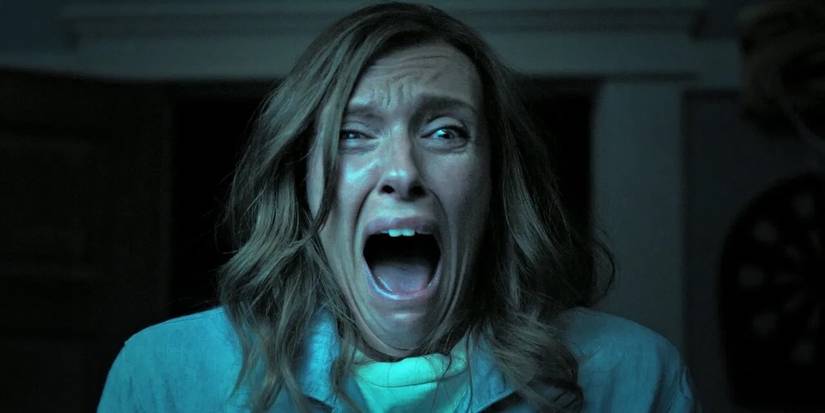 Image via A24
Hereditary is perhaps one of the eeriest modern-day horror films that honestly has it all. And it all starts with family grief in this film, which is already frightening in Hereditary before the occult machinery tightens around it. Annie Graham (Toni Collette) is grieving her secretive mother, trying to hold together a household full of resentment, silence, and strange inheritance. Her daughter Charlie (Milly Shapiro) feels connected to something nobody can explain, her son Peter (Alex Wolff) carries teenage distance like armor, and her husband Steve (Gabriel Byrne) keeps trying to make reason sound comforting in a house where reason has started losing authority.
Then the film commits a brutal emotional attack, and everything after that feels infected. Annie’s grief is so ugly and volcanic that the supernatural elements never float above the family damage. Peter’s terror feels almost childlike once guilt and possession begin closing in. The dinner-table fight, the miniature houses, the clicking sound, the séance, the classroom panic, the ceiling, the attic, all of it turns domestic space into punishment. The movie delivers shock, dread, occult terror, and emotional ruin with savage confidence. That’s a full horror package.
Collider Exclusive · Horror Survival Quiz Which Horror Villain Do You Have the Best Chance of Surviving? Jason Voorhees · Michael Myers · Freddy Krueger · Pennywise · Chucky
Five killers. Five completely different ways to die — if you're not smart enough, fast enough, or self-aware enough to avoid it. Only one of them is the villain your particular set of instincts gives you a fighting chance against. Eight questions will figure out which one.
🏕️Jason
🔪Michael
💤Freddy
🎈Pennywise
🪆Chucky
TEST YOUR SURVIVAL →
01
Something feels wrong. You can't explain it — you just know. What do you do? First instincts are the difference between the survivor and the first act casualty.
ALeave immediately. I don't need to understand a threat to respect it. BStay quiet and observe. If I can see it, I can understand it. If I can understand it, I can avoid it. CStay awake. Whatever this is, I am not going to sleep until I feel safe again. DConfront it directly. Fear grows in the dark — I'd rather know what I'm dealing with. ECheck everything, trust nothing. The threat might be closer than I think — and smaller.
NEXT QUESTION →
02
Where are you most likely to find yourself when things go wrong? Setting is everything in horror. Where you are determines which rules apply.
ASomewhere remote — a cabin, a campsite, off the grid and away from people. BA quiet suburban neighbourhood where nothing ever happens. Except tonight. CIn my own head — the most dangerous place of all, depending on what's already in there. DWherever children are — because something about this place attracts the worst things. ESomewhere ordinary — a house, a toy store, a place where the last thing you'd expect is a threat.
NEXT QUESTION →
03
What is your most reliable survival asset? Every survivor has a quality the villain didn't account for. What's yours?
APhysical fitness — I can run, I can swim, I can outlast something that relies on brute persistence. BSpatial awareness — I always know the exits, the hiding spots, the fastest route out. CPsychological resilience — I've faced my worst fears before. They don't have the same power over me. DEmotional steadiness — I don't panic. Panic is what gets you caught. EScepticism — I don't underestimate threats because of how they look. Size is irrelevant.
NEXT QUESTION →
04
What kind of fear is hardest for you to fight through? Knowing your weakness is the first step to not dying because of it.
AThe unstoppable — something that will not stop, cannot be reasoned with, and is always getting closer. BThe invisible — a threat I can feel but can't locate, watching from somewhere I can't see. CThe psychological — something that uses my own mind and memories against me. DThe unknowable — something ancient, shapeless, that feeds on the fear itself. EThe mundane — a threat so ordinary-looking that no one will believe me until it's too late.
NEXT QUESTION →
05
You're with a group when things start going wrong. What's your role? Horror movies are brutally clear about who survives group situations and who doesn't.
AThe one who says "we need to leave" first — and means it, even when no one listens. BThe one who stays quiet, watches the others, and figures out the pattern before anyone else does. CThe one who holds the group together when panic sets in — because someone has to. DThe one who asks the questions nobody wants to ask — because ignoring them gets people killed. EThe one who takes the threat seriously when everyone else is laughing it off.
NEXT QUESTION →
06
What's the horror movie mistake you're most likely to make? Honest self-assessment is a survival skill. Denial is not.
AGoing back for someone — I know I shouldn't, but I can't leave them behind. BAssuming I'm safe once I've found a hiding spot. That's when it finds me. CFalling asleep when I absolutely cannot afford to. Exhaustion is its own enemy. DLetting my curiosity override my instincts — I always need to understand what I'm dealing with. EDismissing the threat because of how it looks. That's exactly what it wants.
NEXT QUESTION →
07
What's your best weapon against something that can't be stopped by conventional means? Every horror villain has a weakness. The survivors are always the ones who find it.
AThe environment itself — I use the terrain, the water, the geography against it. BPatience — I wait, I watch, and I strike at the one moment it doesn't expect. CLucidity — if I can stay in control of my own mind, it loses its primary weapon. DCourage — facing it directly, refusing to run, taking away the fear it feeds on. EImprovisation — I use whatever's at hand, however unconventional. Creativity over brute force.
NEXT QUESTION →
08
It's the final scene. You're the last one standing. How did you make it? The final survivor always has a reason. What's yours?
AI kept moving. I never stopped, never hid for too long, never let it corner me. BI figured out the pattern before anyone else did — and I used it against the thing following it. CI stayed awake, stayed lucid, and refused to give it the one thing it needed most. DI stopped being afraid of it. And the moment I did, everything changed. EI took it seriously from the start — and I never once made the mistake of underestimating it.
REVEAL MY VILLAIN →
Your Survival Odds Have Been Calculated Your Best Chance Is Against…
Your instincts, your strengths, and your particular way of thinking under pressure point to one villain you actually have a fighting chance against. Everyone else — good luck.
Jason Voorhees
Jason is relentless, but he is also predictable — and that is the gap you would exploit.
- He moves in straight lines toward his target. He doesn't strategise, doesn't adapt, doesn't outsmart. He simply pursues.
- Your ability to keep moving, use the environment, and resist the panic that freezes most victims gives you a genuine edge.
- The Crystal Lake survivors were always the ones who stopped running in circles and started thinking about terrain, water, and distance.
- You think like that. Which means Jason, for all his indestructibility, would face someone who simply refused to be where he expected.
Michael Myers
Michael watches before he moves. He is patient, methodical, and almost impossible to detect — until it's too late for anyone who isn't paying close enough attention.
- But you are paying attention. You notice the shape in the window, the car parked slightly wrong, the silence where there should be sound.
- Michael's power lies in the invisibility of ordinary suburbia — the fact that nothing ever looks wrong until it already is.
- Your spatial awareness and instinct to map every room, every exit, and every shadow before you need them is precisely the quality Laurie Strode had.
- You are not a victim waiting to happen. You are someone who already suspects something is wrong — and acts on it.
Freddy Krueger
Freddy wins by getting inside your head — using your own fears, your own memories, your own subconscious as weapons against you. That strategy requires a target who can be destabilised.
- You are harder to destabilise than most. You've faced uncomfortable truths about yourself and you haven't looked away.
- The survivors on Elm Street were always the ones who understood what was happening and chose to face it rather than flee from it.
- Freddy's greatest weakness is that his power evaporates in the presence of someone who refuses to give him the fear he feeds on.
- Your psychological resilience — the ability to stay grounded when reality itself becomes unreliable — is exactly the quality that keeps you alive here.
Pennywise
Pennywise is ancient, shapeshifting, and feeds on terror — but it has one critical vulnerability: it cannot function against someone who genuinely stops being afraid of it.
- The Losers Club didn't survive because they were braver than everyone else. They survived because they faced their fears together, and faced them honestly.
- You ask the questions others avoid. You look directly at what frightens you rather than turning away.
- That directness — the refusal to let fear fester in the dark — is Pennywise's worst nightmare.
- It chose the wrong target when it chose you. You are exactly the kind of person whose fear tastes like nothing at all.
Chucky
Chucky's greatest advantage is that nobody takes him seriously until it's already too late. He exploits the gap between how something looks and what it actually is.
- You don't have that gap. You take threats seriously regardless of how they present — and you never make the mistake of underestimating something because of its size or appearance.
- Chucky relies on surprise, on the delay between recognition and response. You close that delay faster than almost anyone.
- Your instinct to treat every unfamiliar thing with appropriate scepticism — rather than dismissing it because it seems absurd — is the exact quality that keeps you breathing.
- Against Chucky, not laughing is already winning. You are very good at not laughing.
↻ RETAKE THE QUIZ
5 'A Nightmare on Elm Street' (1984)
 Image via New Line Cinema
Oh how vicious this original movie is. A Nightmare on Elm Street is almost unfairly perfect: teenagers in a quiet suburb are hunted in their dreams by a burned killer with knives on his glove, and sleep itself becomes the trap. Nancy Thompson (Heather Langenkamp) figures out that the deaths around her are connected to something the adults buried.
The dream logic is still electric. Tina (Amanda Wyss) dragged across the ceiling, the body bag in the school hallway, Freddy’s (Robert Englund) arms stretching in the alley, Glen (Johnny Depp) disappearing into that geyser of blood, Nancy setting traps while exhaustion turns her home into a battleground; every image feels handmade to live in a horror fan’s brain forever. Nancy gives the crucial shift from terrified teenager to resourceful fighter, and Freddy Krueger stays nasty before the sequels turned him into a full comedian. The movie delivers slasher danger, surreal imagery, suburban rot, and a villain who attacks the one place people have to surrender control.
4 'The Texas Chain Saw Massacre' (1974)
 Image Via Bryanston Distributing Company
This film feels less watched than survived. In The Texas Chain Saw Massacre, a group of young friends travel through rural Texas and cross into the orbit of a family that treats murder like a household routine. The plot is brutally simple, which gives the movie its nightmare purity. There is heat, dust, bad luck, strange locals, a house that feels wrong from the doorway, and then Leatherface appears with such sudden violence that the entire film seems to lose oxygen.
The horror is not only the chainsaw. It is the texture of everything. The bones, feathers, dinner table, metal door slam, hanging bodies, screaming, animal panic, and sweaty close-ups make the world feel rotten at the surface. Sally (Marilyn Burns) goes through one of the most exhausting ordeals in horror history, and her terror never feels decorative. Leatherface (Gunnar Hansen) is terrifying because he seems confused, dutiful, and monstrous all at once, like violence is simply the family business. The film delivers raw fear, iconic imagery, rural nightmare, and pure sensory assault. It still feels illegal somehow.
3 'Halloween' (1978)
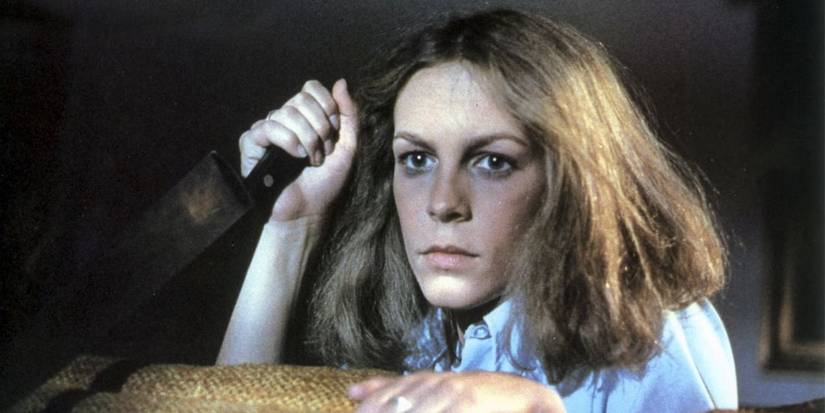 Image via Compass International Pictures
Michael Myers (Nick Castle) walking across a quiet street in daylight is scarier than most killers sprinting through darkness. John Carpenter in the original film, turned Haddonfield into the kind of suburb where safety feels assumed, then lets that assumption rot in real time. Laurie Strode (Jamie Lee Curtis) is a smart, responsible babysitter moving through Halloween night while Michael watches from across streets, behind hedges, outside windows, and inside spaces that should have belonged to ordinary life.
The genius is the patience. Halloween lets you see Michael before the characters do, so dread builds from helpless knowledge. Carpenter’s score keeps tapping at the nerves like a warning nobody can translate fast enough. Dr. Loomis (Donald Pleasence) gives the movie a wild certainty that Michael is something emptier and worse than a normal murderer. Laurie stays vulnerable without becoming foolish, which is why her fight to protect the children carries so much force. The sheets, the closet, the knitting needle, the mask, the breathing, the blank shape standing back up; every piece delivers clean, immortal slasher terror.
2 'The Thing' (1982)
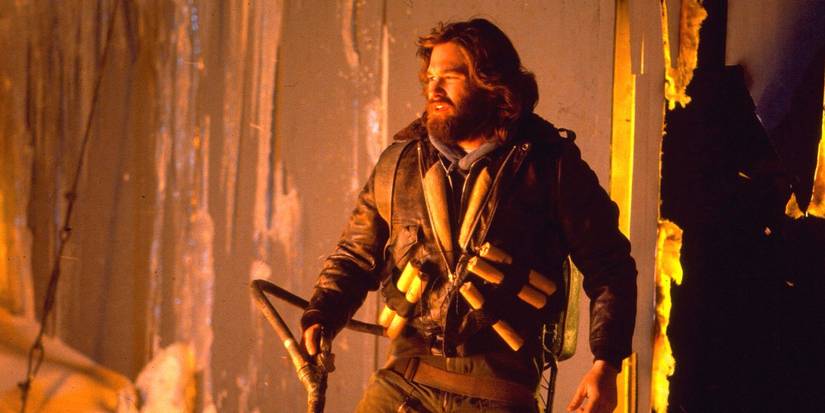 Image via Universal Pictures
Paranoia rarely gets a better monster than something that can look exactly like the person beside you. In an Antarctic research station, a group of men discover an alien organism that imitates living beings after consuming them. The cold already cuts them off from rescue, but the real trap is psychological. Nobody can trust a face, a voice, a memory, or even the dog walking down the hall. That’s The Thing for you.
This is another Carpenter entry on this list, and for obvious reasons. MacReady (Kurt Russell) understands the rules faster than most, yet even his confidence cannot fully calm the room. The defibrillator scene, the dog kennel, the blood test, the severed head sprouting legs, the flamethrowers, the snow, the bottles, the wrecked communication, all of it creates a world where identity becomes meat wearing a mask. MacReady brings a hard survival intelligence, while the ensemble keeps the station buzzing with fear, ego, and accusation. The movie delivers creature effects, isolation, mistrust, disgust, and one great question: how do you fight a monster when proof keeps bleeding?
1 'The Exorcist' (1973)
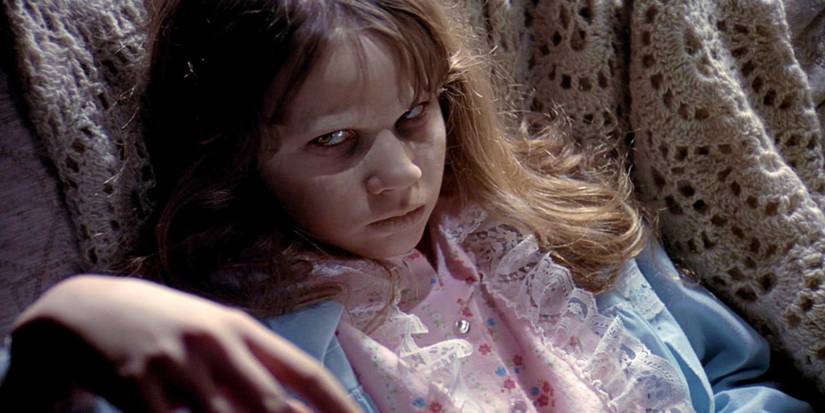 Image via Warner Bros.
The terror in The Exorcist comes from watching love become helpless against something obscene. Chris MacNeil (Ellen Burstyn) is a famous actress and a devoted mother whose daughter Regan (Linda Blair) begins changing in ways doctors, tests, and explanations cannot contain. Across town, Father Karras (Jason Miller) is losing faith while grieving his own mother, and that spiritual exhaustion makes his collision with Regan’s possession feel painfully human before it becomes a battle with evil.
The film is still devastating because it treats the demonic horror with emotional seriousness. Regan’s body becomes the site of every adult fear: illness, violation, innocence corrupted, a child suffering while the people who love her stand powerless. Chris’s panic feels grounded in pure parental desperation. Regan and the possessed voice of Mercedes McCambridge feels foul in a way horror rarely reaches. Karras gives the demon the wounded soul it wants most. The medical scenes, the bedroom cold, the voice, the stairs, the priests, the prayers, all of it delivers horror as shock, faith crisis, family nightmare, and spiritual warfare. It remains the genre’s heavyweight because fear here has consequence.
The Exorcist
Release Date December 26, 1973
Runtime 122 minutes
Writers William Peter Blatty
-

-

Linda Blair
Regan MacNeil






 English (US) ·