
 Image via Fox Searchlight Pictures
Published Jun 15, 2026, 8:09 PM EDT
Jeremy has more than 2500 published articles on Collider to his name, and has been writing for the site since February 2022. He's an omnivore when it comes to his movie-watching diet, so will gladly watch and write about almost anything, from old Godzilla films to gangster flicks to samurai movies to classic musicals to the French New Wave to the MCU... well, maybe not the Disney+ shows.
His favorite directors include Martin Scorsese, Sergio Leone, Akira Kurosawa, Quentin Tarantino, Werner Herzog, John Woo, Bob Fosse, Fritz Lang, Guillermo del Toro, and Yoji Yamada. He's also very proud of the fact that he's seen every single Nicolas Cage movie released before 2022, even though doing so often felt like a tremendous waste of time. He's plagued by the question of whether or not The Room is genuinely terrible or some kind of accidental masterpiece, and has been for more than 12 years (and a similar number of viewings).
When he's not writing lists - and the occasional feature article - for Collider, he also likes to upload film reviews to his Letterboxd profile (username: Jeremy Urquhart) and Instagram account.
He has achieved his 2025 goal of reading all 13,467 novels written by Stephen King, and plans to spend the next year or two getting through the author's 82,756 short stories and 105,433 novellas.
Sign in to your Collider account
Most thrillers depict stressful and tense situations, but psychological thrillers arguably go a step further by getting you well and truly into the head of someone placed in a thriller-like story. A psychological thriller will often lean more toward horror, or at least have you feeling the sorts of things you might feel when watching a horror movie (be it psychological horror or something else).
That’s to say that there is some crossover, when you're talking about particularly despair-filled psychological thriller movies, with some of the ones below also fitting into the horror genre. As long as they can be called psychological thrillers, they qualify. And these ones really are bleak, and often very engaging at the same time, all being among the heaviest psychological thriller movies of all time.
10 'Blow Out' (1981)
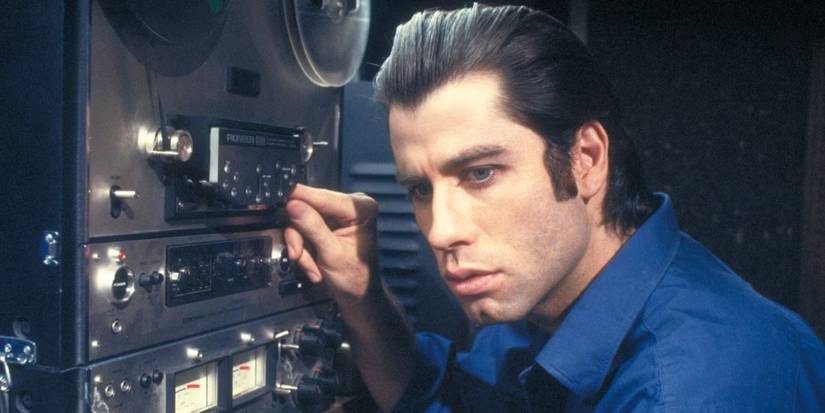 Image via Filmways Pictures
John Travolta has been in some kind of campy movies, and maybe even gave a campy performance in Carrie, which was directed by Brian De Palma and also not inherently campy overall. Travolta was also directed by De Palma in Blow Out, and this is an even grimmer film than Carrie, as it’s about a man capturing the audio of an assassination, and then this leads him into dangerous territory when he gets involved with a young woman who was also at the scene of the crime.
It’s definitely a neo-noir film, being the kind of thing that would've been a bit too gritty and violent for the genre back in the 1940s and ‘50s. Blow Out really does update various noir conventions and tropes exceedingly well, and sure, De Palma is doing a more than slight Alfred Hitchcock homage throughout so much of the film, but he’s one of the best Hitchcock fanatics to himself get behind a camera, so it’s arguably more of a feature than a bug.
9 'The Killing of a Sacred Deer' (2017)
 Image via A24
Yorgos Lanthimos movies have to be entered into with some degree of caution, since with him, Poor Things is probably as approachable and crowd-pleasing as you get, and that’s by no means a movie for everyone. So, it’s not surprising that The Killing of a Sacred Deer is more than a little messed up, though there’s some very dark comedy here, with its story about a family that gets changed forever when a teenage boy comes into their lives.
He’s played by Barry Keoghan, who went on to play a similar role in the almost comparable Saltburn. Saltburn wasn’t as feel-bad as The Killing of a Sacred Deer, though, and probably had a little more by way of outward comedy. This 2017 movie, instead, is pretty firmly in psychological thriller territory, with a little horror and (again, occasional) humor to keep things a bit interesting, not to mention overall less predictable.
8 'Europa' (1991)
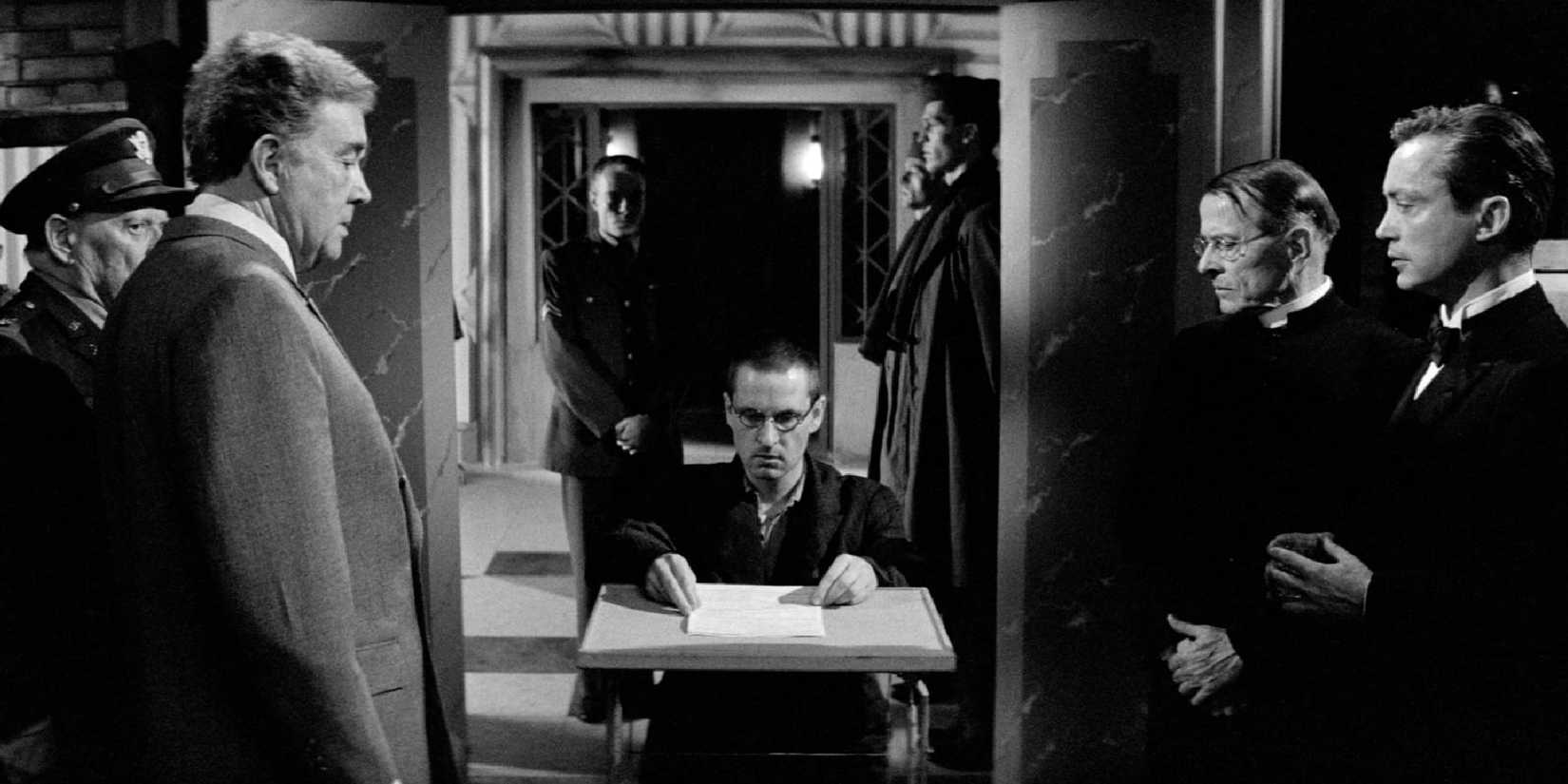 Image via Nordisk Film
Heaviness is what you get when you watch a Lars von Trier movie, honestly quite reliably… to an even greater extent than you'll find general weirdness and discomfort in a Yorgos Lanthimos film. Dancer in the Dark is one of the bleakest musicals of all time, while The House That Jack Built is up there among the heaviest horror films ever made, just for starters.
And then there’s the somewhat more obscure Europa, which really shouldn’t be so overlooked and obscure, as it’s easily one of Lars von Trier’s very best films. It’s kind of a war thriller (technically set just after World War II) and a psychological drama all at once, being about a young man who finds himself a pawn who keeps getting used by different people for different reasons in post-WWII Germany. It’s not directly an adaptation of any Franz Kafka story, but it feels incredibly Kafkaesque, being one of the more underappreciated arthouse films of its era, too.
7 'Obsession' (2025)
Easily the most recent film here, having blown up when it got a wide release in 2026 (though it first screened in 2025, at the Toronto International Film Festival), Obsession does nonetheless feel like a pretty big deal. “Blown up” is an understatement, especially by the standards of movies that cost under $1 million to make, with Obsession potentially doing for Gen Z what The Blair Witch Project did for Gen X (and maybe some older millennials, too).
It’s devastating, as a psychological thriller/horror movie, really making you sit with some uncomfortable things, and flipping between anxious humor and outright horror without any notice, so many times, all throughout one relentless film. There’s a poor choice made early on, and then a sense of the main character just continuing to dig himself – and those around him – into a progressively deeper hole. It’s hard to watch and also hard to look away from, somehow at the same time.
6 'Black Swan' (2010)
 Image via Searchlight Pictures
Black Swan is probably the scariest movie about ballet ever made. Failing that, it’s probably the most iconic horror/thriller movie that concerns ballet in one way or another, though the pursuit of perfection is the important and unsettling part of the movie, truth be told. It just so happens to be a ballerina who is driven to madness because she wants nothing more than to get a certain part in a production, and feels similarly driven to play that part perfectly.
It’s hard to describe what makes Black Swan such a nightmare beyond just saying what it’s about, and mentioning how well-crafted and acted it all is (Natalie Portman’s Oscar win for the film was more than well-deserved). The entire film is compelling and nauseating in equal measure, and it does a great job at balancing psychological drama, body horror, suspense, and plenty of other things you might expect to see in a horror/thriller film. They're all just here in full force, with the movie going above and beyond in being efficiently traumatic.
5 'Vertigo' (1958)
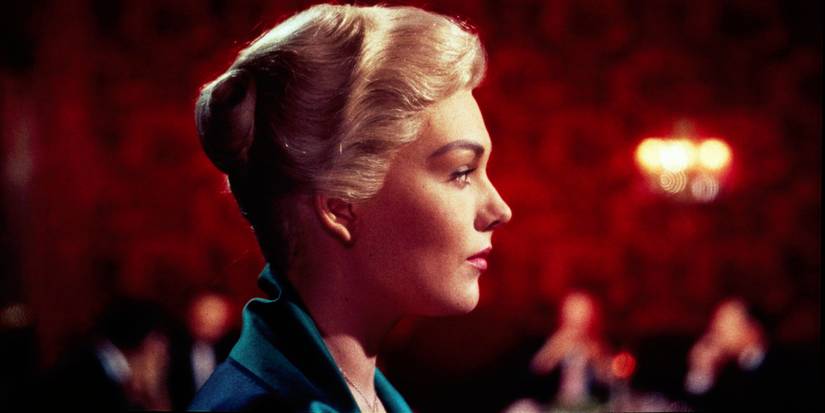 Image via Paramount Pictures
Owing to its age, Vertigo isn't quite as confronting on a visual or visceral level as many of the other movies here, with it being perhaps a little more subtle. It’s still mortifying in its own way, eventually, but definitely a slow-burn that really isn't afraid of being slow. A man is asked by a friend of his to basically look into some unusual things his wife has been purportedly doing, with the man then starting to fall for said wife.
Vertigo doesn't so much take a dark turn, but takes several dark turns that all add up and prove, at a point, surprisingly bleak for a movie from the 1950s.
He gets obsessed, at a point, and then some other things happen in Vertigo, with it not so much taking a dark turn, but taking several dark turns that all add up and prove, at a point, surprisingly bleak for a movie from the 1950s. Vertigo is understandably considered ahead of its time, and one of those classics that people had to get used to first, before it could start to be seen as a classic in the eyes of all.
4 'I Saw the Devil' (2010)
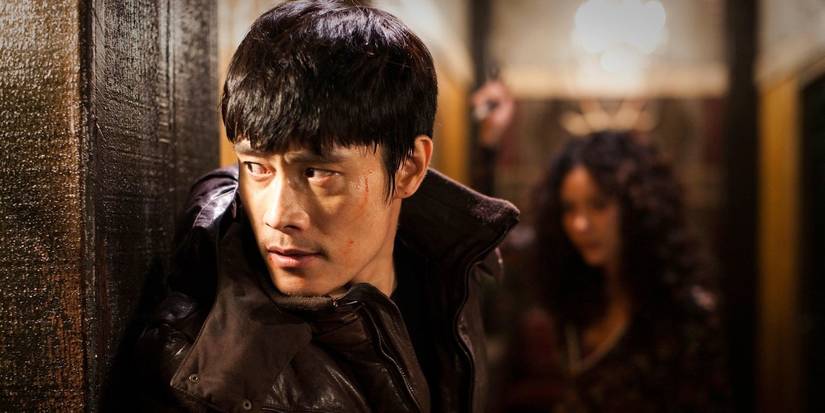 Image via Magnet Releasing
There are plenty of great South Korean thrillers that stand out for being particularly intense and heavy-going, with I Saw the Devil being perhaps the most full-on in this regard. It’s about a serial killer at large who’s done some heinous things (to put it mildly), and then there’s also an agent in South Korea’s National Intelligence Service who has personal reasons to try and hunt down this killer.
He goes to some extreme lengths to get revenge on his target, and so the line is blurred between two people who are technically on opposite sides of the law. Basically, I Saw the Devil asks some interesting morality-related questions while also being one of the most visceral movies made in the past couple of decades. There’s some action here, but it’s mostly a heavy psychological thriller on top of also being a crime movie, and then you get a little horror thrown in, too. It stays coherent and purposeful throughout a lengthy runtime of almost 2.5 hours, and so long as you’ve got a strong stomach, it’s a must-watch.
3 'Nocturnal Animals' (2016)
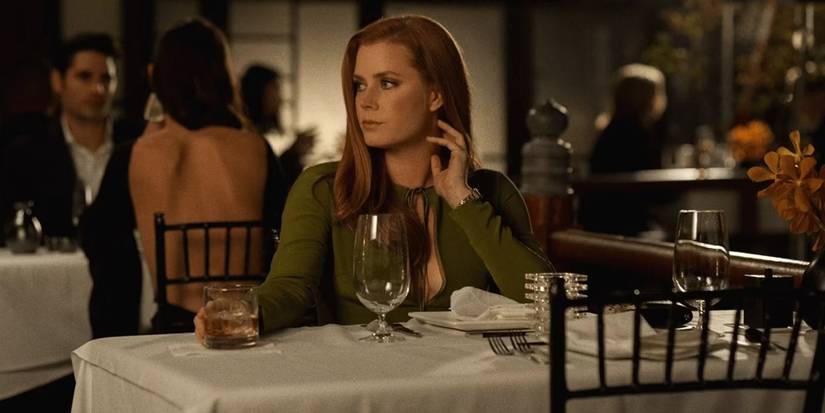 Image via Focus Features
Nocturnal Animals is a tricky movie to talk about, and also a difficult one to watch, in many ways. There’s a story within a story here, because Nocturnal Animals is kind of about a woman reading a novel that one of her exes wrote, and then she feels continually troubled by the events of that novel, believing them to mirror the life she shared with that author in some upsetting ways.
That’s scratching the surface, since it’s hard to go into more detail, and even if one is able to, it’s also not really fair to ruin everything the movie has to offer. There is indeed a lot to Nocturnal Animals, and a reason why it’s not exactly a popular film, but is the kind of thing where just about everyone who has seen it will be able to confirm that it shook them up pretty badly. That is the intent; what it’s going for, and all, yet still, there is something almost a little too raw and real about parts of this nightmarish film.
Collider Exclusive · Oscar Best Picture Quiz
Which Oscar Best Picture
Is Your Perfect Movie?
Parasite · Everything Everywhere · Oppenheimer · Birdman · No Country
Five Oscar Best Picture winners. Five completely different visions of what cinema can be — and what it can do to you. One of them is the film that was made for the way your mind works. Ten questions will figure out which one.
🪜Parasite
🌀Everything Everywhere
☢️Oppenheimer
🐦Birdman
🪙No Country for Old Men
FIND YOUR FILM →
01
What kind of film experience do you actually want? The best movies don't just entertain — they leave something behind.
ASomething that pulls the rug out — that makes me think I'm watching one kind of film and then reveals I'm watching another entirely. BSomething overwhelming — funny, sad, absurd, and genuinely moving, all at once. CSomething grand and weighty — a film that makes me feel the full scale of what I'm watching. DSomething formally daring — a film that pushes what cinema can even do. ESomething lean and relentless — pure tension with no wasted frame.
NEXT QUESTION →
02
Which idea grabs you most in a film? Great films are driven by a central obsession. What's yours?
AClass, inequality, and what people are willing to do when desperation meets opportunity. BIdentity, family, and the chaos of trying to hold your life together when everything is falling apart. CGenius, moral responsibility, and the catastrophic weight of a decision you can never take back. DEgo, legacy, and the terror of becoming irrelevant while you're still alive to watch it happen. EEvil, chance, and whether moral order actually exists or if we just tell ourselves it does.
NEXT QUESTION →
03
How do you like your story told? Form is content. The way a story is shaped changes what it means.
AGenre-twisting — I want it to start in one lane and migrate into something completely different. BMaximalist and genre-blending — comedy, action, drama, sci-fi, all in one ride. CEpic and non-linear — cutting between timelines, building a mosaic of cause and consequence. DA single unbroken flow — I want to feel like I'm living it in real time, no cuts to safety. ESpare and precise — every scene doing exactly what it needs to do and nothing more.
NEXT QUESTION →
04
What makes a truly great antagonist? The opposition defines the protagonist. What kind of opposition fascinates you?
AA system — invisible, structural, and almost impossible to fight because it has no single face. BThe self — the ways we sabotage, abandon, and fail the people we love most. CHistory — the unstoppable momentum of events that no single person can stop or redirect. DThe industry — the machinery of culture that chews up talent and spits out irrelevance. EPure, implacable evil — a force so certain of itself it becomes almost philosophical.
NEXT QUESTION →
05
What do you want from a film's ending? The final note is the one that lingers. What do you want it to sound like?
AShock and inevitability — a conclusion that recontextualises everything that came before it. BEarned emotion — I want to cry, laugh, and feel genuinely hopeful, even if the world is a mess. CDevastation and grandeur — an ending that makes me sit in silence for a few minutes after. DAmbiguity — something that leaves enough open that I'm still thinking about it days later. EBleakness — an honest refusal to pretend the world is tidier than it actually is.
NEXT QUESTION →
06
Which setting pulls you in most? Where a film takes place shapes everything — mood, stakes, what's even possible.
AA gleaming modern city with a hidden underside — beauty masking rot, wealth masking desperation. BA collapsing suburban life that opens onto something infinite — the multiverse of a single ordinary person. CThe corridors of power and science at a world-historical turning point — where decisions echo for decades. DThe grimy, alive chaos of New York and Hollywood — fame as both destination and trap. EVast, indifferent landscape — desert and highway where violence arrives without warning or reason.
NEXT QUESTION →
07
What cinematic craft impresses you most? Every great film has a signature — a technical or artistic element that makes it unmistakable.
AProduction design and mise-en-scène — every frame composed to carry meaning beneath the surface. BEditing and tonal control — the ability to move between registers without losing the audience. CScore and sound design — music that becomes inseparable from the dread and awe of what you're watching. DCinematography as performance — the camera not recording events but participating in them. ESilence and restraint — what's left unsaid and unshown doing more work than any dialogue could.
NEXT QUESTION →
08
What kind of main character do you root for? The protagonist is the lens. Who you choose to follow says something about you.
ASomeone smart and resourceful who makes increasingly dangerous decisions under pressure. BSomeone overwhelmed and ordinary who turns out to be capable of something extraordinary. CA brilliant, tortured figure whose gifts and flaws are inseparable from each other. DA self-destructive artist whose ego is both their superpower and their undoing. EA quiet, principled person trying to make sense of a world that has stopped making sense.
NEXT QUESTION →
09
How do you feel about a film that takes its time? Pace is a choice. Some films sprint; others let tension accumulate slowly, deliberately.
AI love a slow build when I know the payoff is going to be seismic — patience for a devastating reveal. BGive me relentless momentum — I want to feel breathless and emotionally spent by the end. CEpic runtime doesn't scare me — if the material demands three hours, give me three hours. DI want it to feel propulsive even when nothing is technically happening — restless energy throughout. EDeliberate and unhurried — I want dread to accumulate in the spaces between the action.
NEXT QUESTION →
10
What do you want to feel walking out of the cinema? The best films leave a mark. What kind of mark do you want?
AUnsettled — like I've just seen something I can't fully explain but can't stop thinking about. BMoved and energised — like the film reminded me what actually matters and gave me something to hold onto. CHumbled — like I've been in the presence of something genuinely important and overwhelming. DExhilarated — like I've just seen cinema doing something it's never quite done before. EHaunted — like a cold, quiet dread that stays with me for days.
REVEAL MY FILM →
The Academy Has Decided Your Perfect Film Is…
Your answers have pointed to one Oscar Best Picture winner above all others. This is the film that was made for the way your mind works.
Parasite
You are drawn to films that operate on multiple levels simultaneously — that begin in one genre and quietly, brilliantly migrate into another. Bong Joon-ho's Parasite is a film about class, desire, and the architecture of inequality that manages to be darkly funny, deeply suspenseful, and genuinely shocking across a single extraordinary running time. Your instinct is for cinema that hides its true intentions until the moment it's ready to reveal them. Parasite is exactly that — a film that rewards close attention and punishes assumptions, right up to its devastating final image.
Everything Everywhere All at Once
You want it all — and this film gives you all of it. The Daniels' Everything Everywhere All at Once is one of the most maximalist films ever made: action comedy, multiverse sci-fi, family drama, existential crisis, and a genuinely earned emotional core that sneaks up on you amid the chaos. You are someone who responds to ambition, who doesn't want cinema to choose between being entertaining and being meaningful. This film refuses that choice entirely. It is overwhelming by design, and its overwhelming nature is precisely the point — because the feeling of being crushed by infinite possibility is exactly what it's about.
Oppenheimer
You are drawn to cinema on a grand scale — films that understand history not as a backdrop but as a force, and that place their characters inside that force and watch what happens. Christopher Nolan's Oppenheimer is a film about the terrifying gap between what we can do and what we should do, told with the full weight of one of the most consequential moments in human history behind it. You want your films to feel important without feeling self-important — to earn their ambition through sheer craft and the gravity of their subject. Oppenheimer does exactly that. It is enormous, complicated, and refuses easy comfort.
Birdman
You are drawn to films that foreground their own construction — that make the how of the filmmaking part of the what it's about. Alejandro González Iñárritu's Birdman, shot to appear as a single continuous take, is cinema examining itself through the cracked mirror of a fading actor's ego. You respond to formal daring, to the feeling that a film is doing something that probably shouldn't be possible. Michael Keaton's performance and Emmanuel Lubezki's restless camera create something genuinely unlike anything else — a film that is simultaneously about creativity, relevance, self-destruction, and the impossibility of ever truly knowing if your work means anything at all.
No Country for Old Men
You are drawn to cinema that trusts silence, that refuses to explain itself, and that treats dread as a form of meaning. The Coen Brothers' No Country for Old Men is a film about the arrival of a new kind of evil — implacable, arbitrary, and utterly indifferent to the moral frameworks we use to make sense of the world. It is one of the most formally controlled films ever made, and its controlled restraint is what makes it so terrifying. You want your films to haunt you, not comfort you. You are not interested in resolution if resolution would be dishonest. No Country for Old Men is honest in a way that most cinema never dares to be.
↻ RETAKE THE QUIZ
2 'The Vanishing' (1988)
 Image via Argos Films
The Vanishing is high on suspense throughout, and a film that does a lot with what’s ultimately a fairly straightforward premise. It centers on a young couple who are vacationing in France, and then, without warning, the woman disappears, and the man is sent into a panic. He tries in increasingly desperate ways to find out why she vanished, or where she might've vanished to, and then things get a bit bleaker still, from there.
A man claiming to have abducted her begins sending letters to the distraught boyfriend, more or less toying with him, and that adds a whole other angle of psychological horror to the whole thing. The Vanishing succeeds in getting you into the mind of someone going through a hellish situation, making it compelling as a drama/thriller film, sure, but also a pretty challenging watch at times. You're almost guaranteed to feel stress here, at least at several key points, and possibly even throughout the entire distressing thing.
1 'Lake Mungo' (2008)
 Image via Arclight Films
While it’s usually described as a horror movie, Lake Mungo also works as a psychological thriller/drama at the same time, being equal parts scary and deeply upsetting on an emotional level. Most of its narrative is concerned with a family trying to unpack the truth behind a death in the family, grieving that death and then trying to endure while certain uncomfortable truths – and potential supernatural occurrences – make all that even harder than it would usually be.
Also, Lake Mungo is done in a shockingly effective mockumentary style, feeling grounded enough that it can almost be easy to forget you're watching something fictional, at least during the film’s eeriest and most harrowing moments. Owing to how it lingers, and somehow proves so much more unsettling and devastating once it’s over (compared to how it feels while it’s going on… and it is still heavy-going in the moment, too), it feels fair to suggest Lake Mungo might well be the most depressing psychological thriller/horror movie ever made.

Lake Mungo
Release Date January 29, 2010
Director Joel Anderson
Writers Joel Anderson








 English (US) ·