
Television in the new millennium was quite fascinating. With some holdover series entering the 21st century, much of how we view the 2000s on the small screen was shaped by the new series that emerged. Before the big social media boom and the rise of streamers, there was the age of YouTube, which was born right in the middle of the decade. While we didn't turn to the site to watch clips, it's where we turned for global commentary. Aside from the typical office water cooler.
The significance of this over the decade reflected how media changes impacted television. Networks were still trying to battle HBO, which was stronger than ever, with AMC on its tail. Sitcoms shifted from multi-camera live studio hits to dryer comedies utilizing the single camera format. But what was evident was that the characters of the time were even more profound and iconic. From leading men with dark pasts to comedic roles as uncouth individuals, the 21st century jump-started a new generation of characters. To make this list, not only do they have to be played well, the writing has to be equally strong. Plus, their impact on their genre must have been felt. It's time to celebrate these icons.
10 Betty Suarez (America Ferrera)
'Ugly Betty' (2006–2010)
 Image via ABC
There is always a trope in comedy about the ugly duckling being not so ugly in the end. Whether it be a miraculous makeover or the realization that it's what's inside, Hollywood has always been fond of telling those stories. In a sense, that's what Ugly Betty was. But it was so much more than that, thanks in part to the titular character, Betty Suarez (America Ferrera). The hit ABC series followed Betty, an intelligent and well-meaning woman from Queens who, despite her lack of fashion sense, secures a high-end job at Mode, an elite fashion magazine. Betty navigates the glamorous, cutthroat world of the industry while challenging stereotypes. Though Ugly Betty may have focused on a particular trade, Betty's story was about the strength and power that emerge from a lovable underdog.
As a ground "everyman" type character, Betty, by appearance and class, was out of her league, yet her struggles resonated with our own. Rather than an external makeover, Ugly Betty pushed the boundaries to tell a story about an internal journey of finding confidence and embracing our individuality. Yes, at the start, they laid it on thick that Betty was not pristine and put together compared to her rivals, Amanda (Becki Newton) and Marc (Michael Urie), but she had what they lacked: heart. Subverting beauty standards, Betty embodied ambition and humility. Even when knocked down, Betty didn't falter. Being smart, driven, and talented is sometimes all it takes to win. Ugly Betty may feel like a hokey series, but it was trailblazing. And we have America Ferrera to thank for that.
9 Lorelei Gilmore (Lauren Graham)
'Gilmore Girls' (2000–2007)
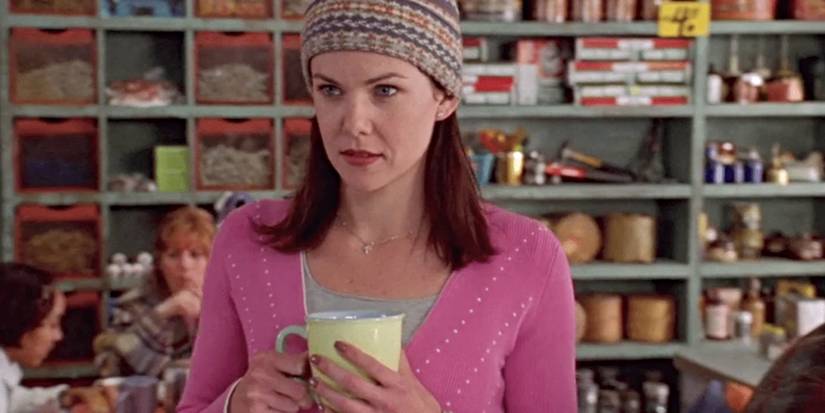 Image via The WB
It might seem wild to select one Gilmore over the other, but there's a method to our madness. Let's discuss. As one half of the mother-daughter duo that made Stars Hollow, Connecticut, their home, Lorelei Gilmore (Lauren Graham) was the mother you wished you had and the woman you aspired to be. After her life changed at 16, Lorelei became an example of how to become a hardworking, self-made woman from scratch. Bringing that "cool mom" energy to the new millennium, Lorelei was devoted to her daughter, Rory (Alexis Bledel). But that didn't stop her from living her own life. And yes, that includes a romance with Luke Danes (Scott Patterson).
What made Lorelei great was that she was inherently flawed. She had to pick herself up from the bootstraps and learn about life on her own. And she was always still learning. She could be stubborn. She was occasionally emotionally cut off. She displayed some emotional vulnerability, especially through dating; and that relatability is why she evolved into a great character. She was willing to learn and grow, leading with her heart. Brought to life by Lauren Graham, we go back to Gilmore Girls still today because of Lorelei Gilmore.
8 Kara "Starbuck" Thrace (Katee Sackhoff)
'Battlestar Galactica' (2003–2009)
 Image via SYFY
When Battlestar Galactica was reimagined, it occupied a sci-fi space on television that was practically empty at the time. With many characters making the jump into the remake, it was integral to bring out a new sense of wonderment. Thankfully, Katee Sackhoff made the revised Starbuck something to remember. To start, the gender-bending casting caused an initial uproar, but Sackhoff made Starbuck a fan favorite almost instantly. A rough-and-tumble tomboy, Starbuck was a brilliant fighter jock who proved that gender meant nothing when crafting a brilliant fictional character.
A beautiful blonde bombshell playing away from a stock character allowed for the new Starbuck to stand out in all the right ways. A rebel with a cause, Starbuck was an elite fighter with reckless skill. But with deep-rooted emotional trauma, it invited the potential in that she was not an untouchable heroine. While the show and its character did shift toward the spiritual by the end, something some fans were not thrilled about, Starbuck still walked away with a fascinating arc. Starbuck paved the way for future female leads in science fiction. In a way, maybe she was ahead of her time.
7 Sheldon Cooper (Jim Parsons)
'The Big Bang Theory' (2007–2019)
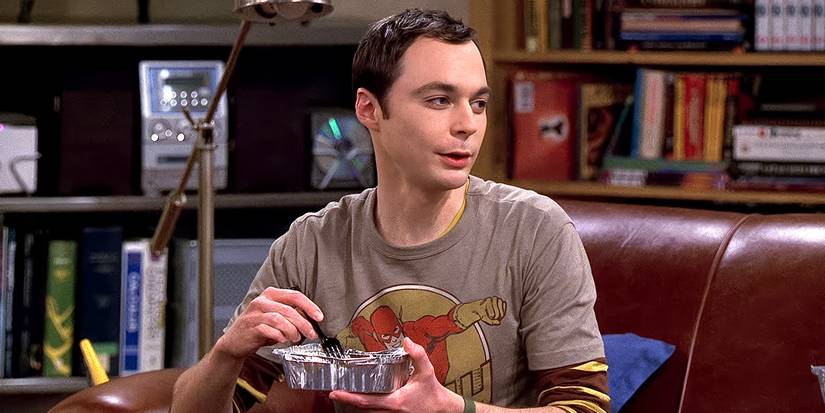 Image via CBS
As the nature of sitcoms shifted away from live-studio-audience comedies, CBS and Chuck Lorre held down the fort to keep the legacy alive. Luckily, with a unique sitcom with larger-than-life characters, the multi-cam continues to flourish. The Big Bang Theory had a simple premise, but it skyrocketed to massive success thanks to characters like Sheldon Cooper (Jim Parsons). When we first met Jim Parsons' Sheldon, he was rigid, arrogant, and a tad socially struggling with individuals outside his core circle. But the odd-coupling-style comedy that came with Penny (Kaley Cuoco) eventually subsided, allowing Sheldon to evolve into a more empathetic and kinder person. But what never changed was his sheer brilliance. As he began to embrace change and a new type of evolution, Sheldon eventually strayed away from comic relief for something more well-rounded.
The reality was, as much as the show was an ensemble effort, Sheldon was the face of the series, and eventually the franchise. There's a reason why Sheldon was given an origin story with Young Sheldon! Audiences simply couldn't get enough Sheldon. He represented an individual who owned their quirks. The nerdy and geeky archetypes became a badge of honor. Though he wasn't everyone's cup of tea, there's no denying how wonderfully unique he was. Sheldon's impact on classic comedy still continues today.
6 Al Swearengen (Ian McShane)
'Deadwood' (2004–2006)
 Image via HBO
We are living in a modern Western boom in media, as television is filled with an array of neo-Westerns. But perhaps we've become reacclimated with the genre because the new millennium offered a classic Western inspired by the real-life individuals who roamed. Deadwood dramatized the events before and after the annexation of the Dakota Territory. The majority of characters were inspired by real-life counterparts. There was one character who shone the brightest: Al Swearengen. Portrayed brilliantly by Ian McShane, initially conceived as the story's villain, Swearengen was a completely enigmatic individual whose pulse on Deadwood ruled supreme. Evolving from a ruthless saloon owner to a protective force to keep the town from being overrun by outsiders, Swearengen's strict moral compass may include extraordinary violence, but it's towards those who lack loyalty.
A nuanced anti-hero by Season 2, he's a skillful tactician who, despite being a murderer and pimp, prioritized the betterment of Deadwood. Almost played like a caricature, Swearengen was a larger-than-life individual whose pulse commanded respect and earned it with ease. Swearengen took David Milch's script and played it like a Shakespearean play. That said, the explosive profanity was simply part of his charm. It's quite impossible to dislike Swearengen as a character. He was bigger than most, and yet, more grounded than anyone. It's a testament to McShane's performance.
5 Don Draper (Jon Hamm)
'Mad Men' (2007–2015)
 Image via AMC
The world of advertising never looked so sexy until Mad Men. And no one led Mad Men quite like Don Draper (Jon Hamm). The embodiment of the complex paradox known as the American Dream, Don was literally a man who was anything but who he appeared to be. Don served as our entryway into the 1960s ad firm. After assuming another man's life, the man we watch over the course of seven seasons is quite a brilliantly complex individual. Plagued by several personal problems, including substance issues and feelings of isolation and social alienation, Don remains an enigmatic individual whose charisma leads him to professional success, though personal achievement is a bit more complicated. His infidelity, alcoholism, and emotional unavailability stem from a life of trauma and a loveless childhood.
The allure of Don was his aura of mystery. Yet that shroud of mystery comes from the fact that he is an exceptional showman. He is a self-made man whose brilliance is in becoming anyone he needs to be. Mad Men was a period piece that mirrored society. While Don was a womanizer outside the building, at work, his ability to see Peggy Olsen (Elisabeth Moss) as more than just a secretary or assistant made him a unicorn in the industry. A symbol of the era, Jon Hamm exuded the part with ease. Once a cynical man who evolved into an individual eager for a life beyond the suit, Don was a profoundly rich character who can never be replicated. He advertised himself perfectly.
4 Tony Soprano (James Gandolfini)
'The Sopranos' (1999–2007)
If you look at Tony Soprano (James Gandolfini), you probably assume he's just a Jersey mob boss. But then, The Sopranos ripped the perception wide open to tell a story of a mentally struggling man trying to balance the anxiety and panic attacks that come from his trade with the actions of leading a group of gangsters. James Gandolfini's character was more than just a mob boss. He was a nuanced individual who was unafraid to explore the profession's psychological effects. He was a big personality anchored in authenticity.
As one of the greatest series of all time, its success was thanks to Tony. He was a character you never tired of. A very different type of anti-hero, as his circumstances were personally made. Yet, the intrigue was that line between intrigue and disgust. He was relatable through his vulnerability. Seeped in depth and evolution through the course of the series, Tony proved gangsters no longer had to be painted one-dimensionally. The epitome of the love-to-hate character, Tony Soprano changed the genre for good.
3 Omar Little (Michael K. Williams)
'The Wire' (2002–2008)
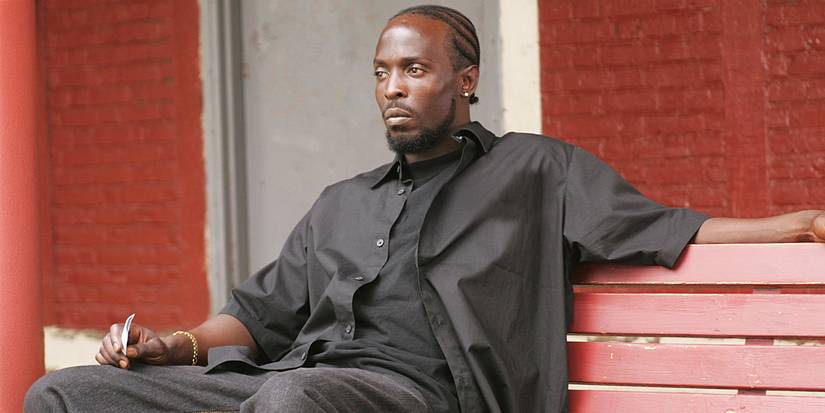 Image via HBO
One of the greatest TV dramas of all time is The Wire. Not the easiest watch, The Wire was a character-driven ensemble piece. Of all the extraordinary characters, the one that will forever stand out is Michael K. Williams' Omar Little. The notorious stick-up man, Omar was a legend around the inner city of Baltimore. What made Williams' character so brilliant was how he crafted a distinct character free of stereotypes. To bring Omar to life, he was given distinct imagery that became synonymous with him: a bold duster under which he hid his shotgun, large-caliber handgun, and bulletproof vest; a facial scar; and his signature whistled tune, "A-Hunting We Will Go." From there, Omar was a character who defied the odds.
Omar was a self-made Robin Hood, operating by his own moral code in a chaotic, dangerous, amoral world. Ferociously independent and methodically calculated, Omar was feared yet revered. To that, he was a compelling walking contradiction. He was a gay man in a deeply homophobic, hypermasculine environment, yet he feared being the toughest, most dominant figure on the streets. Further, he operated as a fascinating, almost mythological, figure. Omar found his own path, becoming an enigmatic and alluring individual. Omar Little is easily one of the most fascinating characters ever written.
2 Lucille Bluth (Jessica Walter)
Arrested Development (2003–2019)
 Image via FOX
No one will call Lucille Bluth (Jessica Walter) a great mother, but we certainly say she's an excellent television character. Played to perfection by Jessica Walter, the Bluth family matriarch was uncouth. While we watched the family attempt to adjust to their lives after George Sr. (Jeffrey Tambor) was locked away, Lucille did anything but change her lifestyle. And for that, we got comedy gold. As the martini-guzzling, manipulative mother, Lucille masks her pain behind her status in high society. But that obsession with her social class is far more important than her own flesh and blood. While she’s overtly critical of Lindsay (Portia de Rossi), she's beyond claustrophobic toward Buster (Tony Hale). Both equally disturbing and funny.
Lucille is a trailblazer when it comes to being a morally despicable delight. She knows how awful she can be, and frankly, she doesn't care. And yes, she'll make you aware. With her signature deadpan wit, Lucille was easily the most quotable character on the series. "I don't understand the question, and I won't respond to it" may have been an insult in some contexts, but we've all used it in our own lives. Even with a brilliant blend of eccentric characters on Arrested Development, Lucille stands atop the heap. Together, we say, "Good for her."
1 Michael Scott (Steve Carell)
'The Office' (2005–2013)
 Image via NBC
Forging your own path is integral in comedy. When The Office was brought over from the UK, the hope was that the series would serve as a foundation, allowing it to find its own identity. Steve Carell had huge shoes to fill playing a part originated by Ricky Gervais. Instead of trying to replicate David Brent, he created Michael Scott. And the future of comedy was forever changed. The regional manager of the Dunder Mifflin Scanton Branch, Michael was a decently effective leader, but not the best boss, as his mug said. The brilliance of the character was his social unawareness. Looking back, some of the comedy would never fly today, yet we still can't stop laughing at his politically incorrect commentary. If there is a line, Michael crosses it, unaware that he is crossing it. Sure, there's remorse when he goes too far. He is an empathetic character, but he's also surrounded by individuals who love to watch him squirm.
The king of cringe-inducing immaturity, Michael was the heart of The Office. At times, you simply couldn't believe he was heading an entire office, but stepping back, his tenure as regional manager was longer than almost anyone else. Hilariously narcissistic, Michael employed his own brand of comedy. Of course, a major bonus to helping Michael become such an iconic character was the company he kept. Some were morally good, others were chaotically evil. Yet together, they were one big happy family. When Carell opted to leave, many feared The Office's demise. Instead, it was just the end of an era. As much as we would love to see Carell reprise the role, the fact is, he could not be the same Michael Scott of the 2000s. The keyboard warriors would have a conniption!




 English (US) ·