
 Image via 20th Century Fox
Published Jun 16, 2026, 8:27 AM EDT
Ryan Heffernan is a Senior Writer at Collider. Storytelling has been one of his interests since an early age, with his appreciation for film and television becoming a particular interest of his during his teenage years.
This passion saw Ryan graduate from the University of Canberra in 2020 with an Honours Degree in Film Production. In the years since, he has found freelance work as a videographer and editor in the Canberra region while also becoming entrenched in the city's film-making community.
In addition to cinema and writing, Ryan's other major interest is sport, with him having a particular love for Australian Rules football, Formula 1, and cricket. He also has casual interests in reading, gaming, and history.
Sign in to your Collider account
The allure of the supernatural has always been at the forefront of horror and thriller cinema. The exhilaration of being confronted by the full force of the unknown, the innate terror of seeing the might and mystery of the impossible, creates an absorbing sense of escapist excitement and joyfully heart-pounding dread that can be truly addictive.
From frightful descents into horror and hysteria to deft and devilishly dark dramas that use their paranormal qualities to examine the full breadth of human psychology, these 10 thriller movies epitomize supernatural cinema at its brilliant and brutal best. Some are modern masterpieces that became true cultural phenomena, others are underrated gems from decades ago, but all of them are must-watch movies for all who enjoy the creeping convergence of supernatural suspense and thriller cinema.
10 'Weapons' (2025)
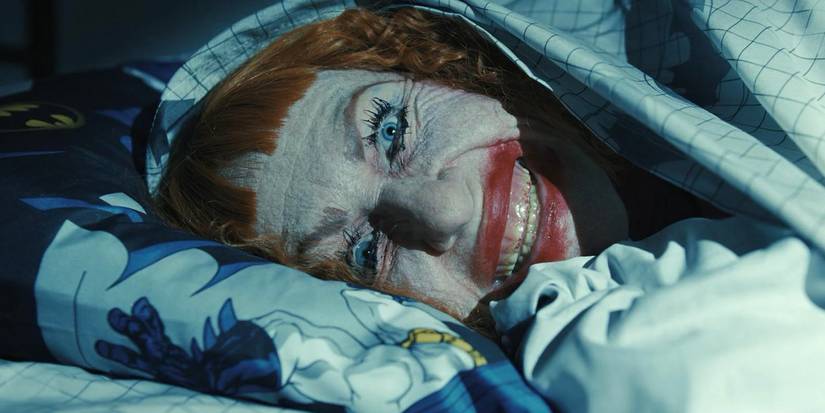 Image via Warner Bros. Pictures
Making an immediate mark on the horror/thriller genre with its arresting narrative structure and its chilling sense of dark mysticism and unknown evil, Weapons emerged as something of a surprise smash hit of last year. Fragmented into six character chapters, it revolves around a mystery that has shaken a community to its core. At 2:17am on the same night, 17 children from the same class ran outside and haven’t been seen since. A month on, tensions have reached boiling point as the search for answers grows increasingly desperate and confounding.
The first hour of Weapons is particularly brilliant, ratcheting up the tension with every shocking revelation that answers one question but asks several more. It is terrifying, overwhelming, and utterly addictive, blurring the line between frightful horror intensity and simmering suspense throughout much of its run. Interestingly, when Weapons does begin to invest in its supernatural darkness, the film loses some of its petrifying and puzzling tension, but it remains an absorbing and rewarding thriller that stands as one of the best paranormal thrillers audiences have seen for many years.
9 'The Others' (2001)
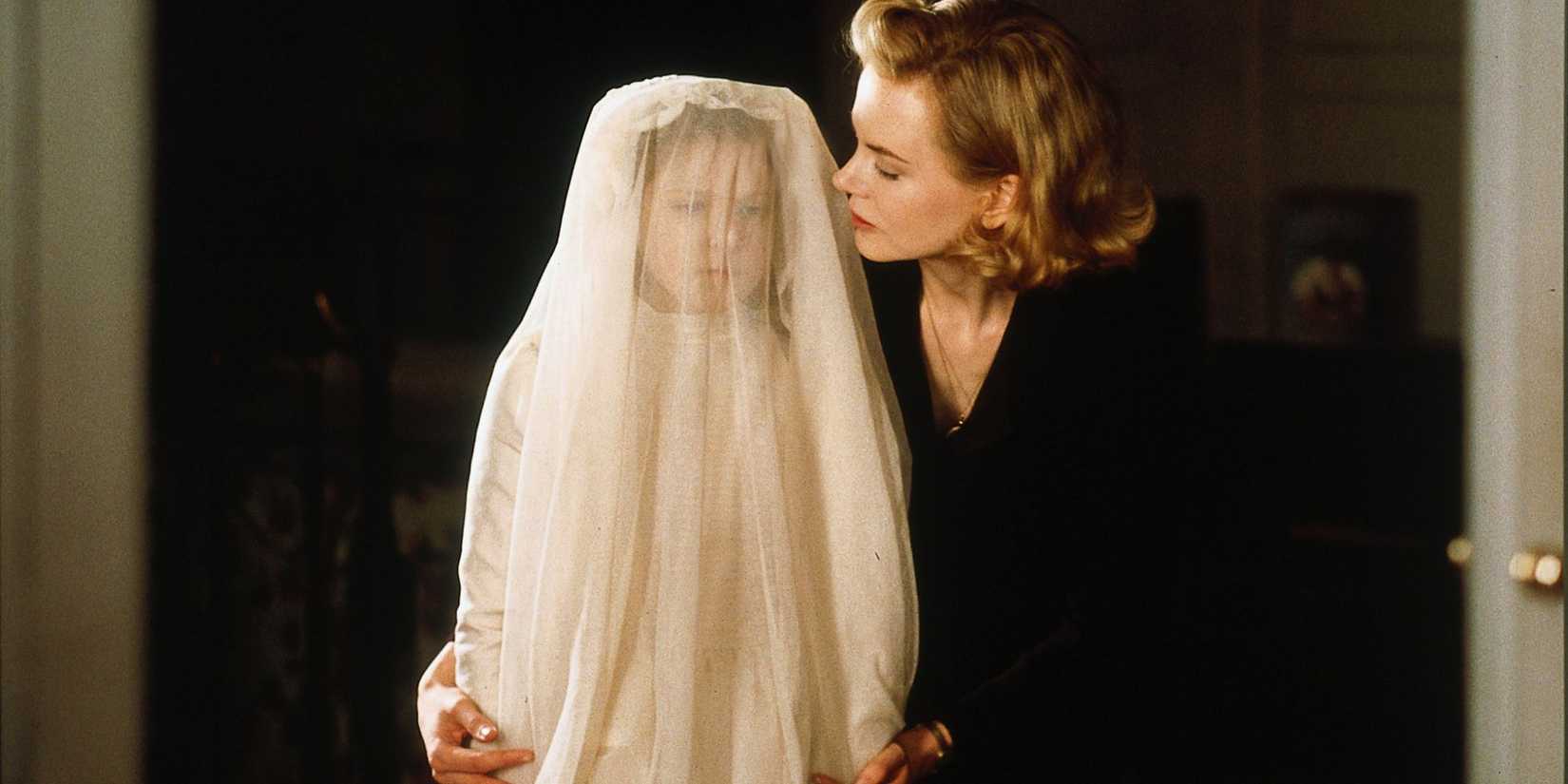 Image via Warner Bros
A masterclass in atmospheric indulgence, psychological duress, and the use of subtlety in a genre that has come to be defined by visceral outbursts, The Others is a bleakly engrossing gem of early 2000s supernatural cinema anchored in Nicole Kidman’s outstanding lead performance. She stars as Grace Stewart, a mother who relocates to a remote country house with her two young children only to come to the conclusion that their new home is haunted following a series of inexplicable events.
Touching on ideas of religious dogmatism, the shackles of faith, and the dark humanity of ghosts, The Others excels as a cerebral spin on haunted house suspense that makes an indelible mark on viewers with its psychological depth and its shocking plot twist. Also complimented by its stunning Gothic aesthetic and its ability to conjure and sustain tension without sequences of blood-and-gore, The Others is one of the truest examples of supernatural thriller cinema that lovers of the genre have been treated to this century.
8 'The Devil’s Backbone' (2001)
 Image via Sony Pictures Classics
While Guillermo del Toro had established himself as an emerging filmmaking through the 1990s, it is his third film that truly stamped him as a master of tone, style, and suspense that international audiences should be taking notice of. A co-production between Spain and Mexico, The Devil’s Backbone follows a young boy admitted to an orphanage after his father is executed in the Spanish Civil War. When he lifts the veil on the tragic history of the institution’s past, he is exposed to a realm of supernatural horror.
Not dissimilar to what del Toro achieved with Pan’s Labyrinth, The Devil’s Backbone thrives at realizing a grueling and confronting story, but grounding it with a core of childlike innocence and curiosity. Real-world evil is posed as being just as terrifying as ghostly entities and paranormal mystery, making the 2001 film a uniquely entrancing supernatural thriller that boasts stirring thematic convictions of the abuse of political power, the destruction of war, and the lingering nature of cultural trauma.
7 'Poltergeist' (1982)
 Image via MGM
Standing the test of time with its ability to contrast the warm tenderness of a happy family lifestyle with the surreal terror of a paranormal presence, Poltergeist is every bit as chilling today as it was in 1982. Directed by Tobe Hooper and conceived by Steven Spielberg, it sees the Freeling family’s dream suburban home turn into a waking nightmare evil spirits rise up to possess the soul of their youngest daughter, Carol Anne (Heather O’Rourke).
It certainly operates as an unflinching descent into all-out horror, but Poltergeist can be considered a thriller as well, especially with its emphasis on the deconstruction of family dynamics, the sinister, predatorial air it views the Freeling family with, and especially the family’s desperate and courageous push to rescue Carol Anne from the poltergeist’s grasp. With its spectacle propped up by a special effects display that has aged surprisingly well, Poltergeist is a heart-stopping gem of supernatural suspense that forever immortalized the words “they’re here” as nightmare fuel and made viewers of all ages look at their television’s suspiciously for years on end.
6 'The Sixth Sense' (1999)
 Image via Walt Disney Studios Motion Pictures
Bold, brilliant, and brutal in its emotional storytelling, The Sixth Sense presents an ingenious spin on ghost story suspense that combines the genre’s innate sense of thrilling intrigue with pulsating psychological drama. It follows Dr. Malcolm Crowe (Bruce Willis) as he works with the Cole Sear (Haley Joel Osment), a troubled child who claims he has the ability to see and communicate with dead people.
Engrossing with its steady atmosphere of slow-burning and excruciating patience, muted color palettes, and a pervasive sense of creeping dread, The Sixth Sense is a wickedly absorbing viewing experience that, famously, culminates in one of the greatest twist endings in cinematic history. It’s not only a viscerally intense and unpredictable movie, but a powerfully emotional one as well, especially as it grounds so much of its dramatic might in the performances of Willis, Osment, and Toni Collette, providing an astonishing movie that completely shifts its mood and nature when rewatched.
5 'Suspiria' (1977)
 Image via Produzioni Atlas Consorziate
One of the most visually astounding supernatural thrillers ever made, Suspiria is a rich procession of vibrant colors, stunning set designs, and fiercely expressionist lighting, all of which conjures a dreamlike atmosphere of suspense, dread, and gorgeous unease as it revolves around a perplexing series of deaths at a prestigious ballet academy in Germany. Intelligently, director Dario Argento opts for quality over quantity when it comes to showing off the kills, an approach that makes the violence far more impactful, but also one that sees Suspiria function as a mystery thriller more so than a traditional horror.
The whodunit suspense the film employs as Suzy Banion (Jessica Harper) investigates the gruesome slayings while researching the local area’s history with witchcraft and dark magic is innately thrilling. Further buoyed by the arresting, synth-heavy score from progressive rock band Goblin, Suspiria is the defining triumph of Italy’s giallo cinema boom of the 60s and 70s, a masterpiece of the subgenre that specialized in combining horror, tension, mystery, and inflections of supernatural angst in enrapturing style.
4 'Hereditary' (2017)
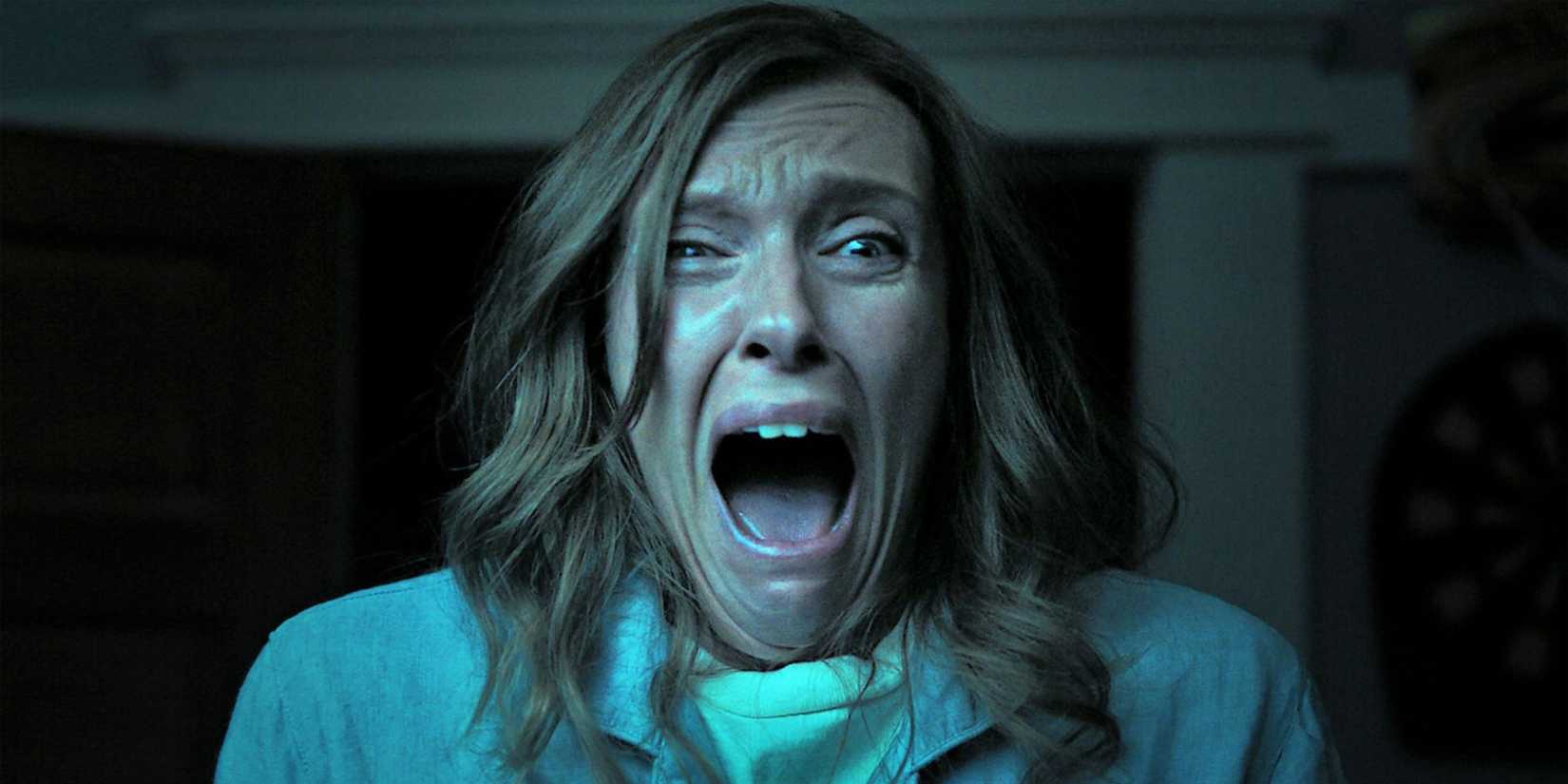 Image via A24
Perhaps the single most terrifying and traumatizing exploration of the supernatural that cinema has ever seen, Hereditary is a rare breed of movie that feels as if it has the essence of evil lurking in every frame. A magnificent directorial debut from Ari Aster, it unfolds as the Graham family mourn the passing of their matriarch. When tragedy strikes again, they begin to unearth disturbing secrets about their ancestry and the brand of occult evil their recently departed was involved in.
Fueled by a litany of unrestrained and raw performances, particularly from Toni Collette, Hereditary delivers an unrelenting plunge into the heart of supernatural terror and all it preys upon, from the straining fabric of a wilting family to the sanity of each individual, and even to the emotional volatility they all wrestle with as they experience grief and loss. The way Aster interweaves the soul-shattering heartache of the Graham family with the pervasive supernatural evil that surrounds them is masterful, making for one of the most striking and frightful pictures of the 21st century so far.
3 'Carrie' (1976)
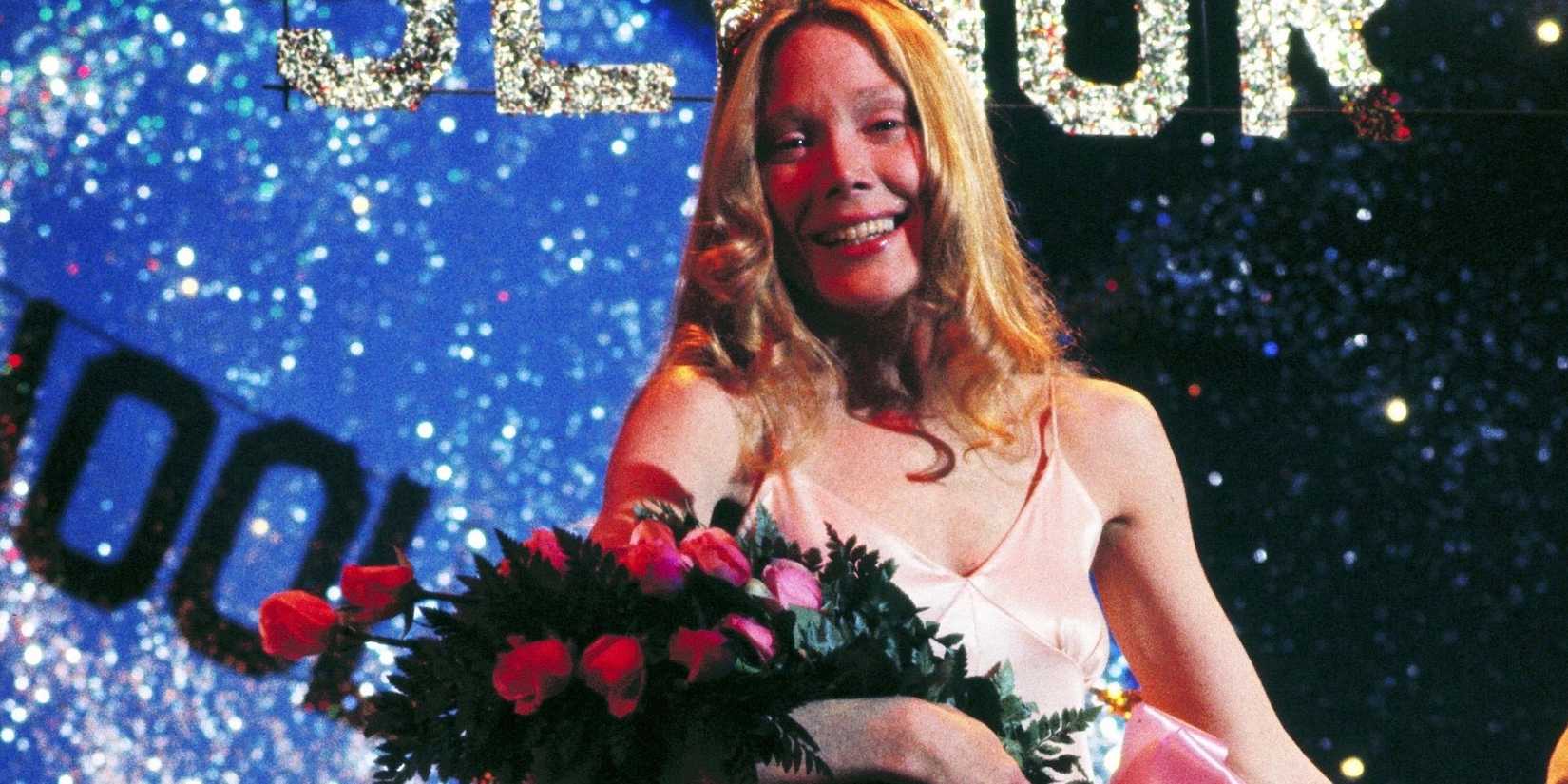 Image via United Artists
2026 marks the 50th anniversary of Carrie, and Brian de Palma’s deeply disturbing yet richly humane adaptation of Stephen King’s debut novel remains every bit as jolting and shocking today as it was in 1976. Anchored by empathetic ideas of social isolation, abusive home life, and vicious bullying, audiences sympathize with Carrie (Sissy Spacek), an outcast teenage girl who suffers under the thumb of her controlling mother. When she is asked to the school dance, she feels as though her misery may be turning around, but her growing telekinetic abilities means a deadly disaster is only one turn of fate away.
de Palma amplifies the brutal hell of high school bullying by casting the threat of a looming supernatural calamity over every scene. Mean-spirited japes procure winces and grimaces. The indifference of the community conjures a sense of helpless damnation and inevitability. And seeing Carrie blinded by humiliation when the bucket of pig’s blood is dropped on her, seeing her vision of everyone laughing at her, makes a nightmarish certainty of the tragedy that soon follows. A work of faultless pacing, emotion, and dread, Carrie is still a defining highlight of supernatural thriller cinema half a century on from its release.
Collider Exclusive · Horror Survival Quiz Which Horror Villain Do You Have the Best Chance of Surviving? Jason Voorhees · Michael Myers · Freddy Krueger · Pennywise · Chucky
Five killers. Five completely different ways to die — if you're not smart enough, fast enough, or self-aware enough to avoid it. Only one of them is the villain your particular set of instincts gives you a fighting chance against. Eight questions will figure out which one.
🏕️Jason
🔪Michael
💤Freddy
🎈Pennywise
🪆Chucky
TEST YOUR SURVIVAL →
01
Something feels wrong. You can't explain it — you just know. What do you do? First instincts are the difference between the survivor and the first act casualty.
ALeave immediately. I don't need to understand a threat to respect it. BStay quiet and observe. If I can see it, I can understand it. If I can understand it, I can avoid it. CStay awake. Whatever this is, I am not going to sleep until I feel safe again. DConfront it directly. Fear grows in the dark — I'd rather know what I'm dealing with. ECheck everything, trust nothing. The threat might be closer than I think — and smaller.
NEXT QUESTION →
02
Where are you most likely to find yourself when things go wrong? Setting is everything in horror. Where you are determines which rules apply.
ASomewhere remote — a cabin, a campsite, off the grid and away from people. BA quiet suburban neighbourhood where nothing ever happens. Except tonight. CIn my own head — the most dangerous place of all, depending on what's already in there. DWherever children are — because something about this place attracts the worst things. ESomewhere ordinary — a house, a toy store, a place where the last thing you'd expect is a threat.
NEXT QUESTION →
03
What is your most reliable survival asset? Every survivor has a quality the villain didn't account for. What's yours?
APhysical fitness — I can run, I can swim, I can outlast something that relies on brute persistence. BSpatial awareness — I always know the exits, the hiding spots, the fastest route out. CPsychological resilience — I've faced my worst fears before. They don't have the same power over me. DEmotional steadiness — I don't panic. Panic is what gets you caught. EScepticism — I don't underestimate threats because of how they look. Size is irrelevant.
NEXT QUESTION →
04
What kind of fear is hardest for you to fight through? Knowing your weakness is the first step to not dying because of it.
AThe unstoppable — something that will not stop, cannot be reasoned with, and is always getting closer. BThe invisible — a threat I can feel but can't locate, watching from somewhere I can't see. CThe psychological — something that uses my own mind and memories against me. DThe unknowable — something ancient, shapeless, that feeds on the fear itself. EThe mundane — a threat so ordinary-looking that no one will believe me until it's too late.
NEXT QUESTION →
05
You're with a group when things start going wrong. What's your role? Horror movies are brutally clear about who survives group situations and who doesn't.
AThe one who says "we need to leave" first — and means it, even when no one listens. BThe one who stays quiet, watches the others, and figures out the pattern before anyone else does. CThe one who holds the group together when panic sets in — because someone has to. DThe one who asks the questions nobody wants to ask — because ignoring them gets people killed. EThe one who takes the threat seriously when everyone else is laughing it off.
NEXT QUESTION →
06
What's the horror movie mistake you're most likely to make? Honest self-assessment is a survival skill. Denial is not.
AGoing back for someone — I know I shouldn't, but I can't leave them behind. BAssuming I'm safe once I've found a hiding spot. That's when it finds me. CFalling asleep when I absolutely cannot afford to. Exhaustion is its own enemy. DLetting my curiosity override my instincts — I always need to understand what I'm dealing with. EDismissing the threat because of how it looks. That's exactly what it wants.
NEXT QUESTION →
07
What's your best weapon against something that can't be stopped by conventional means? Every horror villain has a weakness. The survivors are always the ones who find it.
AThe environment itself — I use the terrain, the water, the geography against it. BPatience — I wait, I watch, and I strike at the one moment it doesn't expect. CLucidity — if I can stay in control of my own mind, it loses its primary weapon. DCourage — facing it directly, refusing to run, taking away the fear it feeds on. EImprovisation — I use whatever's at hand, however unconventional. Creativity over brute force.
NEXT QUESTION →
08
It's the final scene. You're the last one standing. How did you make it? The final survivor always has a reason. What's yours?
AI kept moving. I never stopped, never hid for too long, never let it corner me. BI figured out the pattern before anyone else did — and I used it against the thing following it. CI stayed awake, stayed lucid, and refused to give it the one thing it needed most. DI stopped being afraid of it. And the moment I did, everything changed. EI took it seriously from the start — and I never once made the mistake of underestimating it.
REVEAL MY VILLAIN →
Your Survival Odds Have Been Calculated Your Best Chance Is Against…
Your instincts, your strengths, and your particular way of thinking under pressure point to one villain you actually have a fighting chance against. Everyone else — good luck.
Jason Voorhees
Jason is relentless, but he is also predictable — and that is the gap you would exploit.
- He moves in straight lines toward his target. He doesn't strategise, doesn't adapt, doesn't outsmart. He simply pursues.
- Your ability to keep moving, use the environment, and resist the panic that freezes most victims gives you a genuine edge.
- The Crystal Lake survivors were always the ones who stopped running in circles and started thinking about terrain, water, and distance.
- You think like that. Which means Jason, for all his indestructibility, would face someone who simply refused to be where he expected.
Michael Myers
Michael watches before he moves. He is patient, methodical, and almost impossible to detect — until it's too late for anyone who isn't paying close enough attention.
- But you are paying attention. You notice the shape in the window, the car parked slightly wrong, the silence where there should be sound.
- Michael's power lies in the invisibility of ordinary suburbia — the fact that nothing ever looks wrong until it already is.
- Your spatial awareness and instinct to map every room, every exit, and every shadow before you need them is precisely the quality Laurie Strode had.
- You are not a victim waiting to happen. You are someone who already suspects something is wrong — and acts on it.
Freddy Krueger
Freddy wins by getting inside your head — using your own fears, your own memories, your own subconscious as weapons against you. That strategy requires a target who can be destabilised.
- You are harder to destabilise than most. You've faced uncomfortable truths about yourself and you haven't looked away.
- The survivors on Elm Street were always the ones who understood what was happening and chose to face it rather than flee from it.
- Freddy's greatest weakness is that his power evaporates in the presence of someone who refuses to give him the fear he feeds on.
- Your psychological resilience — the ability to stay grounded when reality itself becomes unreliable — is exactly the quality that keeps you alive here.
Pennywise
Pennywise is ancient, shapeshifting, and feeds on terror — but it has one critical vulnerability: it cannot function against someone who genuinely stops being afraid of it.
- The Losers Club didn't survive because they were braver than everyone else. They survived because they faced their fears together, and faced them honestly.
- You ask the questions others avoid. You look directly at what frightens you rather than turning away.
- That directness — the refusal to let fear fester in the dark — is Pennywise's worst nightmare.
- It chose the wrong target when it chose you. You are exactly the kind of person whose fear tastes like nothing at all.
Chucky
Chucky's greatest advantage is that nobody takes him seriously until it's already too late. He exploits the gap between how something looks and what it actually is.
- You don't have that gap. You take threats seriously regardless of how they present — and you never make the mistake of underestimating something because of its size or appearance.
- Chucky relies on surprise, on the delay between recognition and response. You close that delay faster than almost anyone.
- Your instinct to treat every unfamiliar thing with appropriate scepticism — rather than dismissing it because it seems absurd — is the exact quality that keeps you breathing.
- Against Chucky, not laughing is already winning. You are very good at not laughing.
↻ RETAKE THE QUIZ
2 'The Wailing' (2016)
 Image via 20th Century Studios
A stunning amalgamation of several different subsects of horror, The Wailing is a uniquely gripping and captivating epic that meshes folklore frights, psychological thrills, cosmic dread, and zombie terror seamlessly. Set in a small village in the mountains of South Korea, it unfolds as a devastating virus breaks out in the community soon after the arrival of a mysterious stranger. With the town turning into a bloody, nerve-rattling nightmare, a police officer works to get to the bottom of the volatile sickness to save his ailing daughter.
Never letting up on the eerie allure of ambiguity and symbolism throughout its 156-minute runtime, The Wailing is an utterly hypnotic masterpiece of suspense and scares. Its supernatural thriller elements not only imbue the film with a mystifying air of heart-pounding intensity, but they also contribute to thematic ideas of xenophobia and bigotry, the fragility of faith, and the nature in which humanity is hardwired for self-destruction. The true might of the film’s supernatural punch isn’t revealed until the end, and even then it challenges viewers with a question of paranormal realities or rational explanation.
1 'The Shining' (1980)
 Image via Warner Bros. Pictures
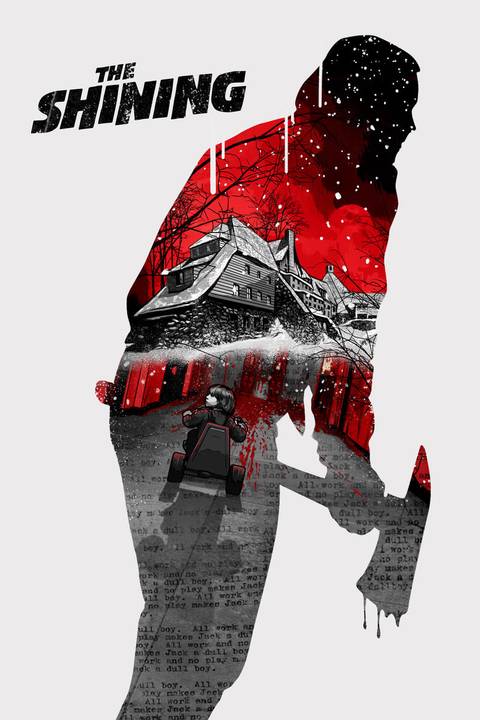
Another masterpiece of supernatural dread adapted from a Stephen King novel, The Shining stands as one of many defining cinematic triumphs from Stanley Kubrick. Entwining viscerally chilling imagery of malevolent ghosts and manipulative entities with an imposing and weighted sense of psychological dread, the 1980 classic presents 146 minutes of heart-pounding tension as it follows the Torrance family in their tenure as the caretakers of the Overlook Hotel in the remote, inaccessible reaches of Colorado’s Rocky Mountains.
Kubrick’s use of symmetry, disorienting architecture, slow camera movements, and unnatural lighting creates a violently unsettling visual display that brilliantly subverts the gloomy darkness that defines the aesthetic of many horror and thriller films. Couple this with the grueling story of looming domestic abuse and its openly interpretable details, and The Shining is every bit as effective today as it was 46 years ago as a creeping exploration of the human mind’s gradual descent into madness.
The Shining
Release Date June 13, 1980
Runtime 144 minutes
Director Stanley Kubrick
-

-

Shelley Duvall
Wendy Torrance






 English (US) ·