
Over the past two decades, space movies have been flourishing. We were treated to new Star Wars films and new Star Trek films, while also having landmark films like Gravity and Interstellar. They have redefined what the genre can achieve, blending scientific realism with deeply personal storytelling. Whether grounded in hard science or driven by imagination, these films reflect a growing desire to understand both the universe and our place within it.
Here, we take a look at some of the best space movies released in the past twenty years. Directors like Christopher Nolan, Alfonso Cuarón, and Denis Villeneuve have approached the genre with distinct visions, yet share a commitment to immersive storytelling and depth. By combining cutting-edge visuals, compelling performances, and thoughtful narratives, modern space cinema has transformed into one of the most dynamic playgrounds for filmmakers today.
Collider Exclusive · Sci-Fi Survival Quiz Which Sci-Fi World Would You Survive? The Matrix · Mad Max · Blade Runner · Dune · Star Wars
Five universes. Five completely different ways the future went wrong — or sideways, or up in flames. Only one of them is the world your instincts were built for. Eight questions will figure out which dystopia, galaxy, or desert wasteland you'd actually make it out of alive.
💊The Matrix
🔥Mad Max
🌧️Blade Runner
🏜️Dune
🚀Star Wars
TEST YOUR SURVIVAL →
01
You sense something is deeply wrong with the world around you. What do you do? The first instinct is often the truest one.
APull on every thread until I understand the system — then figure out how to break it. BStop asking questions and start stockpiling — food, fuel, weapons. Questions don't keep you alive. CKeep my head down, observe carefully, and trust no one until I know who's pulling the strings. DStudy the patterns. Every system has a rhythm — learn it, and you learn how to survive it. EFind the people fighting back and join them. You can't fix a broken galaxy alone.
NEXT QUESTION →
02
In a world of scarcity, what resource do you guard most fiercely? What we protect reveals what we believe survival actually requires.
AKnowledge. If you understand the system, you don't need resources — you can generate them. BFuel. Everything else — movement, power, escape — runs on it. CTrust. In a world of fakes and informants, a truly reliable ally is rarer than any commodity. DWater. And after water, information — the two things empires are truly built on. EShips and credits. The galaxy is big — you survive it by being able to move through it freely.
NEXT QUESTION →
03
What kind of threat keeps you up at night? Fear is useful data — if you're honest about what you're actually afraid of.
AThat reality itself is a lie — that everything I experience has been constructed to keep me compliant. BA raid. No warning, no mercy — just the roar of engines and then nothing left. CBeing identified. Once someone with power decides you're a problem, you're already out of time. DBeing outmanoeuvred — losing a political game I didn't even know I was playing. EThe Empire tightening its grip until there's nowhere left to run.
NEXT QUESTION →
04
How do you deal with authority you don't trust? Every dystopia has a power structure. Your approach to it determines everything.
ASubvert it from the inside — learn its rules well enough to weaponise them against it. BIgnore it and stay out of its reach. The further from any power structure, the better. CAppear to comply while doing exactly what I need to do. Visibility is the enemy. DManoeuvre within it carefully. You can't beat a system you refuse to understand. EResist openly when I have to. Some things are worth the risk of being seen.
NEXT QUESTION →
05
Which environment could you actually endure long-term? Survival isn't just tactical — it's physical, psychological, and very much about where you are.
AUnderground bunkers and server rooms — cramped, artificial, but with access to everything that matters. BOpen wasteland — brutal sun, no shelter, constant movement. At least the threat is honest. CA dense, rain-soaked city where you can disappear into the crowd and nobody asks questions. DMerciless desert — extreme heat, no water, and something enormous living beneath the sand. EThe fringe — backwater planets and busy spaceports where the Empire's attention rarely reaches.
NEXT QUESTION →
06
Who do you want in your corner when things fall apart? The company you keep is the clearest signal of who you actually are.
AA tight crew of believers who've seen behind the curtain and have nothing left to lose. BOne or two people I'd trust with my life. Any more than that and someone talks. CNobody, ideally. Alliances are liabilities. I work alone unless I have no choice. DA community bound by shared hardship and mutual survival — people who need each other to last. EA ragtag team with wildly different skills and total commitment when it counts.
NEXT QUESTION →
07
Where do you draw the line — if you draw one at all? Every survivor eventually faces a moment that tests what they're actually made of.
AI won't harm the innocent — even the ones who'd report me without hesitation. BI do what I have to to protect the people I've chosen. Everything else is negotiable. CThe line shifts depending on who's asking and what's at stake. DI draw a long-term line — nothing that compromises my people's future, even if it'd help now. ESome lines, once crossed, can't be uncrossed. I know which ones they are.
NEXT QUESTION →
08
What would actually make survival worth it? Staying alive is one thing. Having a reason to is another.
AWaking others up — dismantling the illusion so no one else has to live inside it. BFinding somewhere — or someone — worth protecting. A reason to keep moving. CAnswers. Understanding what I am, what any of this means, before time runs out. DLegacy — shaping the future in a way that outlasts me by generations. EFreedom — for myself, for others, for every world still living under someone else's boot.
REVEAL MY WORLD →
Your Fate Has Been Calculated You'd Survive In…
Your answers point to the world your instincts were built for. This is the universe your temperament, your survival instincts, and your particular brand of stubbornness were made for.
The Matrix
You took the red pill a long time ago — probably before anyone offered it to you. You're a systems thinker who can't help but notice the seams in things.
- You're drawn to understanding how the system works before figuring out how to break it.
- You'd find the Resistance, or it would find you — your instinct for spotting constructed realities is the machines' worst nightmare.
- You function best when you have access to information and the freedom to act on it.
- The Matrix built an airtight prison. You'd be the one probing the walls for the door.
Mad Max
The wasteland doesn't reward the clever or the well-connected — it rewards those who are hard to kill and harder to break. That's you.
- You don't need comfort, community, or a cause larger than the next horizon.
- You need a vehicle, a clear threat, and enough fuel to outrun it — and you're good at all three.
- You are unsentimental enough to survive that world, and decent enough — just barely — to be something more than another raider.
- In the wasteland, that distinction is everything.
Blade Runner
You'd survive here because you know how to exist in moral grey areas without losing yourself completely.
- You read people accurately, keep your circle small, and ask the questions others prefer not to answer.
- In a city where humanity is a legal designation rather than a feeling, you hold onto something that keeps you functional.
- You're not a hero. But you're not lost, either.
- In Blade Runner's world, that distinction is everything.
Dune
Arrakis is the most hostile environment in the known universe — and you are precisely the kind of person it rewards.
- Patience, discipline, and political awareness are your core strengths — and on Arrakis, they're survival tools.
- You understand that the long game matters more than any single victory.
- Others come to Dune and are consumed by it. You'd learn its logic and earn its respect.
- In time, you wouldn't just survive Arrakis — you'd begin to reshape it.
Star Wars
The galaxy far, far away is vast, loud, and in a constant state of violent political upheaval — and you wouldn't have it any other way.
- You find meaning in being part of something larger than yourself — a cause, a crew, a rebellion.
- You'd gravitate toward the Rebellion, or the fringes, or whatever pocket of the galaxy still believes the Empire's grip can be broken.
- You fight — not because you have to, but because standing aside isn't something you're capable of.
- In Star Wars, that willingness is what makes all the difference.
↻ RETAKE THE QUIZ
10 ‘Prometheus’ (2012)
 Image via 20th Century Studios
Prometheus follows a team of scientists and explorers who embark on a mission to the distant moon LV-223 after discovering ancient star maps that suggest the origins of humanity may lie beyond Earth. Funded by the Weyland Corporation, the crew of the spaceship Prometheus, led by archaeologist Elizabeth Shaw (Noomi Rapace), seeks answers about creation, only to uncover something far more dangerous.
As an Alien prequel, Prometheus does not operate like a franchise film. Instead of focusing on the Xenomorphs, it asks existential questions about creation and faith, and in return becomes a much more interesting film than a traditional prequel. Performances by the ensemble cast, led by Rapace and an eerie Michael Fassbender, are satisfyingly good. The film does have flaws in its characters, and there are some logic leaps that require extra suspension of disbelief. Nevertheless, Prometheus is visually stunning and much more ambitious than its follow-ups.
9 'Project Hail Mary' (2026)
 Image via Amazon MGM
In Project Hail Mary, Ryland Grace (Ryan Gosling) finds himself aboard a massive spaceship with a mission unknown to him. As he pieces his memory together, he finds another spaceship that might have the same mission as him: to save their planet from a parasitic organism called Astrophages that's eating the Sun. Grace and his new companion must find a way to stop the Astrophages from plunging Earth into eternal winter.
Project Hail Mary is a pleasant surprise for audiences, delivering heady sci-fi ideas packed into an entertaining and exhilarating plot that invites awe. Directed by the duo Christopher Miller and Phil Lord, the movie balances humor and sci-fi really well. It has astounding visuals that are gorgeous to watch on IMAX, and also a great original score that elevates it even further. With charming central performances from Gosling and an unexpectedly funny alien puppet, the film has become 2026's early winner.
8 ‘Guardians of the Galaxy’ (2014)
 Image via Marvel Studios
Guardians of the Galaxy follows a ragtag group of misfits, led by cocky outlaw Peter Quill (Chris Pratt), who come together to stop a common enemy who wants to use an Infinity Stone for power and destruction. Quill is joined by Gamora (Zoe Saldaña), Drax the Destroyer (Dave Bautista), loud-mouthed Rocket Raccoon (Bradley Cooper), and mono-syllabic Groot (Vin Diesel). They might have clashed in the beginning, but throughout their journey, they find themselves working as a unit.
No one really thought Guardians of the Galaxy would work and become the success that it is known today. The previously untested James Gunn managed to blend humor, heart, and adventure without losing the core story. Armed with a killer soundtrack filled with classic rock songs, the film brings warmth and quirkiness that were unseen in Marvel movies before. The vibrant world-building and inventive use of sci-fi elements make space feel lively and unpredictable. By introducing cosmic elements to the MCU, Guardians of the Galaxy becomes one of the most important entries in the franchise, and it's just amazing that the film worked as a whole.
7 ‘Gravity’ (2013)
 Image via Warner Bros. Pictures
Gravity follows Dr. Ryan Stone (Sandra Bullock), a medical engineer on her first space mission, and veteran astronaut Matt Kowalski (George Clooney) as their routine shuttle operation is suddenly hit by a catastrophic debris storm. Stranded in the void with limited oxygen and no clear path back to Earth, Stone must navigate from one damaged spacecraft to another, hoping to find a safe way back home.
Alfonso Cuarón unleashed an unparalleled technical expertise with Gravity, placing the viewer directly alongside the characters. It uses long takes and seamless visual effects to simulate the characters' desperation against the vastness of space. The film unfolds in real time, transforming a simple survival premise into a gripping, moment-to-moment struggle against isolation and death. The sci-fi elements are stripped down to their most realistic form; there are no aliens or spaceships, just the terrifying existence of space. Gravity is the modern film embodiment of the famous Alien tagline: in space, truly, no one can hear you scream.
 Image via 20th Century Studios
In Ad Astra, astronaut Roy McBride (Brad Pitt) is sent on a mission across the solar system to investigate mysterious energy surges that threaten Earth, believed to be linked to his father, a legendary explorer who disappeared years earlier. Traveling from the Moon to Mars and eventually into deep space, Roy navigates both physical dangers and his emotional isolation. As he gets closer to the truth, the mission transforms into a personal journey.
Ad Astra uses the sci-fi genre as an inward journey for its main character. James Gray, who directed drama movies like The Lost City of Z and We Own the Night, also presented a realistic environment for future space travel and business, most memorably exemplified in the exceptional chase sequence set on the moon. Brad Pitt delivers a subdued, nuanced performance that mirrors the film’s somber tone, conveying more through restraint than dialogue. Ad Astra uses space not as an adventure, but as a mirror, leading to one of the most thematically rich modern sci-fi movies.
5 ‘Sunshine’ (2007)
Sunshine follows an international team of astronauts aboard the Icarus II on a mission to reignite the dying Sun using a massive nuclear payload. The team's lead physicist, Robert Capa (Cillian Murphy), is responsible for the bomb. As they journey closer to the Sun, the crew discovers a distress signal from Icarus I, their predecessor that failed to carry out their mission.
Sunshine has a great premise and an outstanding ensemble cast, which also includes Michelle Yeoh, Hiroyuki Sanada, Rose Byrne, and Chris Evans. Danny Boyle's usually kinetic direction is much more restrained here. He allows the beauty of space and the claustrophobia of the spaceship to drive the story. Sunshine is famous for its bonkers third act that becomes an existential horror and slasher, resulting in an unforgettable experience that makes use of its limited budget for its lofty ambitions. It is one of the most underrated films released in the 21st century.
4 ‘The Martian’ (2015)
 Image via 20th Century Studios
The Martian follows Mark Watney (Matt Damon), an astronaut stranded on Mars after being presumed dead by his crew during a violent storm on the planet. Left alone on a barren planet with limited supplies, Watney must rely on his ingenuity and botanist expertise to survive while NASA and his crewmates race against time to rescue him.
As the other Ridley Scott film and the other stranded Matt Damon film on this list, The Martian is wholly different because of its refreshing optimism and realism. Similar to the other Andy Weir adaptation on this list, this film has a charismatic lead performance that also showcases the ingenuity of science. Matt Damon's Watney is a witty character that audiences can root for easily, and the huge ensemble is simply a treat. The Martian's meticulous attention to scientific detail, combined with its accessible tone, makes it one of the most engaging and inspiring space films of its era.
3 ‘Interstellar’ (2014)
 Image via Melinda Sue Gordon/©Paramount Pictures/courtesy Everett Collection
Interstellar follows Cooper (Matthew McConaughey), a former NASA pilot turned farmer, who is recruited for a last-ditch mission to find a habitable planet in another galaxy. Traveling through a wormhole near Saturn, Cooper and his crew visit potential planets that have been discovered by a previous mission. Cooper aims to finish his mission quickly so that he can still return home to his daughter.
Interstellar is often mentioned as one of Christopher Nolan's best movies. Released over ten years ago, the film still resonates with audiences today. Its tenth anniversary screenings were massive hits all over the world. The secret to its success is its deeply human story and mesmerizing galactic sequences. While it has no shortage of jaw-dropping visuals and a harmonious score, Interstellar's core is still the story between a father and a daughter, which transcends time and space, making the film timeless and continuously celebrated.
2 ‘Dune’ (2021)
 Image via Warner Bros.
Dune follows House of Atreides as they take control of the desert planet Arrakis, which is the source of spice, the most important resource in the galaxy. Paul (Timothée Chalamet) assumes his role as a young heir by learning about the spice production and the ways of the indigenous people of the planet. However, the previous caretaker of the planet, House Harkonnen, launches a surprise attack against the family, forcing Paul and his mother to take refuge in the desert.
Denis Villeneuve's Dune is a towering feat in sci-fi filmmaking. This adaptation successfully translated the dense source material and created an immersive film that is able to showcase its themes of politics and religion while also entertaining the audience with unforgettable sequences. Each member of the ensemble cast has time to shine, but it's Chalamet who anchors the film with a performance that balances vulnerability and intensity. With box office and awards glory, Dune and its sequels are proving themselves to be one of the most defining sci-fi sagas of the 21st century.
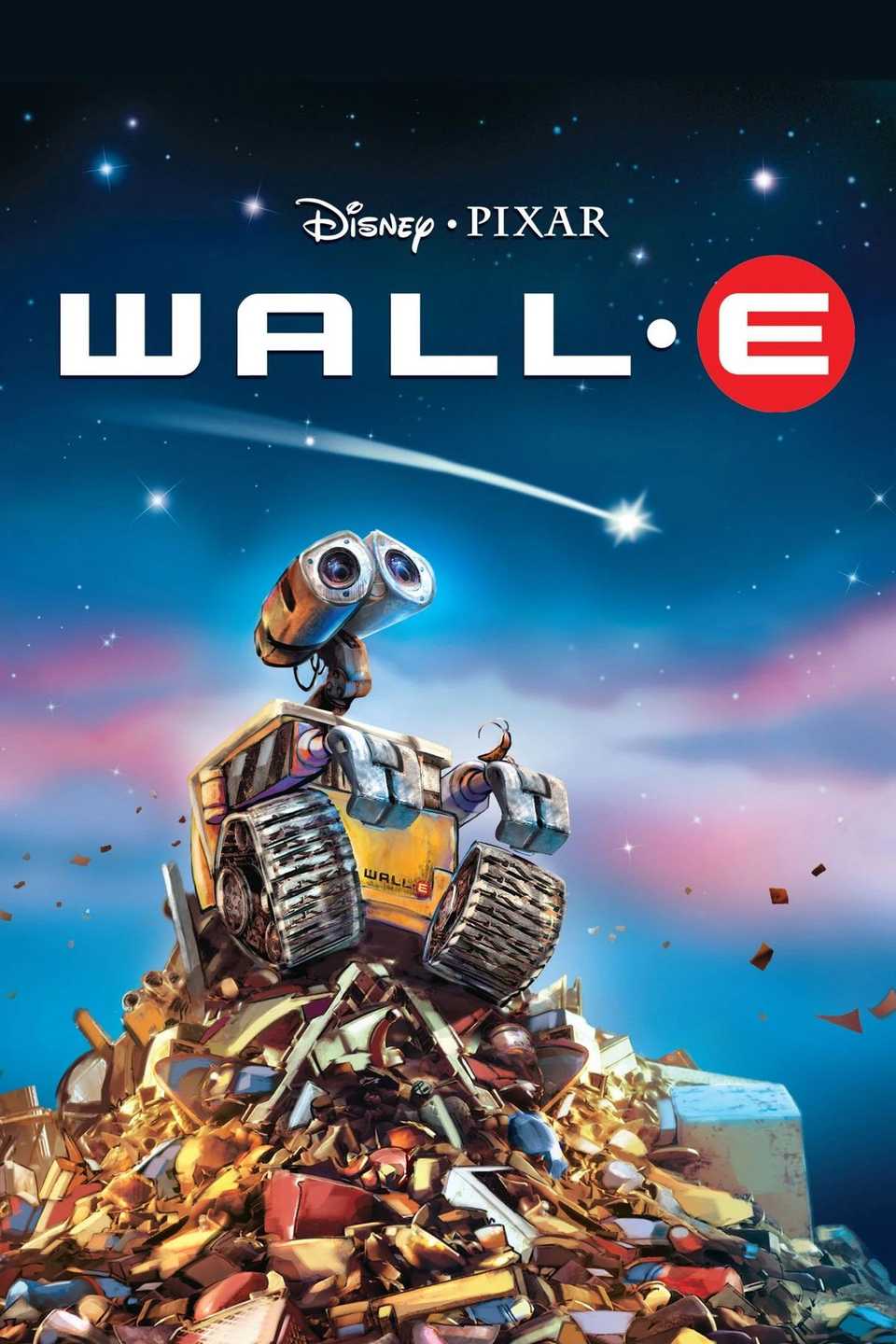
1 ‘WALL-E’ (2008)
 Image via Pixar Animation Studios
WALL-E follows a small, lonely waste-collecting robot left behind on Earth to clean up the planet. All alone, he longs for companionship. Everything changes when a much more modern robot named EVE arrives to search for signs of life. After discovering a small plant, WALL-E is brought into an interstellar journey that leads him to a massive spaceship that houses all the remaining humans.
With minimal dialogue, especially in its first act, WALL-E tells a deeply emotional story through rich visual storytelling that is never boring. The film also presents a sharp critique of our current way of life, with pollution, climate change and also consumerism. The way it showed humans being rendered useless by technology is even more relevant now than before. At the same time, WALL-E is one of the most endearing protagonists in modern cinema, not just a cute merchandising opportunity for Disney. Proving that being an animated film does not diminish a film as a work of art, WALL-E is probably the most profound space film of the 21st century.
WALL-E
Release Date June 27, 2008






 English (US) ·