
 Image via Warner Bros. Pictures

Published Feb 16, 2026, 3:21 PM EST
Jeremy has more than 2300 published articles on Collider to his name, and has been writing for the site since February 2022. He's an omnivore when it comes to his movie-watching diet, so will gladly watch and write about almost anything, from old Godzilla films to gangster flicks to samurai movies to classic musicals to the French New Wave to the MCU... well, maybe not the Disney+ shows.
His favorite directors include Martin Scorsese, Sergio Leone, Akira Kurosawa, Quentin Tarantino, Werner Herzog, John Woo, Bob Fosse, Fritz Lang, Guillermo del Toro, and Yoji Yamada. He's also very proud of the fact that he's seen every single Nicolas Cage movie released before 2022, even though doing so often felt like a tremendous waste of time. He's plagued by the question of whether or not The Room is genuinely terrible or some kind of accidental masterpiece, and has been for more than 12 years (and a similar number of viewings).
When he's not writing lists - and the occasional feature article - for Collider, he also likes to upload film reviews to his Letterboxd profile (username: Jeremy Urquhart) and Instagram account.
He has achieved his 2025 goal of reading all 13,467 novels written by Stephen King, and plans to spend the next year or two getting through the author's 82,756 short stories and 105,433 novellas.
Sign in to your Collider account
A movie doesn’t have to be rewatchable to be a great one, and there are famously some movies that are anything but rewatchable, yet prove vital to see just the once (mostly upsetting films, like Requiem for a Dream and Grave of the Fireflies). But if something’s a favorite, it’s good to revisit, and also, maybe, some movies that reward rewatches can themselves stand a better chance of becoming favorites.
Enter the science fiction genre or, more specifically, the following films. They can be classified as sci-fi ones, either wholly or in part, and they're here because they're compelling to watch and easy to revisit, or they're here because you kind of need more than one watch to fully comprehend and appreciate everything going on. And some are here because they fit into both camps. It’s not meant to suggest that these are the very best sci-fi movies of all time, necessarily, though some are arguably right up there.
10 'The Matrix' (1999)
 Image via Warner Bros.
You could take out all the sci-fi stuff found in The Matrix, and it would still be a pretty damn great action movie, albeit it’d likely feel a whole lot more mindless. But you couple those strong action scenes with some inventive science fiction concepts, and what you're left with is something that’s a masterpiece. Obviously. Like, everyone knows about the original The Matrix at this point.
You’ve got a guy who’s told his existence is a lie, or a simulation, and then he wakes up to the horrifying truth regarding humanity’s enslavement at the hands of the machines, and then he enters a fight for freedom once more on behalf of the whole human race. The Matrix is fun alongside also being thought-provoking, so it’s a “come for the action, stay (and revisit) for the thought-provoking stuff” sort of thing.
9 'Inception' (2010)
What you get with Inception is possibly Christopher Nolan at his best, or at least at his best as far as his science fiction efforts are concerned (Interstellar is certainly a contender, though). You also get an unconventional heist movie that involves planting rather than stealing something, and the whole operation takes place inside someone’s dream, which does admittedly make it comparable to another sci-fi movie that’ll be mentioned in a bit (an animated one from 2006).
But even then, the heist thing feels unique to Inception, and it’s all the wild stuff it does with that idea that makes the film great. There’s a fantastic cast here all very much understanding the assignment at hand, and yeah, sure, the somewhat infamous ending of Inception also plays a role in it being worth rewatching and continuing to ponder over, even all these years after its initial release.
8 'Everything Everywhere All at Once' (2022)
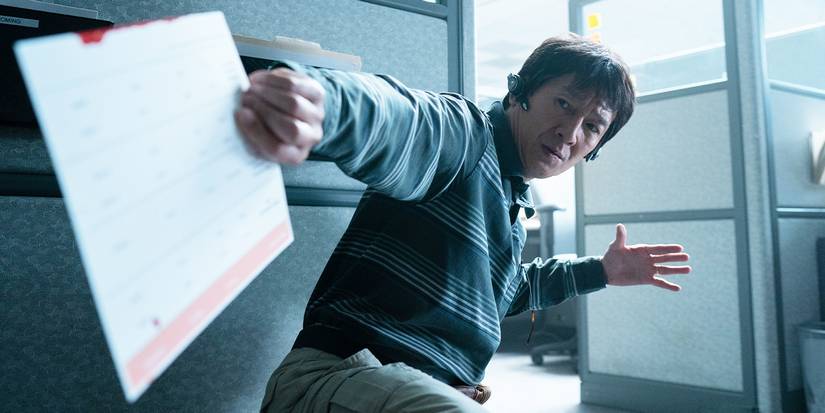 Image via A24
On a thematic front, there isn't too much subtlety to be found in Everything Everywhere All at Once. Well, broadly, it’s about the chaos of modern-day life and is pretty upfront in terms of what it wants to explore as far as being a family dramedy is concerned. There’s more to dig into once things get chaotic, though, and damn does Everything Everywhere All at Once have fun with how chaotic it gets.
Everything Everywhere All at Once has got a lot of martial arts action, plenty of absurd ideas, and a willingness to cross over into almost every genre under the sun.
It’s only a family dramedy (exclusively) for the first few scenes, because most of this movie is about the multiverse, and a battle to save all existence and life everywhere. It’s got a lot of martial arts action, plenty of absurd ideas, and a willingness to cross over into almost every genre under the sun. Since it’s so fast-paced and maximalist, Everything Everywhere All at Once blatantly rewards repeated viewings.
7 'The Empire Strikes Back' (1980)
 Image via 20th Century Studios
It’s weird to single out The Empire Strikes Back as especially revisitable when it exists within a great trilogy, since it’s hard to imagine watching it without also watching Star Wars (1977) and Return of the Jedi, but whatever. It’s the highlight of that original Star Wars trilogy, and also stands, to date, as the single greatest film within the whole Star Wars series.
And you know why, by now. It does more interesting things thematically, it’s got that all-timer of a twist, it manages to hit the ground running narratively, and it does a great deal to expand the whole world of Star Wars. Oh, and it makes all the already-introduced characters even more interesting. It’s a perfect film, and it’s so perfect and iconic that even if you want to argue it’s more fantasy/space opera than true science fiction, this writer quite simply does not care.
6 'Spider-Man: Across the Spider-Verse' (2023)
 Image via Sony Pictures Releasing
The thing about Spider-Man: Across the Spider-Verse is that it’s honestly kind of overstuffed, and it throws so much at you that watching it a second time is indeed a better experience than watching it for the first time. It drastically expands the world introduced in Into the Spider-Verse, and proves unafraid to get crazy with an almost overwhelming number of new ideas, characters, and settings.
The maximalism is appreciated, though, and will probably be even more so once Beyond the Spider-Verse finally comes out (the delays, at the time of writing, have proven frustrating). Still, Spider-Man: Across the Spider-Verse is an impressive animated superhero movie that also goes heavy on the science fiction and multiverse-related concepts, with it – and its predecessor – making up one of the very best still-to-be-completed movie trilogies, at the time of writing.
5 'Eternal Sunshine of the Spotless Mind' (2004)
 Image via Focus Features
The most significant barrier to rewatching a movie like Eternal Sunshine of the Spotless Mind is the heaviness of it all. It’s technically a romance film, with some sci-fi concepts thrown in because of the technology involved with the film’s story, but it’s technically more about breakups than love or anything pleasant. Essentially, it involves two people trying to erase all their memories of the other person, post-break-up.
It’s certainly an original premise, and what Eternal Sunshine of the Spotless Mind ultimately chooses to do with the story at hand makes it feel further unique. There’s a ton going on narratively and thematically here, so it helps to watch the movie more than once, and revisit it to see how it changes as you get older and find the whole thing potentially more relatable… if you're up for it, of course. Again, it’s pretty grim and painfully introspective, at times.
4 'Paprika' (2006)
 Image via Sony Pictures Entertainment Japan
Sure, it’s animated, but that doesn’t get in the way of Paprika being an all-timer as far as science fiction movies are concerned. It’s a movie about exploring dreams, and much of it takes place within a series of dreams, or dreamlike situations, which is what makes it worth comparing to Inception, which came later. But in any event, both movies find other ways to stand out and feel different from each other.
There’s more of a sense of not knowing what the hell’s going on in Paprika, but in a good way. It’s really dazzling and overwhelming as far as the animation goes, and it just never really slows down, either, continually throwing interesting (and sometimes alarming) ideas at you. There’s so much crammed into just 90 minutes that the whole film all but demands to be rewatched, in the end.
3 '2001: A Space Odyssey' (1968)
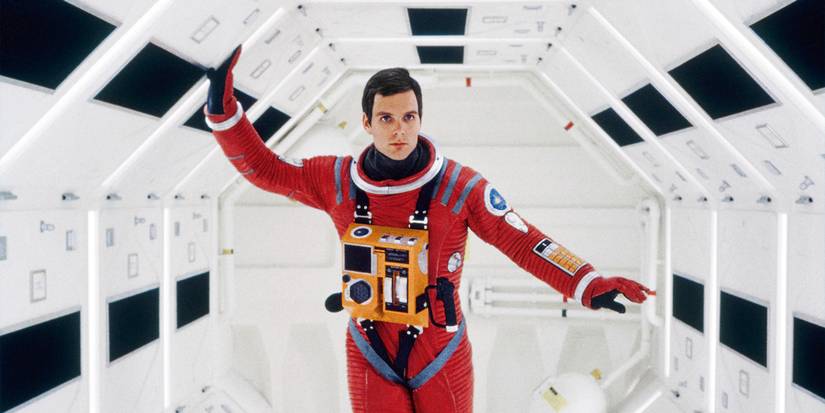 Image via MGM
At the risk of oversimplifying things, 2001: A Space Odyssey is kind of about everything. It starts with a look at life before humans became recognizably human, then jumps forward to what was then slightly futuristic (the titular year), and then goes much further into showing a distant future that still, at the time of writing, feels very much far-fetched and difficult to comprehend.
But that’s by design, highlighting the nature of evolution and the inevitable struggles of trying to guess where life might go many centuries, millennia, or even more time beyond the present. 2001: A Space Odyssey explores all this while taking its time, and proves to be the kind of thing that’s easier to understand and appreciate properly (or at least a little more) should you be willing to revisit it. And then further revisits beyond that initial rewatch should prove to be even more rewarding.
2 'On the Silver Globe' (1988)
 Image via KADR
Even though it wasn’t ever technically finished, On the Silver Globe is still a remarkable film. It would make for a good double feature with 2001: A Space Odyssey, so long as you were okay with two lengthy and thematically dense movies back-to-back, as On the Silver Globe also spans a great deal of time and has a lot on its mind, but the premise is admittedly different.
Here, the whole thing’s about an attempt to start a new civilization on a planet that isn't Earth, showcasing how the settlers there change over generations, and exploring certain things that happen when humanity revisits (or checks up on) said planet. It’s wild and unapologetically disturbing stuff, but there’s so much here that deserves to be grappled with, and On the Silver Globe is also about as bold as movies get, in terms of technical qualities and everything going on under the surface of the basic narrative (or premise… a straightforward story isn't really what you get here, in any event).
1 'Blade Runner' (1982)
 Image via Warner Bros.
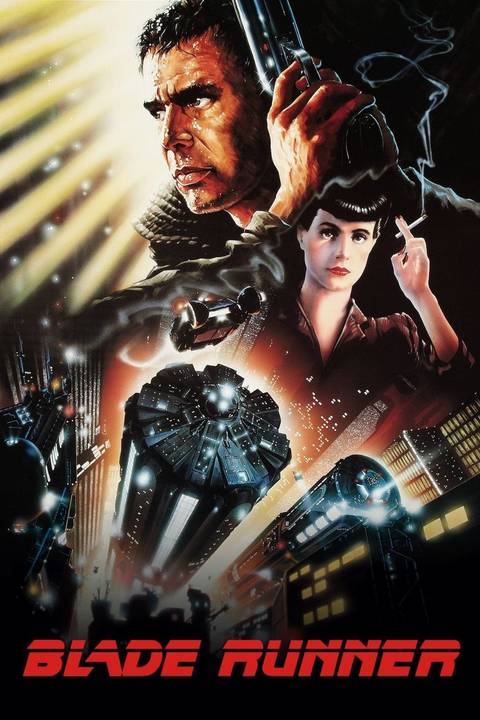
Doing for the science fiction genre what The Godfather did for gangster movies and what Metropolis did for… uh… also the science fiction genre, here’s Blade Runner! This movie initially feels kind of slow, if you watch it for the first time and want to know what all the hype is about, and to some extent, what goes on narratively feels a bit simplistic. At least at first.
After some time has passed, and you’ve seen Blade Runner more than once, things really click into place. The way it looks, feels, and sounds impresses on a first viewing, but all those qualities somehow strengthen once you're going back for the second, third, or fourth time. And what the whole film is saying about technology and its relation to human nature? Yeah, all that’s so much richer on repeat viewings, too. Few sci-fi movies demand rewatches to quite the same extent as the original Blade Runner.
Blade Runner
Release Date June 25, 1982
Runtime 118 minutes
Writers David Webb Peoples, Hampton Fancher, Philip K. Dick







 English (US) ·