
The novella occupies a unique space between the novel and the short story, usually clocking in at between 60 and 160 pages, or roughly 17,000 to 40,000 words. The novella is perfect for a blossoming writer learning to handle their craft, or perhaps a peculiar reader not quite ready to commit to the more demanding length of a traditional novel.
The best of them are long enough to develop their characters, yet concise enough to stay focused and punchy. The novella is far trickier than you'd imagine, both in writing and reading. Yet, there's a wealth of classic novellas to choose from, and this list attempts the daunting task of ranking the best of the best. The titles below are all great in their own way, whether exploring human resilience, the absurdity of modern life, or power's capacity to corrupt.
10 'The Slow Regard of Silent Things' (2014)
 Image via DAW
"There are many things that are right and proper." The Slow Regard of Silent Things is a spin-off of Patrick Rothfuss' brilliant (though frustratingly unfinished) fantasy series The Kingkiller Chronicle. It focuses on the side character Auri, an enigmatic, lovable young woman touched by madness, who lives in the labyrinth of abandoned rooms and tunnels underneath a magical university. Her only companion is a small, glowing lamp she calls Foxen.
The best part of the book is the way it places us inside the offbeat rhythms of Auri's mind. She's an odd, beautiful soul who finds vibrant personalities and poignant significance in places and inanimate objects. Reflecting her state of mind, the novella leans into atmosphere, psychology, and lyrical language rather than plot or action. All in all, Auri's story is sweet and heartbreaking, and compelling even for those who haven't read the main series.
9 'Train Dreams' (2011)
 Image via Picador Paper
"All his life he'd felt as though he'd come from somewhere else." This one was recently adapted into an acclaimed movie starring Joel Edgerton and Felicity Jones. Train Dreams is a historical drama by Dennis Johnson, most well-known for the National Book Award-winning (and Pulitzer-nominated) Tree of Smoke. This one tells the story of Robert Grainier, an ordinary laborer living in the rapidly changing American Northwest during the early twentieth century.
His life is defined by hard work, tragedy, and quiet perseverance. Although he's not a hero or a larger-than-life figure, his tale becomes a stand-in for the history of the USA, particularly its expansion, industrialization, and fading frontier. Train Dreams is lean both in terms of page count (just 116) and writing style, with short, stripped-back sentences that pay clear tribute to Hemingway. However, it's still full of emotion and food for thought.
8 'Rita Hayworth and Shawshank Redemption' (1982)
 Image via Viking Press
"I guess it comes down to a simple choice, really." Before Frank Darabont turned it into one of the greatest movies ever, the story of Andy Dufresne and Red started as the novella Rita Hayworth and Shawshank Redemption, first published in Stephen King's collection Different Seasons. The protagonist is sent to Shawshank Prison after his conviction for murdering his wife and her lover. Over the years, Andy earns the respect of fellow prisoners and pursues a plan to escape.
At the time, this subject matter was quite a change of pace for the horror icon, yet fans and critics generally embraced it. A big part of this success is thanks to the moving and ultimately life-affirming portrayal of the friendship between Andy and Red. Their bond feels authentic, neither forced nor sentimental, and it sends the message that hope can survive even the bleakest circumstances.
7 'The Third Man' (1950)
 Image via Vintage Digital
"Death's at the bottom of everything." Once again, we have a novella that served as the basis for an acclaimed film. Set amid the ruins of postwar Vienna, The Third Man follows struggling writer Rollo Martins, who arrives to visit his old friend Harry Lime only to discover that Lime has supposedly died in a suspicious accident. Martins investigates, quickly uncovering a web of deception and black-market crime.
The story was written by English journalist and author Graham Greene, who also penned The End of the Affair and the Vietnam classic The Quiet American. As with those works, The Third Man is very much concerned with the lingering impact of war. Divided among the occupying Allied powers, Vienna reflects a Europe still struggling to emerge from the devastation of World War II. The city itself becomes a kind of character in its own right, something true of the movie as well.
6 'The Old Man and the Sea' (1952)
 Image via Mercy House
"But man is not made for defeat." One of Hemingway's most beloved stories that nicely shows off his minimalist style. The Old Man and the Sea follows Santiago, an aging Cuban fisherman enduring an eighty-four-day streak without catching anything. Determined to prove his skill, he sails far into the Gulf Stream and hooks an enormous marlin, beginning an epic struggle that tests both his physical (and even spiritual) endurance.
The simplicity conceals a lot of philosophical depth. Indeed, Santiago's battle with the marlin quickly transcends its literal context to become a universal story about a bunch of big themes: perseverance, pride, aging, and humanity's relationship with nature among them. Hemingway strips away all unnecessary description, allowing every action aboard the small fishing boat to feel symbolic and important. Not for nothing, this novella earned Hemingway the Pulitzer Prize.
5 'Heart of Darkness' (1899)
 Independently Published
"The horror! The horror!" This slender work served as the basis for Apocalypse Now, though the original story takes place in the Congo rather than Vietnam. In it, veteran sailor Charles Marlow recounts a journey upriver in search of the mysterious ivory trader Kurtz. However, what begins as a straightforward commercial expedition eventually morphs into a psychological and moral descent, as Marlow witnesses the brutality of European colonialism.
As its title suggests, Heart of Darkness is shadowy and ambiguous, resisting simple interpretation. Kurtz, in particular, is a remarkably mercurial character, at once an idealist, a tyrant, a visionary, and a cautionary tale about unchecked power. Despite (because of?) it, the novella was not well-received on release, but has since been canonized as a classic and a cornerstone of postcolonial literature.
4 'Of Mice and Men' (1937)
 Image via Penguin
"Tell me about the rabbits, George." One of Steinbeck's essential stories, Of Mice and Men centers on migrant workers George Milton and Lennie Small as they travel from ranch to ranch searching for employment. All the while, they dream of owning a small piece of land of their own. Their friendship offers rare comfort in an unforgiving world turned upside down by the Great Depression, but Lennie's immense strength and intellectual disability repeatedly place both men in increasingly dangerous situations.
In writing this story, the author drew on his experiences working on farms as a teenager, where he crossed paths with many migrant workers similar to the characters we meet here. This true-to-life background lends the novella a lot of authenticity, helping us to become invested in George and Lennie's fragile hope for a better future. Their dream of independence represents far more than financial security; it's a symbol for dignity and belonging in a world that constantly refuses to acknowledge them.
3 'The Stranger' (1942)
 Image via Vintage
"Mother died today. Or maybe yesterday; I can't be sure." One of the defining works of existential literature, The Stranger follows Meursault, a French Algerian whose indifferent reaction to his mother's death is soon followed by an apparently senseless act of violence. His subsequent trial focuses less on the murder itself than on society's inability to tolerate someone who refuses to conform to its expectations.
Meursault is fascinating because he neither lies nor pretends, and his honesty becomes deeply unsettling to those around him. Author Albert Camus uses the character's emotional detachment to explore the absurdity of existence, arguing that the universe offers no inherent meaning beyond what individuals create for themselves; here, there's no greater plan or deeper meaning. While certainly not feel-good reading, The Stranger is an important, influential work, full of uncomfortable ideas.
 Image via Little Clothbound Classics
"When Gregor Samsa awoke one morning from troubled dreams, he found himself transformed in his bed into a monstrous vermin." Few opening lines in literature are more famous than the first sentence of Kafka's Metamorphosis. In the story, traveling salesman Gregor Samsa inexplicably transforms into a gigantic insect. But rather than focusing on the impossible transformation itself, Kafka examines the devastating consequences for Gregor's family as they gradually shift from concern to resentment and finally outright rejection.
In other words, instead of just being a tale of body horror, The Metamorphosis is a statement on modern alienation that was radically ahead of its time. Many other interpretations exist, from it being a religious allegory to a metaphor for the character's complex psychological issues. Multitudes exist in just 72 pages. The Metamorphosis made a massive mark on world literature, to the point of being truly revolutionary.
1 'Animal Farm' (1945)
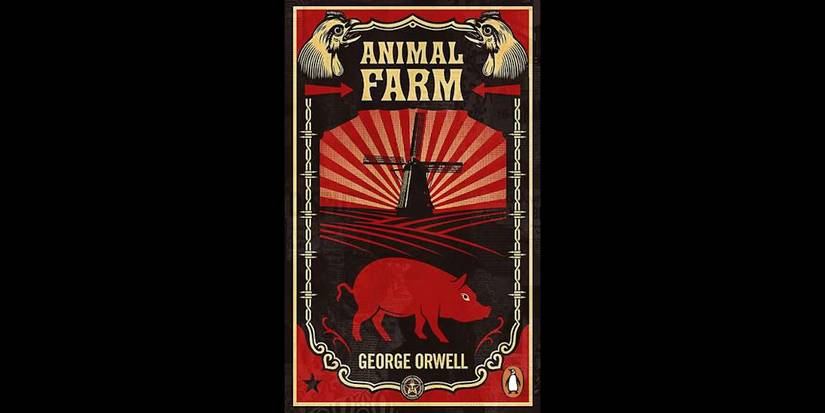 Image via Penguin Essentials
"All animals are equal, but some animals are more equal than others." Animal Farm is several things at once: a political fable, a sharp satire, and a genuinely engrossing story. Following a revolution against their human owner, the animals of Manor Farm attempt to build an equal society based on shared ideals. Yet under the leadership of the pigs, particularly Napoleon, the revolutionary dream gives way to dictatorship, propaganda, and oppression.
Animal Farm is George Orwell's allegory for the Russian Revolution, a movement that started with hope and idealism but ended in gulags and economic ruin. The novella cleverly looks at how politics and ideals can become corrupted by ambition, how language can be manipulated to reshape reality, how ordinary individuals can be persuaded to accept increasingly blatant injustices, and how these injustices become normalized and systematic. The fact that it does all this in just 92 pages makes it a work of genius.



 English (US) ·