
The neo-noir genre is a modernized version of the classic film noir genre that initially reached its peak of popularity during the 1960s and was established by hit movies such as Cape Fear starring Robert Mitchum and Gregory Peck, Martin Scorsese's Taxi Driver, and L.A. Confidential. As neo-noir films were favored well by audiences around the world, the genre inevitably made a name for itself on the small screen with shows like Showtime's Dexter and A&E's Bates Motel, and continues to be a frequent favorite in the world of television.
Over the years, there have been a slew of successful neo-noir shows that are worthy contributions to the genre, but some series, including David Lynch's Twin Peaks, Better Call Saul, and Ray Donovan, embody the core elements and traditional tropes of the neo-noir genre. From the marginalized miniseries, Monsieur Spade starring Clive Owen, to the critically acclaimed anthology crime series, True Detective, these are the greatest neo-noir television shows of all time, ranked.
10 'Monsieur Spade' (2024)
 Image via AMC
Clive Owen stars as Dashiell Hammett's private eye, Sam Spade, in the neo-noir miniseries, Monsieur Spade, which takes place twenty years after the events of The Maltese Falcon. The series follows Spade as he travels to France with Brigid O'Shaughnessy's daughter, Teresa (Cara Bossom), in an attempt to find her father, but what was intended to be a brief trip turns into a permanent stay after Spade falls in love with a local woman. As Spade puts his detective days behind him, his peaceful life is interrupted by the return of Teresa's father and a series of murders, ultimately forcing Spade out of retirement.
Monsieur Spade is based on Hammett's novel, Sam Spade, and is a thrilling must-see neo-noir series that takes viewers through a labyrinth of a whodunit mystery. It's safe to assume that the majority of people are familiar with Spade, who was originally popularized by Humphrey Bogart in one of the best detective film noir movies, The Maltese Falcon. Bogie's portrayal of Spade presents Owen with some big shoes to fill, but he manages to deliver a sensational performance that effectively aligns with Bogie's take on Spade while still forging his own interpretation of the legendary private eye.
9 'Mr. Mercedes' (2017–2019)
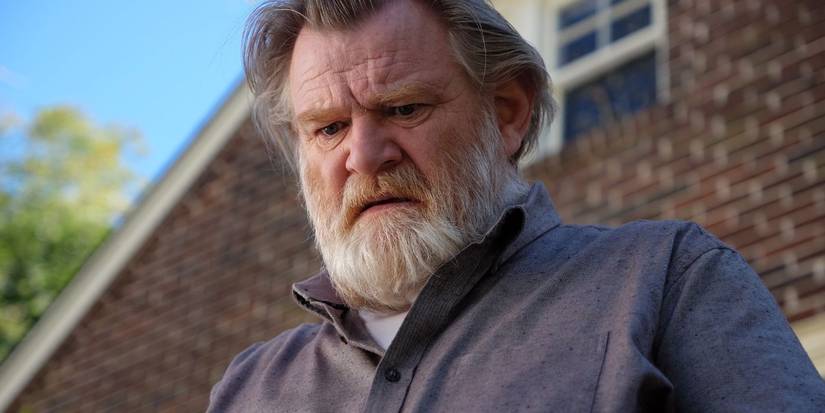 Image via Audience
Based on Stephen King's novel trilogy series, Brendan Gleeson stars in the gripping neo-noir series Mr. Mercedes as Bill Hodges, a retired Ohio detective who, after being taunted by a serial killer online, finds himself in a tedious game of cat and mouse. As Hodges tries to stay two steps ahead of his tormentor, he soon realizes that his search for the killer comes with a dangerous price that puts everyone he loves in jeopardy.
Mr. Mercedes is a highly overlooked series that embodies the neo-noir genre with a touch of King's signature madness. Gleeson gives an outstanding performance as a man haunted by his past and forced to come to terms with his personal and professional failures, presenting an underlying mystery to the main plot. The show ran for three successful seasons, but in 2020, it was unexpectedly discontinued with no indication of it being canceled. While the fate of the series still hangs in the balance, Mr. Mercedes still ranks as a top series that every diehard noir fan should check out.
8 'Sugar' (2024–Present)
 Image via Apple TV
Colin Farrell stars in Apple TV's neo-noir series, Sugar, as a private investigator, John Sugar, who is hired by a Hollywood producer, Jonathan Siegel (James Cromwell), to find his beloved granddaughter, Olivia (Sydney Chandler), whom he believes is missing. As Sugar talks to Olivia's family and friends, his investigation eventually leads him to uncover family secrets and scandals within the Siegel dynasty as well as crucial information about a mystery from his past.
Sugar is a unique neo-noir series with an unexpected blend of genres and a captivating performance by Farrell that ultimately sets it apart from other shows in the genre. Unlike the majority of other neo-noir series, Sugar features frequent cutaways to clips from classic film noir movies and key props, which contribute to the series' classic noir aesthetics. One of the most significant references in the show is Sugar's Chevy Sting Ray, which is the same car Ralph Meeker's Mike Hammer drives in the noir classic, Kiss Me Deadly.
7 'Bates Motel' (2013–2017)
 Image via A&E
Bates Motel is a modern prequel and reimagining of Alfred Hitchcock's classic thriller, Psycho, which is based on Robert Bloch's 1959 horror novel of the same name. Freddie Highmore stars as a young Norman Bates who, after the death of his father, moves with his mother, Norma (Vera Farmiga), to the seaside town of White Pine Bay, where they purchase and run a local motel. They quickly learn that White Pine Bay is far from what it appears to be, and while Norma tries to get the motel up and running, Norman begins to experience strange behavior that his mother tries to keep a secret from their new community.
Aside from its modernized setting, Bates Motel is a clever neo-noir drama that features exceptional performances by the overall cast as well as subtle references to Hitchcock's film, which give the show a nostalgic touch. Unlike Psycho, Bates Motel provides an intriguing insight into Norman's mindset and how it is influenced by the puzzling details surrounding his unusually close relationship with his mother. Although the show takes some creative liberties and tailors the story for a more contemporary audience, Bates Motel is still a riveting revival and character study of Norman Bates, who is one of the most fascinating characters in entertainment history.
Collider Exclusive · Horror Survival Quiz Which Horror Villain Do You Have the Best Chance of Surviving? Jason Voorhees · Michael Myers · Freddy Krueger · Pennywise · Chucky
Five killers. Five completely different ways to die — if you're not smart enough, fast enough, or self-aware enough to avoid it. Only one of them is the villain your particular set of instincts gives you a fighting chance against. Eight questions will figure out which one.
🏕️Jason
🔪Michael
💤Freddy
🎈Pennywise
🪆Chucky
TEST YOUR SURVIVAL →
01
Something feels wrong. You can't explain it — you just know. What do you do? First instincts are the difference between the survivor and the first act casualty.
ALeave immediately. I don't need to understand a threat to respect it. BStay quiet and observe. If I can see it, I can understand it. If I can understand it, I can avoid it. CStay awake. Whatever this is, I am not going to sleep until I feel safe again. DConfront it directly. Fear grows in the dark — I'd rather know what I'm dealing with. ECheck everything, trust nothing. The threat might be closer than I think — and smaller.
NEXT QUESTION →
02
Where are you most likely to find yourself when things go wrong? Setting is everything in horror. Where you are determines which rules apply.
ASomewhere remote — a cabin, a campsite, off the grid and away from people. BA quiet suburban neighbourhood where nothing ever happens. Except tonight. CIn my own head — the most dangerous place of all, depending on what's already in there. DWherever children are — because something about this place attracts the worst things. ESomewhere ordinary — a house, a toy store, a place where the last thing you'd expect is a threat.
NEXT QUESTION →
03
What is your most reliable survival asset? Every survivor has a quality the villain didn't account for. What's yours?
APhysical fitness — I can run, I can swim, I can outlast something that relies on brute persistence. BSpatial awareness — I always know the exits, the hiding spots, the fastest route out. CPsychological resilience — I've faced my worst fears before. They don't have the same power over me. DEmotional steadiness — I don't panic. Panic is what gets you caught. EScepticism — I don't underestimate threats because of how they look. Size is irrelevant.
NEXT QUESTION →
04
What kind of fear is hardest for you to fight through? Knowing your weakness is the first step to not dying because of it.
AThe unstoppable — something that will not stop, cannot be reasoned with, and is always getting closer. BThe invisible — a threat I can feel but can't locate, watching from somewhere I can't see. CThe psychological — something that uses my own mind and memories against me. DThe unknowable — something ancient, shapeless, that feeds on the fear itself. EThe mundane — a threat so ordinary-looking that no one will believe me until it's too late.
NEXT QUESTION →
05
You're with a group when things start going wrong. What's your role? Horror movies are brutally clear about who survives group situations and who doesn't.
AThe one who says "we need to leave" first — and means it, even when no one listens. BThe one who stays quiet, watches the others, and figures out the pattern before anyone else does. CThe one who holds the group together when panic sets in — because someone has to. DThe one who asks the questions nobody wants to ask — because ignoring them gets people killed. EThe one who takes the threat seriously when everyone else is laughing it off.
NEXT QUESTION →
06
What's the horror movie mistake you're most likely to make? Honest self-assessment is a survival skill. Denial is not.
AGoing back for someone — I know I shouldn't, but I can't leave them behind. BAssuming I'm safe once I've found a hiding spot. That's when it finds me. CFalling asleep when I absolutely cannot afford to. Exhaustion is its own enemy. DLetting my curiosity override my instincts — I always need to understand what I'm dealing with. EDismissing the threat because of how it looks. That's exactly what it wants.
NEXT QUESTION →
07
What's your best weapon against something that can't be stopped by conventional means? Every horror villain has a weakness. The survivors are always the ones who find it.
AThe environment itself — I use the terrain, the water, the geography against it. BPatience — I wait, I watch, and I strike at the one moment it doesn't expect. CLucidity — if I can stay in control of my own mind, it loses its primary weapon. DCourage — facing it directly, refusing to run, taking away the fear it feeds on. EImprovisation — I use whatever's at hand, however unconventional. Creativity over brute force.
NEXT QUESTION →
08
It's the final scene. You're the last one standing. How did you make it? The final survivor always has a reason. What's yours?
AI kept moving. I never stopped, never hid for too long, never let it corner me. BI figured out the pattern before anyone else did — and I used it against the thing following it. CI stayed awake, stayed lucid, and refused to give it the one thing it needed most. DI stopped being afraid of it. And the moment I did, everything changed. EI took it seriously from the start — and I never once made the mistake of underestimating it.
REVEAL MY VILLAIN →
Your Survival Odds Have Been Calculated Your Best Chance Is Against…
Your instincts, your strengths, and your particular way of thinking under pressure point to one villain you actually have a fighting chance against. Everyone else — good luck.
Jason Voorhees
Jason is relentless, but he is also predictable — and that is the gap you would exploit.
- He moves in straight lines toward his target. He doesn't strategise, doesn't adapt, doesn't outsmart. He simply pursues.
- Your ability to keep moving, use the environment, and resist the panic that freezes most victims gives you a genuine edge.
- The Crystal Lake survivors were always the ones who stopped running in circles and started thinking about terrain, water, and distance.
- You think like that. Which means Jason, for all his indestructibility, would face someone who simply refused to be where he expected.
Michael Myers
Michael watches before he moves. He is patient, methodical, and almost impossible to detect — until it's too late for anyone who isn't paying close enough attention.
- But you are paying attention. You notice the shape in the window, the car parked slightly wrong, the silence where there should be sound.
- Michael's power lies in the invisibility of ordinary suburbia — the fact that nothing ever looks wrong until it already is.
- Your spatial awareness and instinct to map every room, every exit, and every shadow before you need them is precisely the quality Laurie Strode had.
- You are not a victim waiting to happen. You are someone who already suspects something is wrong — and acts on it.
Freddy Krueger
Freddy wins by getting inside your head — using your own fears, your own memories, your own subconscious as weapons against you. That strategy requires a target who can be destabilised.
- You are harder to destabilise than most. You've faced uncomfortable truths about yourself and you haven't looked away.
- The survivors on Elm Street were always the ones who understood what was happening and chose to face it rather than flee from it.
- Freddy's greatest weakness is that his power evaporates in the presence of someone who refuses to give him the fear he feeds on.
- Your psychological resilience — the ability to stay grounded when reality itself becomes unreliable — is exactly the quality that keeps you alive here.
Pennywise
Pennywise is ancient, shapeshifting, and feeds on terror — but it has one critical vulnerability: it cannot function against someone who genuinely stops being afraid of it.
- The Losers Club didn't survive because they were braver than everyone else. They survived because they faced their fears together, and faced them honestly.
- You ask the questions others avoid. You look directly at what frightens you rather than turning away.
- That directness — the refusal to let fear fester in the dark — is Pennywise's worst nightmare.
- It chose the wrong target when it chose you. You are exactly the kind of person whose fear tastes like nothing at all.
Chucky
Chucky's greatest advantage is that nobody takes him seriously until it's already too late. He exploits the gap between how something looks and what it actually is.
- You don't have that gap. You take threats seriously regardless of how they present — and you never make the mistake of underestimating something because of its size or appearance.
- Chucky relies on surprise, on the delay between recognition and response. You close that delay faster than almost anyone.
- Your instinct to treat every unfamiliar thing with appropriate scepticism — rather than dismissing it because it seems absurd — is the exact quality that keeps you breathing.
- Against Chucky, not laughing is already winning. You are very good at not laughing.
↻ RETAKE THE QUIZ
6 'Ray Donovan' (2013–2020)
 Image via Showtime
Liev Schreiber stars in Showtime's Ray Donovan in the title role as a former Boston thug turned notorious "fixer" for Hollywood's elite and the go-to guy for anyone who wants to make something or someone disappear. While Donovan has carved out a new life for himself in Los Angeles, he soon realizes that he can't run away from his past after his recently paroled father, Mickey (Jon Voight), arrives in town to try and reconnect with him.
Even though it shifts between several different genres, Ray Donovan stays consistently within the realm of the neo-noir genre with a gritty blend of family drama and personal high-stakes that ultimately earns the series a spot on the list. Schreiber and Voight are absolute gold together, but both deliver enthralling performances that make the series all worthwhile. Throughout its solid season run, Ray Donovan received an abundance of nominations and awards, including a Golden Globe Award for Best Supporting Actor for Voight. Unlike other shows, Ray Donovan concluded in 2022 with Ray Donovan: The Movie, bringing this epic neo-noir gem to a fitting end.
5 'The Penguin' (2024)
 Image via HBO
Colin Farrell reprises his role as Oz Cobblepot in HBO's The Penguin, which picks up after the events of Matt Reeves' 2022 movie, The Batman. With Gotham in utter disarray and ruin, Carmine Falcone's son takes over as head of the family, but when he suddenly goes missing, his sister and former patient at Arkham Asylum, Sofia (Cristin Milioti), suspects that Oz is somehow responsible for his disappearance. As Oz meticulously pits the Falcone family against their rivals, the Maroni family, he gradually begins his journey into becoming one of Gotham City's most notorious villains.
The Penguin is an edgy neo-noir miniseries that features unbelievable performances by Farrell and The Sopranos alumni, Milioti, whose personal vendetta against Oz adds emotional depth and drama to the villain's origin story. While some may think the show is only appealing to fans of DC Comics, the Batman comics have always been deeply rooted in the world of noir and feature traditional tropes of the genre, such as political corruption, seedy characters, and a crime-ridden city, which are apparent in The Penguin and ultimately solidifies it as a top-notch neo-noir series.
4 'Dexter' (2006–2013)
 Image via Showtime
Showtime's Dexter is a twisted neo-noir crime drama starring Michael C. Hall as Dexter Morgan, a blood-spatter expert for the Miami police department who not only helps to solve homicides but also commits them. Unlike other serial killers, Dexter sees himself as a vigilante and justifies his sadistic behavior by only killing people who are guilty of unspeakable crimes or slip through the cracks of the justice system.
Dexter puts a gruesome contemporary spin on the classic cynical lawman who, like Sam Spade and Philip Marlowe (minus the murdering part), has a status of legal authority that helps him carry out his own unique brand of justice. Throughout the show's eight seasons, Dexter won four of its twenty-four Primetime Emmy nominations as well as two Golden Globes in 2010 for Best Performance by an Actor in a Television Series – Drama for Hall and Best Performance by an Actor in a Supporting Role for John Lithgow. Despite the show concluding in 2013, there have been several successful spin-off series, including Dexter: New Blood and Dexter: Resurrection, and most recently, Dexter: Original Sin, which is a fascinating prequel series that brings Dexter's life full circle.
3 'Better Call Saul' (2015–2022)
 Image via AMC
Bob Odenkirk reprises his Breaking Bad role as the unscrupulous lawyer and con artist, Saul Goodman, in Better Call Saul, a legal neo-noir series that alternates between Goodman's life on the run and his past as Jimmy McGill and the pivotal events that led him to become an attorney for the criminal underworld. Even though the series fills in the blanks for fans about Goodman's fate after Breaking Bad, it primarily focuses on the character's past and provides crucial pieces that shed light on Goodman's former life.
Odenkirk's performance as Goodman in Breaking Bad is exceptional, but he absolutely shines in Better Call Saul, delivering a complex portrait of vulnerability and ingenuity that, for the first time, puts the misunderstood character in a humanizing light. Character tropes aside, Better Call Saul is engulfed in visual elements and characteristics of the noir genre, utilizing the work of legendary cinematographer John F. Seitz, and the ingenious use of black-and-white, which not only distinguishes between Goodman's past and present but also establishes a spellbinding and wistful tone.
2 'True Detective' (2014–Present)
Nic Pizzolatto's True Detective is a heart-pounding neo-noir anthology series and one of the best Southern gothic shows that follows police detectives as they work on solving unsettling crimes while also struggling with their own personal demons and problems behind closed doors. Out of the show's four seasons, the first, starring Woody Harrelson and Matthew McConaughey, is by far the best as it effortlessly captivates viewers with its intriguing poetic dialogue, horrific series of murders, and two mesmerizing characters who have their share of flaws and secrets.
True Detective brilliantly incorporates an abundance of neo-noir elements, such as moral ambiguity and imperfect characters, as well as following complex narratives within an atmospheric setting, conveying a tone of intensity and uncertainty. Even though the reception of each season has varied, True Detective does keep things interesting with its vastly different cast of characters and premises, effectively remaining true to Pizzolatto's original story structure while also distinctly setting each season into its own vision of a detective neo-noir.
1 'Twin Peaks' (1990–2017)
 Image via ABC
Kyle MacLachlan stars in David Lynch's surrealist neo-noir series, Twin Peaks, as a special agent for the FBI, Dale Cooper, who is leading the investigation into the brutal murder of a teenage girl in the fictional town of Twin Peaks. Although the series incorporates characteristics from other genres, the narrative is derived from the traditional detective fiction that essentially inspired the classic film noir genre, cementing Twin Peaks as the all-time best neo-noir television show.
Lynch defied the world of television with his innovative neo-noir series, Twin Peaks, which takes a traditional murder mystery and heightens it with an array of characteristics from polar opposite genres that only a visionary talent like Lynch could successfully achieve. MacLachlan, who had previously worked with Lynch on one of the director's definitive masterpieces, Blue Velvet, gives a compelling performance as a vividly eccentric character whose quirky mannerisms and unconventional techniques set him apart from the more traditional detectives of the neo-noir genre.

Twin Peaks
Release Date 1990 - 1991-00-00
 English (US) ·