
Beginning with the birth of the 1940s, noir cinema represented something of a turn towards cynicism in Old Hollywood, a pivot away from glitz and glamour in favor of morally questionable characters, bleak fatalism, and coarse stories that supplant happily-ever-afters with gritty realism. Even as the genre has evolved over the decades, its sinister overtones have endured, be it in the form of the more socially-minded neo-noir movies of the 1970s or the hard-edged brutality that defines the genre in the modern day.
The fact is film noir in all its forms has given audiences a litany of masterpieces over the past 80 years. Even if dating back to 1946 omits quintessential classics like The Maltese Falcon and Double Indemnity, there is still such an impressive range of movies to choose from that beloved classics like Drive, Notorious, and Touch of Evil haven’t quite made the cut. The films on this list epitomise the glory and grime of noir cinema at its absolute best.
10 'Strangers on a Train' (1951)
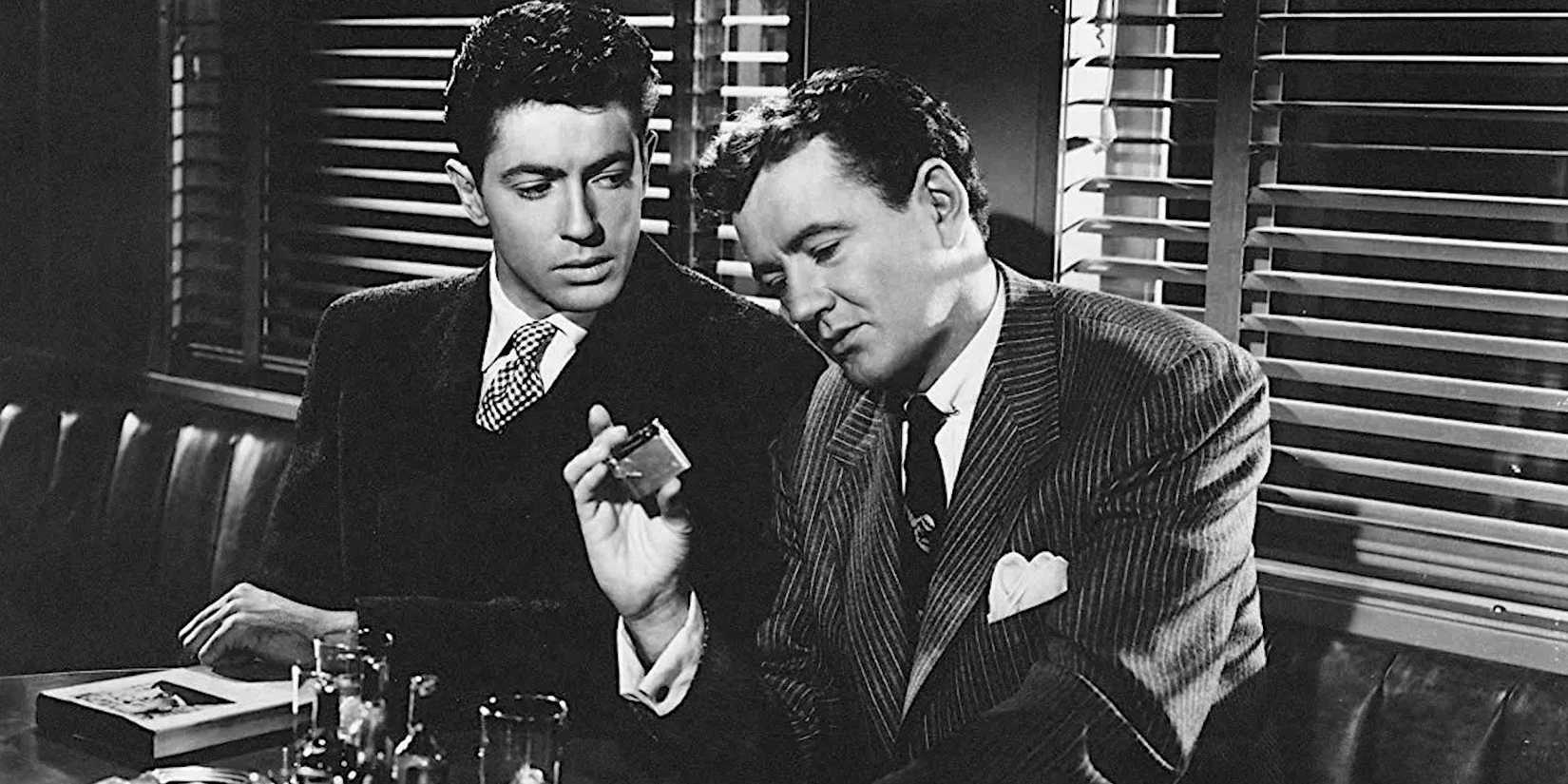 Image by Warner Bros.
Across his career, Alfred Hitchcock’s penchant for suspense and macabre intrigue crossed paths with noir fatalism and duplicity on multiple occasions, in everything from spy thrillers like Notorious to the serial killer chills of Shadow of a Doubt. The very best of these crossovers, however, is the addictively twisted Strangers on a Train, with the adaptation of Patricia Highsmith’s novel soaring with its chilling duel murder premise, festering visual suspense, and Robert Walker’s captivating villainous performance.
It follows Guy Haines (Farley Granger), a tennis star trapped in a hostile marriage who begins talking about his problems with a friendly stranger he meets on a train. When the stranger suggests they could each kill a pesky individual in each other’s lives, Guy initially laughs it off as a morbid fantasy, but when his wife is murdered, he finds himself embroiled in Bruno’s (Walker) deadly deal. Flaunting the moral ambiguity and conceit of film noir and the tension Hitchcock was famous for, Strangers on a Train is as fiendishly exciting as it is timelessly thrilling.
9 'The Big Sleep' (1946)
 Image via Warner Bros.
Humphrey Bogart is the face of classic film noir. While he appeared in a litany of noir classics throughout the 1940s, two movies in particular are responsible for making him such an icon of the genre: The Maltese Falcon and The Big Sleep. 2026 marks 80 years since the latter was released, and its stylistic indulgence in sharp dialogue, feverish chemistry, and a mood of cool cynicism remains every bit as compelling today.
Directed by Howard Hawks and based on Raymond Chandler’s novel, it unravels as private eye Philip Marlowe (Bogart) is hired by a wealthy family to look into a blackmail case that only grows more confounding after the criminal is found dead. While its plotting is purposefully inaccessible, The Big Sleep proves that style and charisma can carry a film even when the narrative becomes muddled. Bolstered by its infectious ensemble cast, imposing atmosphere, and brilliant bleakness, The Big Sleep encapsulates the puzzling allure of noir cinema.
8 'The Night of the Hunter' (1955)
 Metro-Goldwyn-Mayer Studios Inc
Charles Laughton was one of the most adored actors of his era. Sadly, his foray into film direction wasn’t as acclaimed, at least not immediately. While The Night of the Hunter was met with critical derision upon release, the nightmarish noir masterpiece has become a genre-defining triumph in today’s world. Its bold and bleak storytelling works wonderfully in tandem with its striking performances, eerie ambiance, and utterly astounding visual display.
Robert Mitchum stars as Harry Powell, a sadistic serial killer who learns of a stash of stolen cash hidden by a robber who has since been executed. Disguising himself as a priest, Powell gets close to the robber’s family, hoping he can manipulate his wife or kids into mentioning where the money is hidden. With the violent clashing of its ideals of religion, family, greed, and violence, The Night of the Hunter is a transfixing examination of good and evil that blends elements of film noir and Southern Gothic in unforgettable fashion.
7 'The Third Man' (1949)
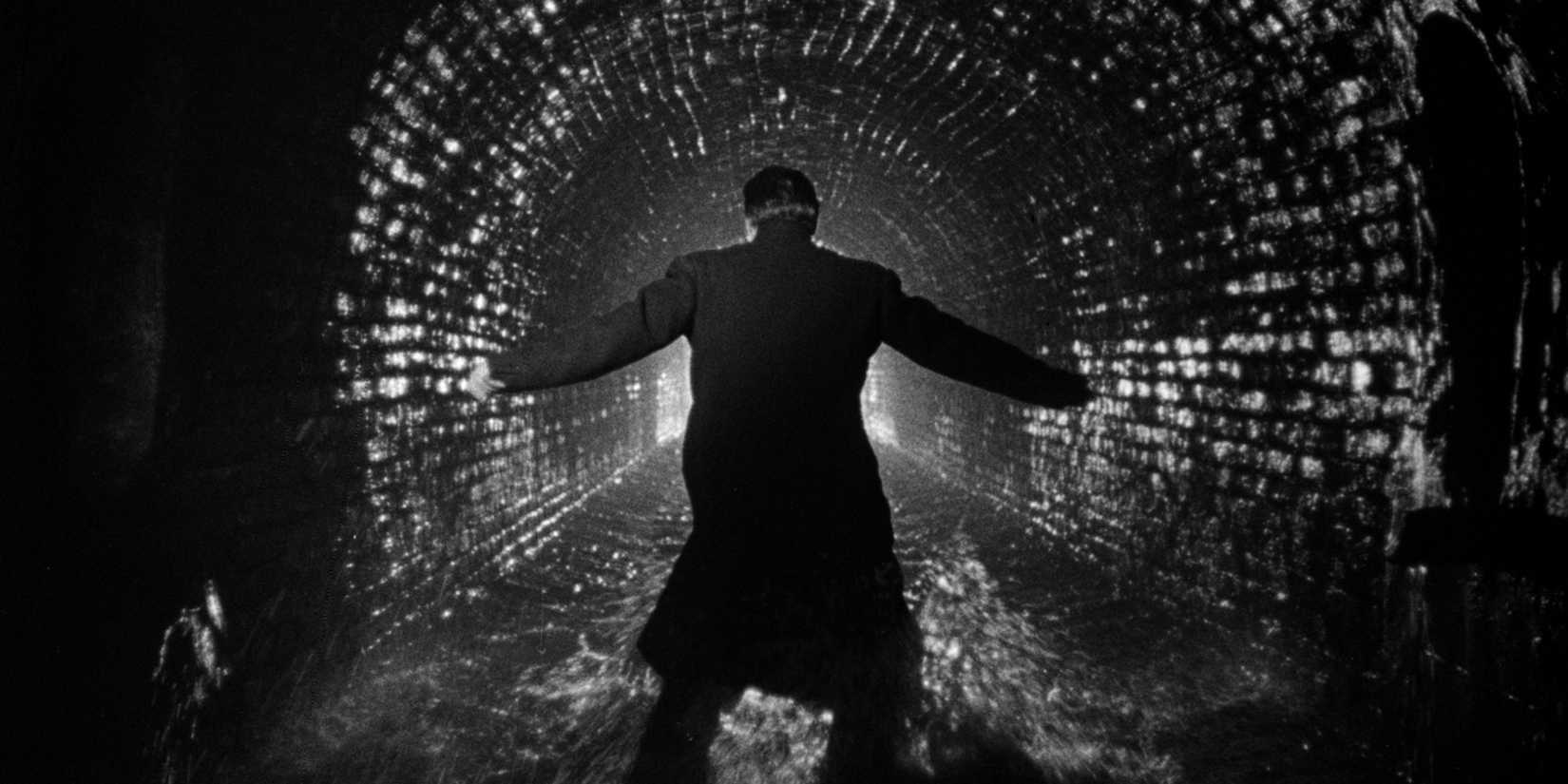 Image via Studiocanal
While it has become famous for Orson Welles’s magnificent, scenery-chewing performance in the final act, The Third Man as a whole is an entrancing treat of classic noir cinema. It follows American novelist Holly Martins (Joseph Cotten) as he travels to post-WWII Vienna at the invitation of his childhood friend, Harry Lime (Welles), only to learn on his arrival that Lime has been murdered. However, after picking up on an inconsistency in the case, Holly begins an investigation to determine what truly happened.
Combining the rich, enigmatic allure of noir mystery with a fascinating historical setting that sees Holly having to navigate a web of national representatives and secluded personal interests, The Third Man is both a quintessential classic of old-school noir and a bold expansion of it. Given even greater stature by Welles’s brilliance, the iconic German Expressionism imagery, and an irresistible atmosphere of simmering paranoia, it is easy to regard it as being one of the greatest achievements of Old Hollywood cinema at large.
6 'Memories of Murder' (2003)
 Image via CJ Entertainment
Leaping forward half a century and halfway around the world, Memories of Murder is the perfect testament to the fact that while noir cinema started in Hollywood in the 1940s, it doesn’t have to stay there. Directed by Bong Joon Ho, it blends noir intrigue, psychological thrillers, and even slapstick comedy. It follows three detectives in a poor farming province of South Korea as they investigate a serial rapist and murderer who has been active in the region.
Loosely based on true events, Memories of Murder is a ferociously dark crime movie. It bolsters its bleak tone of hopelessness with neo-noir elements that define its atmospheric visual style, strengthen its subversions of detective drama, and enforce its nihilistic meditation on the unsolved case. It makes for one of the best murder-mystery movies audiences have ever seen, a modern masterpiece of noir intrigue, and an iconic highlight of international cinema in the 21st century.
5 'Mulholland Drive' (2001)
 Image via Universal Pictures
Film noir has always relished complexity, but few pictures have taken the enigmatic allure of the genre as far as Mulholland Drive. Utilizing David Lynch’s trademark style of surrealist intrigue that embraces dreamlike wonder and nightmarish unease, it explores such conventional genre concepts as femme fatales, the corrupt and seedy underworld, and fatalistic narratives. However, it also imbues them with its deconstruction of the ugly reality behind Hollywood glamour.
An Oscar-worthy Naomi Watts stars as Betty Elms, an aspiring starlet who recently moved to L.A. and takes it upon herself to help Rita (Laura Harring) find her true identity as she suffers from amnesia following a car crash. At times, Mulholland Drive almost feels like a bubbly spin on film noir, but the vibrant illusion is always on the brink of collapse. When it does completely shatter, the pivot to downtrodden hopelessness is jolting. With both its captivating heightened reality and its underlying grit, Mulholland Drive is one of the most transfixing film neo-noir movies ever made.
4 'No Country for Old Men' (2007)
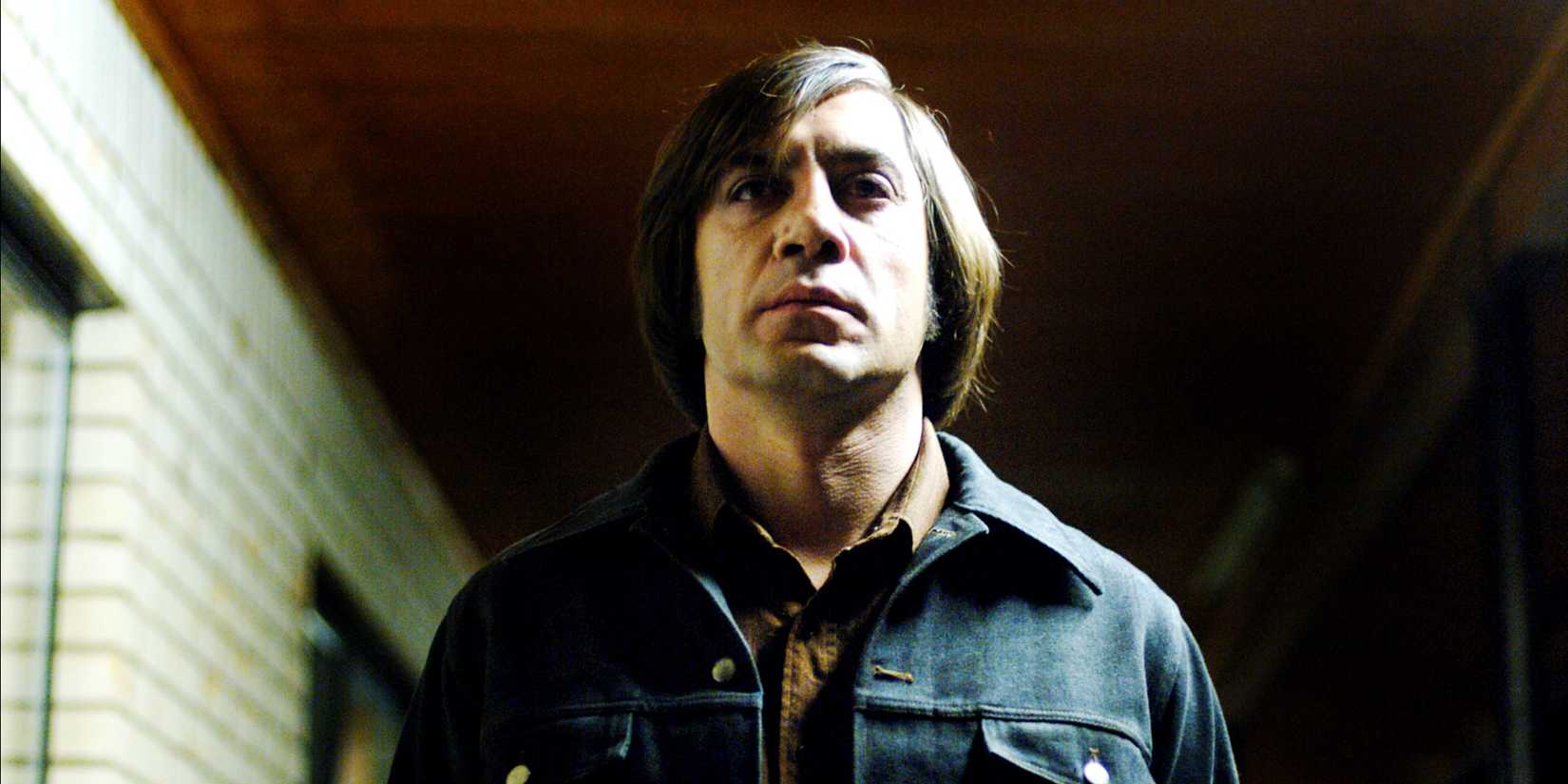 Image via Miramax Films
Existing in a subgenre known as Texas noir, which blends the nihilistic fatalism and stylish grit of noir with elements of Western drama, No Country for Old Men is a fascinating marriage of genres that has come to be adored as one of the most thrilling movies ever made. Based on Cormac McCarthy’s novel, it follows Texan hunter Llewelyn Moss (Josh Brolin) as he finds himself being pursued by a relentless and psychotic cartel hitman after stealing a case of money from the aftermath of a shootout.
Packed with unexpected twists and arresting sequences of unrivaled tension, the Coen Brothers offer a grim exploration of greed, violence, evil, and the shifting landscape of American crime that is pulsating from its opening frame to its last. By leaning heavily on essential noir tropes like the disillusioned lawman, the nihilistic villain, and even the lack of closure at the end, No Country for Old Men revolutionizes the genre for modern viewers while staying true to many of its foundational qualities.
Collider Exclusive · Oscar Best Picture Quiz
Which Oscar Best Picture
Is Your Perfect Movie?
Parasite · Everything Everywhere · Oppenheimer · Birdman · No Country
Five Oscar Best Picture winners. Five completely different visions of what cinema can be — and what it can do to you. One of them is the film that was made for the way your mind works. Ten questions will figure out which one.
🪜Parasite
🌀Everything Everywhere
☢️Oppenheimer
🐦Birdman
🪙No Country for Old Men
FIND YOUR FILM →
01
What kind of film experience do you actually want? The best movies don't just entertain — they leave something behind.
ASomething that pulls the rug out — that makes me think I'm watching one kind of film and then reveals I'm watching another entirely. BSomething overwhelming — funny, sad, absurd, and genuinely moving, all at once. CSomething grand and weighty — a film that makes me feel the full scale of what I'm watching. DSomething formally daring — a film that pushes what cinema can even do. ESomething lean and relentless — pure tension with no wasted frame.
NEXT QUESTION →
02
Which idea grabs you most in a film? Great films are driven by a central obsession. What's yours?
AClass, inequality, and what people are willing to do when desperation meets opportunity. BIdentity, family, and the chaos of trying to hold your life together when everything is falling apart. CGenius, moral responsibility, and the catastrophic weight of a decision you can never take back. DEgo, legacy, and the terror of becoming irrelevant while you're still alive to watch it happen. EEvil, chance, and whether moral order actually exists or if we just tell ourselves it does.
NEXT QUESTION →
03
How do you like your story told? Form is content. The way a story is shaped changes what it means.
AGenre-twisting — I want it to start in one lane and migrate into something completely different. BMaximalist and genre-blending — comedy, action, drama, sci-fi, all in one ride. CEpic and non-linear — cutting between timelines, building a mosaic of cause and consequence. DA single unbroken flow — I want to feel like I'm living it in real time, no cuts to safety. ESpare and precise — every scene doing exactly what it needs to do and nothing more.
NEXT QUESTION →
04
What makes a truly great antagonist? The opposition defines the protagonist. What kind of opposition fascinates you?
AA system — invisible, structural, and almost impossible to fight because it has no single face. BThe self — the ways we sabotage, abandon, and fail the people we love most. CHistory — the unstoppable momentum of events that no single person can stop or redirect. DThe industry — the machinery of culture that chews up talent and spits out irrelevance. EPure, implacable evil — a force so certain of itself it becomes almost philosophical.
NEXT QUESTION →
05
What do you want from a film's ending? The final note is the one that lingers. What do you want it to sound like?
AShock and inevitability — a conclusion that recontextualises everything that came before it. BEarned emotion — I want to cry, laugh, and feel genuinely hopeful, even if the world is a mess. CDevastation and grandeur — an ending that makes me sit in silence for a few minutes after. DAmbiguity — something that leaves enough open that I'm still thinking about it days later. EBleakness — an honest refusal to pretend the world is tidier than it actually is.
NEXT QUESTION →
06
Which setting pulls you in most? Where a film takes place shapes everything — mood, stakes, what's even possible.
AA gleaming modern city with a hidden underside — beauty masking rot, wealth masking desperation. BA collapsing suburban life that opens onto something infinite — the multiverse of a single ordinary person. CThe corridors of power and science at a world-historical turning point — where decisions echo for decades. DThe grimy, alive chaos of New York and Hollywood — fame as both destination and trap. EVast, indifferent landscape — desert and highway where violence arrives without warning or reason.
NEXT QUESTION →
07
What cinematic craft impresses you most? Every great film has a signature — a technical or artistic element that makes it unmistakable.
AProduction design and mise-en-scène — every frame composed to carry meaning beneath the surface. BEditing and tonal control — the ability to move between registers without losing the audience. CScore and sound design — music that becomes inseparable from the dread and awe of what you're watching. DCinematography as performance — the camera not recording events but participating in them. ESilence and restraint — what's left unsaid and unshown doing more work than any dialogue could.
NEXT QUESTION →
08
What kind of main character do you root for? The protagonist is the lens. Who you choose to follow says something about you.
ASomeone smart and resourceful who makes increasingly dangerous decisions under pressure. BSomeone overwhelmed and ordinary who turns out to be capable of something extraordinary. CA brilliant, tortured figure whose gifts and flaws are inseparable from each other. DA self-destructive artist whose ego is both their superpower and their undoing. EA quiet, principled person trying to make sense of a world that has stopped making sense.
NEXT QUESTION →
09
How do you feel about a film that takes its time? Pace is a choice. Some films sprint; others let tension accumulate slowly, deliberately.
AI love a slow build when I know the payoff is going to be seismic — patience for a devastating reveal. BGive me relentless momentum — I want to feel breathless and emotionally spent by the end. CEpic runtime doesn't scare me — if the material demands three hours, give me three hours. DI want it to feel propulsive even when nothing is technically happening — restless energy throughout. EDeliberate and unhurried — I want dread to accumulate in the spaces between the action.
NEXT QUESTION →
10
What do you want to feel walking out of the cinema? The best films leave a mark. What kind of mark do you want?
AUnsettled — like I've just seen something I can't fully explain but can't stop thinking about. BMoved and energised — like the film reminded me what actually matters and gave me something to hold onto. CHumbled — like I've been in the presence of something genuinely important and overwhelming. DExhilarated — like I've just seen cinema doing something it's never quite done before. EHaunted — like a cold, quiet dread that stays with me for days.
REVEAL MY FILM →
The Academy Has Decided Your Perfect Film Is…
Your answers have pointed to one Oscar Best Picture winner above all others. This is the film that was made for the way your mind works.
Parasite
You are drawn to films that operate on multiple levels simultaneously — that begin in one genre and quietly, brilliantly migrate into another. Bong Joon-ho's Parasite is a film about class, desire, and the architecture of inequality that manages to be darkly funny, deeply suspenseful, and genuinely shocking across a single extraordinary running time. Your instinct is for cinema that hides its true intentions until the moment it's ready to reveal them. Parasite is exactly that — a film that rewards close attention and punishes assumptions, right up to its devastating final image.
Everything Everywhere All at Once
You want it all — and this film gives you all of it. The Daniels' Everything Everywhere All at Once is one of the most maximalist films ever made: action comedy, multiverse sci-fi, family drama, existential crisis, and a genuinely earned emotional core that sneaks up on you amid the chaos. You are someone who responds to ambition, who doesn't want cinema to choose between being entertaining and being meaningful. This film refuses that choice entirely. It is overwhelming by design, and its overwhelming nature is precisely the point — because the feeling of being crushed by infinite possibility is exactly what it's about.
Oppenheimer
You are drawn to cinema on a grand scale — films that understand history not as a backdrop but as a force, and that place their characters inside that force and watch what happens. Christopher Nolan's Oppenheimer is a film about the terrifying gap between what we can do and what we should do, told with the full weight of one of the most consequential moments in human history behind it. You want your films to feel important without feeling self-important — to earn their ambition through sheer craft and the gravity of their subject. Oppenheimer does exactly that. It is enormous, complicated, and refuses easy comfort.
Birdman
You are drawn to films that foreground their own construction — that make the how of the filmmaking part of the what it's about. Alejandro González Iñárritu's Birdman, shot to appear as a single continuous take, is cinema examining itself through the cracked mirror of a fading actor's ego. You respond to formal daring, to the feeling that a film is doing something that probably shouldn't be possible. Michael Keaton's performance and Emmanuel Lubezki's restless camera create something genuinely unlike anything else — a film that is simultaneously about creativity, relevance, self-destruction, and the impossibility of ever truly knowing if your work means anything at all.
No Country for Old Men
You are drawn to cinema that trusts silence, that refuses to explain itself, and that treats dread as a form of meaning. The Coen Brothers' No Country for Old Men is a film about the arrival of a new kind of evil — implacable, arbitrary, and utterly indifferent to the moral frameworks we use to make sense of the world. It is one of the most formally controlled films ever made, and its controlled restraint is what makes it so terrifying. You want your films to haunt you, not comfort you. You are not interested in resolution if resolution would be dishonest. No Country for Old Men is honest in a way that most cinema never dares to be.
↻ RETAKE THE QUIZ
3 'Taxi Driver' (1976)
 Image via Columbia Pictures
While the eruption of neo-noir movies in the 1970s was well and truly underway by the time it was released in 1976, Taxi Driver is a pioneering achievement given how it repurposes the integral elements of noir cinema to tell an urgent and timely story of violence, alienation, and morality in post-Vietnam War America. The jaded and cynical antihero isn’t a private eye, but a drifting vet with a festering disgust for the city around him.
Taxi Driver still adheres to the fabric of noir cinema, however, using its foundations to enrich its story as it follows Travis Bickle’s (Robert De Niro) descent from aimlessness to a driven, dogmatic urge to commit violence. Its reconfiguration of antihero angst from a beacon of cynical suave to a disturbing indictment of the malice that festers in society is masterful. The message is further complemented by its neon-infused grime and the piercing ideas of cultural decay and violence that Martin Scorsese and writer Paul Schrader strive to bring to the forefront.
2 'Sunset Boulevard' (1950)
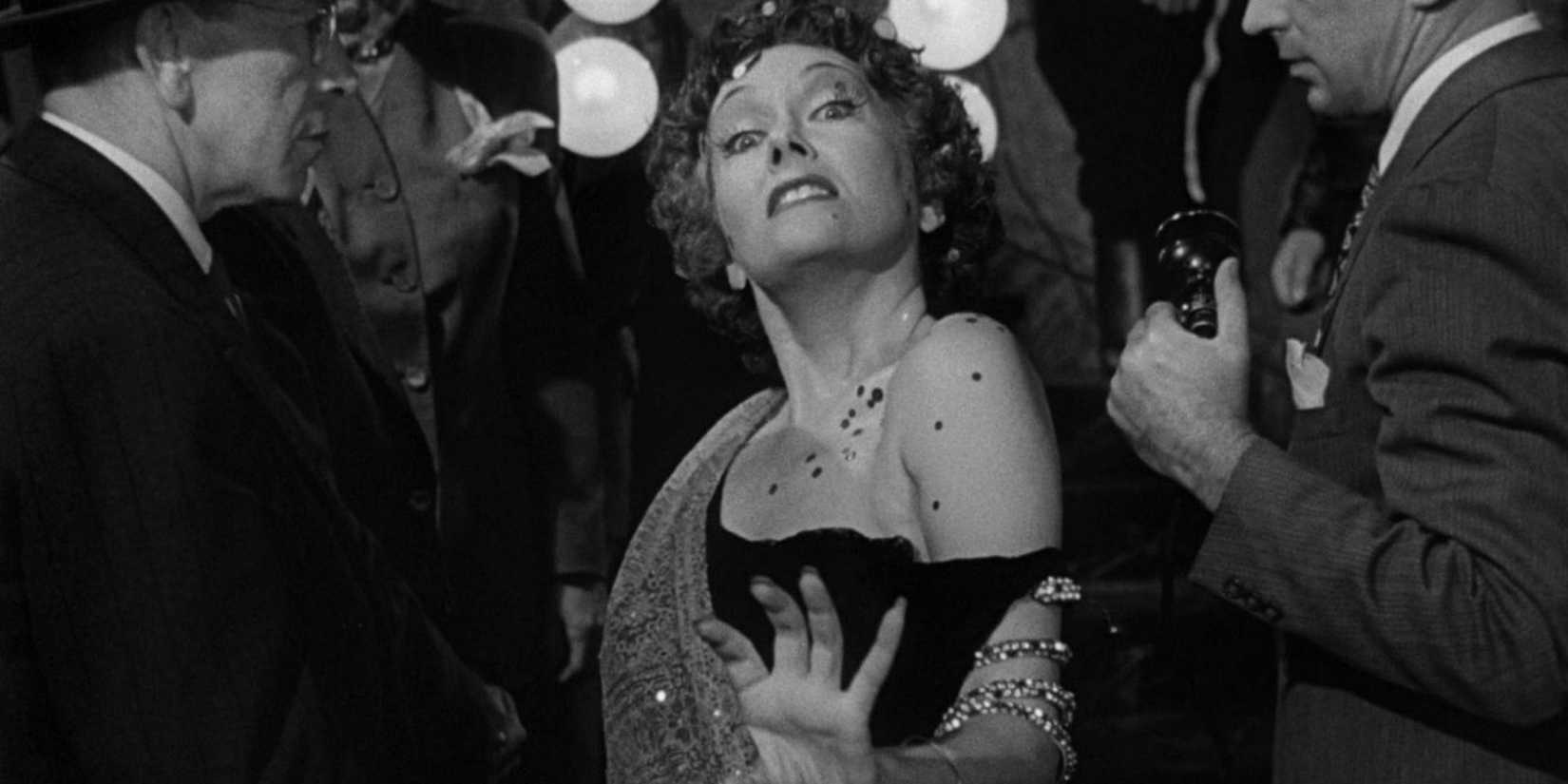 Image via Paramount Pictures
It would be incredibly easy to mount a case that Sunset Boulevard is the greatest classical noir movie of all time, given how it combines the cold fatalism of the genre with a razor-sharp indictment of the nature of Hollywood. Co-written and directed by Billy Wilder, it follows struggling screenwriter Joe Gillis (William Holden) as he finds a safe harbor in the mansion of Norma Desmond (Gloria Swanson), a faded silent film star planning a career comeback. Ensnared in a mercenary romance, Gillis agrees to write for her while using her dwindling assets for self-gain, but the complicated relationship soon turns violent and volatile.
By opening on Gillis’ corpse floating in a swimming pool, Sunset Boulevard introduces itself with a sense of dread and frames Gillis’ ambition, corruption, and scheming with a pervasive air of damnation. Also thriving off the back of its trademark noir cinematography that imbues Norma’s dilapidated mansion with an eerie decadence, as well as the unhinged glory of Swanson’s performance itself, Sunset Boulevard is a quintessential icon of noir cinema.
1 'Chinatown' (1974)
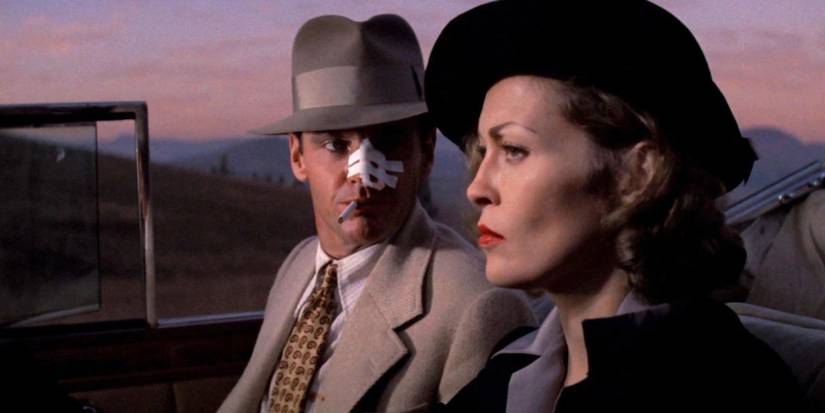 Image via Paramount Pictures
Not only an enduring triumph of noir cinema, but widely viewed as being the best written movie of all time as well, Chinatown is the defining achievement of neo-noir cinema and one of the greatest cinematic feats of the 1970s. Set in 1930s Los Angeles, amid the California water wars, it follows private eye Jake Gittes (Jack Nicholson) as he is hired under false pretenses to investigate the affair of a key figure in the political conflict, a ruse that soon sees him embroiled in a vicious world of power and corruption.
It maintains many of the integral tropes of classic noir cinema, from the hard-boiled detective to the femme fatale, the puzzling plotting, and even the imposing air of cynicism and rot. However, Chinatown’s endeavor to level these pessimistic ideas directly at institutions gives it a critical and mindful edge that is distinctly ‘70s. It’s the perfect reinterpretation of the genre’s original form that stands tall among the greatest noir movies ever made, paving the way for so much of the noir cinema audiences have enjoyed over the past 50 years.






 English (US) ·