
For every instant hit that tops the bestseller lists, there are plenty of equally impressive books that spread slowly by word of mouth, finding niche fanbases over years or even decades. Some of these slow starters eventually break into the mainstream; others remain forever on the sidelines, loved deeply rather than widely.
With that in mind, this list looks at some of the very best cult classic books of all time, the ones that gathered enough goodwill to cement themselves as icons of the medium. From 1920s spiritual odysseys to 1950s horror anthologies, what unites them is their enduring ability to inspire loyalty and fascination, however narrow.
10 'The Electric Kool-Aid Acid Test' (1968)
 Image via Picador
"You're either on the bus or off the bus." The Electric Kool-Aid Acid Test chronicles the adventures of novelist Ken Kesey (author of One Flew Over the Cuckoo's Nest) and the Merry Pranksters, a countercultural group that traveled across America in a brightly painted bus... while experimenting with copious amounts of psychedelic drugs. They were thus emblematic of the Swinging Sixties, and the book immerses us in the energy and chaos of that moment in time.
Here, author Tom Wolfe pioneered what became known as New Journalism, blending rigorous reporting with literary techniques usually associated with fiction. The result is a nonfiction book that reads like a novel. The book became a cult classic because it captured that era's counterculture like lightning in a bottle, and it's essential for understanding both the successes and failures of that movement.
9 'Siddhartha' (1922)
 Image via Jaico Books
"Wisdom cannot be imparted." Siddhartha follows a young man in ancient India who abandons a comfortable life in search of enlightenment. Along his journey, he encounters ascetics, merchants, gamblers, and holy men, gradually learning that wisdom cannot simply be taught by others but must be discovered on one's own. It's a surprisingly simple book, written in clear sentences and clocking in at about 150 pages, but still packed with philosophical ideas.
When it was first published in the 1920s, Siddhartha was not a big hit, receiving a relatively muted response from most critics. However, during the 1960s and '70s, it became very popular among young people in the West, quickly turning into one of the go-to books for a generation seeking alternative spirituality. It's held this role ever since and continues to charm millions of people looking for answers.
8 'The Pan Book of Horror Stories' (1959)
 Image via Pan Books
"There are worse things than death." One of the most influential horror anthologies ever. Edited by Herbert Van Thal, the collection assembled stories from a variety of authors (including Bram Stoker) and, for many readers, it was their very first experience of the genre. Within its pages, they discovered unsettling tales involving ghosts, monsters, and psychological terror, including material far darker than anything available in mainstream fiction at the time.
Because of this, the Pan horror anthologies developed an almost mythical status among genre enthusiasts, particularly in Britain. Their lurid covers and provocative stories created a sense of the forbidden that appealed strongly to younger readers desperate to read what they shouldn't. This reputation helped them spread by word of mouth, turning them into a touchstone for the Baby Boomers. Indeed, many future horror icons read these anthologies when they were kids.
7 'The Collector' (1963)
 Image via Little, Brown and Company
"I think you can never really know another person." Another influential and very, very creepy tale. The Collector tells the story of Frederick Clegg, a lonely, socially awkward man who becomes obsessed with art student Miranda Grey. After winning a large sum of money, Clegg kidnaps Miranda and imprisons her in the basement of a secluded house, believing he can eventually make her love him. Author John Fowles spins this setup into one of the most disturbing psychological thrillers ever, anchored by well-written characters.
The story unfolds through the perspectives of both Clegg and Miranda, providing us with an uncomfortably close view of their minds, particularly the villain's. It's no exaggeration to say that Clegg is one of the most evil creations in all of fiction, a loathsome coward who has always wanted to commit crimes but never had the power or guts to do so—until now, that is.
6 'A Confederacy of Dunces' (1980)
 Image via Grove Press
"My valve has closed." A Confederacy of Dunces follows Ignatius J. Reilly, one of the most outrageous protagonists in 20th-century American literature. Living with his mother in New Orleans, he spends his days criticizing modern society while avoiding meaningful work. When financial circumstances force him into the workforce, chaos inevitably follows. The book was written in 1963 but only published in 1980, eleven years after the death of author John Kennedy Toole.
From there, A Confederacy of Dunces developed a cult following before eventually breaking into the mainstream, earning rave reviews and even taking home the Pulitzer Prize for Fiction. It's now widely considered a modern classic, taught in schools and university courses around the world. It's up there with the paintings of Van Gogh in terms of being a work of art only recognized years after it was made, an outcome as ironic as the book itself.
5 'Flowers for Algernon' (1966)
 Image via Mariner Books Classics
"Intelligence and education that hasn't been tempered by human affection isn't worth a damn." A subtle sci-fi that uses its speculative elements to tell a poignant, character-driven story. Flowers for Algernon centers on Charlie Gordon, a man with an intellectual disability who is selected for an experimental procedure designed to dramatically increase his intelligence. After the operation succeeds, Charlie's intellectual abilities rapidly surpass those of almost everyone around him.
However, as he gains knowledge and insight, he begins discovering painful truths about himself, the people in his life, and the experiment itself. Worse still, the experiment's success turns out to be short-lived, and Charlie realizes that his mind will soon slip away from him once more. It's a beautiful, heartbreaking book, presenting inevitability as equal parts tragic and ever-present. It's among the best genre novels of the 1960s, and it deserves way more attention.
4 'The Hitchhiker's Guide to the Galaxy' (1979)
 Image via Pan Books
"Don't panic." This novel, a landmark of comic sci-fi writing, first started as a BBC radio broadcast, and its offbeat brand of humor slowly earned it a growing coterie of devoted fans. In it, ordinary Englishman Arthur Dent learns that Earth is about to be demolished to make way for a hyperspace bypass. Rescued moments before destruction by his alien friend Ford Prefect, Arthur is launched into an absurd adventure that takes him across the galaxy and introduces him to eccentric aliens, impossible technologies, and cosmic mysteries.
The book is very, very odd, and it's kind of an acquired taste, but this singular identity is also precisely why it's so beloved. Douglas Adams' imagination seems limitless, and he puts hilarious spins on genuinely fascinating concepts, particularly science and religion. As a later book in the series tells us: "In the beginning the Universe was created. This has made a lot of people very angry and been widely regarded as a bad move.”
Collider Exclusive · Sci-Fi Personality Quiz Which Sci-Fi Hero Are You Most Like? Paul Atreides · Captain Kirk · Princess Leia · Ellen Ripley · Max Rockatansky
Five iconic heroes. Five completely different ways of facing an impossible universe. One of them shares your instincts, your values, and your particular way of refusing to back down. Eight questions will tell you which one.
🏜️Paul Atreides
🖖Capt. Kirk
✊Princess Leia
🔦Ellen Ripley
🔥Max Rockatansky
FIND YOUR HERO →
01
How do you lead when the stakes couldn't be higher? The way you lead under pressure is the most honest thing about you.
AI absorb everything — every variable, every pattern — and move only when I know the path forward. BI read the room, make the call, and own the consequences. Hesitation costs more than mistakes. CI rally people. A cause needs a voice, and I refuse to let fear be louder than conviction. DI assess the threat, establish what needs doing, and get it done without waiting for permission. EI don't lead. I act. Others can follow or not — I'm already moving.
NEXT QUESTION →
02
What is your greatest strength in a crisis? The quality that keeps you alive when everything else fails.
APrescience — the ability to see further ahead than anyone else and plan accordingly. BImprovisation — I'm at my best when the plan falls apart and I have to invent a new one. CConviction — I know what I'm fighting for, and that certainty doesn't waver under fire. DComposure — I stay functional when everyone around me is falling apart. Panic is a luxury. EEndurance — I outlast things. I take the hit and keep moving long after others have stopped.
NEXT QUESTION →
03
What is the thing you'd sacrifice everything else for? Your deepest motivation is your truest compass.
AThe survival and dignity of my people — even if I have to become something frightening to ensure it. BThe safety of my crew — every single one of them. No one gets left behind. CFreedom — for my people, for every world still crushed under the weight of an empire. DThe truth — what actually happened, what's actually out there, whether anyone believes me or not. EThe one person — or the one memory — that still makes any of this worth surviving for.
NEXT QUESTION →
04
How do you relate to the people around you? Who you are to others under pressure is who you really are.
AWith intensity and distance — I care deeply, but the weight I carry makes closeness complicated. BWith warmth and irreverence — I take the mission seriously, not myself. CWith directness and trust — I say what I mean, and I expect the people I work with to rise to it. DWith professional care but clear limits — I'll protect you, but I won't pretend we're family. EWith wariness that slowly becomes loyalty — I don't trust easily, but when I do, it holds.
NEXT QUESTION →
05
You're facing a threat that no one else believes is real. What do you do? How you respond when you're the only one who sees it defines everything.
APrepare in silence. If they won't listen, I'll be ready when they finally have to. BKeep pushing until someone listens — and if no one does, handle it myself. CBuild the case, find the allies, and make the threat impossible to ignore. DDocument everything. The truth matters even if no one believes it yet. EStop trying to convince anyone. Survive it. That's the only argument that counts.
NEXT QUESTION →
06
What has your heroism cost you personally? Every hero pays. The question is what — and whether they'd pay it again.
AMy innocence — I've seen what I'm capable of, and I can't unsee it. BPeople I loved — the command chair has a view, but it's a lonely one. CA normal life — I gave up everything ordinary the moment I chose the cause. DMy sense of safety — I know exactly what's out there now, and I can't pretend otherwise. EAlmost everything — and I'm still not sure what I'm carrying it all for. But I keep going.
NEXT QUESTION →
07
How do you feel about the rules of the world you're in? Every hero has a relationship with the system. What's yours?
AI understand them deeply — and I know exactly which ones must be broken, and why. BI respect the spirit of them and bend the letter when the situation demands it. CThe system is the problem. I'm not here to work within it — I'm here to dismantle it. DI follow protocol until protocol stops being useful. Then I make the call myself. EThe rules collapsed a long time ago. What's left is instinct, and mine are reliable.
NEXT QUESTION →
08
When everything is on the line, what keeps you going? The answer is the most honest thing about you.
ADestiny — or something that feels so much like it that the difference no longer matters. BThe people on my ship — their faces, their trust, the fact that they're counting on me. CThe belief that what we're fighting for is worth every sacrifice, including this one. DSheer refusal to let it win — whatever it is. I don't stop. That's just who I am. EI'm not sure anymore. But the road is still there, and I'm still on it.
REVEAL MY HERO →
Your Hero Has Been Identified Your Sci-Fi Hero Is…
Your answers point to the iconic sci-fi hero who shares your instincts, your values, and your particular way of facing the impossible.
Paul Atreides
You carry a weight most people would crumble under — the knowledge of what you're capable of, and the burden of what you might have to become.
- You see further ahead than others and you plan accordingly, even when the vision frightens you.
- You are driven by loyalty to your people and a sense of destiny you didn't ask for but can't escape.
- Paul Atreides is not simply a hero — he is someone who understands the cost of power and chooses to bear it anyway.
- That gravity, that willingness to carry what others won't, is exactly you.
Captain Kirk
You lead with instinct, warmth, and an absolute refusal to accept a no-win scenario — because you've always believed there's a third option nobody else has thought of yet.
- You take the mission seriously without ever taking yourself too seriously.
- Your crew would follow you anywhere, not because you demand it, but because you've earned it.
- Kirk's genius isn't tactical — it's human. He reads people, bends rules with purpose, and wills outcomes into existence through sheer conviction.
- That combination of warmth, audacity, and relentless optimism is unmistakably yours.
Princess Leia
You are the kind of person who holds the line when everyone else is losing faith — not because you're fearless, but because giving up simply isn't something you're capable of.
- You lead through conviction. Your voice carries because your belief is unshakeable.
- You gave up everything ordinary the moment you chose the cause, and you've never looked back.
- Leia is not a supporting character in her own story — she is the moral centre of the entire rebellion.
- That same fierce, principled, unbreakable core is what defines you.
Ellen Ripley
You are not reckless, not grandiose, and not particularly interested in being anyone's hero — you just refuse to stop when it matters.
- You see threats clearly, you document the truth even when no one listens, and when the time comes you handle it yourself.
- Ripley's heroism is earned, not performed. She doesn't have a speech — she has a flamethrower and a plan.
- You share her composure under the worst possible pressure, and her refusal to pretend the monster isn't there.
- When it counts, you don't flinch. That's everything.
Max Rockatansky
You have been through fire that would break most people — and what came out the other side is something the world underestimates at its peril.
- You don't ask for help, don't need validation, and don't wait for anyone to tell you the rules no longer apply.
- Your loyalty, when it finally arrives, is absolute — but it's earned in silence and tested in action, not in words.
- Max is not a nihilist. He is someone who lost everything and found, against his will, that he still has something worth protecting.
- That bruised, stubborn, ultimately human core is exactly yours.
↻ RETAKE THE QUIZ
3 'House of Leaves' (2000)
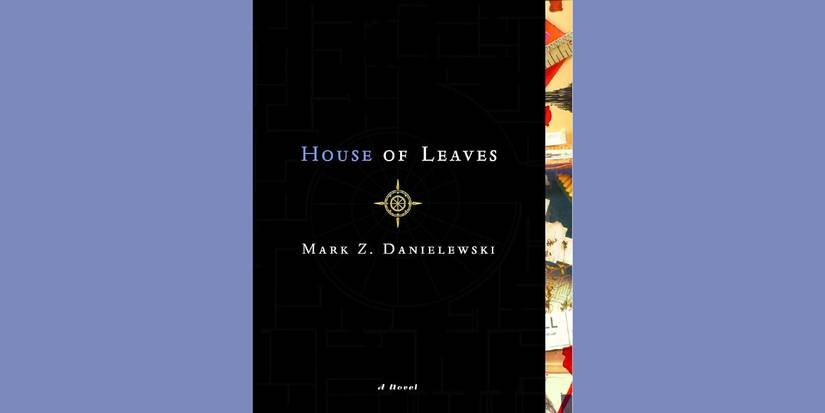 Image via Pantheon Books
"This is not for you." One of the most inventive horror novels ever, not just in terms of its plot but in terms of its structure and the clever way it uses its medium. House of Leaves begins as the story of a family that discovers their house is somehow larger on the inside than it is on the outside. However, that premise quickly becomes only one layer of an increasingly complex narrative involving academic analysis, unreliable narrators, footnotes, documents, and stories nested within stories.
Most strikingly, the text itself becomes part of the storytelling experience. Pages contain unusual layouts, fragmented scenes, and strange digressions, along with visual experiments like paragraphs that you must turn the book sideways to read. All of these elements force the reader to interact with the book in unconventional ways; it actively, physically includes the reader in the narrative, turning itself into a complete sensory experience. House of Leaves is a cult phenomenon unlike any other.
2 'Ham on Rye' (1982)
 Image via Canongate Books
"If you're going to try, go all the way." Ham on Rye ranks among the very best projects from Charles Bukowski, the patron saint of beautiful losers and barstool philosophers. A fictionalized account of the author's early life, it follows Henry Chinaski from childhood through adolescence, depicting his struggles with poverty, abuse, alienation, social rejection, and acne as he attempts to find his place in the world. But, unlike many coming-of-age stories, Ham on Rye stubbornly refuses sentimentality.
Here, Bukowski presents life's difficulties in all their glory, leaning hard into humiliation, loneliness, and disappointment without softening a thing, coming-of-age by way of cringe. This authenticity is a major reason the novel developed such a devoted following. Readers often connect deeply with Chinaski because of his outsider status; his frustrations and insecurities feel intensely real and lived-in. Even when his behavior is self-destructive, there's something undeniably human about it.
1 'We Have Always Lived in the Castle' (1962)
 Image via Penguin
"I am going to put death in all their food and watch them die." We Have Always Lived in the Castle is a horror novel by Shirley Jackson, best known for writing the influential horror masterpiece The Haunting of Hill House. It's about eighteen-year-old Merricat Blackwood, who lives in near isolation with her sister Constance and their ailing uncle. Years earlier, most of the Blackwood family died under mysterious circumstances, leaving the surviving relatives ostracized by their village. When a cousin arrives unexpectedly, the fragile balance of their lives begins to unravel.
The book's atmosphere is extraordinary, combining relentless Gothic suspense and biting dark humor. From the opening pages, we can sense that something is very wrong; we just don't know what. A big part of this uncertainty comes from the fact that Merricat is such a mercurial, unreliable narrator: she's fascinatingly complex, simultaneously childlike, imaginative, and deeply disturbed, elevating this gem way above other books in the genre.


 English (US) ·