
Who doesn't love cosmic horror? Whether it's an inconceivable evil with cultist followers, eldritch abominations, or seeing something so horrifying that it's literally indescribable (bonus points if it makes a person tear their own eyes out), the existential dread this genre conjures can be both frightening and fun. Luckily, for fans, there's plenty of cosmic horror media to go around, in the form of books, movies, and even television.
H.P. Lovecraft is, of course, the king of cosmic horror, and his stories have influenced numerous films and even a few television shows. While cosmic horror TV shows are harder to come by than movies, some have either directly adapted Lovecraft's works or referenced them in settings, storylines, and occasionally, just vibes. Some of these shows lasted a mere season, but others had much longer runs, giving fans of Lovecraftian horror more to indulge in.
Twin Peaks
(1990-1991, 1992, 2014, 2017)
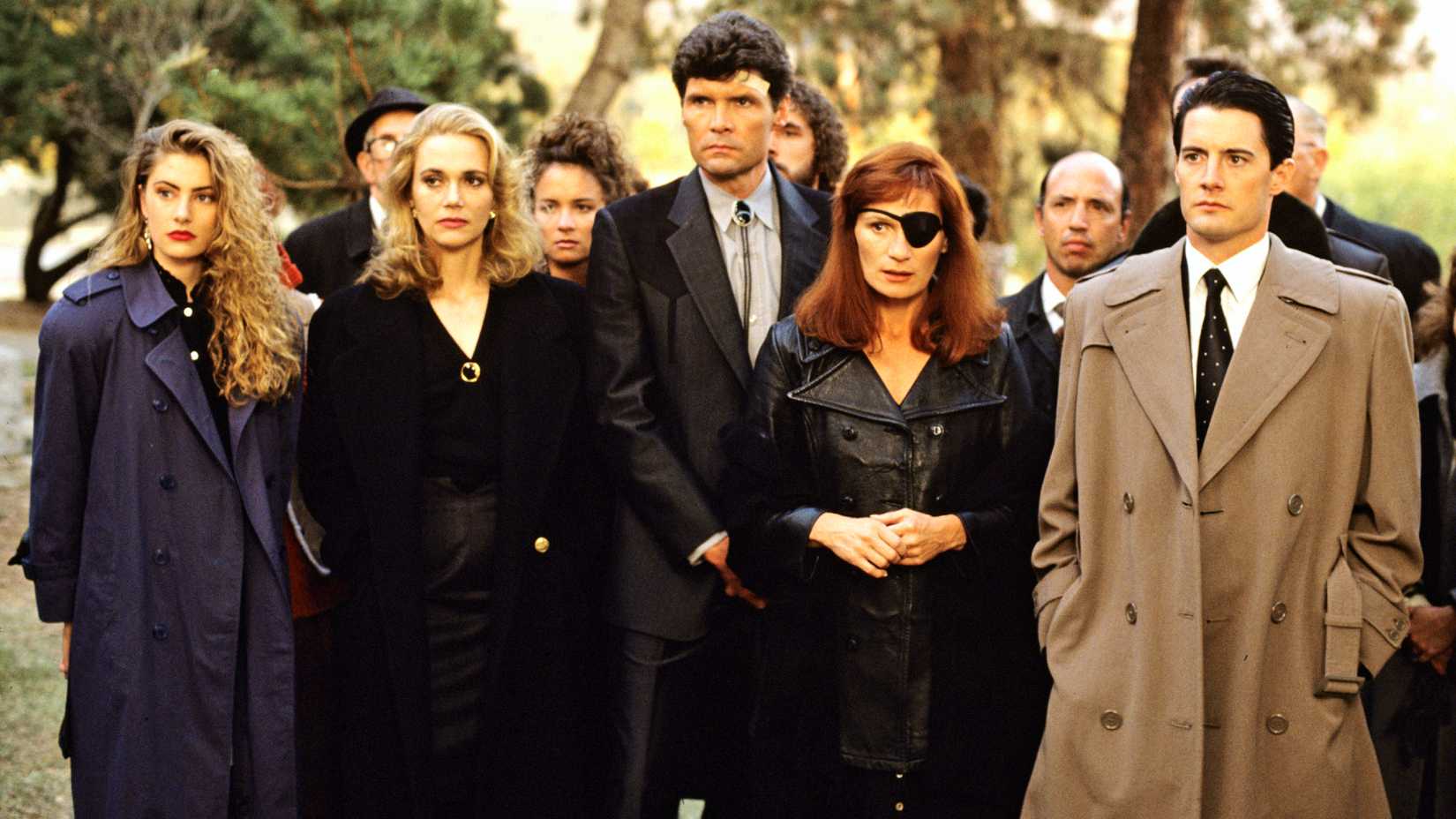 Image via MovieStillsDB
Twin Peaks is divisive in the cosmic horror subgenre, so not everyone will agree with its inclusion. But many people do consider the show to have certain aspects of cosmic horror. The show might have started with a murder mystery, but there were plenty of supernatural occurrences, as Twin Peaks' best episodes prove.
The series featured plenty of abstract horrors throughout (like Killer BOB, a demonic entity that possessed people), but also hinted at something bigger, more dangerous, and unknown lurking in the background (especially as the show went on). Whether one thinks it leans more toward hints of cosmic horror or further toward surreal horror, it was an incredibly influential and excellent show.
Sapphire & Steel
(1979-1982)

For those who love Ducky from NCIS or Patsy from Absolutely Fabulous, this one's for you. Sapphire & Steel is a British show that ran from 1979 to 1982, featured lore that was only barely explained, and starred Joanna Lumley and David McCallum as the titular characters, Sapphire and Steel.
The premise was simple at first glance. Time is like a corridor, but it has weak spots that allow Lovecraftian-like creatures and Time itself to slip into the world to take what they want. Most often, weak spots appear when a very old thing is around — except this could mean anything from a nursery rhyme to a physical item. Sapphire and Steel were essentially alien guardians who protected the flow of time.
The lack of explanation and rules for what's happening onscreen made the whole thing less simple; it also made the series seem as though the audience had stepped into a world just slightly left of center. The series presented enough confusion to be anxiety-inducing. Plus, it was incredibly eerie, leaving viewers plenty of time to ponder the what-ifs of the universe.
Threshold
(2005)
 Image via MovieStillsDB
Threshold was an American sci-fi show that lasted only one season in 2005. What's even worse, the last four episodes didn't air in the US; those aired on a UK channel. However, as far as TV shows inspired by cosmic horror go, this one had a lot going for it. It focused on a special government task force investigating an incident where a naval vessel came across a UFO, with several of the vessel's crew members dying (and terribly, at that).
The aliens, as it turned out, were trying to rewrite human DNA, affecting humanity in mysterious ways. For a show that lasted only a season, the mythology was pretty solid. And because the showrunners found out halfway through filming the final episode that the show was being canceled, they managed to include a semblance of an ending, though some things are forever left unexplained. It's a shame it didn't last longer, but the single season it offers is a fun time.
Guillermo del Toro's Cabinet of Curiosities
(2022)
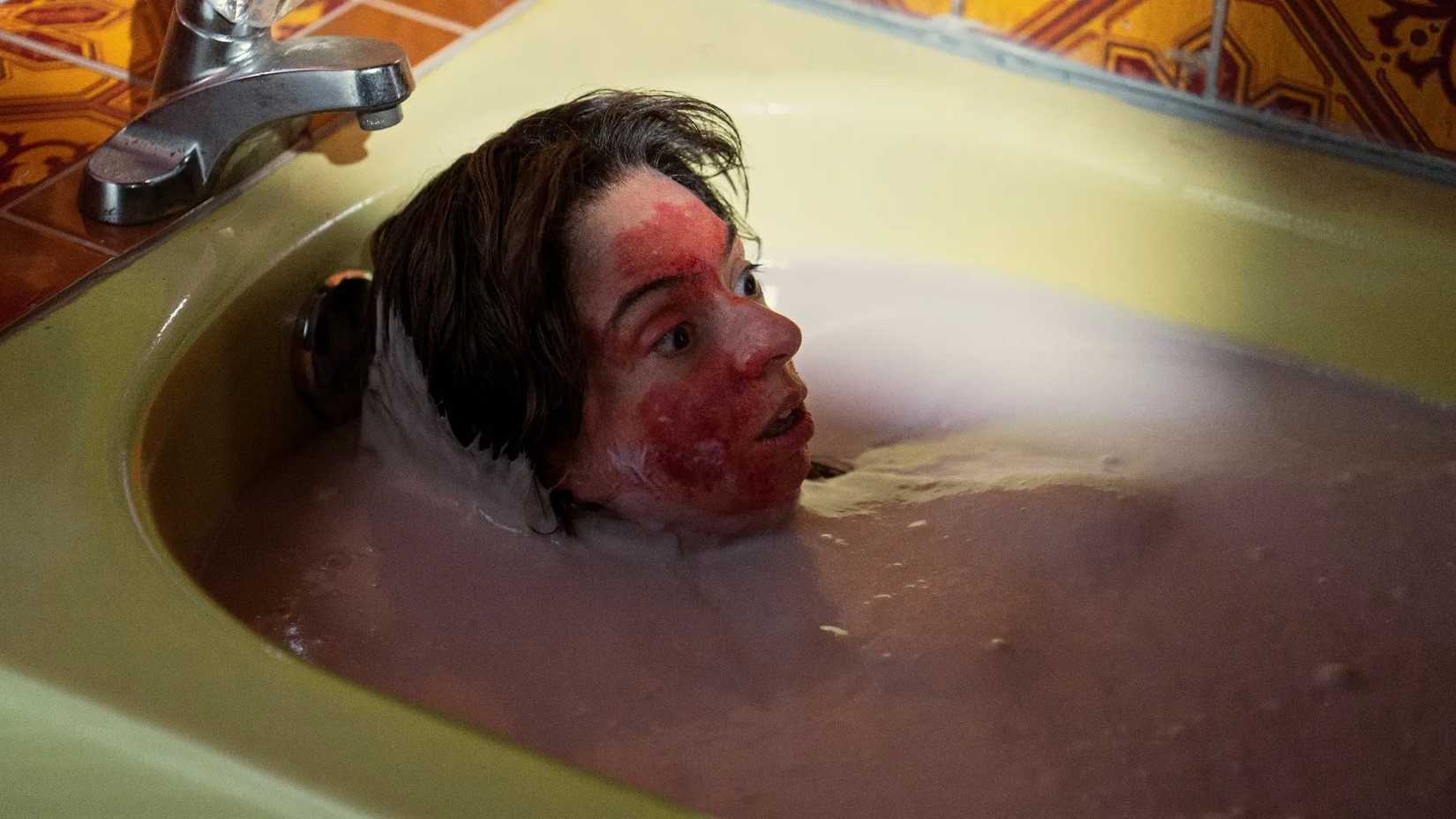
Guillermo del Toro knows horror, especially the sort that's Lovecraftian, so it's not surprising that some episodes of his Netflix anthology show Guillermo del Toro's Cabinet of Curiosities were inspired by the author. In particular, episodes 3, 5, and 6 are all either inspired by or direct adaptations of Lovecraft's works.
Episode 3, "The Autopsy," chronicled the tale of a group of miners who die after a mysterious person exploded a strange sphere. As authorities worked the scene and examined the bodies, they found more than they bargained for.
Episodes 5 and 6 were both adaptations of Lovecraft's short stories. "Pickman's Model" followed an artist's horrifying artwork that began to disturb one man's reality, while "Dreams in the Witch House" was about a researcher who used a drug to venture into a mysterious realm in the hopes of bringing back his deceased twin.
Night Gallery
(1970-1973)

The American anthology series Night Gallery ran from 1970 to 1973 (though the pilot aired in 1969) and was hosted by Rod Serling, creator of The Twilight Zone. The premise, as the name suggests, was an art gallery, with Serling acting as curator and introducing the audience to paintings each episode. The paintings were visual representations of the tales to come, with the stories ranging from original works to adaptations of popular classical authors.
Serling wrote a few of the scripts, including season 2's "Cool Air," an adaptation of the Lovecraft story of the same name. "Pickman's Model" also appeared in an episode of the same season (adapted by a different writer). Overall, The Night Gallery presented a series not always cosmic horror-aligned, but filled with the supernatural, gore, and action.
Love, Death & Robots
(2019-2025)
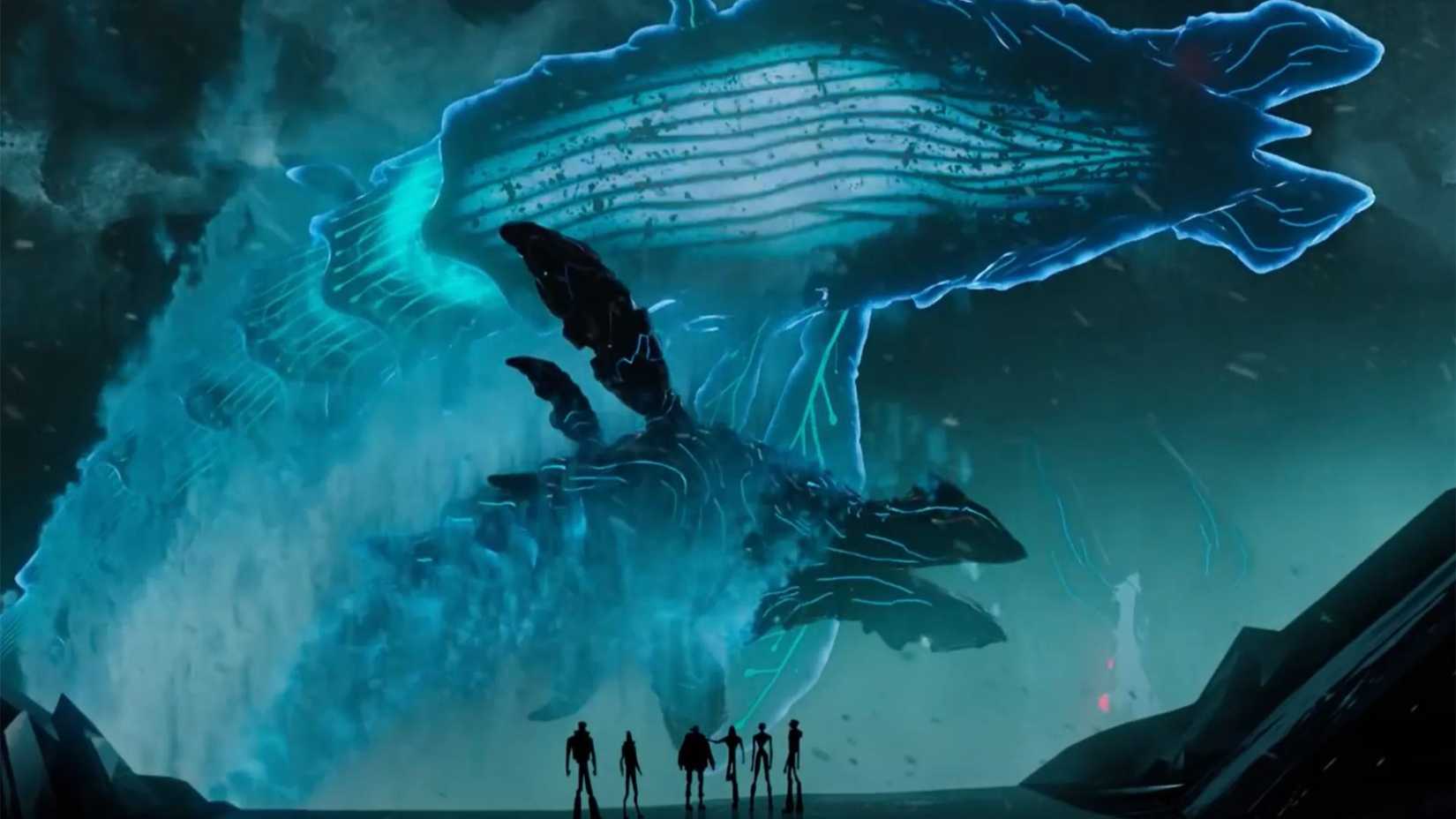
Another fantastic anthology series (honestly, it doesn't have a single bad episode), Love, Death & Robots offered stories spanning a variety of genres, from sci-fi to fantasy. Oftentimes, the episodes featured disturbing themes and imagery, and a few held elements of cosmic horror.
In particular, volume 3, episode 2, "Bad Travelling," and volume 3, episode 6, "The Swarm," invoked the idea of ancient entities that were alien to the human mind. In the first episode, sailors in an alien ocean are set upon by a ravenous crab-like creature, the Thanapod, with which they are forced to make a deal to survive. "The Swarm" featured scientists studying an ancient alien entity, a nest known as The Swarm that viewed humanity as parasites.
Perhaps the episode that best captured cosmic horror, though, was volume 3, episode 8, "In Vaulted Halls Entombed." Elder gods and modern warfare collided, and things went, well, about as well as might be expected, with dead soldiers, minds lost, and eyeballs gone.
The Outer Limits
(1963-1965)

The Outer Limits, which ran from 1963 to 1965, is sometimes confused with The Twilight Zone because both were sci-fi anthologies with opening and closing narration for most episodes. However, while both were sci-fi, The Twilight Zone veered more towards irony in its stories. The Outer Limits, though, had a habit of pitting humanity against existential forces (and Stephen King claimed it had better horror).
Whether it was alien abductions, as in season 1, episode 29, "A Feasibility Study," or bodies being taken over by alien parasites, as in season 1, episode 19, "The Invisibles," the show knew how to terrify with the thought of what might be lurking out there, unseen and unknown; its revival debuted in 1995 and lasted until 2002.
Archive 81
(2022)

Another series that lasted only a season, Archive 81, was based on the podcast of the same name. In it, a film conservator was approached on behalf of a mysterious corporation that requested that he restore some videotapes from the 1990s. Of course, this involved moving to a research campus in the middle of nowhere — a place that had no cell phone or internet service. After that, things got weird.
By the end of it all, a pan-dimensional god (or possibly demon), a cult, a parallel universe known as The Otherworld, witches, and the bending of time and space had all come into play. Throw in rituals and portals, and this Netflix show basically had it all.
True Detective
(2014)
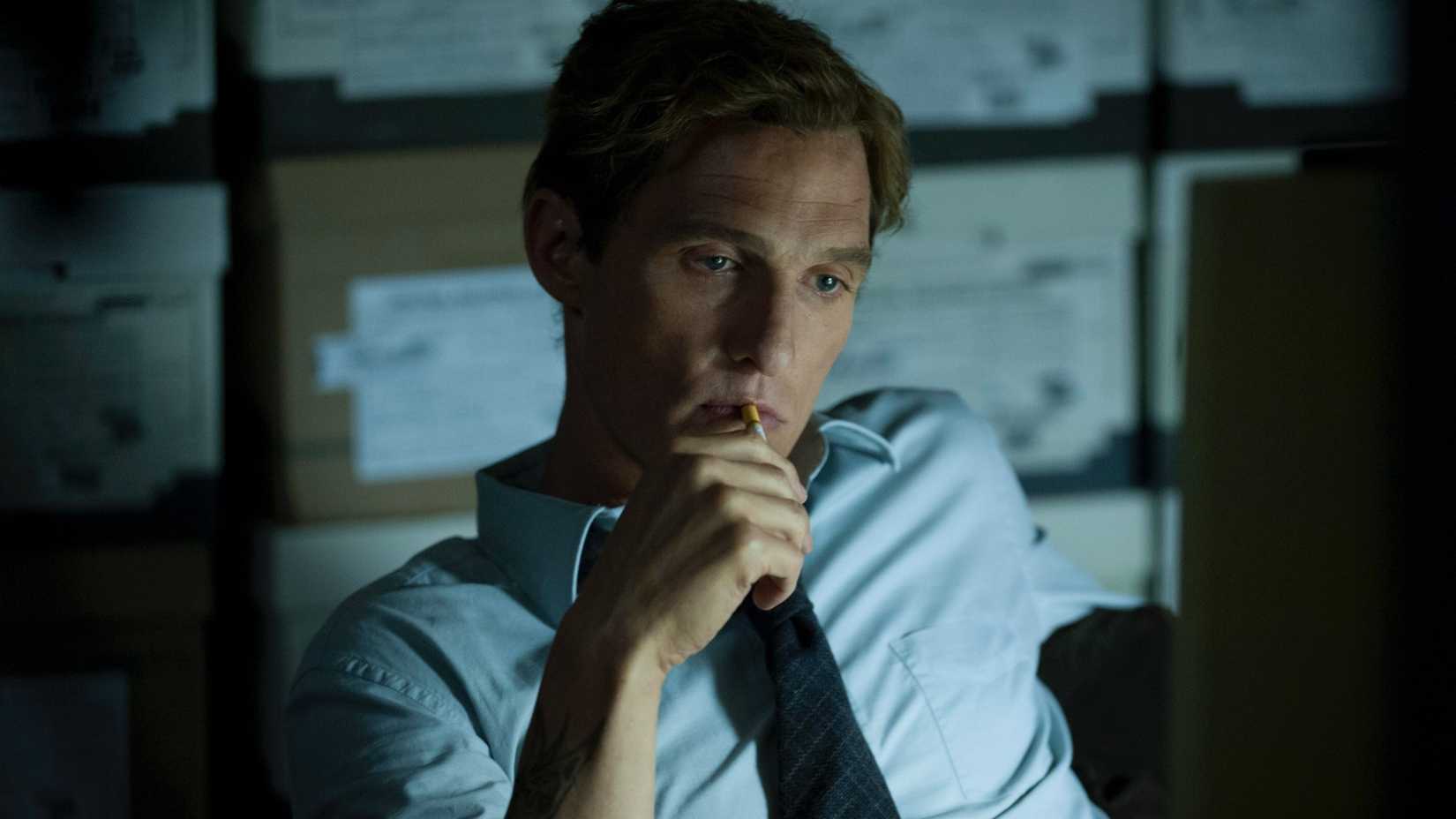
True Detective as a whole may not be cosmic horror, but it was definitely inspired by it, particularly season 1. While the supernatural elements are only hinted at, the first season featured crimes involving a Yellow King-worshipping cult and a symbol tied to the mysterious city of Carcosa.
Nic Pizzolatto, the show's creator, based the season, in part, on the 1895 book The King in Yellow by Robert W. Chambers. This book served as inspiration for Lovecraft, who included references to it in The Whisperer in Darkness. The Lovecraftian vibes in True Detective were strong enough that some fans even posited that the show took place in Lovecraft's Universe.
Lovecraft Country
(2020)

Lovecraft Country, which aired in 2020, was set in the US in the 1950s and followed a young Black man who was searching for his missing father. While doing so, he learned about secrets that had ravaged the town that H.P. Lovecraft allegedly set many of his stories in. The show's pairing of cosmic horror and Lovecraftian monsters with the real-life terrors of Jim Crow increased the horrors of both.
The show was generally well-received (it holds an 88% approval rating on Rotten Tomatoes), but Lovecraft Country's second season never panned out, as HBO canceled the series even after initial planning and writing had begun. Still, the 10 existing episodes of Lovecraft Country offered up possibly TV's best Lovecraft show and one of the best recent cosmic horror shows.



 English (US) ·