
A movie's worth can be measured in many different ways, and the most important thing to fans is how much they enjoyed it, as well as its critical success. With films such as Avengers: Infinity War being praised for their entertainment value and critical enjoyment, many claim it is one of the most iconic modern movies. However, it is also one of the most financially successful movies ever, which is another key measure of success.
While a director, writer, and actors aim to please the audience, the goal of a movie is to make money, and that is where the box office comes in. Comedy movies, in particular, are known to make people happy, which is why this list will rank the ten greatest comedy movies ever by box office. This list isn't ranking the highest-grossing comedy films, which would be Barbie, but rather curates the ten best comedies and then ranks them by how much they earned. This list also won't adjust for inflation.
10 'Duck Soup' (1933)
$106,318
 Image via Paramount Pictures
Since this list isn't adjusted for inflation, older movies will make much less than newer ones, and, as the oldest film on this list, Duck Soup's box office is especially low. After a bankrupt country elects a fast-talking, cynical leader, they hope he will lead them out of poverty. However, his incompetence knows no bounds, instantly instigating a war with a neighboring nation.
Comedy has changed over the years, and what was funny years ago no longer makes anyone laugh, making it challenging for classics such as Duck Soup to reach a modern audience. Unfortunately, it didn't even reach an audience back then, being considered a financial disaster that barely made anything. It may have been a box-office nightmare that wasn't appreciated back then and nearly bankrupted the studio, but its sharp wit, anarchic style, and anti-war satirical humor is now regarded as a timeless classic.
9 'Monty Python and the Holy Grail' (1975)
$5,763,644
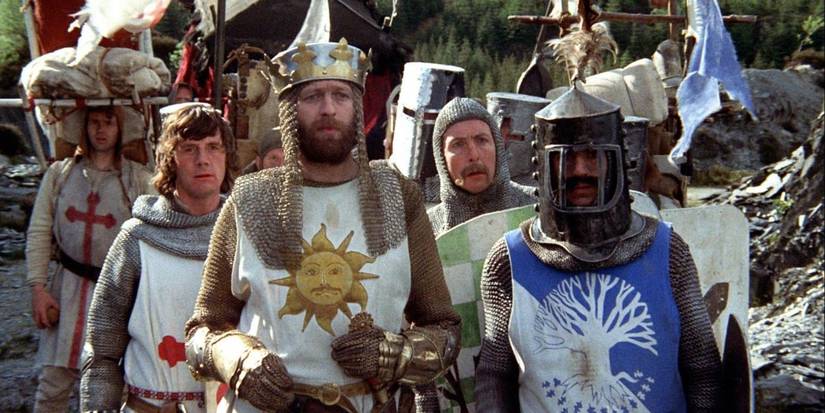 Image via EMI Films
Some of the best movies of all time have a large budget to pay their stars and ensure their quality, but projects such as Monty Python and the Holy Grail make do with only around $400,000. King Arthur (Graham Chapman) and his group of knights embark on a surreal quest to find the titular grail. From a killer rabbit to some Hedge Knights, their quest is full of bizarre dangers.
Getting money for a film is challenging, especially when no studios would bite, but when that happened for Monty Python and the Holy Grail, they found funding from rock bands such as Pink Floyd and Led Zeppelin. Monty Python's staple comedy translates perfectly to a feature length film, with ridiculous, chaotic, and surreal humor that defined a generation of comedies and remains a beloved masterpiece.
8 'Dr. Strangelove' (1964)
$9,440,272
 Image via Columbia Pictures
Stanley Kubrick is one of the greatest directors of all time, mainly known for his revolutionary techniques and distinct films, including Dr. Strangelove. Set during the Cold War, an unhinged war general orders a nuclear strike on the Soviet Union, leading a group of eccentric characters to make sure the bomber doesn't nuke the country, ensuring mutually assured destruction.
This black comedy is a satirical masterpiece that perfectly creates an anti-war film. It somehow turned a very real and pressing matter into a hilarious, relevant, and timely classic. Dr. Strangelove is regarded as one of the greatest comedy movies of all time, and it made its money back nearly tenfold, proving to be a financial success.
7 'Some Like It Hot' (1959)
$25,000,000
 Image via United Artists
Marilyn Monroe is one of the most iconic figures of Hollywood, but she was much more than just a legendary figure; she even starred in incredible comedies such as Some Like It Hot. After two male musicians witness the St. Valentine's Day Massacre, they disguise themselves as women and hide with a jazz band on its way to Florida.
On a budget of roughly $2.9 million, it made around $25 million, proving to be a big box office draw of the late 50s and an era-defining comedy. Some Like It Hot features a tight script with flawless acting and incredible comedic timing. However, it wasn't just a fun time; this film also challenged gender norms, establishing its legacy as an important, iconic, and hilarious comedy masterpiece.
6 'The Big Lebowski' (1998)
$48,261,691
Up to this point, all of these movies were classics ranging from the 1930s to 1970s, but The Big Lebowski is the first modern masterpiece. The Dude (Jeff Bridges) is just a lazy slacker, but he gets mistaken for a millionaire with the same name. After a slew of kidnapping schemes that ruins his favorite rug, he gets involved in a bunch of conspiracies even though he just wants to bowl.
When it came out in theaters, The Big Lebowski made a modest amount that barely broke even. However, in the years following, this film became a cult classic and a cultural icon, also making a lot of money on DVD and streaming. The Big Lebowski can only be described as a surreal comedy noir with a unique protagonist, beloved side-characters, and sharp dialog that make it a cultural comedy landmark.
5 'Airplane!' (1980)
$83,455,874
 Image via Paramount Pictures
Leslie Nielsen started as a serious actor, but he is mostly known as a comedic legend, especially for his film Airplane, which many consider to be the best comedy of all time. When the flight crew and the captain of a commercial plane all fall ill, the only person who can fly the plane to safety is an ex-pilot who is deathly afraid of flying after being traumatized.
Spoof movies aren't as popular as they used to be, but Airplane was one of the first that established the genre as a fan-favorite, creating a franchise of spoofs in the future. This massively successful comedy didn't just exceed financial expectations; it also proved to be an influential film with rapid-fire jokes, gags, and deadpan lines.
4 'Young Frankenstein' (1974)
$86,438,418
 Image via 20th Century Fox.
Mel Brooks is one of the greatest comedy directors who has not one, but two films on this list, starting with Young Frankenstein. The American grandson of the infamous Frankenstein inherits his old laboratory. Despite trying to distance himself from his grandfather's legacy, he eventually repeats the same experiment to create a new monster.
With a box office of $86 million to its $3 million budget, Young Frankenstein made a huge return on its investment and remained a timeless satirical spoof. Gene Wilder and his chaotic approach made the film even better, and alongside a witty script, it cemented itself as one of the funniest classic comedies ever made.
3 'Blazing Saddles' (1974)
$119,627,105
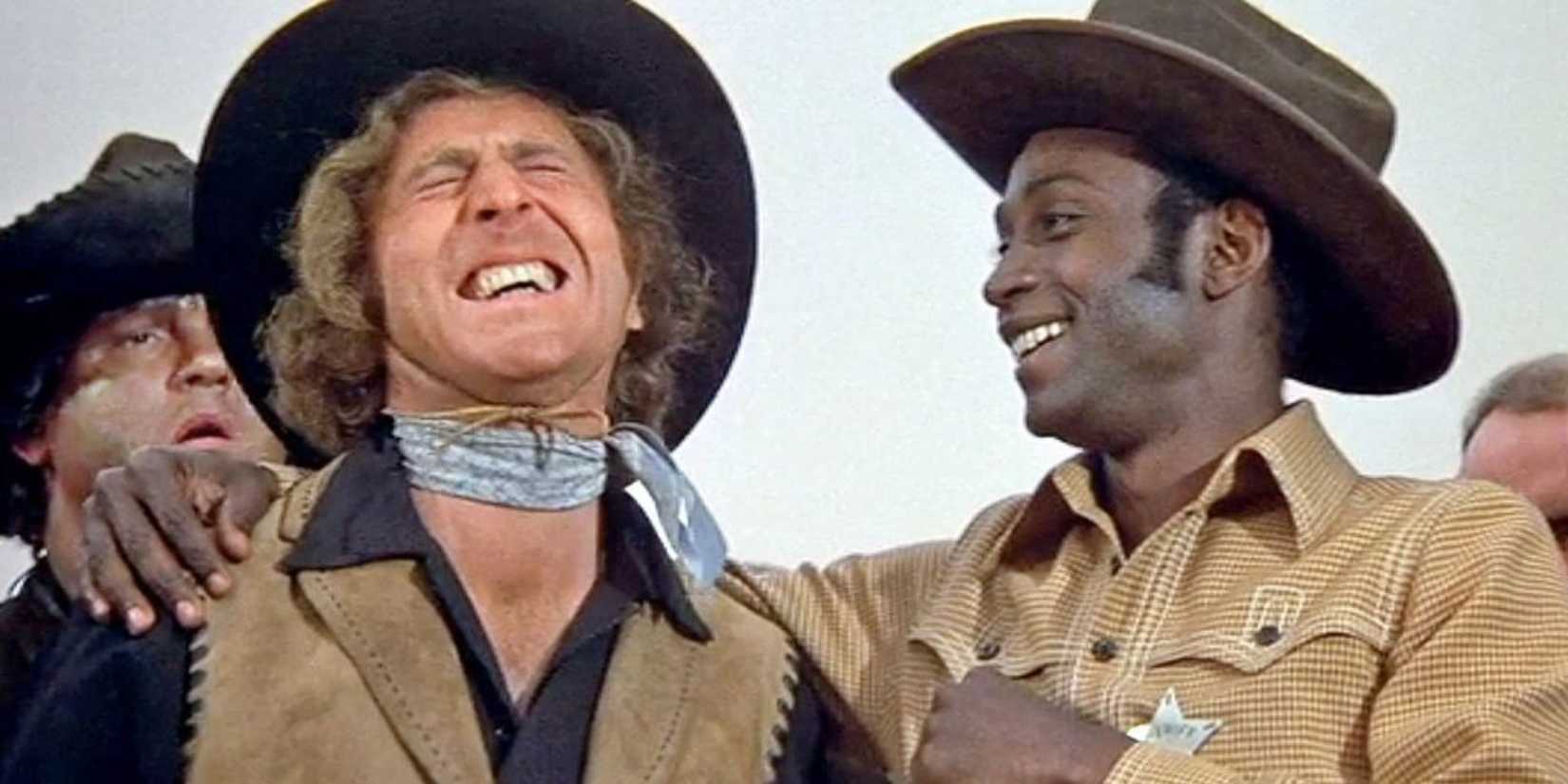 Image via Warner Bros.
As mentioned, Brooks is an all-time comedic legend, and he was in his bag in 1974, releasing Young Frankenstein and Blazing Saddles. A corrupt politician wants to destroy a village to make room for a new railway. To do this, he appoints a black sheriff. However, the sheriff outsmarts the bigoted residents to save the town and stop the railway from being built.
This was an incredibly successful year for Brooks, who delivered one of the best years for comedy films ever. As one of the highest-grossing movies of 1974, Blazing Saddles wasn't just a comedic success, but an overall triumph of filmmaking that defined the year. Entering the $100 million range, Blazing Saddles was a massive success. Its absurdist and meta-humor broke the fourth wall and weaponized its comedy to mock racism.
2 'Tropic Thunder' (2008)
$195,703,709
 Image via DreamWorks Pictures
There are more older movies on this list because they have an established legacy that influenced the genre. But some newer films are just as good, including Tropic Thunder. A group of prima donna actors are trying to shoot a war film in Vietnam. When the director uses guerrilla filming tactics, they don't realize that the director is dead and what is happening isn't scripted, but real life.
With a budget of $92 million, this blockbuster is the most expensive movie on this list, but it proved to be worth it after making over $195 million. This massive success was thanks to its star-studded cast of comedic legends and dramatic icons who proved their comedic acting chops. Not to mention Tropic Thunder's satirical take on Hollywood and general comedic masterclass, with hilarious jokes, made it a prominent cult classic.
1 'Bridesmaids' (2011)
$289,160,931
 Image via Universal Pictures
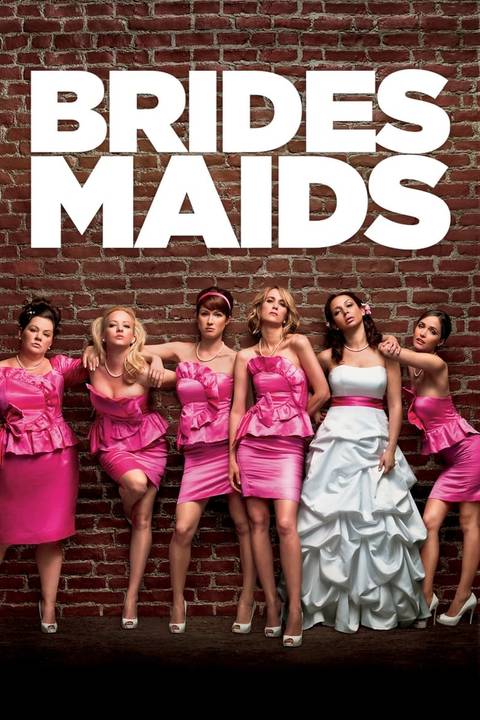
As mentioned, most of the movies on this list are classics, but the most recent one is also the highest-grossing, highlighting how modern films naturally make more. Bridesmaids follows Annie (Kristen Wiig), who is struggling to keep her life together. When she is invited to be the maid of honor at her best friend's wedding, she must manage the chaotic bridesmaids while trying to plan the perfect party.
It was believed that female-led comedies couldn't compete with male-dominated films, but Bridesmaids shattered that myth. It made more than $100 million more than second place on this list, earning $289 million on a $32 million budget. Bridesmaids is an undisputed icon, both financially and critically, combining genuine emotion with outrageous physical comedy to cement its legacy as one of the funniest modern comedy films and a box-office juggernaut.
Collider Exclusive · Oscar Best Picture Quiz
Which Oscar Best Picture
Is Your Perfect Movie?
Parasite · Everything Everywhere · Oppenheimer · Birdman · No Country
Five Oscar Best Picture winners. Five completely different visions of what cinema can be — and what it can do to you. One of them is the film that was made for the way your mind works. Ten questions will figure out which one.
🪜Parasite
🌀Everything Everywhere
☢️Oppenheimer
🐦Birdman
🪙No Country for Old Men
FIND YOUR FILM →
01
What kind of film experience do you actually want? The best movies don't just entertain — they leave something behind.
ASomething that pulls the rug out — that makes me think I'm watching one kind of film and then reveals I'm watching another entirely. BSomething overwhelming — funny, sad, absurd, and genuinely moving, all at once. CSomething grand and weighty — a film that makes me feel the full scale of what I'm watching. DSomething formally daring — a film that pushes what cinema can even do. ESomething lean and relentless — pure tension with no wasted frame.
NEXT QUESTION →
02
Which idea grabs you most in a film? Great films are driven by a central obsession. What's yours?
AClass, inequality, and what people are willing to do when desperation meets opportunity. BIdentity, family, and the chaos of trying to hold your life together when everything is falling apart. CGenius, moral responsibility, and the catastrophic weight of a decision you can never take back. DEgo, legacy, and the terror of becoming irrelevant while you're still alive to watch it happen. EEvil, chance, and whether moral order actually exists or if we just tell ourselves it does.
NEXT QUESTION →
03
How do you like your story told? Form is content. The way a story is shaped changes what it means.
AGenre-twisting — I want it to start in one lane and migrate into something completely different. BMaximalist and genre-blending — comedy, action, drama, sci-fi, all in one ride. CEpic and non-linear — cutting between timelines, building a mosaic of cause and consequence. DA single unbroken flow — I want to feel like I'm living it in real time, no cuts to safety. ESpare and precise — every scene doing exactly what it needs to do and nothing more.
NEXT QUESTION →
04
What makes a truly great antagonist? The opposition defines the protagonist. What kind of opposition fascinates you?
AA system — invisible, structural, and almost impossible to fight because it has no single face. BThe self — the ways we sabotage, abandon, and fail the people we love most. CHistory — the unstoppable momentum of events that no single person can stop or redirect. DThe industry — the machinery of culture that chews up talent and spits out irrelevance. EPure, implacable evil — a force so certain of itself it becomes almost philosophical.
NEXT QUESTION →
05
What do you want from a film's ending? The final note is the one that lingers. What do you want it to sound like?
AShock and inevitability — a conclusion that recontextualises everything that came before it. BEarned emotion — I want to cry, laugh, and feel genuinely hopeful, even if the world is a mess. CDevastation and grandeur — an ending that makes me sit in silence for a few minutes after. DAmbiguity — something that leaves enough open that I'm still thinking about it days later. EBleakness — an honest refusal to pretend the world is tidier than it actually is.
NEXT QUESTION →
06
Which setting pulls you in most? Where a film takes place shapes everything — mood, stakes, what's even possible.
AA gleaming modern city with a hidden underside — beauty masking rot, wealth masking desperation. BA collapsing suburban life that opens onto something infinite — the multiverse of a single ordinary person. CThe corridors of power and science at a world-historical turning point — where decisions echo for decades. DThe grimy, alive chaos of New York and Hollywood — fame as both destination and trap. EVast, indifferent landscape — desert and highway where violence arrives without warning or reason.
NEXT QUESTION →
07
What cinematic craft impresses you most? Every great film has a signature — a technical or artistic element that makes it unmistakable.
AProduction design and mise-en-scène — every frame composed to carry meaning beneath the surface. BEditing and tonal control — the ability to move between registers without losing the audience. CScore and sound design — music that becomes inseparable from the dread and awe of what you're watching. DCinematography as performance — the camera not recording events but participating in them. ESilence and restraint — what's left unsaid and unshown doing more work than any dialogue could.
NEXT QUESTION →
08
What kind of main character do you root for? The protagonist is the lens. Who you choose to follow says something about you.
ASomeone smart and resourceful who makes increasingly dangerous decisions under pressure. BSomeone overwhelmed and ordinary who turns out to be capable of something extraordinary. CA brilliant, tortured figure whose gifts and flaws are inseparable from each other. DA self-destructive artist whose ego is both their superpower and their undoing. EA quiet, principled person trying to make sense of a world that has stopped making sense.
NEXT QUESTION →
09
How do you feel about a film that takes its time? Pace is a choice. Some films sprint; others let tension accumulate slowly, deliberately.
AI love a slow build when I know the payoff is going to be seismic — patience for a devastating reveal. BGive me relentless momentum — I want to feel breathless and emotionally spent by the end. CEpic runtime doesn't scare me — if the material demands three hours, give me three hours. DI want it to feel propulsive even when nothing is technically happening — restless energy throughout. EDeliberate and unhurried — I want dread to accumulate in the spaces between the action.
NEXT QUESTION →
10
What do you want to feel walking out of the cinema? The best films leave a mark. What kind of mark do you want?
AUnsettled — like I've just seen something I can't fully explain but can't stop thinking about. BMoved and energised — like the film reminded me what actually matters and gave me something to hold onto. CHumbled — like I've been in the presence of something genuinely important and overwhelming. DExhilarated — like I've just seen cinema doing something it's never quite done before. EHaunted — like a cold, quiet dread that stays with me for days.
REVEAL MY FILM →
The Academy Has Decided Your Perfect Film Is…
Your answers have pointed to one Oscar Best Picture winner above all others. This is the film that was made for the way your mind works.
Parasite
You are drawn to films that operate on multiple levels simultaneously — that begin in one genre and quietly, brilliantly migrate into another. Bong Joon-ho's Parasite is a film about class, desire, and the architecture of inequality that manages to be darkly funny, deeply suspenseful, and genuinely shocking across a single extraordinary running time. Your instinct is for cinema that hides its true intentions until the moment it's ready to reveal them. Parasite is exactly that — a film that rewards close attention and punishes assumptions, right up to its devastating final image.
Everything Everywhere All at Once
You want it all — and this film gives you all of it. The Daniels' Everything Everywhere All at Once is one of the most maximalist films ever made: action comedy, multiverse sci-fi, family drama, existential crisis, and a genuinely earned emotional core that sneaks up on you amid the chaos. You are someone who responds to ambition, who doesn't want cinema to choose between being entertaining and being meaningful. This film refuses that choice entirely. It is overwhelming by design, and its overwhelming nature is precisely the point — because the feeling of being crushed by infinite possibility is exactly what it's about.
Oppenheimer
You are drawn to cinema on a grand scale — films that understand history not as a backdrop but as a force, and that place their characters inside that force and watch what happens. Christopher Nolan's Oppenheimer is a film about the terrifying gap between what we can do and what we should do, told with the full weight of one of the most consequential moments in human history behind it. You want your films to feel important without feeling self-important — to earn their ambition through sheer craft and the gravity of their subject. Oppenheimer does exactly that. It is enormous, complicated, and refuses easy comfort.
Birdman
You are drawn to films that foreground their own construction — that make the how of the filmmaking part of the what it's about. Alejandro González Iñárritu's Birdman, shot to appear as a single continuous take, is cinema examining itself through the cracked mirror of a fading actor's ego. You respond to formal daring, to the feeling that a film is doing something that probably shouldn't be possible. Michael Keaton's performance and Emmanuel Lubezki's restless camera create something genuinely unlike anything else — a film that is simultaneously about creativity, relevance, self-destruction, and the impossibility of ever truly knowing if your work means anything at all.
No Country for Old Men
You are drawn to cinema that trusts silence, that refuses to explain itself, and that treats dread as a form of meaning. The Coen Brothers' No Country for Old Men is a film about the arrival of a new kind of evil — implacable, arbitrary, and utterly indifferent to the moral frameworks we use to make sense of the world. It is one of the most formally controlled films ever made, and its controlled restraint is what makes it so terrifying. You want your films to haunt you, not comfort you. You are not interested in resolution if resolution would be dishonest. No Country for Old Men is honest in a way that most cinema never dares to be.
↻ RETAKE THE QUIZ
Bridesmaids
Release Date May 13, 2011
Runtime 125 minutes
Director Paul Feig




 English (US) ·