
 Image via Pathé

Published Apr 15, 2026, 4:54 PM EDT
Luc Haasbroek is a writer and videographer from Durban, South Africa. He has been writing professionally about pop culture for eight years. Luc's areas of interest are broad: he's just as passionate about psychology and history as he is about movies and TV. He's especially drawn to the places where these topics overlap.
Luc is also an avid producer of video essays and looks forward to expanding his writing career. When not writing, he can be found hiking, playing Dungeons & Dragons, hanging out with his cats, and doing deep dives on whatever topic happens to have captured his interest that week.
Sign in to your Collider account
Arthouse cinema operates in a different register — it doesn’t rush to explain itself, doesn’t bend to clarity, and rarely concerns itself with conventional narrative satisfaction. These are works that reject easy answers and familiar structures. Sure, sometimes these movies can miss the mark and become frustrating rather than intriguing, but the best of them linger in the mind long after the credits have rolled.
With that in mind, this list looks at some of the finest arthouse films ever made. The titles below all stand out in different ways, whether through fragmented narratives, hypnotic pacing, brilliant performances, or sheer visual poetry. They might not be necessarily "accessible" for mainstream audiences, but those willing to engage with their distinct sensibilities will find them rewarding and unforgettable.
Collider Exclusive · Sci-Fi Survival Quiz Which Sci-Fi World Would You Survive? The Matrix · Mad Max · Blade Runner · Dune · Star Wars
Five universes. Five completely different ways the future went wrong — or sideways, or up in flames. Only one of them is the world your instincts were built for. Eight questions will figure out which dystopia, galaxy, or desert wasteland you'd actually make it out of alive.
💊The Matrix
🔥Mad Max
🌧️Blade Runner
🏜️Dune
🚀Star Wars
TEST YOUR SURVIVAL →
01
You sense something is deeply wrong with the world around you. What do you do? The first instinct is often the truest one.
APull on every thread until I understand the system — then figure out how to break it. BStop asking questions and start stockpiling — food, fuel, weapons. Questions don't keep you alive. CKeep my head down, observe carefully, and trust no one until I know who's pulling the strings. DStudy the patterns. Every system has a rhythm — learn it, and you learn how to survive it. EFind the people fighting back and join them. You can't fix a broken galaxy alone.
NEXT QUESTION →
02
In a world of scarcity, what resource do you guard most fiercely? What we protect reveals what we believe survival actually requires.
AKnowledge. If you understand the system, you don't need resources — you can generate them. BFuel. Everything else — movement, power, escape — runs on it. CTrust. In a world of fakes and informants, a truly reliable ally is rarer than any commodity. DWater. And after water, information — the two things empires are truly built on. EShips and credits. The galaxy is big — you survive it by being able to move through it freely.
NEXT QUESTION →
03
What kind of threat keeps you up at night? Fear is useful data — if you're honest about what you're actually afraid of.
AThat reality itself is a lie — that everything I experience has been constructed to keep me compliant. BA raid. No warning, no mercy — just the roar of engines and then nothing left. CBeing identified. Once someone with power decides you're a problem, you're already out of time. DBeing outmanoeuvred — losing a political game I didn't even know I was playing. EThe Empire tightening its grip until there's nowhere left to run.
NEXT QUESTION →
04
How do you deal with authority you don't trust? Every dystopia has a power structure. Your approach to it determines everything.
ASubvert it from the inside — learn its rules well enough to weaponise them against it. BIgnore it and stay out of its reach. The further from any power structure, the better. CAppear to comply while doing exactly what I need to do. Visibility is the enemy. DManoeuvre within it carefully. You can't beat a system you refuse to understand. EResist openly when I have to. Some things are worth the risk of being seen.
NEXT QUESTION →
05
Which environment could you actually endure long-term? Survival isn't just tactical — it's physical, psychological, and very much about where you are.
AUnderground bunkers and server rooms — cramped, artificial, but with access to everything that matters. BOpen wasteland — brutal sun, no shelter, constant movement. At least the threat is honest. CA dense, rain-soaked city where you can disappear into the crowd and nobody asks questions. DMerciless desert — extreme heat, no water, and something enormous living beneath the sand. EThe fringe — backwater planets and busy spaceports where the Empire's attention rarely reaches.
NEXT QUESTION →
06
Who do you want in your corner when things fall apart? The company you keep is the clearest signal of who you actually are.
AA tight crew of believers who've seen behind the curtain and have nothing left to lose. BOne or two people I'd trust with my life. Any more than that and someone talks. CNobody, ideally. Alliances are liabilities. I work alone unless I have no choice. DA community bound by shared hardship and mutual survival — people who need each other to last. EA ragtag team with wildly different skills and total commitment when it counts.
NEXT QUESTION →
07
Where do you draw the line — if you draw one at all? Every survivor eventually faces a moment that tests what they're actually made of.
AI won't harm the innocent — even the ones who'd report me without hesitation. BI do what I have to to protect the people I've chosen. Everything else is negotiable. CThe line shifts depending on who's asking and what's at stake. DI draw a long-term line — nothing that compromises my people's future, even if it'd help now. ESome lines, once crossed, can't be uncrossed. I know which ones they are.
NEXT QUESTION →
08
What would actually make survival worth it? Staying alive is one thing. Having a reason to is another.
AWaking others up — dismantling the illusion so no one else has to live inside it. BFinding somewhere — or someone — worth protecting. A reason to keep moving. CAnswers. Understanding what I am, what any of this means, before time runs out. DLegacy — shaping the future in a way that outlasts me by generations. EFreedom — for myself, for others, for every world still living under someone else's boot.
REVEAL MY WORLD →
Your Fate Has Been Calculated You'd Survive In…
Your answers point to the world your instincts were built for. This is the universe your temperament, your survival instincts, and your particular brand of stubbornness were made for.
The Matrix
You took the red pill a long time ago — probably before anyone offered it to you. You're a systems thinker who can't help but notice the seams in things.
- You're drawn to understanding how the system works before figuring out how to break it.
- You'd find the Resistance, or it would find you — your instinct for spotting constructed realities is the machines' worst nightmare.
- You function best when you have access to information and the freedom to act on it.
- The Matrix built an airtight prison. You'd be the one probing the walls for the door.
Mad Max
The wasteland doesn't reward the clever or the well-connected — it rewards those who are hard to kill and harder to break. That's you.
- You don't need comfort, community, or a cause larger than the next horizon.
- You need a vehicle, a clear threat, and enough fuel to outrun it — and you're good at all three.
- You are unsentimental enough to survive that world, and decent enough — just barely — to be something more than another raider.
- In the wasteland, that distinction is everything.
Blade Runner
You'd survive here because you know how to exist in moral grey areas without losing yourself completely.
- You read people accurately, keep your circle small, and ask the questions others prefer not to answer.
- In a city where humanity is a legal designation rather than a feeling, you hold onto something that keeps you functional.
- You're not a hero. But you're not lost, either.
- In Blade Runner's world, that distinction is everything.
Dune
Arrakis is the most hostile environment in the known universe — and you are precisely the kind of person it rewards.
- Patience, discipline, and political awareness are your core strengths — and on Arrakis, they're survival tools.
- You understand that the long game matters more than any single victory.
- Others come to Dune and are consumed by it. You'd learn its logic and earn its respect.
- In time, you wouldn't just survive Arrakis — you'd begin to reshape it.
Star Wars
The galaxy far, far away is vast, loud, and in a constant state of violent political upheaval — and you wouldn't have it any other way.
- You find meaning in being part of something larger than yourself — a cause, a crew, a rebellion.
- You'd gravitate toward the Rebellion, or the fringes, or whatever pocket of the galaxy still believes the Empire's grip can be broken.
- You fight — not because you have to, but because standing aside isn't something you're capable of.
- In Star Wars, that willingness is what makes all the difference.
↻ RETAKE THE QUIZ
10 'Koyaanisqatsi' (1982)
 Image via Island Alive
"If we dig precious things from the land, we will invite disaster." Koyaanisqatsi is less a film than an experience, one that unfolds without dialogue, characters, or traditional plot. Instead, it presents a series of images: vast natural landscapes, industrial machinery, crowded cities, all set to a hypnotic score by Philip Glass. The title itself, drawn from the Hopi language, translates loosely to "life out of balance," and that idea becomes the film's central thesis.
The project moves from untouched nature to increasingly mechanized environments, accelerating as it goes, until the pace becomes almost overwhelming. Through time-lapse and slow motion, the film reshapes reality, making cities pulse like living organisms and traffic flow like blood. The editing is masterful, using repetition, variation, and bold cuts to great effect. The juxtaposition of imagery is striking but ambiguous, allowing the viewer to draw their own conclusions.
9 'The White Ribbon' (2009)
 Image via Sony Pictures Classic
"I don’t know what the future holds." The White Ribbon is an austere masterwork from Michael Haneke, the director behind Funny Games and Amour. Set in a small German village just before World War I, it follows a series of strange and unsettling incidents; acts of cruelty that ripple through the community, touching both children and adults. Haneke constructs an atmosphere of unease, where suspicion and repression simmer beneath the surface.
The result is an intelligent moral investigation. Fundamentally, The White Ribbon is a study of how violence, repression, and moral rigidity take root long before they erupt. It suggests that the seeds of future horrors are planted in everyday environments. The aesthetics reinforce these themes: the black-and-white cinematography is harsh and rigid, ordered and drained of emotion, reflecting a society obsessed with discipline and purity. Not for nothing, the film won that year's Palme d'Or.
8 'Dancer in the Dark' (2000)
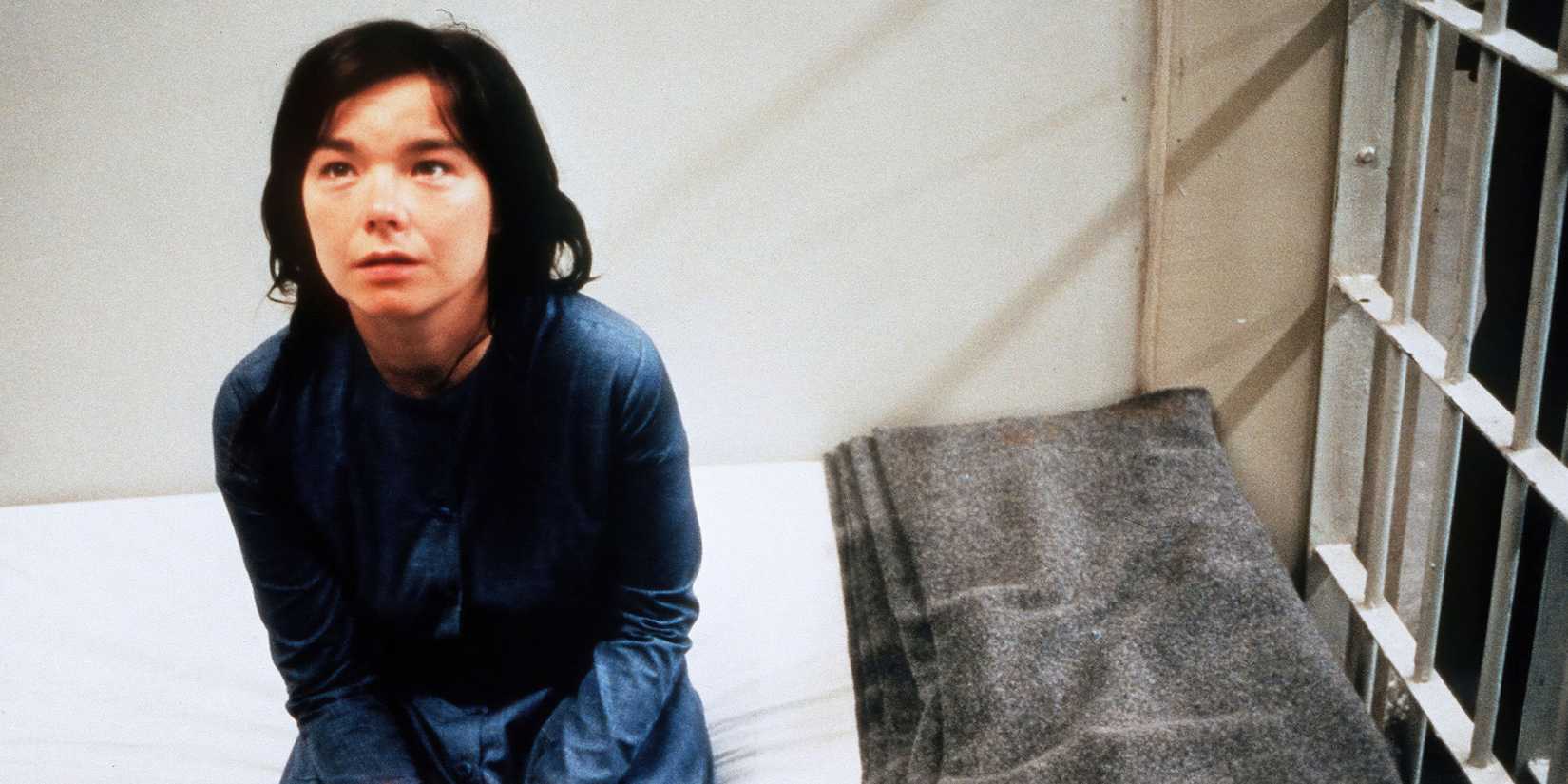 Image via Fine Line Features
"They say it’s the last song." Another Palme d'Or winner, Dancer in the Dark is an emotionally intense Lars von Trier gem starring Björk as Selma, a Czech immigrant working in a factory in America. She is slowly going blind while saving money for an operation that will prevent her son from suffering the same fate. The film blends harsh realism with musical fantasy, using Selma’s inner world as an escape from the brutality of her circumstances.
Stylistically, it was a masterstroke by von Trier, powerfully subverting the expectations we usually have about musicals. The musical sequences are vivid, almost euphoric, standing in stark contrast to the bleakness of the character's reality. As the story progresses, that contrast becomes increasingly painful. Dancer in the Dark is, at times, heartrending to the point of being difficult to watch. However, Björk's phenomenal performance elevates it above pure tragedy.
7 'Three Colours: Blue' (1993)
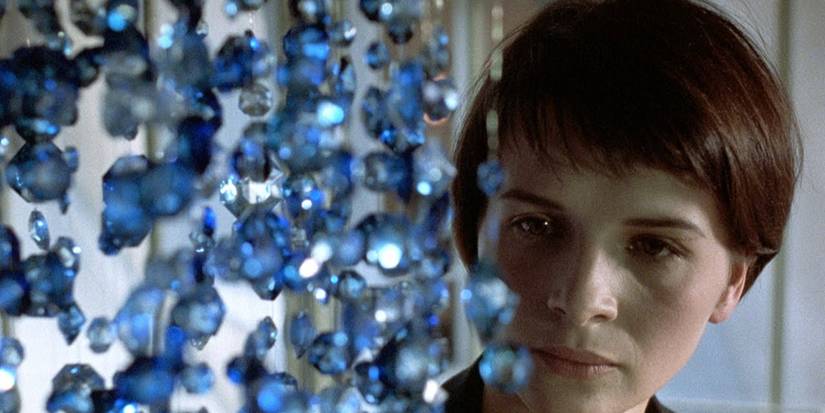 Image via mk2 Diffusion
"I have nothing left." Several movies by Polish director Krzysztof Kieślowski could have made this list, though perhaps the most well-rounded of them is Three Colours: Blue, the first installment in a thematic trilogy. It centers on Julie (Juliette Binoche), who survives a car crash that kills her husband and daughter. In the aftermath, she attempts to sever herself from her past, retreating into isolation in an effort to escape her pain. The narrative is internal, focused less on external events than on Julie’s shifting emotional state.
The colors refer to the French flag, each of them associated with a key idea, in this case, liberty. The film takes the abstract idea of freedom and turns it into something deeply personal, emotional, and almost tactile. Julie seeks freedom by cutting ties, avoiding relationships, and rejecting her past, but the movie suggests that true freedom may be impossible without connection.
6 'The Tree of Life' (2011)
"Where were you?" Terrence Malick is no stranger to ambitious storytelling, and with The Tree of Life, he attempts to capture something almost cosmic. The movie juxtaposes the life of a Texas family in the 1950s with images of the universe itself: creation, evolution, existence on a scale that dwarfs human experience. At its center is Jack (Sean Penn), reflecting on his childhood, his relationship with his parents, and the loss that shaped him.
However, the film refuses to stay grounded in narrative, instead moving fluidly between time, space, and individual perspective, thus creating a tapestry of memory and meaning. Childhood summer days are followed by shots of dinosaurs and forming planets. In the process, The Tree of Life attempts to grapple with big questions around existence, suffering, and grace. While not everyone liked its grand, sweeping approach, the film can be very rewarding if you get on its wavelength.
5 'Hiroshima Mon Amour' (1959)
 Image via Cocinor and Daiei
"You saw nothing in Hiroshima. Nothing." Hiroshima Mon Amour is one of the most influential movies of the French New Wave, hugely reshaping how memory and time could be represented on screen. The story follows a French actress (Emmanuelle Riva) and a Japanese architect (Eiji Okada) who share a brief, intense relationship in post-war Hiroshima, their conversations drifting between the present and the past.
Rather than being a straightforward plot, the movie plays out as a collision of memories: her experiences in Nazi-occupied France, his in a city defined by atomic devastation. Through these characters, Hiroshima Mon Amour looks at how individuals are shaped by history, how personal memory can be intertwined with collective trauma. While the dialogue is philosophically rich and compelling, the editing was revolutionary for the time, too, dissolving boundaries between time and space in a way that feels almost dreamlike.
4 'Stalker' (1979)
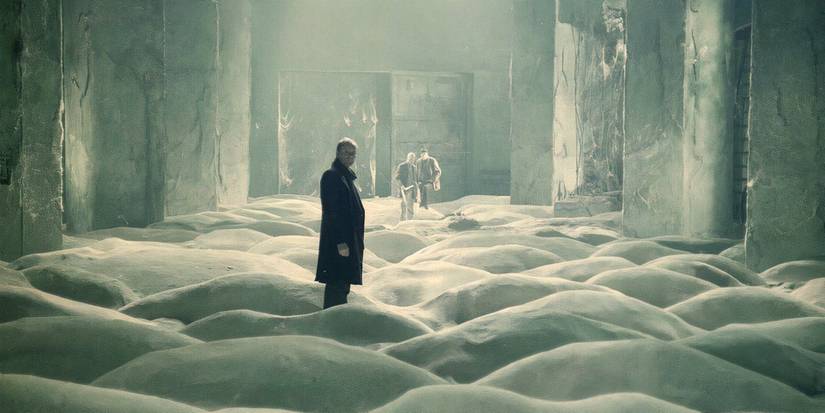 Image via Mosfilm
"Let everything that’s been planned come true." Directed by the giant of Soviet cinema Andrei Tarkovsky, Stalker follows three men — the Stalker (Alexander Kaidanovsky), the Writer (Anatoly Solonitsyn), and the Professor (Nikolai Grinko) — as they travel into the mysterious "Zone," a forbidden area said to contain a room that grants one’s deepest desires. While the premise sounds like something from pulp sci-fi, the execution is pure arthouse.
The sci-fi conceit becomes a spiritual and philosophical journey, a trick Tarkovsky also pulled off with his other masterpiece, Solaris. Long takes, slow pacing, surreal colors, and dense philosophical dialogue create a sense of immersion that can feel meditative or oppressive, depending on the viewer. The movie refuses to rush or explain, demanding instead that the audience sit with its questions about faith, desire, and the nature of fulfillment.
3 'Beau Travail' (1999)
 Image via Pyramide Distribution
"Nothing will happen again." Beau Travail is a film of bodies, rhythm, and suppressed emotion, generally regarded as Claire Denis' finest work. Set among French Foreign Legion soldiers stationed in Djibouti, it follows Galoup (Denis Lavant), a non-commissioned officer whose rigid sense of order begins to unravel when a recruit (Grégoire Colin) disrupts the fragile balance of the group. Soon, a combustible brew of jealousy, desire, and resentment begins simmering just below the threshold of expression.
Here, gesture and movement convey way more than the dialogue does. Training exercises become almost ritualistic, the physicality of the soldiers’ lives captured with hypnotic precision; every motion feels loaded with meaning. It all culminates in a powerful final scene, a sudden and explosive release of everything that's been building up. It makes for a layered statement on masculinity and repression.
2 'Come and See' (1985)
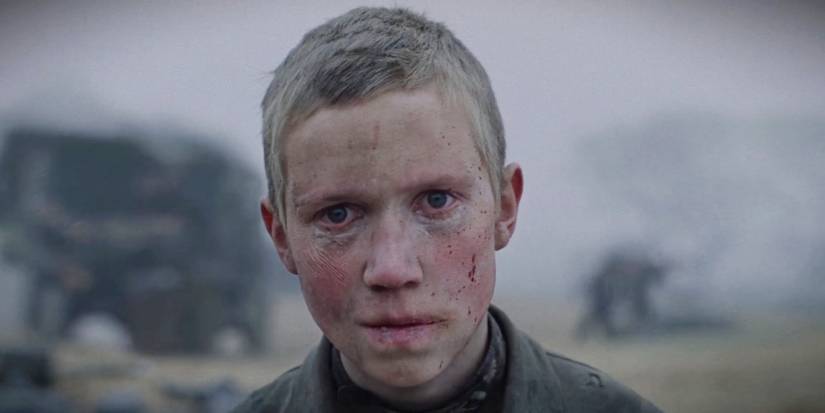 Image via Sovexportfilm
"I am not afraid." Come and See is one of the most harrowing war films ever made, arthouse or otherwise. It takes place in Nazi-occupied Belarus, where a young boy, Flyora (Aleksei Kravchenko), joins a group of partisans, only to be exposed to the full brutality of war. What starts as naive enthusiasm collapses into something far more devastating. It is a vision of innocence destroyed; where most war movies just let the viewer observe the devastation, Come and See wants you to endure it.
The film’s style is immersive and disorienting, often placing the viewer directly in Flyora’s perspective. Some elements are brutally realistic, like the mud, fire, and decay, while others are deliberately exaggerated. Sound design becomes distorted, images grow increasingly surreal, and the line between reality and nightmare dissolves. In the end, Come and See is a genuine endurance test and a profound anti-war declaration.
1 'Jeanne Dielman, 23, quai du Commerce, 1080 Bruxelles' (1975)
 Image via Janus Films
"I always do things the same way." Jeanne Dielman is a radical movie, so much so that it still feels ahead of its time more than 50 years later. It follows Jeanne (Delphine Seyrig), a widowed mother, over the course of several days as she cooks, cleans, and maintains a rigid daily schedule, occasionally engaging in sex work to support herself. The structure is repetitive by design; scenes unfold in real time, actions repeated with minimal variation.
It's a film made up of the smallest, most routine aspects of life. But within that repetition, subtle changes begin to emerge, small disruptions that gradually accumulate into something deeply unsettling. The character's pain and isolation build over the film's epic 200-minute runtime, leading to a shocking finale. Seyrig's performance does a lot of the heavy lifting, expressing so much through controlled movements, seemingly neutral expressions, and subtle gestures.




 English (US) ·