


Published Apr 17, 2026, 8:45 PM EDT
Luc Haasbroek is a writer and videographer from Durban, South Africa. He has been writing professionally about pop culture for eight years. Luc's areas of interest are broad: he's just as passionate about psychology and history as he is about movies and TV. He's especially drawn to the places where these topics overlap.
Luc is also an avid producer of video essays and looks forward to expanding his writing career. When not writing, he can be found hiking, playing Dungeons & Dragons, hanging out with his cats, and doing deep dives on whatever topic happens to have captured his interest that week.
Sign in to your Collider account
War movies are one of the oldest and most popular genres, and they include some of cinema's greatest classics. At their best, these films reveal a lot about what happens when ordinary human beings are placed in extraordinary circumstances. American war filmmaking, in particular, has a strange dual identity: part myth-making machine, part moral reckoning.
With that in mind, this list looks at the very best of them, from the character study of Patton to the non-stop action of Black Hawk Down. For the purposes of this list, we'll be looking at any movie that was produced by an American studio.
10 'Patton' (1970)
 Image via 20th Century Fox
"No bastard ever won a war by dying for his country." George C. Scott delivers a career-defining, Oscar-winning lead performance here as the titular general, who led campaigns across North Africa and Europe during World War II. The movie is incredibly audacious, beginning quite literally with a man addressing the audience, and by extension, history itself. It's as much a character study as it is a war epic, fascinated by the contradictions of a man who was both a brilliant tactician and a deeply troubling human being.
A big part of what makes Patton so enduring is its refusal to reduce its subject to either hero or villain. He's by turns inspiring and insufferable, disciplined and reckless, deeply patriotic and narcissistically self-absorbed. The film revels in his theatricality, his speeches, his ego, even his belief in reincarnation, all while quietly exposing the cost of that myth, too.
9 'Letters from Iwo Jima' (2006)
 Image via Warner Bros.
"This island will not fall, no matter how many Americans attack it." A companion piece to Flags of Our Fathers, Clint Eastwood's Letters from Iwo Jima is a rare and remarkable inversion: an American war movie told almost entirely from the perspective of the enemy. Set during the brutal Battle of Iwo Jima in World War II, the film follows Japanese soldiers, most notably General Tadamichi Kuribayashi (Ken Watanabe), as they prepare for and endure the inevitable American invasion.
Rather than framing them as faceless antagonists, the film lingers on their humanity, their fears, and the quiet dignity of men facing certain death. Kuribayashi makes for an especially fascinating character. A leader educated in America, he now finds himself torn between duty to his country, an understanding of the enemy he must fight, and the knowledge that defeat is inevitable.
8 'The Hurt Locker' (2008)
 Image via Summit Entertainment
"War is a drug." The Hurt Locker was one of the first American movies to reckon with the Iraq War, and it remains one of the best. Here, Kathryn Bigelow strips away the usual grandeur of war storytelling and replaces it with tension and addiction. At the eye of the storm is Staff Sergeant William James (Jeremy Renner), a reckless and enigmatic soldier who seems almost drawn to danger. The plot is episodic, moving from one bomb disposal mission to the next, each sequence a masterclass in suspense.
Refreshingly, The Hurt Locker focuses on psychology over politics. The Iraq War is present, of course, but largely in the background, stripped of overt commentary. Instead, the film examines the internal cost of repeated exposure to extreme stress. James becomes a man who can function perfectly in war, but not in peace, culminating in the movie's brilliant, Sisyphean ending.
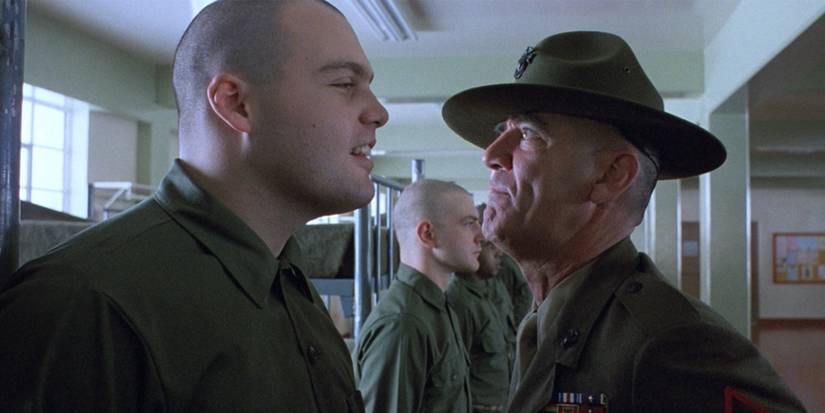 Image via Warner Bros.
"I am in a world of sh*t." The Vietnam War genre was pretty saturated by the late '80s, yet Stanley Kubrick still found something new to say with Full Metal Jacket, crafting one of the era's starkest portraits of soldiers and their psychological transformation. The movie is famously split into two halves: the first set in a Marine Corps boot camp, the second unfolding during the Vietnam War.
The boot camp section, led by the unforgettable Gunnery Sergeant Hartman (R. Lee Ermey), is a brutal exercise in dehumanization, systematically breaking recruits down and reshaping them into instruments of war. The second half follows Joker (Matthew Modine), one of the recruits, as he navigates the chaos of Vietnam, working as a war correspondent while grappling with the contradictions of the conflict. Across both sections, Kubrick’s approach is cold, almost clinical, emphasizing the absurdity and horror of war rather than any sense of heroism.
6 'The Thin Red Line' (1998)
 Image via 20th Century Studios
"What’s this war in the heart of nature?" The Thin Red Line is a sprawling, philosophical war epic from Terrence Malick. Set during the Battle of Guadalcanal in World War II, it follows a group of American soldiers (played by heavy hitters like Sean Penn, Adrien Brody, John Cusack, and George Clooney) as they move through the dense jungles of the Pacific, confronting both the enemy and themselves. But to describe it in purely narrative terms feels almost reductive. This is a film less concerned with plot than with mood and theme.
Malick’s signature style, defined by introspection, whispered voiceovers, and lyrical imagery, transforms the battlefield into something almost spiritual. The violence is real, often sudden and brutal, but it exists alongside moments of haunting beauty: sunlight filtering through trees, the quiet movement of animals, the strange indifference of nature to human conflict.
5 'Black Hawk Down' (2001)
 Image via Sony Pictures Releasing
"Nobody asks to be a hero. It just sometimes turns out that way." Ridley Scott followed up Gladiator with this relentless war movie based on the real-life Battle of Mogadishu in 1993. It's about a U.S. military mission that spirals disastrously out of control when two Black Hawk helicopters are shot down, trapping American soldiers deep within hostile territory. What begins as a routine operation becomes a desperate fight for survival.
Where Malick's film is slower and introspective, Black Hawk Down is almost entirely defined by momentum. The structure is simple: get in, complete the mission, get out. The execution, however, is anything but. Scott throws the viewer into chaos and refuses to let up. The geography becomes disorienting, the noise overwhelming, the stakes constantly escalating, the danger omnipresent. And yet, amid the confusion, there is camaraderie, keeping us invested.
4 'Inglourious Basterds' (2009)
 Image via Universal Pictures
"Au revoir, Shosanna!" With Inglourious Basterds, Quentin Tarantino does something almost heretical: he turns World War II into a revenge fantasy. This banger (which might just be his masterpiece) serves up two parallel narratives: one centered on a group of Jewish-American soldiers hunting Nazis across occupied Europe, the other on a young Jewish woman, Shosanna (Mélanie Laurent), plotting her own act of vengeance against the Nazi high command. These threads converge in a gleefully ahistorical climax that rewrites the outcome of the war itself.
Tarantino’s approach is deliberately stylized, blending spaghetti western influences with sharp dialogue and explosive violence. The performances are electric, particularly Christoph Waltz's Oscar-winning turn as Hans Landa, turning conversations into battlegrounds as tense as any firefight. Beneath all the bullets, fire, and mayhem, Inglourious Basterds is a kind of cathartic myth, one where evil is not just defeated, but obliterated.
3 'Dunkirk' (2017)
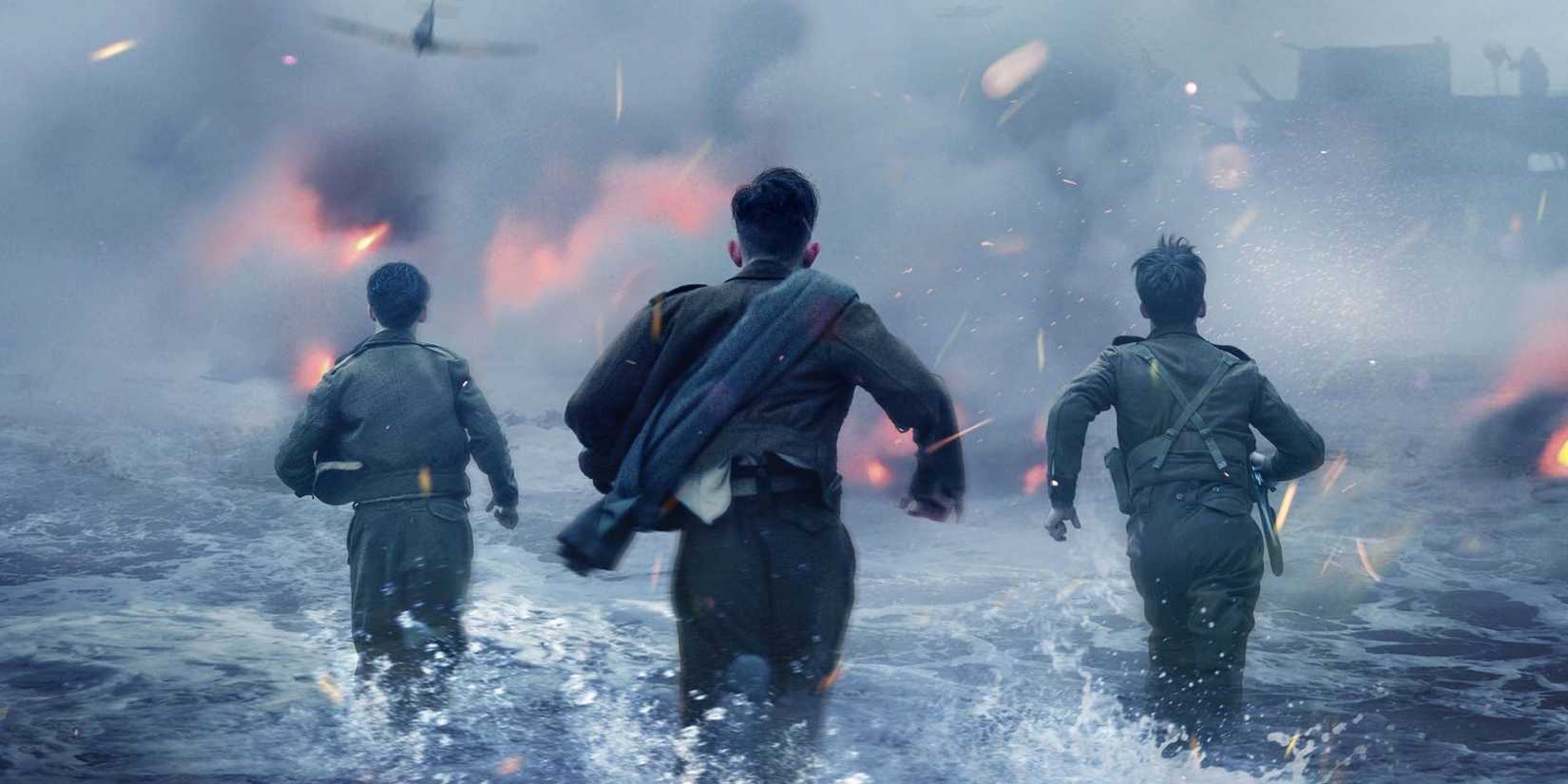 Image via Warner Bros. Pictures
"You can practically see it from here." Sure, Dunkirk was directed by a Brit and tells a distinctly British story, but it was a UK-US co-production, and it's brilliant, so it makes this list. The film transforms one of World War II’s most desperate evacuations into an exercise in pure cinematic tension. It interweaves three timelines across land, sea, and air, each unfolding at a different pace but converging toward a single moment of survival.
Soldiers are stranded on the beaches of Dunkirk, surrounded by enemy forces, waiting for a rescue that may never come. Nolan immerses the viewer in their experience: the sound of approaching planes, the panic of sinking ships, the quiet dread of waiting. Time itself becomes elastic, folding and overlapping to heighten the sense of urgency. Amid all the chaos, heroism emerges quietly, in small acts of courage and endurance.
2 'Saving Private Ryan' (1998)
 Image via DreamWorks Pictures
"Earn this." With Saving Private Ryan, Spielberg reshaped the language of war cinema, laying a blueprint that almost every WWII movie since has borrowed from. The movie opens with the now-iconic D-Day sequence, a brutal, immersive depiction of the Normandy landings that redefined realism on screen. From there, it follows Captain Miller (Tom Hanks) and his squad as they venture deep into enemy territory to find and bring home Private James Ryan (Matt Damon), the last surviving brother of four soldiers.
The premise is simple, almost mythic: risk many lives to save one. But the execution is anything but straightforward. However, the soldiers are not archetypes but individuals, each carrying fear, doubt, and a desperate desire to survive. Through them, the movie interrogates the very idea of sacrifice, forcing its characters (and the audience) to confront uncomfortable questions about duty, morality, and the value of human life.
1 'Apocalypse Now' (1979)
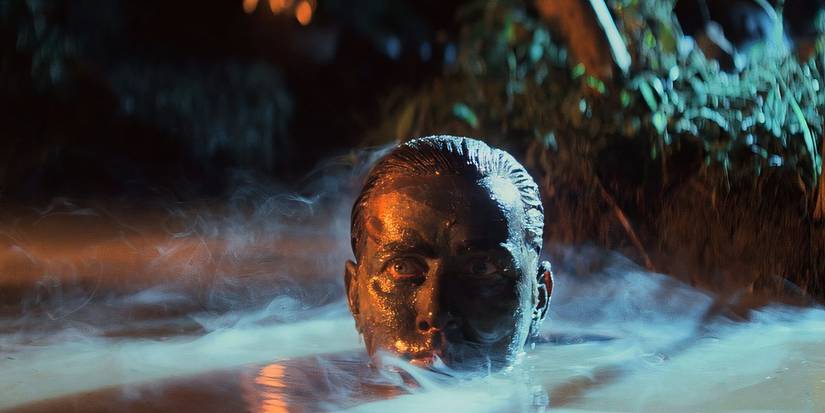 Image via United Artists
"I love the smell of napalm in the morning." Apocalypse Now is less a war film than a descent into madness. Loosely based on Joseph Conrad’s Heart of Darkness, this phantasmagoric odyssey follows Captain Willard (Martin Sheen) as he journeys upriver into the jungles of Vietnam on a mission to assassinate Colonel Kurtz (Marlon Brando), a rogue officer who has established himself as a god-like figure among his followers. What begins as a military operation quickly dissolves into something far stranger and more surreal.
The further Willard travels, the more the boundaries between sanity and insanity blur. The set pieces feel like fragments from a fever dream: eerie, dreamlike encounters deep in the jungle, helicopter assaults scored to Wagner. The movie was absurdly ambitious and challenging to make, almost breaking its cast and crew in the process, but the finished product is one of the most towering achievements of '70s cinema.
Collider Exclusive · Oscar Best Picture Quiz
Which Oscar Best Picture
Is Your Perfect Movie?
Parasite · Everything Everywhere · Oppenheimer · Birdman · No Country
Five Oscar Best Picture winners. Five completely different visions of what cinema can be — and what it can do to you. One of them is the film that was made for the way your mind works. Ten questions will figure out which one.
🪜Parasite
🌀Everything Everywhere
☢️Oppenheimer
🐦Birdman
🪙No Country for Old Men
FIND YOUR FILM →
01
What kind of film experience do you actually want? The best movies don't just entertain — they leave something behind.
ASomething that pulls the rug out — that makes me think I'm watching one kind of film and then reveals I'm watching another entirely. BSomething overwhelming — funny, sad, absurd, and genuinely moving, all at once. CSomething grand and weighty — a film that makes me feel the full scale of what I'm watching. DSomething formally daring — a film that pushes what cinema can even do. ESomething lean and relentless — pure tension with no wasted frame.
NEXT QUESTION →
02
Which idea grabs you most in a film? Great films are driven by a central obsession. What's yours?
AClass, inequality, and what people are willing to do when desperation meets opportunity. BIdentity, family, and the chaos of trying to hold your life together when everything is falling apart. CGenius, moral responsibility, and the catastrophic weight of a decision you can never take back. DEgo, legacy, and the terror of becoming irrelevant while you're still alive to watch it happen. EEvil, chance, and whether moral order actually exists or if we just tell ourselves it does.
NEXT QUESTION →
03
How do you like your story told? Form is content. The way a story is shaped changes what it means.
AGenre-twisting — I want it to start in one lane and migrate into something completely different. BMaximalist and genre-blending — comedy, action, drama, sci-fi, all in one ride. CEpic and non-linear — cutting between timelines, building a mosaic of cause and consequence. DA single unbroken flow — I want to feel like I'm living it in real time, no cuts to safety. ESpare and precise — every scene doing exactly what it needs to do and nothing more.
NEXT QUESTION →
04
What makes a truly great antagonist? The opposition defines the protagonist. What kind of opposition fascinates you?
AA system — invisible, structural, and almost impossible to fight because it has no single face. BThe self — the ways we sabotage, abandon, and fail the people we love most. CHistory — the unstoppable momentum of events that no single person can stop or redirect. DThe industry — the machinery of culture that chews up talent and spits out irrelevance. EPure, implacable evil — a force so certain of itself it becomes almost philosophical.
NEXT QUESTION →
05
What do you want from a film's ending? The final note is the one that lingers. What do you want it to sound like?
AShock and inevitability — a conclusion that recontextualises everything that came before it. BEarned emotion — I want to cry, laugh, and feel genuinely hopeful, even if the world is a mess. CDevastation and grandeur — an ending that makes me sit in silence for a few minutes after. DAmbiguity — something that leaves enough open that I'm still thinking about it days later. EBleakness — an honest refusal to pretend the world is tidier than it actually is.
NEXT QUESTION →
06
Which setting pulls you in most? Where a film takes place shapes everything — mood, stakes, what's even possible.
AA gleaming modern city with a hidden underside — beauty masking rot, wealth masking desperation. BA collapsing suburban life that opens onto something infinite — the multiverse of a single ordinary person. CThe corridors of power and science at a world-historical turning point — where decisions echo for decades. DThe grimy, alive chaos of New York and Hollywood — fame as both destination and trap. EVast, indifferent landscape — desert and highway where violence arrives without warning or reason.
NEXT QUESTION →
07
What cinematic craft impresses you most? Every great film has a signature — a technical or artistic element that makes it unmistakable.
AProduction design and mise-en-scène — every frame composed to carry meaning beneath the surface. BEditing and tonal control — the ability to move between registers without losing the audience. CScore and sound design — music that becomes inseparable from the dread and awe of what you're watching. DCinematography as performance — the camera not recording events but participating in them. ESilence and restraint — what's left unsaid and unshown doing more work than any dialogue could.
NEXT QUESTION →
08
What kind of main character do you root for? The protagonist is the lens. Who you choose to follow says something about you.
ASomeone smart and resourceful who makes increasingly dangerous decisions under pressure. BSomeone overwhelmed and ordinary who turns out to be capable of something extraordinary. CA brilliant, tortured figure whose gifts and flaws are inseparable from each other. DA self-destructive artist whose ego is both their superpower and their undoing. EA quiet, principled person trying to make sense of a world that has stopped making sense.
NEXT QUESTION →
09
How do you feel about a film that takes its time? Pace is a choice. Some films sprint; others let tension accumulate slowly, deliberately.
AI love a slow build when I know the payoff is going to be seismic — patience for a devastating reveal. BGive me relentless momentum — I want to feel breathless and emotionally spent by the end. CEpic runtime doesn't scare me — if the material demands three hours, give me three hours. DI want it to feel propulsive even when nothing is technically happening — restless energy throughout. EDeliberate and unhurried — I want dread to accumulate in the spaces between the action.
NEXT QUESTION →
10
What do you want to feel walking out of the cinema? The best films leave a mark. What kind of mark do you want?
AUnsettled — like I've just seen something I can't fully explain but can't stop thinking about. BMoved and energised — like the film reminded me what actually matters and gave me something to hold onto. CHumbled — like I've been in the presence of something genuinely important and overwhelming. DExhilarated — like I've just seen cinema doing something it's never quite done before. EHaunted — like a cold, quiet dread that stays with me for days.
REVEAL MY FILM →
The Academy Has Decided Your Perfect Film Is…
Your answers have pointed to one Oscar Best Picture winner above all others. This is the film that was made for the way your mind works.
Parasite
You are drawn to films that operate on multiple levels simultaneously — that begin in one genre and quietly, brilliantly migrate into another. Bong Joon-ho's Parasite is a film about class, desire, and the architecture of inequality that manages to be darkly funny, deeply suspenseful, and genuinely shocking across a single extraordinary running time. Your instinct is for cinema that hides its true intentions until the moment it's ready to reveal them. Parasite is exactly that — a film that rewards close attention and punishes assumptions, right up to its devastating final image.
Everything Everywhere All at Once
You want it all — and this film gives you all of it. The Daniels' Everything Everywhere All at Once is one of the most maximalist films ever made: action comedy, multiverse sci-fi, family drama, existential crisis, and a genuinely earned emotional core that sneaks up on you amid the chaos. You are someone who responds to ambition, who doesn't want cinema to choose between being entertaining and being meaningful. This film refuses that choice entirely. It is overwhelming by design, and its overwhelming nature is precisely the point — because the feeling of being crushed by infinite possibility is exactly what it's about.
Oppenheimer
You are drawn to cinema on a grand scale — films that understand history not as a backdrop but as a force, and that place their characters inside that force and watch what happens. Christopher Nolan's Oppenheimer is a film about the terrifying gap between what we can do and what we should do, told with the full weight of one of the most consequential moments in human history behind it. You want your films to feel important without feeling self-important — to earn their ambition through sheer craft and the gravity of their subject. Oppenheimer does exactly that. It is enormous, complicated, and refuses easy comfort.
Birdman
You are drawn to films that foreground their own construction — that make the how of the filmmaking part of the what it's about. Alejandro González Iñárritu's Birdman, shot to appear as a single continuous take, is cinema examining itself through the cracked mirror of a fading actor's ego. You respond to formal daring, to the feeling that a film is doing something that probably shouldn't be possible. Michael Keaton's performance and Emmanuel Lubezki's restless camera create something genuinely unlike anything else — a film that is simultaneously about creativity, relevance, self-destruction, and the impossibility of ever truly knowing if your work means anything at all.
No Country for Old Men
You are drawn to cinema that trusts silence, that refuses to explain itself, and that treats dread as a form of meaning. The Coen Brothers' No Country for Old Men is a film about the arrival of a new kind of evil — implacable, arbitrary, and utterly indifferent to the moral frameworks we use to make sense of the world. It is one of the most formally controlled films ever made, and its controlled restraint is what makes it so terrifying. You want your films to haunt you, not comfort you. You are not interested in resolution if resolution would be dishonest. No Country for Old Men is honest in a way that most cinema never dares to be.
↻ RETAKE THE QUIZ
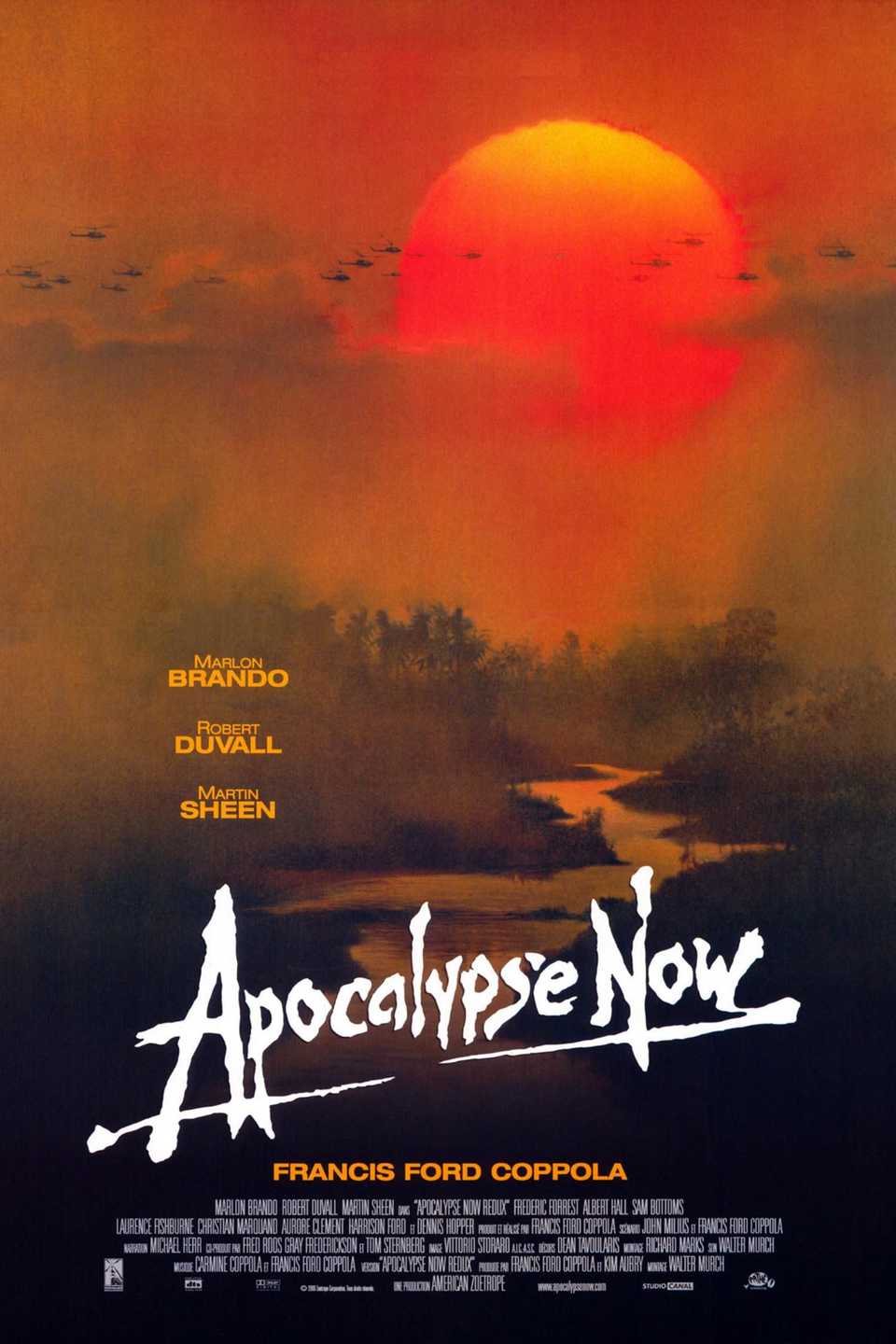
Apocalypse Now
Release Date August 15, 1979
Runtime 147 minutes
Director Francis Ford Coppola
Writers Joseph Conrad, John Milius, Francis Ford Coppola, Michael Herr





 English (US) ·