
The history of the United States of America and the history of filmmaking are pretty intertwined. Though the official founding of this country may have come long before celluloid film, it was just getting on its feet when domestic film productions began and could begin to chronicle the many stories that make up the tapestry of the nation. Since then, film trends and movements have come and gone in the country, many of them devoted to retelling stories of our past or looking forward to our future.
That holds true today, and the best films from the last 15 years of American cinema are all reflections of where we’ve been and where we’re going in one way or another. What constitutes a completely American film has become an increasingly complicated question with every passing decade. Production companies have been formed all over the world, and even when an American movie studio is the major distributor of a film, the money that makes it comes from all sorts of international sources. Ultimately, the films listed here all have two things in common: they all, by any basic measure, could be considered American films, and they’re some of the best made in the last 15 years.
10 'Spider-Man: Into the Spider-Verse' (2018)
 Image via Sony Pictures Releasing
Animated movies in America have been dominated by computer animation in the last 15 years. Disney and Pixar are the most massive forces in that regard, and they’ve given us some amazing films, like Moana, Encanto, Coco and Inside Out, appealing to American audiences of increasing diversity. Themes of universality also apply to the best animated film of the last 15 years, Spider-Man: Into the Spider-Verse. It’s a Spider-Man film that expanded the idea of who its main character could be and what a mainstream animated movie could look like, but also made an appeal to the heroism inside all of us.
Switching the focus from Peter Parker to Miles Morales was the smartest move the first animated Spider-Verse could make, breaking out of the mold that had begun to grow stale. While Tom Holland’s inaugural film as the character, from the year prior, borrowed a bit from Miles’ comics, the animated film still forges a new path by introducing a whole multiverse of possibilities. The film is packed with different versions of Spider-Heroes and colliding visual styles that also represent the closest a film may ever come to replicating a comic book. Into the Spider-Verse is an American animated masterpiece.
9 'Bridesmaids' (2011)
 Image via Universal Pictures
Comedy in the last decade and a half has certainly shifted more to the small screen. That doesn’t mean we haven’t gotten some great American comedies in the last 15 years—there have been many. Booksmart, Game Night, The Nice Guys, One of Them Days, and Palm Springs all come to mind. If we want the best, though, we have to go 15 years back to a film that was a big hit at the box office: Bridesmaids.
A perfect marriage of 2000s “chick flicks” like How to Lose a Guy in Ten Days with the frat-humor, immature raunchiness of movies like The Hangover, Bridesmaids also elevates both. It supercharged the directorial career of Paul Feig, made Kristen Wiig a legitimate leading lady, and catapulted Melissa McCarthy to the comedy A-list. Bridesmaids is such a funny, perfectly pitched movie that hasn’t diminished at all in that time. Some things will simply always be funny, like Melissa McCarthy doing a number 2 into a sink.
8 'Killers of the Flower Moon' (2023)
.jpg?q=49&fit=crop&w=825&dpr=2) Image via Apple Studios
Image via Apple StudiosNo genre is more quintessentially American than the Western. Even if some of the best ever made were produced outside the States, they are still tied to the same iconography of the Old West and the films that were produced during the genre’s golden age. The genre will never match that level of output ever again, but it doesn’t mean we don’t still get some great American Westerns. In the last 15 years, we've seen movies attempting to grapple with the inherent violence and racism of the Western, but none more directly than Martin Scorsese’s revisionist Killers of the Flower Moon.
Rife with contradictions and bloody depictions of inhumanity, Killers of the Flower Moon wrangles with both real and film history. Scorsese may not be the best filmmaker to tell the story of the Osage people of Oklahoma, who were slaughtered by white men over a decade so they could control their oil rights and money, and he seems to know that. Still, this Western understands the issue of monetizing the violence perpetrated against a nation for the sake of entertainment. That acknowledgment doesn’t forgive the film of its sins, but playing devil’s advocate, it's still a genuine attempt to explore America's mythologizing and romanticizing of one of the most violent and volatile eras in its history.
7 'Interstellar' (2014)
 Image via Melinda Sue Gordon/©Paramount Pictures/courtesy Everett Collection
Christopher Nolan holds dual citizenship as a citizen and filmmaker. His influences range from the visual magnificence of Ridley Scott, the technical perfectionism of Stanley Kubrick, and the blockbuster showmanship of Steven Spielberg. He has a clear affinity for science fiction, and nowhere is that, or his influences, more apparent than in Interstellar, a blockbuster sci-fi adventure film and a father-daughter love story made on a gigantic scale with unbelievable visuals. It’s Nolan’s attempt at the cosmic grandeur of 2001: A Space Odyssey but with the blockbuster sensibility of Spielberg.
Even when you can see the signatures of other filmmakers in any of Nolan’s films, the result is always uniquely his. Interstellar's notions of love being quantifiable may be awkward, the result of a technically brilliant filmmaker trying to tackle sentimentality, but damned if the film doesn't fail to move you. It helps that, on a pure spectacle level, it's Nolan's greatest accomplishment, with technically astounding and awe-inspiring space sequences. It's an overwhelming viewing experience, demanding to be seen on the biggest screen possible.
6 'Gone Girl' (2014)
 Image via 20th Century Studios
Thrillers are a cornerstone of any healthy film diet, and they can occupy just about any section of the pyramid. Gillian Flynn's novel Gone Girl is certainly better than the average airport novel, with some ingenious twists and turns in its plot, but it's easy to see how it could have been adapted into a standard thriller. With David Fincher at the helm, with many of his usual collaborators and a truly stacked cast, the film adaptation became one of the best thrillers of the 21st century.
Not only does the film look and sound better than most thrillers, with cinematography by Jeff Cronenweth and a thrumming score by Trent Reznor and Atticus Ross, but it also has tight pacing with perfectly timed plot twists. Perception is key to the plot, and Fincher plays with the audience throughout the first half before dropping the first twist like an anvil. In lesser hands, that reveal could rob the film of all its mystery and reduce its momentum, but it only makes the second half of Gone Girl all the more enthralling. Everything and everyone is firing on all cylinders, from Fincher to Ben Affleck and an Oscar-nominated Rosamund Pike and even Tyler Perry, who has never been better cast in a role.
5 'One Battle After Another' (2025)
 Image via Warner Bros.
American filmmakers have undoubtedly delivered some spectacular action movies in the last 15 years, but the best American-made movie brought the fight home with a thoroughly domestic thriller. One Battle After Another features a very different style of action: its pulse-pounding sequences aren't bombastic gunfights but riots and police raids, and its car chase isn't made exciting by endless flips and crashes, but by a long stretch of road and a low-angle camera.
Paul Thomas Anderson's action thriller takes the revolutionary spirit of Thomas Pynchon's novel Vineland and applies a modern context to it. It's a film about the failures of political movements and the hope that they can inspire future changes. It finds action through revolution and chaos, and its sequences are as perfectly executed as anything you'll find in more escapist fare, also inspiring more unease than the average action movie because the images can so easily be applied to current political events. One Battle After Another is visceral, chaotic and even clumsy at times, exactly what you want out of an action movie made by PTA.
Collider Exclusive · Oscar Best Picture Quiz
Which Oscar Best Picture
Is Your Perfect Movie?
Parasite · Everything Everywhere · Oppenheimer · Birdman · No Country
Five Oscar Best Picture winners. Five completely different visions of what cinema can be — and what it can do to you. One of them is the film that was made for the way your mind works. Ten questions will figure out which one.
🪜Parasite
🌀Everything Everywhere
☢️Oppenheimer
🐦Birdman
🪙No Country for Old Men
FIND YOUR FILM →
01
What kind of film experience do you actually want? The best movies don't just entertain — they leave something behind.
ASomething that pulls the rug out — that makes me think I'm watching one kind of film and then reveals I'm watching another entirely. BSomething overwhelming — funny, sad, absurd, and genuinely moving, all at once. CSomething grand and weighty — a film that makes me feel the full scale of what I'm watching. DSomething formally daring — a film that pushes what cinema can even do. ESomething lean and relentless — pure tension with no wasted frame.
NEXT QUESTION →
02
Which idea grabs you most in a film? Great films are driven by a central obsession. What's yours?
AClass, inequality, and what people are willing to do when desperation meets opportunity. BIdentity, family, and the chaos of trying to hold your life together when everything is falling apart. CGenius, moral responsibility, and the catastrophic weight of a decision you can never take back. DEgo, legacy, and the terror of becoming irrelevant while you're still alive to watch it happen. EEvil, chance, and whether moral order actually exists or if we just tell ourselves it does.
NEXT QUESTION →
03
How do you like your story told? Form is content. The way a story is shaped changes what it means.
AGenre-twisting — I want it to start in one lane and migrate into something completely different. BMaximalist and genre-blending — comedy, action, drama, sci-fi, all in one ride. CEpic and non-linear — cutting between timelines, building a mosaic of cause and consequence. DA single unbroken flow — I want to feel like I'm living it in real time, no cuts to safety. ESpare and precise — every scene doing exactly what it needs to do and nothing more.
NEXT QUESTION →
04
What makes a truly great antagonist? The opposition defines the protagonist. What kind of opposition fascinates you?
AA system — invisible, structural, and almost impossible to fight because it has no single face. BThe self — the ways we sabotage, abandon, and fail the people we love most. CHistory — the unstoppable momentum of events that no single person can stop or redirect. DThe industry — the machinery of culture that chews up talent and spits out irrelevance. EPure, implacable evil — a force so certain of itself it becomes almost philosophical.
NEXT QUESTION →
05
What do you want from a film's ending? The final note is the one that lingers. What do you want it to sound like?
AShock and inevitability — a conclusion that recontextualises everything that came before it. BEarned emotion — I want to cry, laugh, and feel genuinely hopeful, even if the world is a mess. CDevastation and grandeur — an ending that makes me sit in silence for a few minutes after. DAmbiguity — something that leaves enough open that I'm still thinking about it days later. EBleakness — an honest refusal to pretend the world is tidier than it actually is.
NEXT QUESTION →
06
Which setting pulls you in most? Where a film takes place shapes everything — mood, stakes, what's even possible.
AA gleaming modern city with a hidden underside — beauty masking rot, wealth masking desperation. BA collapsing suburban life that opens onto something infinite — the multiverse of a single ordinary person. CThe corridors of power and science at a world-historical turning point — where decisions echo for decades. DThe grimy, alive chaos of New York and Hollywood — fame as both destination and trap. EVast, indifferent landscape — desert and highway where violence arrives without warning or reason.
NEXT QUESTION →
07
What cinematic craft impresses you most? Every great film has a signature — a technical or artistic element that makes it unmistakable.
AProduction design and mise-en-scène — every frame composed to carry meaning beneath the surface. BEditing and tonal control — the ability to move between registers without losing the audience. CScore and sound design — music that becomes inseparable from the dread and awe of what you're watching. DCinematography as performance — the camera not recording events but participating in them. ESilence and restraint — what's left unsaid and unshown doing more work than any dialogue could.
NEXT QUESTION →
08
What kind of main character do you root for? The protagonist is the lens. Who you choose to follow says something about you.
ASomeone smart and resourceful who makes increasingly dangerous decisions under pressure. BSomeone overwhelmed and ordinary who turns out to be capable of something extraordinary. CA brilliant, tortured figure whose gifts and flaws are inseparable from each other. DA self-destructive artist whose ego is both their superpower and their undoing. EA quiet, principled person trying to make sense of a world that has stopped making sense.
NEXT QUESTION →
09
How do you feel about a film that takes its time? Pace is a choice. Some films sprint; others let tension accumulate slowly, deliberately.
AI love a slow build when I know the payoff is going to be seismic — patience for a devastating reveal. BGive me relentless momentum — I want to feel breathless and emotionally spent by the end. CEpic runtime doesn't scare me — if the material demands three hours, give me three hours. DI want it to feel propulsive even when nothing is technically happening — restless energy throughout. EDeliberate and unhurried — I want dread to accumulate in the spaces between the action.
NEXT QUESTION →
10
What do you want to feel walking out of the cinema? The best films leave a mark. What kind of mark do you want?
AUnsettled — like I've just seen something I can't fully explain but can't stop thinking about. BMoved and energised — like the film reminded me what actually matters and gave me something to hold onto. CHumbled — like I've been in the presence of something genuinely important and overwhelming. DExhilarated — like I've just seen cinema doing something it's never quite done before. EHaunted — like a cold, quiet dread that stays with me for days.
REVEAL MY FILM →
The Academy Has Decided Your Perfect Film Is…
Your answers have pointed to one Oscar Best Picture winner above all others. This is the film that was made for the way your mind works.
Parasite
You are drawn to films that operate on multiple levels simultaneously — that begin in one genre and quietly, brilliantly migrate into another. Bong Joon-ho's Parasite is a film about class, desire, and the architecture of inequality that manages to be darkly funny, deeply suspenseful, and genuinely shocking across a single extraordinary running time. Your instinct is for cinema that hides its true intentions until the moment it's ready to reveal them. Parasite is exactly that — a film that rewards close attention and punishes assumptions, right up to its devastating final image.
Everything Everywhere All at Once
You want it all — and this film gives you all of it. The Daniels' Everything Everywhere All at Once is one of the most maximalist films ever made: action comedy, multiverse sci-fi, family drama, existential crisis, and a genuinely earned emotional core that sneaks up on you amid the chaos. You are someone who responds to ambition, who doesn't want cinema to choose between being entertaining and being meaningful. This film refuses that choice entirely. It is overwhelming by design, and its overwhelming nature is precisely the point — because the feeling of being crushed by infinite possibility is exactly what it's about.
Oppenheimer
You are drawn to cinema on a grand scale — films that understand history not as a backdrop but as a force, and that place their characters inside that force and watch what happens. Christopher Nolan's Oppenheimer is a film about the terrifying gap between what we can do and what we should do, told with the full weight of one of the most consequential moments in human history behind it. You want your films to feel important without feeling self-important — to earn their ambition through sheer craft and the gravity of their subject. Oppenheimer does exactly that. It is enormous, complicated, and refuses easy comfort.
Birdman
You are drawn to films that foreground their own construction — that make the how of the filmmaking part of the what it's about. Alejandro González Iñárritu's Birdman, shot to appear as a single continuous take, is cinema examining itself through the cracked mirror of a fading actor's ego. You respond to formal daring, to the feeling that a film is doing something that probably shouldn't be possible. Michael Keaton's performance and Emmanuel Lubezki's restless camera create something genuinely unlike anything else — a film that is simultaneously about creativity, relevance, self-destruction, and the impossibility of ever truly knowing if your work means anything at all.
No Country for Old Men
You are drawn to cinema that trusts silence, that refuses to explain itself, and that treats dread as a form of meaning. The Coen Brothers' No Country for Old Men is a film about the arrival of a new kind of evil — implacable, arbitrary, and utterly indifferent to the moral frameworks we use to make sense of the world. It is one of the most formally controlled films ever made, and its controlled restraint is what makes it so terrifying. You want your films to haunt you, not comfort you. You are not interested in resolution if resolution would be dishonest. No Country for Old Men is honest in a way that most cinema never dares to be.
↻ RETAKE THE QUIZ
4 'Get Out' (2017)
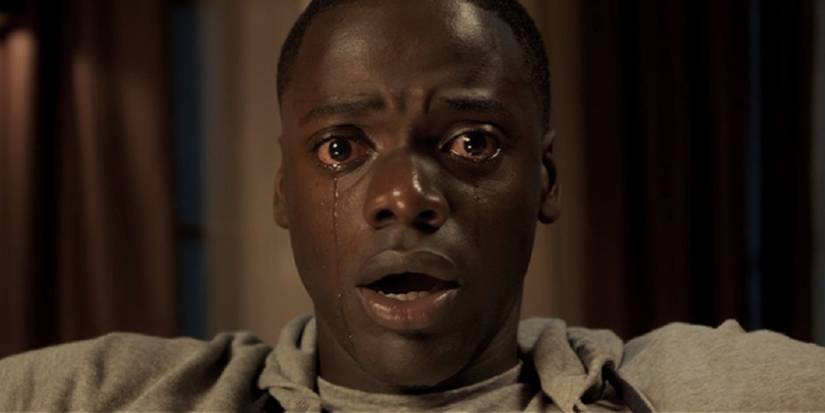 Image via Universal Pictures
Horror has been having a moment for the last 15 years. The rise of so-called "elevated" horror, which is a complete misnomer that indirectly insults decades of great movie work made by great filmmakers, is a sign of how the genre is finally being taken seriously outside its own fervent fandoms. The Witch, Hereditary, and Talk to Me are all modern horror masterpieces, and then there's the work of Jordan Peele. The former sketch-comedy star proved that the tension and release of a good joke is strikingly similar to that of a good scare.
While Us and Nope are both amazing continuations of Peele's genre dominance, it's his directorial debut, Get Out, that's the near-perfect summation of the "post-racial America" it was released in. Using horror as a lens to examine white liberal racism in a post-Obama America where deeply seeded prejudices were ready to sprout, the film was a terrifying herald of what would grow rampantly in Trump's America. A decade on, the horror seems almost too understated compared to the bold bigotry that dominates our culture now, but its keen insights into a more quietly insidious racism are still just as sharp. It's a horror film that can make different viewers uncomfortable in different ways, which is part of what makes it the best American horror film of the last 15 years.
3 '13th' (2016)
 Image via Netflix
There have been many incredibly compelling documentaries made in America in the last 15 years, many of them unsurprisingly focusing on race. Ava DuVernay's 13th, which chronicles the history of the Thirteenth Amendment of the Constitution and argues that its exemptions have been exploited to perpetuate slavery through prison labor, is a fascinating, infuriating work that examines a wide range of social issues and punitive legislation that overwhelmingly affect Black Americans.
Through personal stories, statistical analysis, and historical events, the film makes a very compelling case and offers a wake-up call to Americans who may have been blissfully or deliberately ignorant of the inequalities built into our institutions. There have been claims against some of the film's assertions and use of data, but those are minuscule compared to the overwhelming evidence it provides and the heartbreaking stories it spotlights. Released in 2016, the film was already powerfully relevant, but the ensuing years since, which have continued to expose just how foundationally broken our systems are, have also proven its necessity.
2 'Inside Llewyn Davis' (2013)
 Image via CBS Films
Nothing can lighten the mood like a good musical, even when they're resolutely morose. In the last 15 years, there have been a number of big Broadway-born movie musicals that have all added to the rich film history of music in movies, but if there's one movie that feels like the filmic version of the music it portrays, it's Inside Llewyn Davis. The Coen Brothers' New York City-set portrait of the folk music scene is a melancholy masterpiece with chilly visuals and fantastic music. Its cyclical plot, misanthropic lead character and mushy-grey visual palette all contribute to a movie that looks and feels just like a folk song.
About as inspired by the life of folk singer Dave Von Ronk as Fargo was by a true story, the film rambles and wanders through its narrative. Like its lead character, played and sung by Oscar Isaac, it rambles and wanders through the artistically rendered vision of early '60s New York City, to the tune of a carefully curated soundtrack of period songs assembled by T Bone Burnett. Inside Llewyn Davis looks like no other movie, and it has the sound to match, with a distinct dark spirit to it but also an odd comfort. It might be difficult to argue that it's the Coens' greatest film—difficult, but not impossible.
1 'Moonlight' (2016)
 Image via A24
Barry Jenkins' Moonlight is one of the most deeply felt and nakedly emotional films of the 21st century. Following a Black male protagonist through three different stages of his life in Miami and Atlanta as he discovers his sexuality and struggles with his identity and masculinity, the film offers a window into a very specific lived experience. The intersection of all of its themes can only really be fully appreciated by those who can fully relate and engage with it, but it can still evoke strong emotions and inspire empathy in the rest of us.
Even in hyperbolic terms, it's hard to express what makes Moonlight the best American film of the last 15 years. Its specificity and depiction of a life that's far too underrepresented in film are part of what makes it great, but they aren't automatic qualifiers. It comes through the sympathetic filmmaking of Jenkins, the breathtaking cinematography of James Laxton, the compelling performances of the entire cast, and its ineffable ability to emotionally annihilate. There's not one specific quality that makes a film objectively better than any other; sometimes it just comes down to how it makes you feel, and Moonlight makes you feel a lot.






 English (US) ·