
 Image via Penguin Classics
Published Aug 20, 2026, 8:11 PM EDT
Diego Pineda has been a devout storyteller his whole life. He has self-published a fantasy novel and a book of short stories, and is actively working on publishing his second novel.
A lifelong fan of watching movies and talking about them endlessly, he writes reviews and analyses on his Instagram page dedicated to cinema, and occasionally on his blog. His favorite filmmakers are Andrei Tarkovsky and Charlie Chaplin. He loves modern Mexican cinema and thinks it's tragically underappreciated.
Other interests of Diego's include reading, gaming, roller coasters, writing reviews on his Letterboxd account (username: DPP_reviews), and going down rabbit holes of whatever topic he's interested in at any given point.
Sign in to your Collider account
The literary output of the United States of America started growing in terms of international importance and artistic independence around the mid-19th century, and since then, it has become one of the most groundbreaking national literatures on the planet. The debate on what The Great American Novel could possibly be has been around since 1868, bringing up titles of the caliber of Moby Dick and The Great Gatsby. Some of the most prominent candidates for the title, however, actually come from the past 100 years.
From 1926 until the present, several of the greatest English-language books ever written have been published in the United States, further enshrining American literature as one of the most internationally relevant and influential of modern times. From modern speculative fiction epics like Words of Radiance to foundational 20th-century classics like The Catcher in the Rye, the best American books of the last century should all be considered essential for anyone with the ability to read.
10 'Words of Radiance' (2014)
 Image via Tor Books
In an age when many fantasy authors have fallen into the bad habit of keeping fans waiting over a decade for the next chapter in a series, Brandon Sanderson is a breath of fresh air, a speculative fiction master that's among the most prolific in the highest tier of 21st-century fantasy and sci-fi. He has penned several fantasy books better than most movies being made today, but there's one in particular that tends to be considered his magnum opus: Words of Radiance, the second installment in the iconic Stormlight Archive series.
It's perhaps the greatest fantasy masterpiece from a century that has thus far delivered fantasy banger after fantasy banger.
Deciding what the best American book of the 21st century thus far could be is a daunting task that could never possibly elicit an answer guaranteed to satisfy everyone, but there's a strong argument to be made in Words of Radiance's favor. Grand and epic in scale yet wonderfully intimate and character-driven in terms of narrative and thematic scope, it's perhaps the greatest fantasy masterpiece from a century that has thus far delivered fantasy banger after fantasy banger.
9 'The Old Man and the Sea' (1952)
 Image via Mercy House
There can be no conversation on the importance and tremendous quality of American literature without talking about Ernest Hemingway, a famed modernist so fascinating that he himself has been mythologized almost as much as his exceptional bibliography. People looking for a good gateway to get into Hemingway might as well start with his best book: The Old Man and the Sea, one of the best novellas of all time. It earned Hemingway the 1953 Pulitzer Prize for Fiction, and it was the only book explicitly mentioned when the author was awarded the Nobel Prize in Literature in 1954.
Much like the rest of its writer's work, it's definitely not a book for everyone, since its sparse prose and slow-burning style may underwhelm readers looking for something bigger. However, those open to its deep thematic explorations of human resilience, its carefully-constructed yet powerfully dark tone, and the unique cleanliness of Hemingway's prose are bound to have an unforgettable time experiencing The Old Man and the Sea. It's only around 140 pages long, but several of the best American books of the last century are short.
8 'Gravity's Rainbow' (1973)
 Image via Viking Press
Thomas Pynchon is another author whose work has to be discussed when talking about the greatest American novels of all time, and Gravity's Rainbow is almost universally regarded as his masterpiece. A strong contender for the title of The Great American Novel, this sci-fi satire was notably controversial upon release (being rejected by the Pulitzer Prize jury for being "turgid" and "obscene), but haven't most books worth reading historically been the subject of controversy? Pynchon is one of the most important literary artists in the history of postmodernism, and Gravity's Rainbow is a must-read for those interested in the movement.
Some may find the book more than a little bit overwritten and disorienting, but that density is essential to the novel's commentary on paranoia, technology, and the dehumanizing effects of modern imperialism. But aside from its thematic work having aged like fine wine, Gravity's Rainbow is a masterpiece for a wide variety of other reasons. Philosophically complex, emotionally layered, and at times intentionally grotesque, it's a boundary-pushing work of genius whose experimental style and delightful satire have all made it absolutely timeless.
7 'Dune' (1965)
 Image via Chilton Books
Frank Herbert's Dune is one of those sci-fi book masterpieces that became the blueprint for the genre going forward, a masterpiece so immensely impactful and influential that many would still consider it the greatest sci-fi novel ever written. Yet another book that proves why no one does speculative fiction quite like American writers, this space opera won the inaugural Nebula Award for Best Novel. As the years have passed, Dune's comments on things like ecology, the intersection of religion and politics, and the dangers of messianic leaders have all remained awfully timely.
It's also a quintessentially American sci-fi masterpiece, deeply rooted in the political and cultural anxieties of the mid-20th-century United States. Few times in history has literature seen world-building this complex and enrapturing, character development this emotionally compelling, or a plot this absorbing and well-paced. Far more than just the greatest American science fiction book ever written, Dune is a subversion of the Hero's Journey archetype that somehow still reads as a uniquely fresh and creative story all these years later.
Collider Exclusive · Sci-Fi Survival Quiz Which Sci-Fi World Would You Survive? The Matrix · Mad Max · Blade Runner · Dune · Star Wars
Five universes. Five completely different ways the future went wrong — or sideways, or up in flames. Only one of them is the world your instincts were built for. Eight questions will figure out which dystopia, galaxy, or desert wasteland you'd actually make it out of alive.
💊The Matrix
🔥Mad Max
🌧️Blade Runner
🏜️Dune
🚀Star Wars
TEST YOUR SURVIVAL →
01
You sense something is deeply wrong with the world around you. What do you do? The first instinct is often the truest one.
APull on every thread until I understand the system — then figure out how to break it. BStop asking questions and start stockpiling — food, fuel, weapons. Questions don't keep you alive. CKeep my head down, observe carefully, and trust no one until I know who's pulling the strings. DStudy the patterns. Every system has a rhythm — learn it, and you learn how to survive it. EFind the people fighting back and join them. You can't fix a broken galaxy alone.
NEXT QUESTION →
02
In a world of scarcity, what resource do you guard most fiercely? What we protect reveals what we believe survival actually requires.
AKnowledge. If you understand the system, you don't need resources — you can generate them. BFuel. Everything else — movement, power, escape — runs on it. CTrust. In a world of fakes and informants, a truly reliable ally is rarer than any commodity. DWater. And after water, information — the two things empires are truly built on. EShips and credits. The galaxy is big — you survive it by being able to move through it freely.
NEXT QUESTION →
03
What kind of threat keeps you up at night? Fear is useful data — if you're honest about what you're actually afraid of.
AThat reality itself is a lie — that everything I experience has been constructed to keep me compliant. BA raid. No warning, no mercy — just the roar of engines and then nothing left. CBeing identified. Once someone with power decides you're a problem, you're already out of time. DBeing outmanoeuvred — losing a political game I didn't even know I was playing. EThe Empire tightening its grip until there's nowhere left to run.
NEXT QUESTION →
04
How do you deal with authority you don't trust? Every dystopia has a power structure. Your approach to it determines everything.
ASubvert it from the inside — learn its rules well enough to weaponise them against it. BIgnore it and stay out of its reach. The further from any power structure, the better. CAppear to comply while doing exactly what I need to do. Visibility is the enemy. DManoeuvre within it carefully. You can't beat a system you refuse to understand. EResist openly when I have to. Some things are worth the risk of being seen.
NEXT QUESTION →
05
Which environment could you actually endure long-term? Survival isn't just tactical — it's physical, psychological, and very much about where you are.
AUnderground bunkers and server rooms — cramped, artificial, but with access to everything that matters. BOpen wasteland — brutal sun, no shelter, constant movement. At least the threat is honest. CA dense, rain-soaked city where you can disappear into the crowd and nobody asks questions. DMerciless desert — extreme heat, no water, and something enormous living beneath the sand. EThe fringe — backwater planets and busy spaceports where the Empire's attention rarely reaches.
NEXT QUESTION →
06
Who do you want in your corner when things fall apart? The company you keep is the clearest signal of who you actually are.
AA tight crew of believers who've seen behind the curtain and have nothing left to lose. BOne or two people I'd trust with my life. Any more than that and someone talks. CNobody, ideally. Alliances are liabilities. I work alone unless I have no choice. DA community bound by shared hardship and mutual survival — people who need each other to last. EA ragtag team with wildly different skills and total commitment when it counts.
NEXT QUESTION →
07
Where do you draw the line — if you draw one at all? Every survivor eventually faces a moment that tests what they're actually made of.
AI won't harm the innocent — even the ones who'd report me without hesitation. BI do what I have to to protect the people I've chosen. Everything else is negotiable. CThe line shifts depending on who's asking and what's at stake. DI draw a long-term line — nothing that compromises my people's future, even if it'd help now. ESome lines, once crossed, can't be uncrossed. I know which ones they are.
NEXT QUESTION →
08
What would actually make survival worth it? Staying alive is one thing. Having a reason to is another.
AWaking others up — dismantling the illusion so no one else has to live inside it. BFinding somewhere — or someone — worth protecting. A reason to keep moving. CAnswers. Understanding what I am, what any of this means, before time runs out. DLegacy — shaping the future in a way that outlasts me by generations. EFreedom — for myself, for others, for every world still living under someone else's boot.
REVEAL MY WORLD →
Your Fate Has Been Calculated You'd Survive In…
Your answers point to the world your instincts were built for. This is the universe your temperament, your survival instincts, and your particular brand of stubbornness were made for.
The Matrix
You took the red pill a long time ago — probably before anyone offered it to you. You're a systems thinker who can't help but notice the seams in things.
- You're drawn to understanding how the system works before figuring out how to break it.
- You'd find the Resistance, or it would find you — your instinct for spotting constructed realities is the machines' worst nightmare.
- You function best when you have access to information and the freedom to act on it.
- The Matrix built an airtight prison. You'd be the one probing the walls for the door.
Mad Max
The wasteland doesn't reward the clever or the well-connected — it rewards those who are hard to kill and harder to break. That's you.
- You don't need comfort, community, or a cause larger than the next horizon.
- You need a vehicle, a clear threat, and enough fuel to outrun it — and you're good at all three.
- You are unsentimental enough to survive that world, and decent enough — just barely — to be something more than another raider.
- In the wasteland, that distinction is everything.
Blade Runner
You'd survive here because you know how to exist in moral grey areas without losing yourself completely.
- You read people accurately, keep your circle small, and ask the questions others prefer not to answer.
- In a city where humanity is a legal designation rather than a feeling, you hold onto something that keeps you functional.
- You're not a hero. But you're not lost, either.
- In Blade Runner's world, that distinction is everything.
Dune
Arrakis is the most hostile environment in the known universe — and you are precisely the kind of person it rewards.
- Patience, discipline, and political awareness are your core strengths — and on Arrakis, they're survival tools.
- You understand that the long game matters more than any single victory.
- Others come to Dune and are consumed by it. You'd learn its logic and earn its respect.
- In time, you wouldn't just survive Arrakis — you'd begin to reshape it.
Star Wars
The galaxy far, far away is vast, loud, and in a constant state of violent political upheaval — and you wouldn't have it any other way.
- You find meaning in being part of something larger than yourself — a cause, a crew, a rebellion.
- You'd gravitate toward the Rebellion, or the fringes, or whatever pocket of the galaxy still believes the Empire's grip can be broken.
- You fight — not because you have to, but because standing aside isn't something you're capable of.
- In Star Wars, that willingness is what makes all the difference.
↻ RETAKE THE QUIZ
6 'Stoner' (1965)
 Image via Viking Press
During his life, John Williams was a relatively quiet figure in American literature; but today, he's seen as one of the nation's literary giants from his time. Stoner in particular is not only one of the best books of the 1960s, but generally regarded as one of the best American novels of all time. It was after its re-publication in the 2000s that this classic began to garner the praise that it always deserved, and today, many regard it as one of the most important exponents of the campus novel genre.
Both in terms of narrative and style, Stoner is a masterpiece. Regarding the former, the way Williams takes a slice-of-life story about an ordinary university professor and turns it into a universally moving and profound exploration of the human condition is nothing if not admirable. And regarding the latter, the radically restrained and tightly-controlled nature of Williams' prose makes Stoner read as an entirely unique kind of literary experience even after all these decades.
5 'Blood Meridian' (1985)
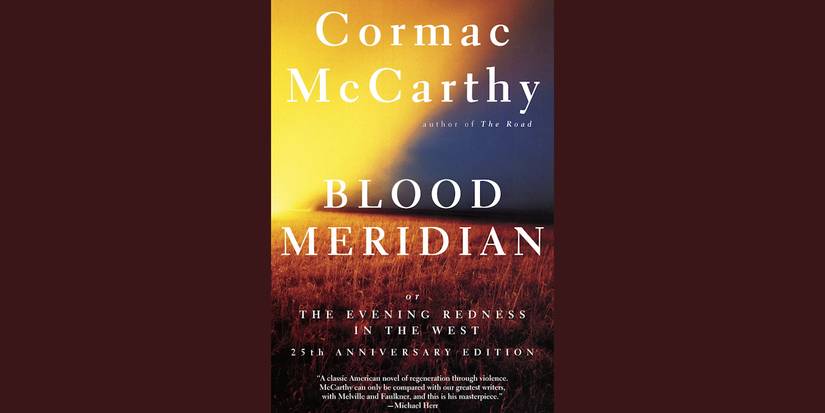 Image via Random House
Cormac McCarthy was another one of the most important and influential American authors in the history of literature, the mind behind masterpieces of the caliber of Blood Meridian. This epic historical novel is regarded by many as the quintessential anti-Western book, a deconstruction of the myths of the American frontier that's as subversive and chaotically nihilistic as it is intelligent. The novel's reception upon release was lukewarm at best, but as the years have passed and analysis of McCarthy and his work has greatly expanded, it has come to be labeled as The Great American Novel by many bookworms and critics.
That challenging nature is not only fully intentional, but also essential to the narrative.
Blood Meridian is, at the very least, one of the most intense books of all time. Formally, McCarthy makes sure that it's a daunting read, using no quotation marks for speech and including things like untranslated Spanish and archaic vocabulary. That challenging nature is not only fully intentional, but also essential to the narrative. By stripping away these stylistic comforts, McCarthy crafted a novel whose study of the myths of the Wild West feels all the more oppressive and relentlessly brutal than it otherwise ever would have.
4 'To Kill a Mockingbird' (1960)
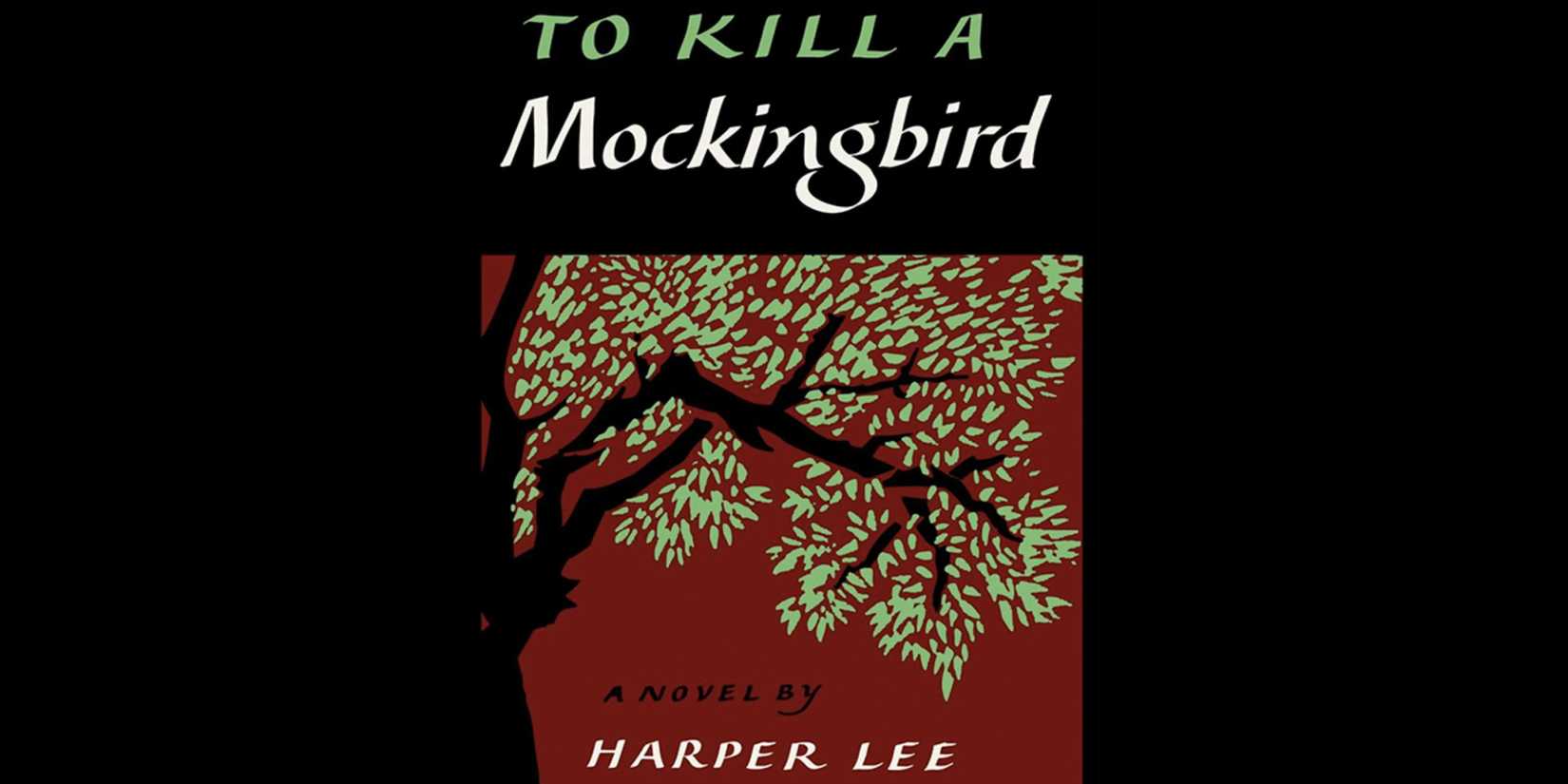 Image via J. B. Lippincott & Co.
There's a good reason why Harper Lee's Pulitzer Prize-winning classic To Kill a Mockingbird has historically been a staple of school curricula and libraries all across the United States, and there's also a good reason why it's one of the best banned books of all time. The reasons why it's needlessly controversial and the reasons why it's essential are one and the same: Challenging though its portrayal of systemic racism in the US may be, it's a must-read for pretty much everyone, no matter where they're from.
Because as intricately tied as To Kill a Mockingbird is to the American justice system and history of racism, it's also a universally compelling tale about empathy, justice, and the loss of innocence. As charming as it is dark-toned and as beautifully-written as it is poignant, it's a must-read, must-study, and must-analyze mid-20th-century masterpiece which proves beyond a shadow of a doubt why few countries have quite as many timeless classic books as the US.
3 'In Cold Blood' (1966)
 Image via Vintage
Far more than just a gargantuan figure in the history of American literature and culture, Truman Capote pretty much invented the non-fiction novel with In Cold Blood. Capote learned of the 1959 Clutter family murders before the killers were captured, so he traveled to Kansas to write about the crime alongside Harper Lee herself. From that research came In Cold Blood. And with its turning 60 years old in 2026, it's one of those non-fiction books that are a must-read this year.
All those who even mildly enjoy the true-crime genre ought to read In Cold Blood at least once in their lives; and even those who typically don't love it should consider experiencing it, because it really is one of the most groundbreaking American books in history. The blend of novelistic techniques, psychological depth, and journalistic elements that Capote leveraged to craft this literary gem results in a magnum opus that's as enthralling as it is insightful.
2 'The Catcher in the Rye' (1951)
 Image via Little, Brown and Company
Upon publication, J. D. Salinger's The Catcher in the Rye was immediately and immensely controversial. Originally written for adults, this coming-of-age story ended up also finding the interest of teenage readers who found deep connection to its themes of angst, isolation, and loneliness. All these many years later, it's still a widely controversial book, but that hasn't stopped it from being regarded as one of the best books of the 1950s and one of The Great American Novels.
Grief, as well as the pain and confusion of the transition from childhood innocence to the superficiality of the adult world, are emotions and experiences that have proven perfectly universal as the decades have passed. As such, it's no wonder that Catcher in the Rye has remained so timeless. Impeccably written, refreshingly authentic, and crafted with an un-sanitized and youthful prose that has aged like fine wine, it's one of the most powerful works of American literature in history, let alone of the past century.
1 'East of Eden' (1952)
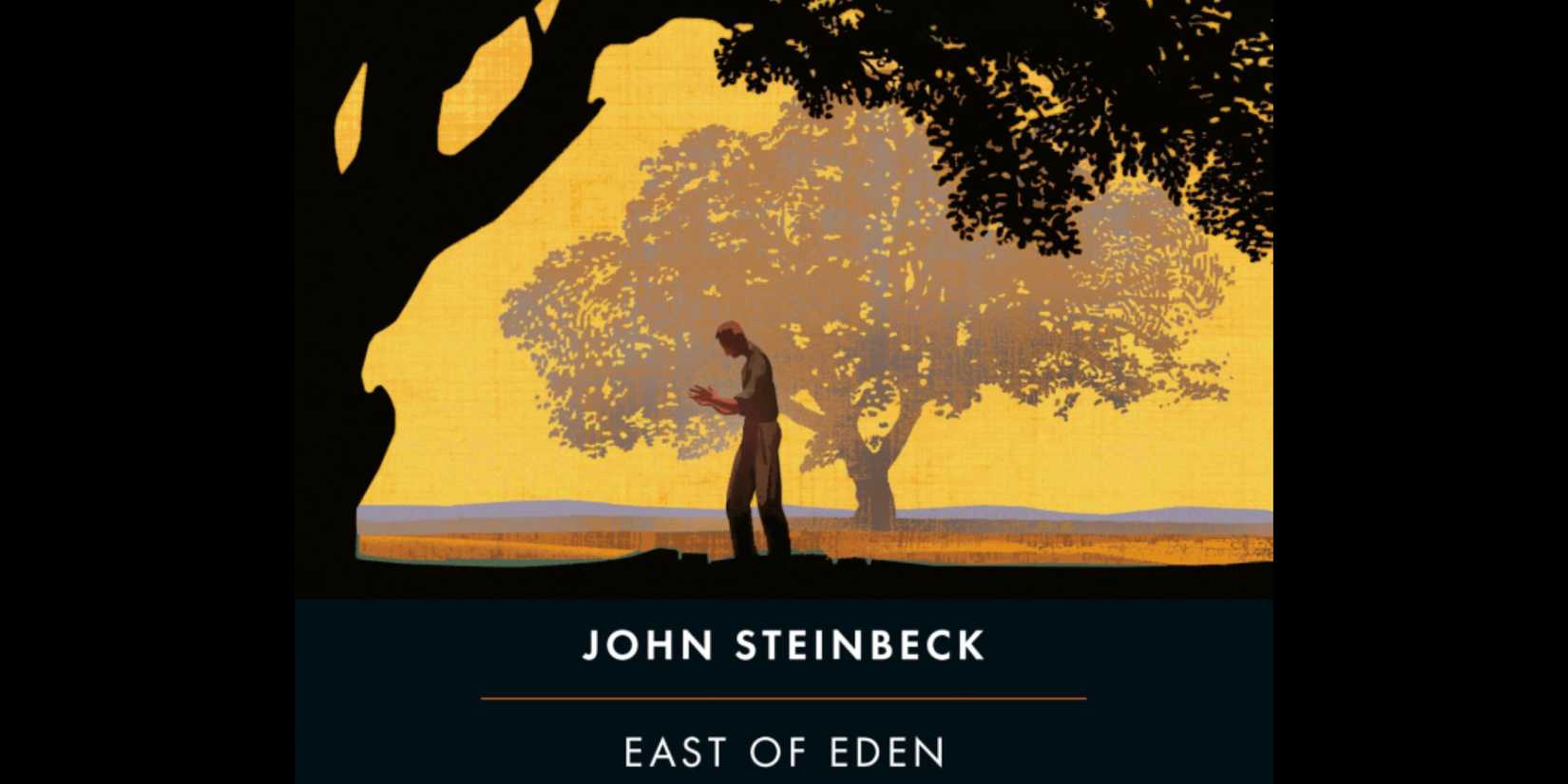 Image via Penguin Classics
John Steinbeck, winner of the 1962 Nobel Prize in Literature, was one of the greatest and most influential giants of American literature during the 20th century. A champion of the working class and a voice always willing to speak about the harsh realities of the Great Depression, he was the mind behind masterpieces of the caliber of East of Eden, arguably the strongest post-1926 contender for the title of The Great American Novel.
It's one of those book masterpieces that are perfectly written, a family saga that Steinbeck himself considered not just his most ambitious work, but even his magnum opus. It's only a little over 600 pages long—and the keyword there is "only," because it's such a vast, well-rounded, and complex study of free will and the constant battle between good and evil that it could have easily been twice as long. Beautifully rich in terms of its character writing, plotting, thematic work, and moral messaging, it almost definitely is the best American book of the last 100 years.

East of Eden
Release Date April 10, 1955
Runtime 115 minutes
Director Elia Kazan
-

-
-
Raymond Massey
Adam Trask
-
Richard Davalos
Aron Trask




 English (US) ·