Is there a best genre? Can any one genre be objectively better than another? It probably comes down to personal tastes, but if there's any genre between action, comedy, drama, horror, or thriller that I'd say has a fighting chance for the crown, I'll take thriller every time. It's a genre that can be paired perfectly with any other, and which comes in a variety of different flavors. Whether you're in the mood for something erotic, criminal, political or psychological, thrillers have got you covered.
There's nothing quite like a good thriller, and while the genre has always had its peaks and valleys in terms of quality and popularity, as any genre does, it's always been a reliable source of white-knuckle entertainment. Every era of filmmaking has brought with it new trends of thrillers, and once they've run their course, there's another on its way right behind them. From the early days of black-and-white classics to 21st-century Oscar winners, these are ten great movies that confirm thriller is the best genre.
'The Most Dangerous Game' (1932)
Image via RKO Radio Pictures
Richard Connell's 1924 short story The Most Dangerous Gameis one of the most influential of all time. It's a tale of humans hunting humans that has inspired dozens of official and unofficial adaptations that apply its primal premise to a variety of different situations. Everything from The Pest to Predatorowes a debt to it, but it's likely that influence would be a fraction of what it is without the original 1932 film adaptation. It's a cracking, classic film whose influence has spread across genres including adventure, horror, and comedy, but it's all thriller.
Big game hunter Rainsford (Joel McCrea) becomes the lone survivor of a shipwreck that leaves him stranded on the island of Count Zaroff (Leslie Banks), who enjoys hunting the most dangerous game: humans. That's the simple, effective set-up for this seminal survival thriller, which features many of the same jungle sets that would later be used in King Kong. Both films were made by the same filmmakers, Ernest B. Schoedsack and Merian C. Cooper, and also featured original Scream Queen Fay Wray. Like that monster movie classic, The Most Dangerous Game has had a long, thrilling legacy.
'Double Indemnity' (1944)
Image via Paramount Pictures
A quintessential film noir, Billy Wilder's Double Indemnity represents just about everything you could want out of a classic thriller. The plot, adapted from James M. Cain's novel by Wilder and Raymond Chandler, is filled with turns that will twist your stomach into anxious knots. The dialogue is razor sharp, and the actors all wield it with cutting precision. It's one of the best movies ever made in every category it qualifies for, but it's still a thriller through and through.
Walter Neff (Fred MacMurray) is an insurance salesman whose house call to Dietrichson (Tom Powers) leads him to cross paths with his chilling wife, Phyllis (Barbara Stanwyck), who seems hot to trot for Neff. That hotness is reciprocated in some sizzling banter that's still safe for the censors of the Hays Code era, and the two characters eventually plot the murder of Dietrichson so they can collect on the insurance. Double Indemnity is a classic film noir thriller that still packs a punch.
'The Wages of Fear' (1953)
Image via Cinédis
If someone told you that the term white-knuckle was invented to describe the film The Wages of Fear, you'd be likely to believe them. Henri-Georges Clouzot'snerve-shredding adaptation of Georges Arnaud'snovel puts you on the edge of your seat by putting its characters on the edge of theirs. It's a masterpiece of French cinema and suspense films, and it's just as intense today as it was over 70 years ago.
In a small town in South America, four ex-pats are down on their luck and looking for work when the opportunity arises from an American oil company that needs two trucks driven to an oil field fire. The only catch is that the trucks contain highly volatile nitroglycerin and need to be driven over some of the roughest roads of the jungle. When every pebble or branch in the road represents certain death, you can't help but sweat alongside the four men. More than just the physical threats are those to the men's sanity, as the extreme conditions push them all to the edge, and that's exactly where The Wages of Fear keeps you the whole time.
'Psycho' (1960)
Image via Paramount Pictures
Though it's become a seminal horror film, particularly in regard to the slasher genre, Alfred Hitchcock's Psychois just as much a thriller. The brilliance of the film is how it hard switches between the two genres. It begins as any other Hitchcockian thriller might. Even when it takes a detour off the road, it doesn't seem out of the ordinary for the genre. Then with one pull of the shower curtain, the film slashes into horror film history.
It seems almost as if the film's protagonist, Marion Crane (Janet Leigh), isn't aware that she might be in a horror film. When she steals $40,000 from her work and goes on the run, she's acting like the lead in a thriller. She might think that motel proprietor Norman Bates (Anthony Perkins) is a little odd, but probably no more so than the twitchy night manager played by Dennis Weaver in Touch of Evil. So when she stepped into the shower, the last thing she, and the audience at the time, expected was for her to meet an untimely death at the end of a kitchen knife. Psycho thrills in equal measure to its shocks, and is a perfectly horrifying thriller.
'The Conversation' (1974)
Image via Paramount Pictures
As Buffalo Springfield once sang, "Paranoia strikes deep." That 1967 song might as well be the theme for all American thrillers from the '70s, which tapped into a nationwide anxiety born out of the Vietnam War, political assassinations, and Watergate. That last event is particularly relevant to Francis Ford Coppola'smystery thriller masterpiece The Conversation. It's a film all about surveillance and conspiracies that quietly crackles with slow-burn suspense.
Harry Caul (Gene Hackman) is a surveillance expert who has been hired to spy on a couple who he believes may be targets for murder. As he searches for the truth, Harry quickly becomes consumed by his own guilt and paranoia, and The Conversation ends on a haunting open note. Made by Coppolabetween The Godfatherand its sequel, The Conversation is every bit as immaculate as those crime epics, but delivered in a much tighter, leaner thriller package.
'Manhunter' (1986)
Image Via De Laurentiis Entertainment Group
Years before serial killer thrillers became popular on the big screen, and decades before true crime covered every corner of streaming, Michael Mann brought one of the most famous fictional murderous madmen to the screen in Manhunter. Based on the novel Red Dragon by Thomas Harris, the film brought audiences face to face with Hannibal Lecter. Made by Mann with the same neon-soaked visuals and synth-heavy soundtrack as his cop series Miami Vice, the film wouldn't find the same success as The Silence of the Lambsfive years later. Both are classic serial killer thrillers, but Manhunter is truly mesmerizing.
Brian Cox's Hannibal Lektor (yes, it's spelled Lektor here) has a small but effective supporting role in the film, which follows FBI agent Will Graham (William Petersen) as he's pulled out of retirement to put his obsessive skills to use to catch the serial killer called the Tooth Fairy (Tom Noonan). Cox is coldly charismatic as the iconic character, offering a much different interpretation of Anthony Hopkins' portrayal that's no less effective, but the film belongs to Petersen and Noonan. Both actors capture the brokenness of their characters with brilliant subtlety, while Mann lets the dark atmosphere of his stylish thriller envelop them.
'The Fugitive' (1993)
Image via Warner Bros. Pictures
Action-packed and filled with suspense, The Fugitiveis the ideal blockbuster thriller. Taking the basic premise of the original television series and bulking it up with a budget, the film has incredible set pieces and two perfect performances. Harrison Ford has always been compelling on screen, utilizing his star power to great effect in lead roles that aren't outwardly complex. Tommy Lee Jones has equal power, but it's dialed up a few notches in terms of energy, and he rightly earned an Academy Award for his performance.
With a lethal efficiency, the film introduces us to Dr. Richard Kimble (Ford) before quickly dispatching his wife and sending him to prison for her murder. In an outstanding stunt sequence involving a bus and a train, Kimble goes on the run, and U.S. Marshal Sam Gerard (Jones) is hot on his tail. A smart thriller designed for adult audiences, The Fugitive is always one step ahead of the audience but never pretends to be smarter than it is. It's a perfect unpretentious film that brought Hitchcockian thrills into the blockbuster '90s. Under the assured direction of Andrew Davis, The Fugitive is worth its weight in popcorn.
'No Country for Old Men' (2007)
Image via Miramax Films
Over a decade later, Jones would be at the heart of another perfect thriller, though this one came with a much darker, nihilistic tone that perfectly meshed with the mood that America was in the 2000s. Post-9/11 thrillers share the same cynicism as the best from the '70s, but with a more relentless pace and violent approach. Directed by Joel and Ethan Coen, No Country for Old Men was a return to their Blood Simpleroots, offering a sunbaked Texas-set noir where everybody is trying to outrun their fate.
Llewelyn Moss (Josh Brolin) is a simple man put into extreme circumstances when he finds $2 million in the desert from a drug deal gone bad. By taking the money for himself, he sets off a chain of violent events and puts himself on a collision course with Sheriff Ed Tom Bell (Jones), contract killer Carson Wells (Woody Harrelson), and supernatural psychopath Anton Chigurh (Javier Bardem). Like the novel by Cormac McCarthy on which it's based, the film never takes the expected turns, offering a much more cynical thriller that isn't sure that the world is a fine place or worth fighting for.
'Uncut Gems' (2019)
Image via A24
Another pair of sibling directors, Josh and Benny Safdie, looked to be the heirs apparentto filmmakers like Martin Scorsese and Sidney Lumet with their frenetic New York City thrillers. After a couple of raw formative films, and beginning with the addiction drama Heaven Knows What, the brothers tapped into a live-wire anxiety that became more frayed in Good Timeand sparked hard in Uncut Gems. Starring Adam Sandler in a delightfully scummy role, the film is a feature-length panic attack about a degenerate gambler that harkens back to '70s classics of NYC cinema.
Howard Ratner (Sandler) is a jeweler whose business in the Diamond District is mostly a fund for his gambling, leaving him heavily in debt. His personal life is just as messy as he juggles a wife and girlfriend, but Howard is always thinking three bets ahead and, after he comes into possession of a rare black opal, he believes his luck will finally change. Uncut Gems is as harrowing a vision of addiction as any drug movie, walking an electrified line between the thrilling rush of success and the crushing weight of defeat.
'One Battle After Another' (2025)
Image via Warner Bros. Pictures
Every decade has political movements and moments of violent social upheaval. Even when they bleed into each other, they will come to define their eras, and that extends to the films made around them. One Battle After Anothermay be an adaptation of Thomas Pynchon's Vineland, which focused on '60s radicals living through the Reagan-era '80s, but it couldn't feel more relevant to the current political and social landscape. With its white supremacist villains and depictions of violent immigration raids, One Battle After Another is a sickening mirror of reality, tempered by a wicked sense of humor and thrilling action sequences.
Years after his radical wife turned government informant and then disappeared, burnt-out rebel Bob (Leonardo DiCaprio) lives in California with his daughter Willa (Chase Infiniti). When his former adversary, Col. Lockjaw (Sean Penn), starts looking for them, Bob and Willa go on the run, and the film kicks into high gear with its thrills through some truly staggering sequences, including an immigration raid turned riot and a sweat-inducing car chase. One Battle After Another is a modern masterpiece of a larger puzzle that confirms that the thriller is the best genre.

 Image via Warner Bros. Pictures

 Image via RKO Radio Pictures
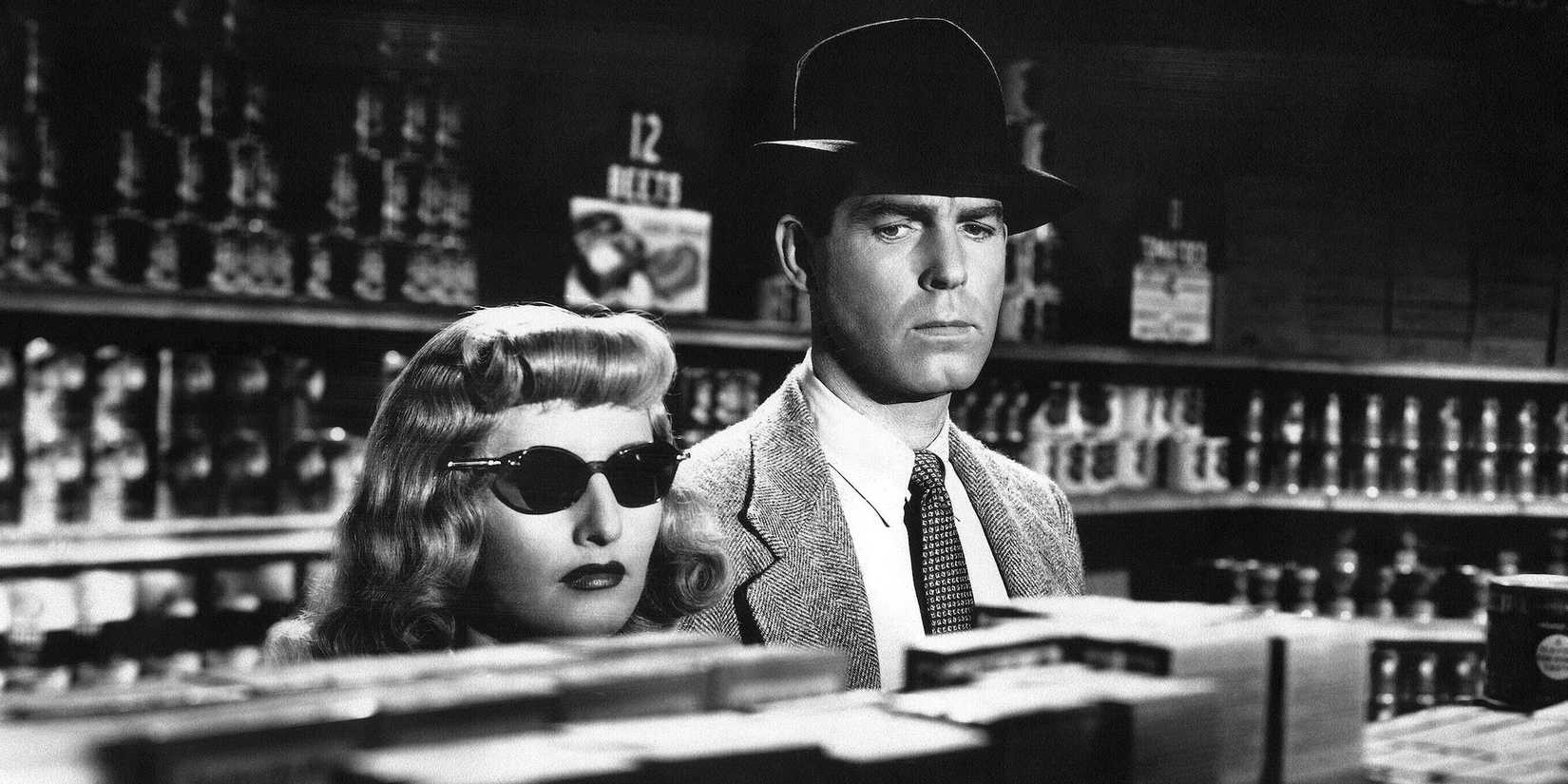 Image via Paramount Pictures
 Image via Cinédis
 Image via Paramount Pictures
 Image via Paramount Pictures
 Image Via De Laurentiis Entertainment Group
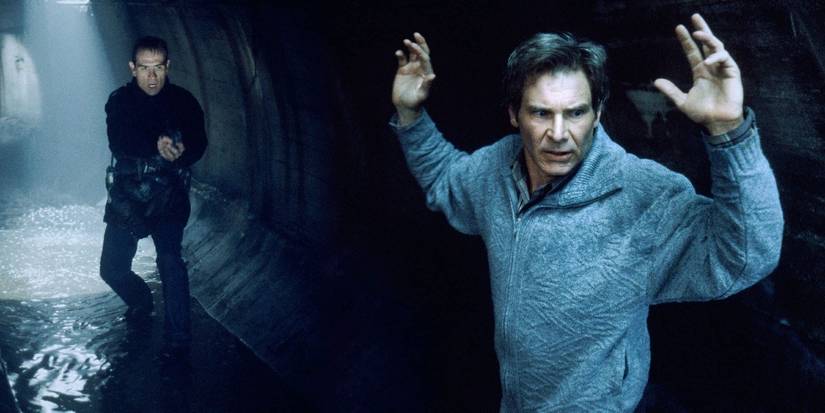 Image via Warner Bros. Pictures
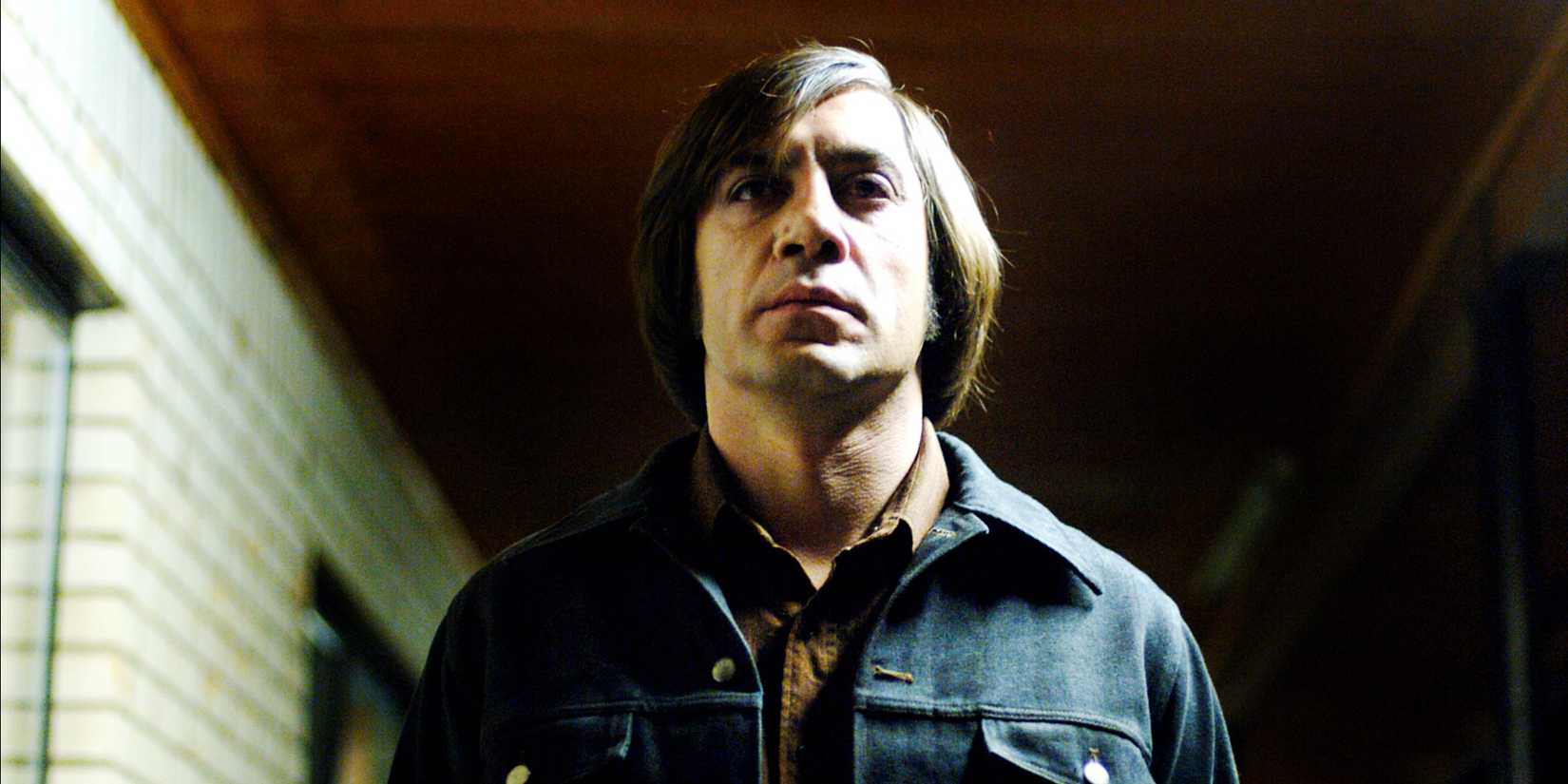 Image via Miramax Films
 Image via A24
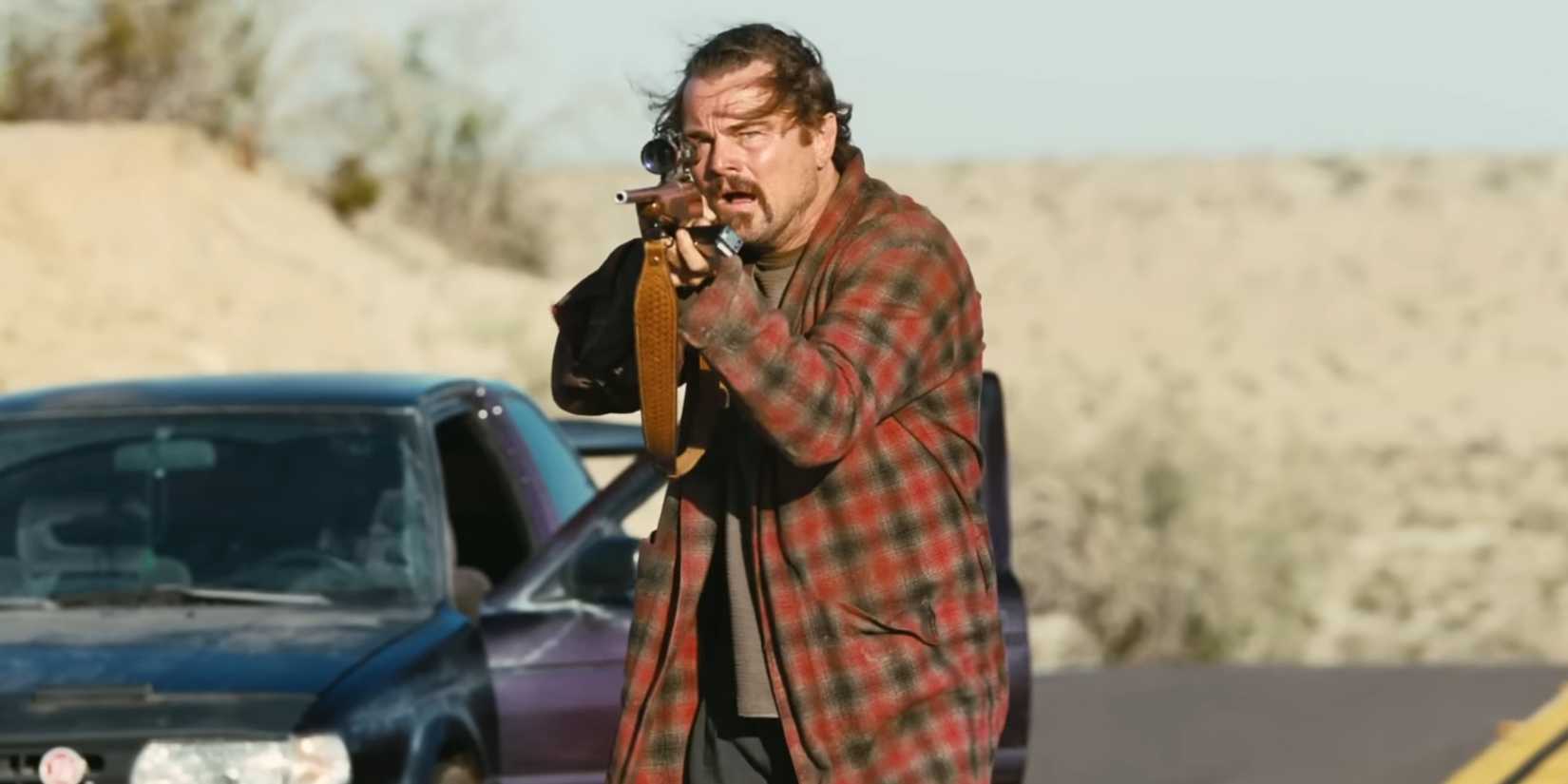 Image via Warner Bros. Pictures

 English (US) ·