
 Image via STX Entertainment
Published Jun 20, 2026, 5:30 PM EDT
Sign in to your Collider account
Watching a psychological thriller isn’t for everybody. And if you dig deeper, identifying what is a good psychological thriller isn’t for everybody either. In my opinion, they hit hardest when the danger starts sounding like a thought the character cannot shake.
For instance, a knife, a body, a crime, or a stranger can open the door, but the real fear comes later, when guilt, paranoia, desire, identity, memory, or belief starts bending the room around everyone. These 10 thrillers are underrated in that sense. Because they have one or more of those ingredients and yet they never became famous. So if you’re one to not back from an honest psychological thriller, sit tight.
10 'The Gift' (2015)
 Image via STX Entertainment
The nastiest thing about The Gift is how politely it starts. Simon (Jason Bateman) and Robyn (Rebecca Hall) are a married couple trying to restart their life in California when Gordo (Joel Edgerton), an awkward man from Simon’s school days, reappears with gifts, visits, and a smile that never lets the room relax. At first, it feels like a creepy-old-acquaintance story, but the film keeps shifting the discomfort toward Simon, whose confidence starts looking less like charm and more like something he has used to bury people.
That is where the movie gets mean in a smart way. Robyn becomes the only person actually listening to the silence around her husband’s past, while Simon keeps treating the truth like a business inconvenience he can manage. The koi pond, the locked house feeling, the dinner tension, and Gordo’s wounded politeness all keep pushing one ugly question: what happens when the bully grows up, gets rich, and assumes nobody saved the receipt? The film’s revenge cuts deep because it attacks the life Simon built from denial.
9 'A Simple Plan' (1998)
 Image via Paramount Pictures
Money falling out of the sky sounds like a fantasy until A Simple Plan reminds you that normal people are often one bad decision away from becoming strangers to themselves. Hank (Bill Paxton), his brother Jacob (Billy Bob Thornton), and their friend Lou (Brent Briscoe) find a crashed plane in the snow with a dead pilot and a bag full of cash. Hank is the sensible one, the man with the job, the wife, the baby on the way, the clean self-image. That is exactly why watching him break is so painful.
The brilliance is how small the first compromises feel. Hide the money. Wait. Lie once. Protect the lie. Sarah (Bridget Fonda), Hank’s wife, starts thinking through consequences with a cold practicality that almost scares you before Hank fully catches up. Jacob’s loneliness gives the whole story its ache, because his love for Hank keeps getting dragged through decisions neither brother can undo. The snow, the crows, the farmhouse visits, the accidental violence, everything feels like morality freezing over inch by inch. This is a masterpiece of ordinary greed turning ordinary people into evidence.
8 'Frailty' (2001)
 Image via Lionsgate
Few thrillers make faith feel this intimate and this frightening. In Frailty, a man named Fenton Meiks (Matthew McConaughey) walks into an FBI office and tells an agent that his brother may be the serial killer known as the God’s Hand killer. His story goes back to childhood, when his widowed father (Bill Paxton) claimed an angel gave him a divine mission to destroy demons disguised as humans. Fenton and his younger brother Adam (Jeremy Sumpter) then became trapped inside a home where bedtime, chores, and murder started sharing the same language.
The film is so unnerving because the father is loving in the moments that should make everything clearer. He hugs his sons, feeds them, teaches them, and speaks with total conviction, which makes his violence even harder to process through a child’s eyes. Fenton resists because he still believes the world has rules outside his father’s visions. Adam wants to believe because belief keeps him close to the parent he worships. The axe, the cellar, the list of names, and the father’s calm certainty turn the movie into a nightmare about children inheriting a reality they never chose.
7 'Take Shelter' (2011)
 Image via Sony Pictures Classics
Take Shelter follows Curtis LaForche (Michael Shannon) who sees storms coming before anyone else can feel the weather change, and that is what makes the film so heartbreaking. He is a husband and father in Ohio, working construction and trying to care for his wife Samantha (Jessica Chastain) and their young daughter Hannah. Then the nightmares begin. Rain like motor oil, people turning violent, his dog attacking him, and a storm shelter in the backyard that starts feeling less like preparation and more like confession.
Curtis understands how fear can destroy a family even if the fear comes from love. That is what makes this film hurt. He knows his mother’s mental illness history. He knows money is tight. He knows Samantha is watching him disappear into something she cannot follow. Shannon gives Curtis a desperate stillness that feels terrifying because he is trying so hard to stay decent. Chastain gives Samantha the strength of someone who loves him enough to demand the truth. Every shelter purchase, every lie, every community embarrassment pulls the same question tighter. Is he protecting his family, or is the danger inside him? That feels crazy when you watch the thing. 10/10 points.
6 'Dead Ringers' (1988)
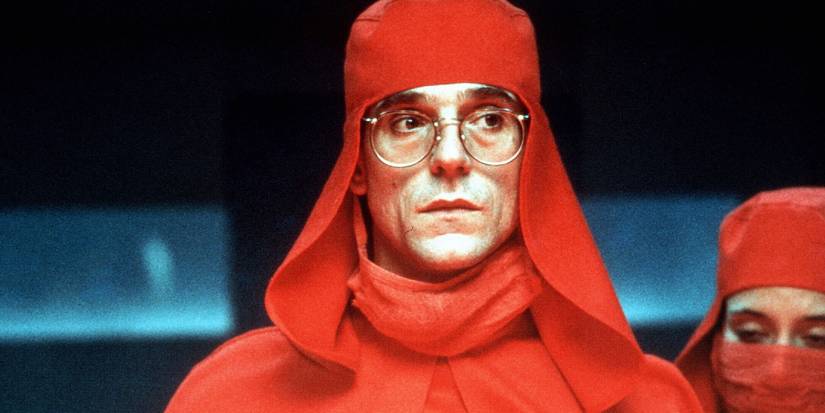 Image via 20th Century Fox
Dead Ringers follows the Mantle twins who are the kind of characters who make your skin crawl before anything obviously horrific happens. Elliot Mantle (Jeremy Irons) and Beverly Mantle (Jeremy Irons), identical twin gynecologists, share a medical practice, a reputation, and eventually the same women, with Elliot usually seducing patients before passing them to the more fragile Beverly. Their whole life is built on sameness, secrecy, and a private language that lets them treat other people as extensions of their bond.
Then Claire (Geneviève Bujold), an actress with a rare reproductive anatomy, disrupts the arrangement because Beverly actually falls into emotional dependence rather than routine possession. From there, the film becomes a slow collapse of twin identity, drug addiction, surgical obsession, and bodies treated as mysteries to control. It gets bizarre. The custom instruments Beverly designs for “mutant women” are horrifying because they make his psychological unraveling physical. Irons gives the brothers distinct souls without turning the performance into a trick. The film is cold, sickly, and tragic.
Collider Exclusive · Oscar Best Picture Quiz
Which Oscar Best Picture
Is Your Perfect Movie?
Parasite · Everything Everywhere · Oppenheimer · Birdman · No Country
Five Oscar Best Picture winners. Five completely different visions of what cinema can be — and what it can do to you. One of them is the film that was made for the way your mind works. Ten questions will figure out which one.
🪜Parasite
🌀Everything Everywhere
☢️Oppenheimer
🐦Birdman
🪙No Country for Old Men
FIND YOUR FILM →
01
What kind of film experience do you actually want? The best movies don't just entertain — they leave something behind.
ASomething that pulls the rug out — that makes me think I'm watching one kind of film and then reveals I'm watching another entirely. BSomething overwhelming — funny, sad, absurd, and genuinely moving, all at once. CSomething grand and weighty — a film that makes me feel the full scale of what I'm watching. DSomething formally daring — a film that pushes what cinema can even do. ESomething lean and relentless — pure tension with no wasted frame.
NEXT QUESTION →
02
Which idea grabs you most in a film? Great films are driven by a central obsession. What's yours?
AClass, inequality, and what people are willing to do when desperation meets opportunity. BIdentity, family, and the chaos of trying to hold your life together when everything is falling apart. CGenius, moral responsibility, and the catastrophic weight of a decision you can never take back. DEgo, legacy, and the terror of becoming irrelevant while you're still alive to watch it happen. EEvil, chance, and whether moral order actually exists or if we just tell ourselves it does.
NEXT QUESTION →
03
How do you like your story told? Form is content. The way a story is shaped changes what it means.
AGenre-twisting — I want it to start in one lane and migrate into something completely different. BMaximalist and genre-blending — comedy, action, drama, sci-fi, all in one ride. CEpic and non-linear — cutting between timelines, building a mosaic of cause and consequence. DA single unbroken flow — I want to feel like I'm living it in real time, no cuts to safety. ESpare and precise — every scene doing exactly what it needs to do and nothing more.
NEXT QUESTION →
04
What makes a truly great antagonist? The opposition defines the protagonist. What kind of opposition fascinates you?
AA system — invisible, structural, and almost impossible to fight because it has no single face. BThe self — the ways we sabotage, abandon, and fail the people we love most. CHistory — the unstoppable momentum of events that no single person can stop or redirect. DThe industry — the machinery of culture that chews up talent and spits out irrelevance. EPure, implacable evil — a force so certain of itself it becomes almost philosophical.
NEXT QUESTION →
05
What do you want from a film's ending? The final note is the one that lingers. What do you want it to sound like?
AShock and inevitability — a conclusion that recontextualises everything that came before it. BEarned emotion — I want to cry, laugh, and feel genuinely hopeful, even if the world is a mess. CDevastation and grandeur — an ending that makes me sit in silence for a few minutes after. DAmbiguity — something that leaves enough open that I'm still thinking about it days later. EBleakness — an honest refusal to pretend the world is tidier than it actually is.
NEXT QUESTION →
06
Which setting pulls you in most? Where a film takes place shapes everything — mood, stakes, what's even possible.
AA gleaming modern city with a hidden underside — beauty masking rot, wealth masking desperation. BA collapsing suburban life that opens onto something infinite — the multiverse of a single ordinary person. CThe corridors of power and science at a world-historical turning point — where decisions echo for decades. DThe grimy, alive chaos of New York and Hollywood — fame as both destination and trap. EVast, indifferent landscape — desert and highway where violence arrives without warning or reason.
NEXT QUESTION →
07
What cinematic craft impresses you most? Every great film has a signature — a technical or artistic element that makes it unmistakable.
AProduction design and mise-en-scène — every frame composed to carry meaning beneath the surface. BEditing and tonal control — the ability to move between registers without losing the audience. CScore and sound design — music that becomes inseparable from the dread and awe of what you're watching. DCinematography as performance — the camera not recording events but participating in them. ESilence and restraint — what's left unsaid and unshown doing more work than any dialogue could.
NEXT QUESTION →
08
What kind of main character do you root for? The protagonist is the lens. Who you choose to follow says something about you.
ASomeone smart and resourceful who makes increasingly dangerous decisions under pressure. BSomeone overwhelmed and ordinary who turns out to be capable of something extraordinary. CA brilliant, tortured figure whose gifts and flaws are inseparable from each other. DA self-destructive artist whose ego is both their superpower and their undoing. EA quiet, principled person trying to make sense of a world that has stopped making sense.
NEXT QUESTION →
09
How do you feel about a film that takes its time? Pace is a choice. Some films sprint; others let tension accumulate slowly, deliberately.
AI love a slow build when I know the payoff is going to be seismic — patience for a devastating reveal. BGive me relentless momentum — I want to feel breathless and emotionally spent by the end. CEpic runtime doesn't scare me — if the material demands three hours, give me three hours. DI want it to feel propulsive even when nothing is technically happening — restless energy throughout. EDeliberate and unhurried — I want dread to accumulate in the spaces between the action.
NEXT QUESTION →
10
What do you want to feel walking out of the cinema? The best films leave a mark. What kind of mark do you want?
AUnsettled — like I've just seen something I can't fully explain but can't stop thinking about. BMoved and energised — like the film reminded me what actually matters and gave me something to hold onto. CHumbled — like I've been in the presence of something genuinely important and overwhelming. DExhilarated — like I've just seen cinema doing something it's never quite done before. EHaunted — like a cold, quiet dread that stays with me for days.
REVEAL MY FILM →
The Academy Has Decided Your Perfect Film Is…
Your answers have pointed to one Oscar Best Picture winner above all others. This is the film that was made for the way your mind works.
Parasite
You are drawn to films that operate on multiple levels simultaneously — that begin in one genre and quietly, brilliantly migrate into another. Bong Joon-ho's Parasite is a film about class, desire, and the architecture of inequality that manages to be darkly funny, deeply suspenseful, and genuinely shocking across a single extraordinary running time. Your instinct is for cinema that hides its true intentions until the moment it's ready to reveal them. Parasite is exactly that — a film that rewards close attention and punishes assumptions, right up to its devastating final image.
Everything Everywhere All at Once
You want it all — and this film gives you all of it. The Daniels' Everything Everywhere All at Once is one of the most maximalist films ever made: action comedy, multiverse sci-fi, family drama, existential crisis, and a genuinely earned emotional core that sneaks up on you amid the chaos. You are someone who responds to ambition, who doesn't want cinema to choose between being entertaining and being meaningful. This film refuses that choice entirely. It is overwhelming by design, and its overwhelming nature is precisely the point — because the feeling of being crushed by infinite possibility is exactly what it's about.
Oppenheimer
You are drawn to cinema on a grand scale — films that understand history not as a backdrop but as a force, and that place their characters inside that force and watch what happens. Christopher Nolan's Oppenheimer is a film about the terrifying gap between what we can do and what we should do, told with the full weight of one of the most consequential moments in human history behind it. You want your films to feel important without feeling self-important — to earn their ambition through sheer craft and the gravity of their subject. Oppenheimer does exactly that. It is enormous, complicated, and refuses easy comfort.
Birdman
You are drawn to films that foreground their own construction — that make the how of the filmmaking part of the what it's about. Alejandro González Iñárritu's Birdman, shot to appear as a single continuous take, is cinema examining itself through the cracked mirror of a fading actor's ego. You respond to formal daring, to the feeling that a film is doing something that probably shouldn't be possible. Michael Keaton's performance and Emmanuel Lubezki's restless camera create something genuinely unlike anything else — a film that is simultaneously about creativity, relevance, self-destruction, and the impossibility of ever truly knowing if your work means anything at all.
No Country for Old Men
You are drawn to cinema that trusts silence, that refuses to explain itself, and that treats dread as a form of meaning. The Coen Brothers' No Country for Old Men is a film about the arrival of a new kind of evil — implacable, arbitrary, and utterly indifferent to the moral frameworks we use to make sense of the world. It is one of the most formally controlled films ever made, and its controlled restraint is what makes it so terrifying. You want your films to haunt you, not comfort you. You are not interested in resolution if resolution would be dishonest. No Country for Old Men is honest in a way that most cinema never dares to be.
↻ RETAKE THE QUIZ
5 'The Tenant' (1976)
 Image via Paramount Pictures
Apartment paranoia should not feel this personal, but The Tenant turns a rented room into a personality slowly swallowing its occupant. The premise of The Tenant follows Trelkovsky (Roman Polanski), a quiet Polish man in Paris who moves into an apartment after the previous tenant, Simone Choule (Dominique Poulange), attempts suicide. At first, his neighbors seem merely strict and nosy. They complain about noise, watch him too closely, and treat ordinary behavior like a violation of an invisible code.
Then the room starts rewriting him. Trelkovsky finds Simone’s old belongings, notices people staring from across the courtyard, visits the café where staff keep serving him her usual order, and slowly begins to feel that the building wants him to become the woman who lived there before him. The genius is how the movie never lets comfort settle around what is happening. Maybe the neighbors are conspiring. Maybe Trelkovsky is collapsing. Maybe those options are feeding each other. The bathroom across the courtyard, the tooth in the wall, the makeup, the dress, the stairwell, all of it turns city living into psychological possession.
4 'The Vanishing' (1988)
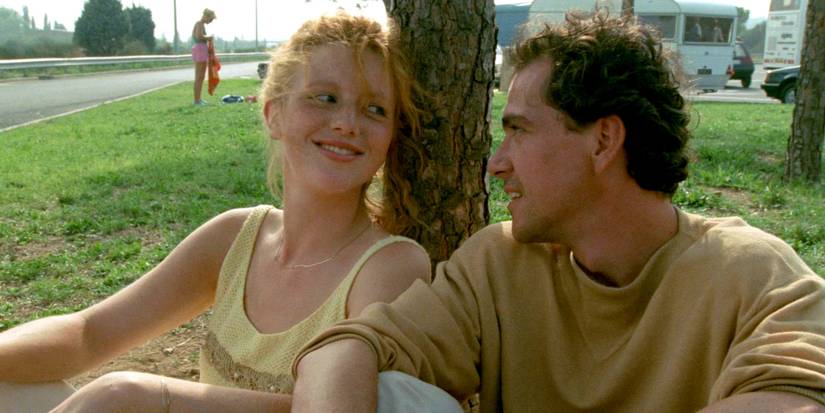 Image via Argos Films
The horror and psychological stimulation in The Vanishing begins with the kind of disappearance that ruins time itself. Rex Hofman (Gene Bervoets) and Saskia Wagter (Johanna ter Steege) are a young Dutch couple traveling through France when Saskia vanishes at a gas station. No body, no answer, no dramatic clue that lets grief move into the next stage. Rex spends years consumed by the need to know what happened, and that need becomes the exact weakness Raymond Lemorne (Bernard-Pierre Donnadieu) understands too well.
This is one of the most merciless thrillers ever made. It treats curiosity as a trap. Rex does not simply miss Saskia but becomes addicted to the missing piece, to the idea that an answer might give shape to the emptiness. Raymond is terrifying in a plain, domestic way. He has a family, routines, rehearsals, and the calm pride of a man testing whether he can commit evil as an experiment. Their eventual meeting is unbearable because the movie understands something brutal about obsession. Some people would rather know the truth and be destroyed by it than live forever outside the door.
3 'Cure' (1997)
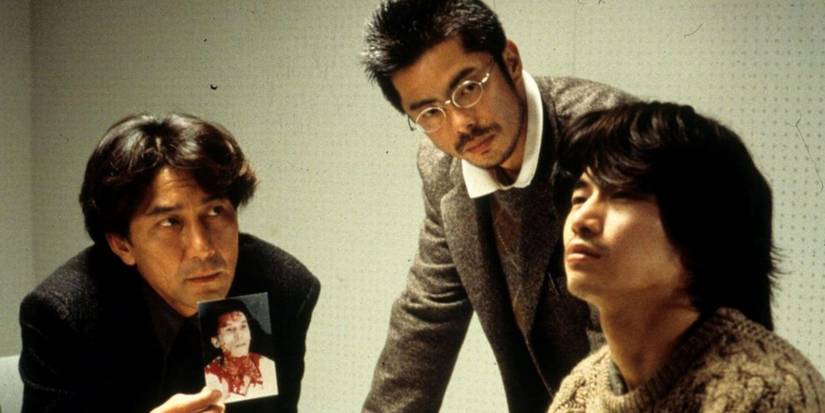 Image via Daiei Film
This film feels like evil learned how to speak softly and wait. Cure’s premise follows Detective Kenichi Takabe (Kōji Yakusho) who is investigating a series of murders in Tokyo where different killers leave the same X carved into their victims, yet none of them seem to remember why they did it. The trail leads to Mamiya (Masato Hagiwara), a blank, drifting man whose questions, pauses, and strange calm appear to loosen something inside the people around him.
The fear in Cure is not loud. It spreads through conversations that feel slightly wrong, through rooms where the air seems drained of certainty, through Takabe’s growing exhaustion as his work life and home life start pressing on the same nerve. His wife’s mental health struggles already leave him frightened of losing control, and Mamiya’s presence turns that private fear into a wider infection. A lighter flame, a glass of water, a repeated question, a person staring a second too long, these tiny things start to feel violent. The movie is terrifying because murder becomes less like an act and more like an idea someone left unlocked.
2 'Perfect Blue' (1997)
 Image via MadHouse
Perfect Blue is about Mima Kirigoe (Junko Iwao)’s nightmare. It feels more relevant every year, which is honestly scary. She leaves a pop idol group to become an actress, hoping to be taken seriously, but the transition turns her image into public property. Fans feel betrayed, producers push her into exploitative roles, and an online diary written in her voice makes it seem as if another version of Mima is living more convincingly than she is.
The movie becomes dizzying because fame keeps attacking her from different angles. A stalker watches her with devotional entitlement. Her former idol persona appears like a ghost of innocence and accusation. The film shoot forces her to perform trauma for career credibility, then reality starts slipping around the edges of performance. The film’s a masterpiece because of how sharply it understands celebrity as identity theft with applause.
1 'Seconds' (1966)
 Image via Paramount Pictures
The terrifying fantasy of Seconds is that a second life may only reveal how deeply the first one hollowed you out. Arthur Hamilton (John Randolph) is a middle-aged banker whose safe, deadened existence has become almost unbearable. A secret organization offers him a new face, a staged death, and a manufactured identity as Tony Wilson (Rock Hudson), a younger-looking artist living in California. On paper, that sounds like escape. In practice, it becomes one of cinema’s loneliest traps.
The film cuts so deeply because Arthur does get the fantasy, and it still cannot save him. The new house, new body, new friends, wine parties, and promised freedom all feel designed by people who studied desire without understanding the soul. It’s brilliant how Hudson gives Tony a sadness that keeps leaking through the handsome surface, as if Arthur’s old emptiness followed him into the new skin. His visit to his former wife is devastating because she mourns a man who had already vanished long before the fake death. Seconds is my top choice because it turns reinvention into horror. A new face cannot rescue a life that was never truly lived.

Seconds
Release Date October 2, 1966
Runtime 106 Minutes
Director John Frankenheimer
Writers Lewis John Carlino, David Ely








 English (US) ·