
 Image via Killer Films
Published Jun 17, 2026, 8:17 PM EDT
Sign in to your Collider account
Musicals get judged unfairly. And that’s mainly because my personal experience sometimes perceives the songs like interruptions. But one close look at the finest musicals out there and you understand that the finest ones use music as the place where characters finally say the thing they were too scared, too proud, too broken, or too young to say plainly.
The ten films below deserve a bigger spotlight because each one understands that musical numbers can carry loneliness, desire, grief, rebellion, absurdity, identity, and pure cinematic joy. Some are strange. Some are messy. Some are tiny compared to the obvious classics. All ten have that rare feeling where the music seems to unlock the movie’s soul. Go figure.
'God Help the Girl' (2014)
 Image via Metrodome
God Help the Girl follows Eve (Emily Browning), a fragile and imaginative young woman in Glasgow, as she leaves treatment for mental health struggles and starts making music with James (Olly Alexander) and Cassie (Hannah Murray). The plot is small on purpose. A band forms, feelings shift, friends wander through cafés, parks, bedrooms, and practice spaces, and every song feels like someone trying to build a version of themselves they can survive inside.
That is the charm people underrate. The movie has the softness of an old indie-pop record, but Eve’s pain keeps the sweetness from floating away. Browning makes her feel dreamy without turning her into a cute sadness object. James has his own awkward sincerity, while Cassie gives the group a brighter, sharper pulse. The songs sound light, yet they keep brushing against recovery, loneliness, romance, and the strange relief of finding people who understand your rhythm before your life is fixed.
'The Lure' (2015)
 Image via Kino Świat
A Polish mermaid horror musical set in a nightclub should sound too strange to be this emotionally sharp. The Lure follows two siren sisters, Golden (Michalina Olszańska) and Silver (Marta Mazurek), who are pulled into the human world of 1980s Warsaw nightlife, where they sing, seduce, perform, and try to understand desire inside a place that wants to sell their bodies as spectacle. One sister leans toward hunger and instinct. The other starts chasing love with a human man who has no idea what that love will cost her.
The movie is wild, bloody, glittery, and weirdly heartbreaking in the same breath. The music has that cold synth-pop nightclub pulse, and the performances make the sisters feel magical without smoothing over how dangerous they are. Their tails are gorgeous and grotesque. Their voices are hypnotic. Their bond is the real emotional anchor, especially as romance starts threatening the thing that made them powerful together. The Lure deserves masterpiece status because it turns a fairy tale into body horror, pop fantasy, sister tragedy, and coming-of-age nightmare all at once.
'Anna and the Apocalypse' (2017)
 Image via Vertigo Releasing
Anna and the Apocalypse follows Anna (Ella Hunt), a teenager in the small Scottish town of Little Haven, desperate to leave home and travel before adulthood locks her into everyone else’s expectations. Then Christmas season gets swallowed by a zombie outbreak, and her school, friends, crushes, teachers, and family problems all become part of a survival story with songs. Zombie musicals should collapse from the concept alone, so the shock here is how much heart this one has.
The fun is obvious at first: candy-colored holiday chaos, undead attacks, school corridors, weapons made from whatever is nearby, and songs that treat teen frustration like it deserves a full chorus. Then the movie starts cutting deeper. Anna’s need to escape her dad, John’s (Malcolm Cumming) quiet love for her, Steph’s (Sarah Swire) isolation, and the group’s messy loyalty make the horror hurt more than expected. “Hollywood Ending” gives the whole thing a bright teen-movie lift before the world gets uglier. The movie earns affection because it lets the singing be funny, sincere, and painful without apologizing for any of it.
'Everyone Says I Love You' (1996)
 Image via Miramax Films
Next up, this whole film feels like a wealthy, neurotic family daydreaming its way through romance, and honestly, that is the best way to meet it. Woody Allen’s ensemble musical Everyone Says I Love You follows tangled relationships across New York, Paris, and Venice, with family members, lovers, exes, and romantic disasters slipping into classic American standards. The singing is often imperfect, which gives the movie a loose, personal quality most polished musicals would have cleaned away.
That looseness becomes the point. These people are not bursting into song because they are grand performers. They sing because love has made them foolish, hopeful, jealous, sentimental, or ridiculous. The film has a breezy charm in the way it drifts through crushes, breakups, political mismatches, and impossible romantic fantasies. Goldie Hawn floating by the Seine is the image everyone remembers, and for good reason. It feels like a private wish made visible. The movie is underrated because its lightness hides real craft. It understands romance as performance, embarrassment, and fantasy we keep choosing even after experience should have made us wiser.
'Pennies from Heaven' (1981)
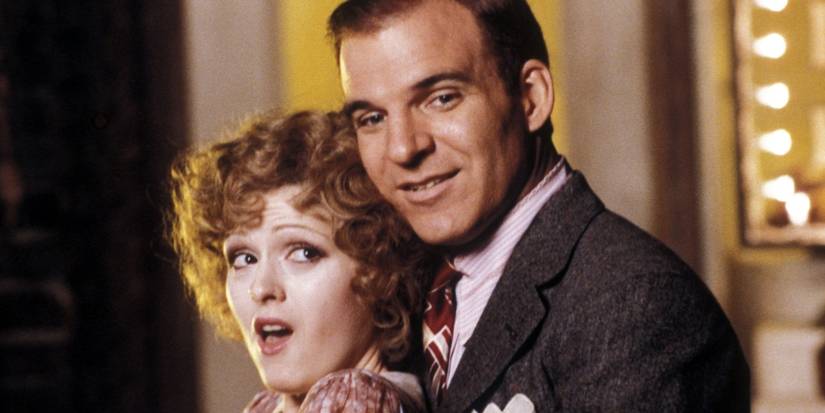 Image via MGM
Pennies from Heaven stars Arthur Parker (Steve Martin), a sheet-music salesman during the Depression who dreams in old songs because reality gives him very little worth singing about. This is the kind of musical that smiles with its mouth and bleeds underneath. His marriage is cold, his business life is humiliating, and his affair with schoolteacher Eileen (Bernadette Peters) pulls both of them into a fantasy of glamour that their actual world refuses to support.
The lip-synced musical numbers are brilliant. They make happiness feel borrowed. Characters open their mouths and old recordings pour out, as if they can only access beauty through songs that existed before their pain. The “Pennies from Heaven” and “Let’s Misbehave” sequences glow with artificial joy, but the streets outside stay cruel, poor, and unforgiving. Peters gives Eileen a sadness that keeps deepening as her dream turns into compromise. The movie is too bitter to become a comfort musical, which may explain why it still feels under-loved. It uses fantasy to show how badly people need fantasy when life has cornered them.
'The Commitments' (1991)
 Image via Beacon Pictures
You can feel the sweat in this one before the band even becomes good. The Commitments follows Jimmy Rabbitte (Robert Arkins), a working-class Dubliner who pulls together a group of local musicians under the wildly ambitious belief that soul music belongs to them too. They are young, broke, mouthy, restless, and convinced for at least five minutes at a time that they might become legendary. That delusion is part of the magic.
The performances have a rough, electric joy that makes the movie endlessly rewatchable. Deco Cuffe (Andrew Strong)’s voice is ridiculous in the best way, even when his ego makes him impossible to stand. The backing singers bring heat, humor, and actual personality instead of becoming decoration. Joey “The Lips” Fagan (Johnny Murphy) gives the whole project a strange mythic confidence, like every tiny gig is connected to a larger musical universe. The rehearsals, arguments, cramped stages, and explosive versions of “Try a Little Tenderness” and “Mustang Sally” are so godo and make the movie feel alive from the floor up. It is a masterpiece about a band that burns bright partly because it was never built to last.
'Sing Street' (2016)
 Image via The Weinstein Company
Sing Street follows Conor (Ferdia Walsh-Peelo), a Dublin schoolboy in the 1980s dealing with his parents’ collapsing marriage, money problems, and a grim new school run by cruel authority. Then he sees Raphina (Lucy Boynton), claims he is in a band to impress her, and suddenly has to invent one with other boys who also need somewhere to put their hunger for escape. Few movies understand how music lets teenagers become brave before they actually feel brave.
The joy is in watching influence turn into identity. Duran Duran, The Cure, Spandau Ballet, and music-video fantasy all pass through Conor until the songs start sounding like his own life fighting back. “Drive It Like You Stole It” is pure teenage imagination taking over a miserable school hall. “Up” captures that first rush of thinking someone sees the version of you that nobody at home understands. Brendan (Jack Reynor), Conor’s older brother, gives the film its bruised wisdom because he knows what it costs to stay stuck. The movie feels small, then suddenly enormous, because a song can become the first door out.
'Once' (2007)
 Image via Summit Entertainment
Some movie romances shout. This one barely raises its voice, and that is why it hurts so beautifully. Once follows a Dublin busker, Guy (Glen Hansard), and a Czech immigrant, Girl (Markéta Irglová), who meet through music, then begin recording songs together while carrying unfinished lives in different directions. He is still wounded by an old love. She has responsibilities, a child, and a marriage that complicates every feeling the music starts bringing to the surface.
The songs feel discovered rather than staged. “Falling Slowly” has become the obvious signature, but the whole movie has that fragile, lived-in quality where a melody can say what a conversation would ruin. Hansard and Irglová give the relationship a tenderness that never needs cheap romantic certainty. The music shop scene, the late-night piano, the studio sessions, the headphones, the small looks after each song, all of it builds a connection that feels real enough to leave unfinished. That is why Once keeps finding people. It understands that some relationships change your life without becoming your life.
Collider Exclusive · Oscar Best Picture Quiz
Which Oscar Best Picture
Is Your Perfect Movie?
Parasite · Everything Everywhere · Oppenheimer · Birdman · No Country
Five Oscar Best Picture winners. Five completely different visions of what cinema can be — and what it can do to you. One of them is the film that was made for the way your mind works. Ten questions will figure out which one.
🪜Parasite
🌀Everything Everywhere
☢️Oppenheimer
🐦Birdman
🪙No Country for Old Men
FIND YOUR FILM →
01
What kind of film experience do you actually want? The best movies don't just entertain — they leave something behind.
ASomething that pulls the rug out — that makes me think I'm watching one kind of film and then reveals I'm watching another entirely. BSomething overwhelming — funny, sad, absurd, and genuinely moving, all at once. CSomething grand and weighty — a film that makes me feel the full scale of what I'm watching. DSomething formally daring — a film that pushes what cinema can even do. ESomething lean and relentless — pure tension with no wasted frame.
NEXT QUESTION →
02
Which idea grabs you most in a film? Great films are driven by a central obsession. What's yours?
AClass, inequality, and what people are willing to do when desperation meets opportunity. BIdentity, family, and the chaos of trying to hold your life together when everything is falling apart. CGenius, moral responsibility, and the catastrophic weight of a decision you can never take back. DEgo, legacy, and the terror of becoming irrelevant while you're still alive to watch it happen. EEvil, chance, and whether moral order actually exists or if we just tell ourselves it does.
NEXT QUESTION →
03
How do you like your story told? Form is content. The way a story is shaped changes what it means.
AGenre-twisting — I want it to start in one lane and migrate into something completely different. BMaximalist and genre-blending — comedy, action, drama, sci-fi, all in one ride. CEpic and non-linear — cutting between timelines, building a mosaic of cause and consequence. DA single unbroken flow — I want to feel like I'm living it in real time, no cuts to safety. ESpare and precise — every scene doing exactly what it needs to do and nothing more.
NEXT QUESTION →
04
What makes a truly great antagonist? The opposition defines the protagonist. What kind of opposition fascinates you?
AA system — invisible, structural, and almost impossible to fight because it has no single face. BThe self — the ways we sabotage, abandon, and fail the people we love most. CHistory — the unstoppable momentum of events that no single person can stop or redirect. DThe industry — the machinery of culture that chews up talent and spits out irrelevance. EPure, implacable evil — a force so certain of itself it becomes almost philosophical.
NEXT QUESTION →
05
What do you want from a film's ending? The final note is the one that lingers. What do you want it to sound like?
AShock and inevitability — a conclusion that recontextualises everything that came before it. BEarned emotion — I want to cry, laugh, and feel genuinely hopeful, even if the world is a mess. CDevastation and grandeur — an ending that makes me sit in silence for a few minutes after. DAmbiguity — something that leaves enough open that I'm still thinking about it days later. EBleakness — an honest refusal to pretend the world is tidier than it actually is.
NEXT QUESTION →
06
Which setting pulls you in most? Where a film takes place shapes everything — mood, stakes, what's even possible.
AA gleaming modern city with a hidden underside — beauty masking rot, wealth masking desperation. BA collapsing suburban life that opens onto something infinite — the multiverse of a single ordinary person. CThe corridors of power and science at a world-historical turning point — where decisions echo for decades. DThe grimy, alive chaos of New York and Hollywood — fame as both destination and trap. EVast, indifferent landscape — desert and highway where violence arrives without warning or reason.
NEXT QUESTION →
07
What cinematic craft impresses you most? Every great film has a signature — a technical or artistic element that makes it unmistakable.
AProduction design and mise-en-scène — every frame composed to carry meaning beneath the surface. BEditing and tonal control — the ability to move between registers without losing the audience. CScore and sound design — music that becomes inseparable from the dread and awe of what you're watching. DCinematography as performance — the camera not recording events but participating in them. ESilence and restraint — what's left unsaid and unshown doing more work than any dialogue could.
NEXT QUESTION →
08
What kind of main character do you root for? The protagonist is the lens. Who you choose to follow says something about you.
ASomeone smart and resourceful who makes increasingly dangerous decisions under pressure. BSomeone overwhelmed and ordinary who turns out to be capable of something extraordinary. CA brilliant, tortured figure whose gifts and flaws are inseparable from each other. DA self-destructive artist whose ego is both their superpower and their undoing. EA quiet, principled person trying to make sense of a world that has stopped making sense.
NEXT QUESTION →
09
How do you feel about a film that takes its time? Pace is a choice. Some films sprint; others let tension accumulate slowly, deliberately.
AI love a slow build when I know the payoff is going to be seismic — patience for a devastating reveal. BGive me relentless momentum — I want to feel breathless and emotionally spent by the end. CEpic runtime doesn't scare me — if the material demands three hours, give me three hours. DI want it to feel propulsive even when nothing is technically happening — restless energy throughout. EDeliberate and unhurried — I want dread to accumulate in the spaces between the action.
NEXT QUESTION →
10
What do you want to feel walking out of the cinema? The best films leave a mark. What kind of mark do you want?
AUnsettled — like I've just seen something I can't fully explain but can't stop thinking about. BMoved and energised — like the film reminded me what actually matters and gave me something to hold onto. CHumbled — like I've been in the presence of something genuinely important and overwhelming. DExhilarated — like I've just seen cinema doing something it's never quite done before. EHaunted — like a cold, quiet dread that stays with me for days.
REVEAL MY FILM →
The Academy Has Decided Your Perfect Film Is…
Your answers have pointed to one Oscar Best Picture winner above all others. This is the film that was made for the way your mind works.
Parasite
You are drawn to films that operate on multiple levels simultaneously — that begin in one genre and quietly, brilliantly migrate into another. Bong Joon-ho's Parasite is a film about class, desire, and the architecture of inequality that manages to be darkly funny, deeply suspenseful, and genuinely shocking across a single extraordinary running time. Your instinct is for cinema that hides its true intentions until the moment it's ready to reveal them. Parasite is exactly that — a film that rewards close attention and punishes assumptions, right up to its devastating final image.
Everything Everywhere All at Once
You want it all — and this film gives you all of it. The Daniels' Everything Everywhere All at Once is one of the most maximalist films ever made: action comedy, multiverse sci-fi, family drama, existential crisis, and a genuinely earned emotional core that sneaks up on you amid the chaos. You are someone who responds to ambition, who doesn't want cinema to choose between being entertaining and being meaningful. This film refuses that choice entirely. It is overwhelming by design, and its overwhelming nature is precisely the point — because the feeling of being crushed by infinite possibility is exactly what it's about.
Oppenheimer
You are drawn to cinema on a grand scale — films that understand history not as a backdrop but as a force, and that place their characters inside that force and watch what happens. Christopher Nolan's Oppenheimer is a film about the terrifying gap between what we can do and what we should do, told with the full weight of one of the most consequential moments in human history behind it. You want your films to feel important without feeling self-important — to earn their ambition through sheer craft and the gravity of their subject. Oppenheimer does exactly that. It is enormous, complicated, and refuses easy comfort.
Birdman
You are drawn to films that foreground their own construction — that make the how of the filmmaking part of the what it's about. Alejandro González Iñárritu's Birdman, shot to appear as a single continuous take, is cinema examining itself through the cracked mirror of a fading actor's ego. You respond to formal daring, to the feeling that a film is doing something that probably shouldn't be possible. Michael Keaton's performance and Emmanuel Lubezki's restless camera create something genuinely unlike anything else — a film that is simultaneously about creativity, relevance, self-destruction, and the impossibility of ever truly knowing if your work means anything at all.
No Country for Old Men
You are drawn to cinema that trusts silence, that refuses to explain itself, and that treats dread as a form of meaning. The Coen Brothers' No Country for Old Men is a film about the arrival of a new kind of evil — implacable, arbitrary, and utterly indifferent to the moral frameworks we use to make sense of the world. It is one of the most formally controlled films ever made, and its controlled restraint is what makes it so terrifying. You want your films to haunt you, not comfort you. You are not interested in resolution if resolution would be dishonest. No Country for Old Men is honest in a way that most cinema never dares to be.
↻ RETAKE THE QUIZ
'Hedwig and the Angry Inch' (2001)
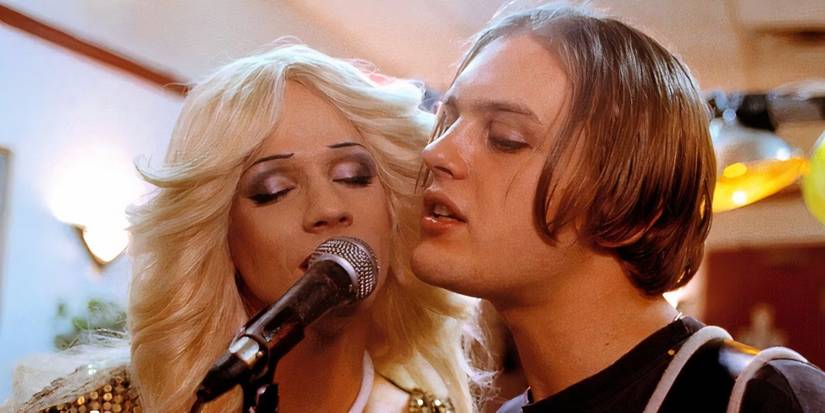 Image via New Line Cinema
This musical does not ask for attention. Hedwig and the Angry Inch follows Hedwig (John Cameron Mitchell), an East German rock singer touring seafood restaurants and small venues while telling the story of her botched gender-affirming surgery, her escape from Berlin, and the lover who stole her songs and became famous. The stage becomes her confession booth, battlefield, and survival mechanism at the same time. It kicks the door open in heels, eyeliner, rage, glitter, and heartbreak.
The music is furious, funny, wounded, and alive in a way most screen musicals never dare to be. “Tear Me Down,” for instance, turns identity into a wall being smashed. “Wig in a Box” turns self-creation into an anthem for anyone who has ever had to invent armor before leaving the room. “Origin of Love” gives Hedwig’s longing a mythic shape, while Tommy Gnosis (Michael Pitt) keeps representing the validation she wants and the theft she cannot forgive. The film is messy in the way a real open wound is messy. Its masterpiece status comes from how completely the songs, performance, pain, jokes, and gendered self-mythology fuse into one unforgettable voice.
'The Young Girls of Rochefort' (1967)

Image via Madeleine Films
At #1, we have this pure joy that is harder to make than people admit, and this movie makes it look like the whole city woke up singing in color. The Young Girls of Rochefort follows Delphine (Catherine Deneuve) and Solange (Françoise Dorléac), twin sisters in Rochefort who dream of love, art, music, and a larger life beyond their seaside town. Around them, sailors, shopkeepers, old lovers, visiting performers, and strangers keep crossing paths as if romance has turned the streets into choreography.
The miracle is how much melancholy lives inside all that brightness. Deneuve and Dorléac give the sisters lightness, but the film never treats longing as shallow. People miss each other by seconds. Old love hovers near new possibility. Michel Legrand’s music turns every walk, glance, and turn through the square into emotional movement. Gene Kelly brings Hollywood grace into Demy’s French dream world without making it feel imported. The colors are famous, the dancing is gorgeous, and the songs are addictive, but the reason it sits at No. 1 is deeper than style. It captures the feeling that life may be full of near-misses, yet beauty keeps asking people to step back into the street.

The Young Girls of Rochefort
Release Date April 11, 1968
Runtime 126 Minutes
Director Jacques Demy
Writers Jacques Demy
-

Catherine Deneuve
Delphine Garnier
-
Françoise Dorléac
Solange Garnier








 English (US) ·