
The 2010s were remarkable years for cinema, a decade dominated by the thriller genre. It's really where thrillers took off in the 21st century, a time marked by more creativity, suspense, and psychological wonder. Most of the films released here were nothing short of incredible and became landmarks, from Oscar-winning marvels like Christopher Nolan's Inception and Bong Joon Ho's Parasite to unforgettable classics like Gone Girl and Gravity. Truly, the 2010s are the years defined by thrillers.
Now the thriller genre is stronger than ever, thanks to the boost it got in the 2010s. We as cinema buffs will forget the ones that shined the most that decade, but we also can't overlook the ones that didn't shine so brightly. Let's talk about the thrillers audiences may have missed in the 2010s, the underrated gems and misunderstood cult classics that were swept under the rug, and some were even forgotten. These movies keep up the suspense, blow us away with their mind-bending twist, and enthrall us with exciting stories that were sadly dismissed at the time.
'The Stanford Prison Experiment' (2015)
 Image via IFC Films
Based on a fascinating true story, 2015's The Stanford Prison Experiment is a pulse-pounding psychological drama that grips you instantly with how heavy it gets without being violent. Billy Crudup stars as the unconventional American psychologist Dr. Philip Zimbardo, who sets out to test the effects of unchecked power and authority by simulating a functioning prison within one of the halls at Stanford, using two groups of volunteers to play prisoners and guards. However, the experiment quickly turns intense once the guards get too much into their roles.
It's a mostly accurate recreation of one of the most infamous scientific disasters of the 20th century. It almost immediately places you in an uncomfortable, cramped setting, making you feel the emotions of both the prisoner and guard volunteers as they interact in this small hallway. There are moments so tense that you can hardly breathe until it's relieved. It's got mostly stellar casting and is well acted, and its unrelenting suspense and sharp dialogue have kept it fascinating to watch now, even more than ten years later.
'Compliance' (2012)
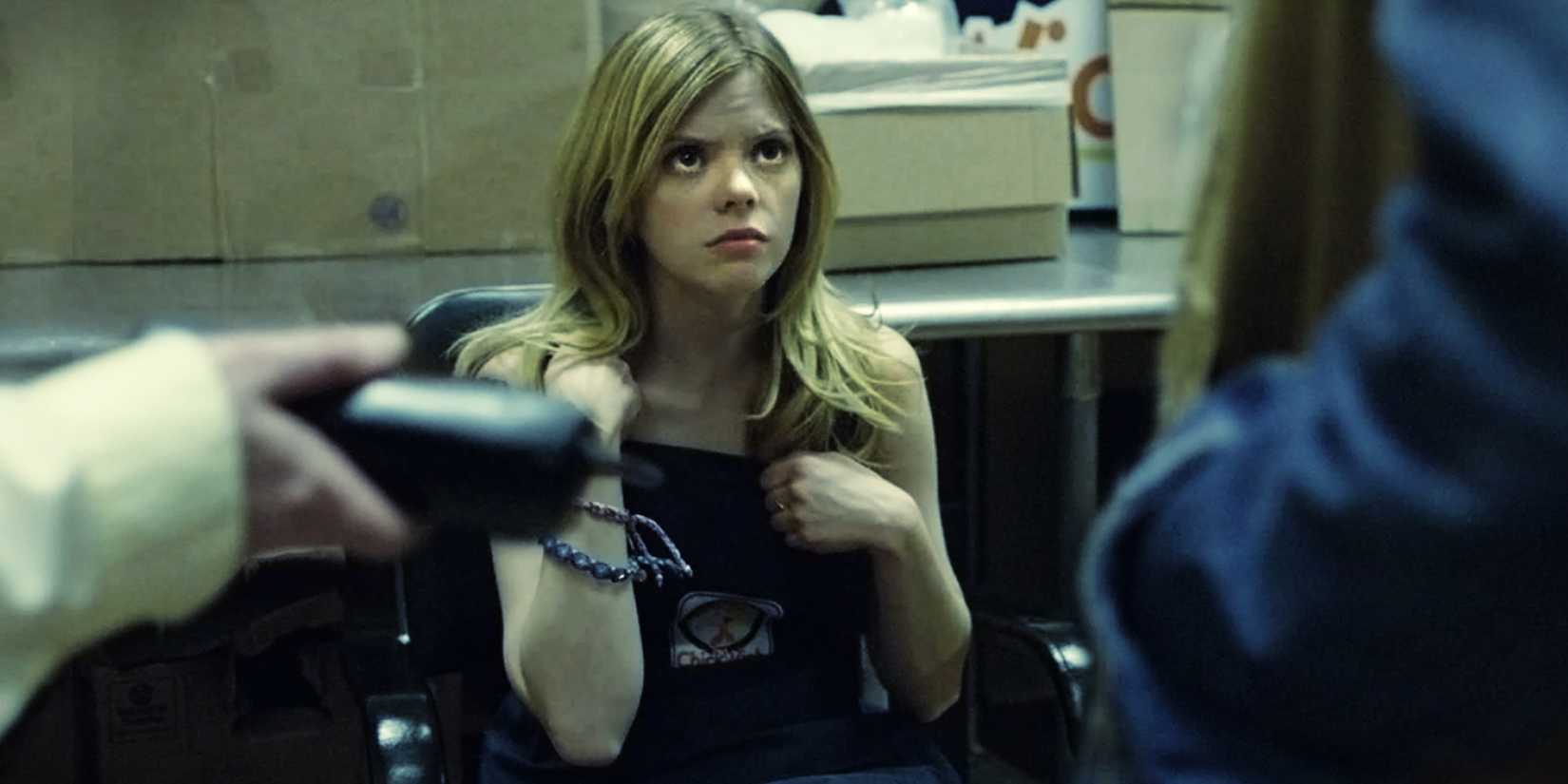 Image via Magnolia Pictures
Inspired by a shocking real-life incident, Compliance is a 2012 thriller about manipulation and dark, twisted behavior. Starring Ann Dowd and Dreama Walker, it tells of a mysterious caller claiming to be a cop as he convinces the staff at a fast food restaurant that a young female employee is stealing. What follows next is a tense situation as the caller further manipulates them into committing unspeakable acts against her.
Complience is a heartbreaking, intense look into psychology and how a collective group of people can be so easily coerced into doing something truly despicable. It's an edge-of-your-seat experience right up until the end, and it doesn't shy away from exploring dark avenues and showing shocking imagery. It holds your attention incredibly from beginning to end, and it hasn't lost this ability more than a decade later. It may not have been a huge hit in 2012, but now it's being seen more as the twisted psychological mind-bender it deserves to be.
'Creep' (2014)
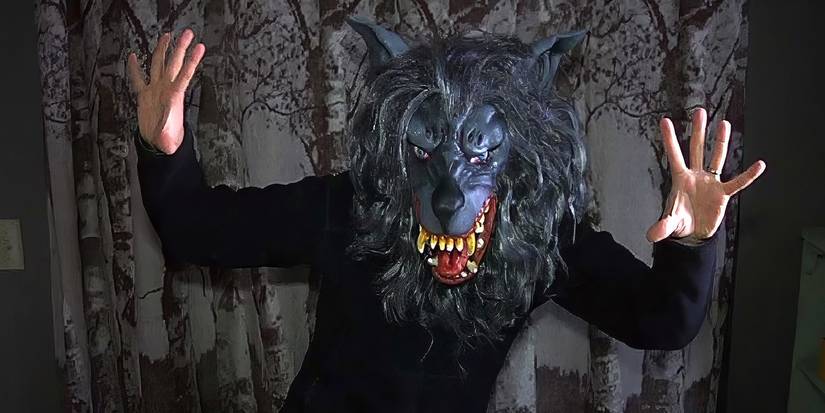 Image via The Orchard
Experience one of the most underappreciated found-footage horror thrillers of the 2010s. Creep is a 2014 cult classic full of nail-biting tension and eerie, uncomfortable quiet moments. Directed and starring Patrick Brice, it follows him as a freelance videographer named Aaron who answers an ad to document a dying man named Josef's (Mark Duplass) last records for his unborn son. But, as he starts recording Josef, Aaron starts to realize something is off about this man, and soon discovers Josef is not who he appears to be.
Horror lovers can get a kick out of this one as it chills the bones and is endlessly tense from start to finish. Mark Duplass gives the most complex and stress-inducing performance of his entire career playing the mysterious and sinister Josef, an unpleasant and unpredictable man who you don't know who he truly is. It's an admittedly slow-paced film lacking consistent scares, but Duplass fills the screen with dread every moment he appears, and this helps make Creep an oddly ageless horror thriller that's still scary to watch today.
'A Record of Sweet Murder' (2014)
 Image via Nikkatsu Corporation
2014's A Record of Sweet Murder is one of the most skin-crawling international horror thrillers you've probably never heard of. It's a South Korean-Japanese collaborative film that excels at delivering mind-bending terror, using its found-footage style, sharp writing, epic suspense, and stellar acting to bring something no one's going to forget. After being contacted by an old childhood friend, a South Korean reporter and his Japanese cameraman arrive at an apartment complex and are forced by the friend to constantly document his nightly murderous activities.
A Record of Sweet Murder is truly a masterclass in dread, and it builds on this immense sense that any terrible can happen at anything moment as we follow this reporter being forced to record a serial killer's violent killing spree. The violence is brutal, the imagery is haunting, the suspense is through the roof, and the performances are nearly perfect, truly making this a must-watch for thriller and horror fans. It wasn't as well-known outside its two countries of origin, but like many obscure horror movies these days, this one's getting much more recognition.
Collider Exclusive · Horror Survival Quiz Which Horror Villain Do You Have the Best Chance of Surviving? Jason Voorhees · Michael Myers · Freddy Krueger · Pennywise · Chucky
Five killers. Five completely different ways to die — if you're not smart enough, fast enough, or self-aware enough to avoid it. Only one of them is the villain your particular set of instincts gives you a fighting chance against. Eight questions will figure out which one.
🏕️Jason
🔪Michael
💤Freddy
🎈Pennywise
🪆Chucky
TEST YOUR SURVIVAL →
01
Something feels wrong. You can't explain it — you just know. What do you do? First instincts are the difference between the survivor and the first act casualty.
ALeave immediately. I don't need to understand a threat to respect it. BStay quiet and observe. If I can see it, I can understand it. If I can understand it, I can avoid it. CStay awake. Whatever this is, I am not going to sleep until I feel safe again. DConfront it directly. Fear grows in the dark — I'd rather know what I'm dealing with. ECheck everything, trust nothing. The threat might be closer than I think — and smaller.
NEXT QUESTION →
02
Where are you most likely to find yourself when things go wrong? Setting is everything in horror. Where you are determines which rules apply.
ASomewhere remote — a cabin, a campsite, off the grid and away from people. BA quiet suburban neighbourhood where nothing ever happens. Except tonight. CIn my own head — the most dangerous place of all, depending on what's already in there. DWherever children are — because something about this place attracts the worst things. ESomewhere ordinary — a house, a toy store, a place where the last thing you'd expect is a threat.
NEXT QUESTION →
03
What is your most reliable survival asset? Every survivor has a quality the villain didn't account for. What's yours?
APhysical fitness — I can run, I can swim, I can outlast something that relies on brute persistence. BSpatial awareness — I always know the exits, the hiding spots, the fastest route out. CPsychological resilience — I've faced my worst fears before. They don't have the same power over me. DEmotional steadiness — I don't panic. Panic is what gets you caught. EScepticism — I don't underestimate threats because of how they look. Size is irrelevant.
NEXT QUESTION →
04
What kind of fear is hardest for you to fight through? Knowing your weakness is the first step to not dying because of it.
AThe unstoppable — something that will not stop, cannot be reasoned with, and is always getting closer. BThe invisible — a threat I can feel but can't locate, watching from somewhere I can't see. CThe psychological — something that uses my own mind and memories against me. DThe unknowable — something ancient, shapeless, that feeds on the fear itself. EThe mundane — a threat so ordinary-looking that no one will believe me until it's too late.
NEXT QUESTION →
05
You're with a group when things start going wrong. What's your role? Horror movies are brutally clear about who survives group situations and who doesn't.
AThe one who says "we need to leave" first — and means it, even when no one listens. BThe one who stays quiet, watches the others, and figures out the pattern before anyone else does. CThe one who holds the group together when panic sets in — because someone has to. DThe one who asks the questions nobody wants to ask — because ignoring them gets people killed. EThe one who takes the threat seriously when everyone else is laughing it off.
NEXT QUESTION →
06
What's the horror movie mistake you're most likely to make? Honest self-assessment is a survival skill. Denial is not.
AGoing back for someone — I know I shouldn't, but I can't leave them behind. BAssuming I'm safe once I've found a hiding spot. That's when it finds me. CFalling asleep when I absolutely cannot afford to. Exhaustion is its own enemy. DLetting my curiosity override my instincts — I always need to understand what I'm dealing with. EDismissing the threat because of how it looks. That's exactly what it wants.
NEXT QUESTION →
07
What's your best weapon against something that can't be stopped by conventional means? Every horror villain has a weakness. The survivors are always the ones who find it.
AThe environment itself — I use the terrain, the water, the geography against it. BPatience — I wait, I watch, and I strike at the one moment it doesn't expect. CLucidity — if I can stay in control of my own mind, it loses its primary weapon. DCourage — facing it directly, refusing to run, taking away the fear it feeds on. EImprovisation — I use whatever's at hand, however unconventional. Creativity over brute force.
NEXT QUESTION →
08
It's the final scene. You're the last one standing. How did you make it? The final survivor always has a reason. What's yours?
AI kept moving. I never stopped, never hid for too long, never let it corner me. BI figured out the pattern before anyone else did — and I used it against the thing following it. CI stayed awake, stayed lucid, and refused to give it the one thing it needed most. DI stopped being afraid of it. And the moment I did, everything changed. EI took it seriously from the start — and I never once made the mistake of underestimating it.
REVEAL MY VILLAIN →
Your Survival Odds Have Been Calculated Your Best Chance Is Against…
Your instincts, your strengths, and your particular way of thinking under pressure point to one villain you actually have a fighting chance against. Everyone else — good luck.
Jason Voorhees
Jason is relentless, but he is also predictable — and that is the gap you would exploit.
- He moves in straight lines toward his target. He doesn't strategise, doesn't adapt, doesn't outsmart. He simply pursues.
- Your ability to keep moving, use the environment, and resist the panic that freezes most victims gives you a genuine edge.
- The Crystal Lake survivors were always the ones who stopped running in circles and started thinking about terrain, water, and distance.
- You think like that. Which means Jason, for all his indestructibility, would face someone who simply refused to be where he expected.
Michael Myers
Michael watches before he moves. He is patient, methodical, and almost impossible to detect — until it's too late for anyone who isn't paying close enough attention.
- But you are paying attention. You notice the shape in the window, the car parked slightly wrong, the silence where there should be sound.
- Michael's power lies in the invisibility of ordinary suburbia — the fact that nothing ever looks wrong until it already is.
- Your spatial awareness and instinct to map every room, every exit, and every shadow before you need them is precisely the quality Laurie Strode had.
- You are not a victim waiting to happen. You are someone who already suspects something is wrong — and acts on it.
Freddy Krueger
Freddy wins by getting inside your head — using your own fears, your own memories, your own subconscious as weapons against you. That strategy requires a target who can be destabilised.
- You are harder to destabilise than most. You've faced uncomfortable truths about yourself and you haven't looked away.
- The survivors on Elm Street were always the ones who understood what was happening and chose to face it rather than flee from it.
- Freddy's greatest weakness is that his power evaporates in the presence of someone who refuses to give him the fear he feeds on.
- Your psychological resilience — the ability to stay grounded when reality itself becomes unreliable — is exactly the quality that keeps you alive here.
Pennywise
Pennywise is ancient, shapeshifting, and feeds on terror — but it has one critical vulnerability: it cannot function against someone who genuinely stops being afraid of it.
- The Losers Club didn't survive because they were braver than everyone else. They survived because they faced their fears together, and faced them honestly.
- You ask the questions others avoid. You look directly at what frightens you rather than turning away.
- That directness — the refusal to let fear fester in the dark — is Pennywise's worst nightmare.
- It chose the wrong target when it chose you. You are exactly the kind of person whose fear tastes like nothing at all.
Chucky
Chucky's greatest advantage is that nobody takes him seriously until it's already too late. He exploits the gap between how something looks and what it actually is.
- You don't have that gap. You take threats seriously regardless of how they present — and you never make the mistake of underestimating something because of its size or appearance.
- Chucky relies on surprise, on the delay between recognition and response. You close that delay faster than almost anyone.
- Your instinct to treat every unfamiliar thing with appropriate scepticism — rather than dismissing it because it seems absurd — is the exact quality that keeps you breathing.
- Against Chucky, not laughing is already winning. You are very good at not laughing.
↻ RETAKE THE QUIZ
'Killer Joe' (2011)
 Image via LD Entertainment
One of the most underrated thrillers of the decade, 2011's Killer Joe is just plain wild, insane, and a shocker that will stun you at every turn. It's a dark crime thriller unlike anything else from the 2010s, featuring a bleak tone, brutal violence, and starring a truly impressive array of talents, including Oscar-winner Matthew McConaughey in easily his most intimidating performance to date. When a greedy criminal family plots to kill their hated mother for her life insurance policy, they hire a corrupt cop who moonlights as a hitman to do it in exchange for him to take their daughter.
Killer Joe hits you with a stunning crime story you can't unsee, forcing you to witness the murder, betrayal, and cruelty of what's being carried out on screen. It's a blast of thrills that gets more tense with every scene and is too heavy to watch at times. It's made all the more worthwhile to see Matthew McConaughey completely dominate the screen as the titular Joe, a frightening menace who fills the screen with so much paranoia every time he appears. It's an overall standout of the genre that was unfortunately mixed in with so many other thrillers in the early 2010s. It truly gets more noticeable as the years go by.
'Take Shelter' (2011)
From director Jeff Nichols comes Take Shelter, a 2011 psychological thriller teaming with nailbiting pressure. Starring Oscar nominee Michael Shannon and award winner Jessica Chastain, it's a tense edge-of-your-seat drama about a blue-collar family man who keeps seeing visions of an impending apocalyptic storm. Soon he races against time to build a bunker in his backyard to protect his family, all while his loved ones and those around him suspect he's suffering a mental breakdown.
The stress when watching Take Shelter comes from not knowing if the main character, Curtis, is suffering from paranoid delusions or is really seeing premonitions of a coming doomsday. It uses ambiguity to its full advantage and keeps you guessing every moment about what is real and what isn't. Michael Shannon shines in his complex and fascinating performance as Curtis, capturing his caring nature and concern for his family, and showing his personal flaws and his loosening grip on reality. It wasn't a financial hit when it first released, but Take Shelter was well-received by critics, and its acclaim hasn't dwindled over the years. Now, it still feels well-acted, perfectly paced, and just as captivating as before.
'The Invitation' (2015)
 Image via Drafthouse Films
Taking its place among other horror cult classics as one of the most underrated near-masterpieces of the genre, Karyn Kusama's The Invitation is a must-watch for thriller and horror lovers, as it enthralls you with the most stress-inducing quiet moments and hair-raising dialogue ever put to screen. Logan Mitchel-Green stars as a grieving father still mourning the death of his son as he accepts an invitation to his ex-wife's dinner party hosted by her new support group. But as the night unfolds, he slowly comes to suspect that his ex-wife's new friends are secretly part of a murderous cult.
This will seriously have you on edge right off the bat until the final twist. It frightens and excites you by revealing less and focusing more on the suspense and build-up to the eventual reveal that the main character's concerns were all too real. It's a very paranoia-fueled, powerfully engaging, and nonstop, stressful horror thriller that invites you to experience shockingly good terror. While it suffers from some pacing issues and wasn't a huge hit at the box office, The Invitation is still a solid film and shouldn't be overlooked.
'The Guilty' (2018)
.jpg?q=49&fit=crop&w=825&dpr=2) Image via Nordisk Film Distribution
Image via Nordisk Film DistributionIn this stupendous Danish thriller from 2018, The Guilty takes you on a thrill ride of emotion, drawing you into a thrilling mystery that takes place mostly in one location. Set in an ordinary office desk, demoted police officer Asger Holm (Jakob Cedergren) is forced into the unfulfilling role of an emergency dispatcher. But when he receives a call from a frightened woman claiming to be kidnapped, he'll do everything from his position to rescue her.
The Guilty's greatest strength is enhancing the stakes and tension without even changing much of the scenery. It's mostly set at a boring office desk, but it's elevated by a heightened sense of urgency in the story, and by Jakob Cedergren's commanding performance, who really sells his role as a man desperately keeping up the pace when trying to save this poor woman. You can feel the weight of the stress his character is under during this situation, and it makes for a compelling experience. Though not well known among most American audiences today, The Guilty deserves to be seen, as it is endlessly exciting.
'The Wave' (2015)
 Image via Magnolia Pictures
A tense, emotional, and visually breathtaking disaster thriller, 2015's The Wave is a captivating spectacle that truly needs to be seen to be believed. It's a rollercoaster ride full of thrills and heartbreaking drama, following a geologist (Kristoffer Joner) in a small town in Western Norway as he struggles to save his family and as many residents as he can after a collapsed crevice triggers a massive tidal wave.
It's one of the most captivating disaster films of the 21st century, a complete jaw-dropper with Oscar-worthy direction, acting, and visual effects. Unfortunately, it lost its chance for nomination as Best International Film at the 88th Academy Awards, but awards or no awards, this is a near flawless film that honestly gets better with age. The effects continue to hold up and get more fascinating every rewatch.
'Searching' (2018)
 Image via Sony Pictures Releasing
One of the most unique and gripping found-footage films of the 2010s, Aneesh Chaganty's fascinating 2018 screenlife mystery thriller Searching deserves the final spot on this list. It's a pulse-pounding race against time story set mostly on a single computer. John Cho stars as a widowed father experiencing every parent's worst nightmare when his daughter goes missing, and he suspects a kidnapping. Using the internet, he follows along on the ensuing police investigation, hoping to find her before it's too late.
Searching uses its screenlife premise and found-footage filmmaking technique to its full advantage, crafting a one-of-a-kind thriller that feels tense, perfectly paced, and eerily realistic at points. Performances are what really grip audiences, as the film relies heavily on them to sell the severity of this situation. John Cho shines in a rare non-comedic performance as a man forced to do whatever he can to find his child, and it's his role that really anchors this story. It's a shame that Searching didn't make such a significant impact in cinemas upon release. But with time, it's only improved with age, and it stands as one of the best thrillers of the 2010s.

Searching
Release Date August 24, 2018
Runtime 102 minutes
Director Aneesh Chaganty
Writers Sev Ohanian, Aneesh Chaganty
-

-

-

Debra Messing
Detective Vick
-








 English (US) ·