
 Image via Christopher Tolkien / The Tolkien Estate
Published Aug 24, 2026, 5:08 PM EDT
Luc Haasbroek is a writer and videographer from Durban, South Africa. He has been writing professionally about pop culture for eight years. Luc's areas of interest are broad: he's just as passionate about psychology and history as he is about movies and TV. He's especially drawn to the places where these topics overlap.
Luc is also an avid producer of video essays and looks forward to expanding his writing career. When not writing, he can be found hiking, playing Dungeons & Dragons, hanging out with his cats, and doing deep dives on whatever topic happens to have captured his interest that week.
Sign in to your Collider account
Worldbuilding is a huge part of fantasy. We want to be transported to a magical place different from our own, where alternate rules apply, and new possibilities abound. To this end, the genre's greatest writers have gifted us with vibrant magic systems and make-believe societies with rich histories.
With that in mind, this list looks at some of the fantasy books with the very best worldbuilding ever. These stories offer complete immersion, universes seemingly without end. Not for nothing, some of them have charmed millions of readers for generations.
10 'The Black Company' (1984)
 Image via Tor Books
"Soldiers live. Soldiers die." Most fantasy books show us their worlds through the eyes of kings, legendary heroes, or powerful wizards. The Black Company takes the opposite approach, immersing us in the ground-level perspective of ordinary mercenary soldiers. The Black Company is an elite mercenary unit hired by the mysterious Lady, one of the world's most feared rulers. As the Company marches across battlefields and ancient ruins, we steadily discover that the conflicts surrounding them represent only the latest chapter in a history stretching back countless generations.
Indeed, the universe has a compelling, elaborate backstory involving a sorcerer known as the Dominator who, centuries past, enslaved other wizards to his will and conquered many kingdoms. He was defeated in a rebellion and rendered unconscious, lying trapped (and still dangerous) beneath a burial mound. All in all, this was a pioneering work of grimdark.
9 'The Lies of Locke Lamora' (2006)
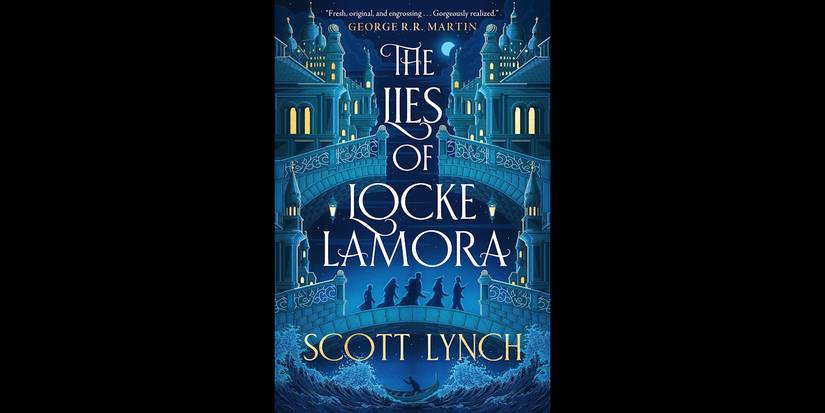 Image via Bantam Spectra
"Someday, you're going to own this city." This colorful, entertaining story is basically a crime caper set in a magical world inspired by medieval Venice. The title character is an orphan raised among the Gentlemen Bastards, a group of highly skilled con men and thieves who secretly prey upon Camorr's wealthy elite, Robin Hood-style. Their daring schemes gradually collide with dangerous criminal organizations and deadly rivalries that expose every layer of the city's social hierarchy.
First up, the setting is great. Built upon the mysterious remnants of an ancient civilization, Camorr is a city of canals and noble districts, shady back alleys and bustling marketplaces, as well as mysterious supernatural structures known as Elderglass. Then there's the magic, including alchemy and complex poisons, as well as the shadowy sorcery of the Bondsmagi of Karthain, a guild of hitmen and political fixers.
8 'The Name of the Wind' (2007)
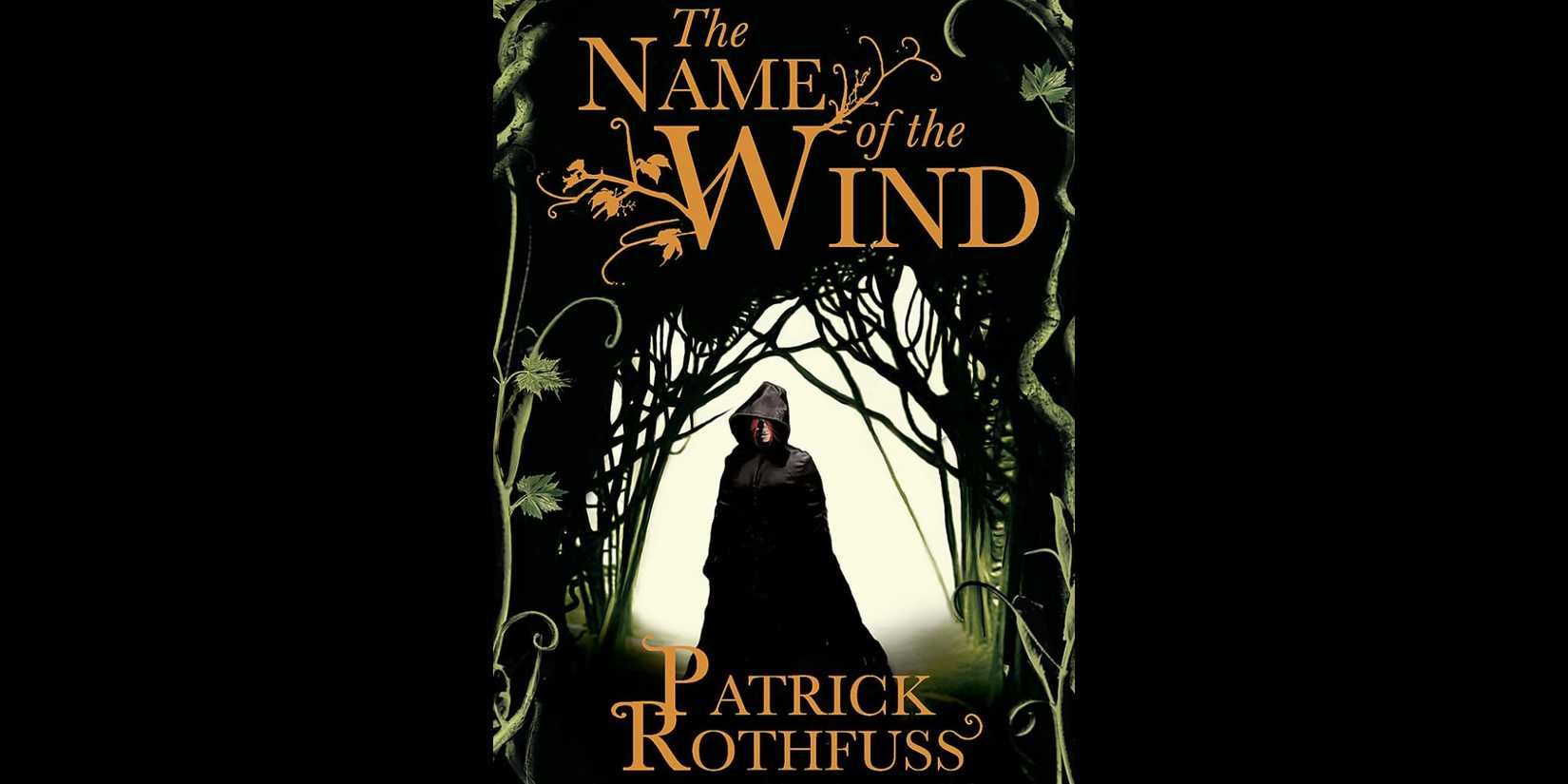 Image via Gollancz
"It was night again. The Waystone Inn lay in silence, and it was a silence of three parts." One of the very best fantasy books of the 2000s, The Name of the Wind gets deep and three-dimensional with both its fictional societies and its characters. Our protagonist is Kvothe, who recounts the extraordinary events of his life, from his childhood among traveling performers to his years studying sympathy (the novel's elegant, thermodynamics-inspired magical discipline) at the University.
Along the way, readers encounter an array of cultures, traditions, and places, from sleepy human hamlets to scheme-filled royal courts, and, later, even the fae realm of the nymph-like Felurian. Here, songs and children's stories preserve forgotten history. Looming over all this are the Chandrian, a group of seven immortal, terrifying beings who killed Kvothe's family and with whom he seems destined to collide once again.
7 'The Colour of Magic' (1983)
 Image via Colin Smythe
"In the beginning there was nothing, which exploded." This was the first book in Terry Pratchett's beloved Discworld series, which manages to poke fun at fantasy while also being an endlessly imaginative example of it. The novel follows the hopeless wizard Rincewind and the relentlessly optimistic tourist Twoflower as they stumble across the Disc's extraordinary landscapes, crossing paths with dragons powered by imagination, sentient luggage, eccentric wizards, and legendary (but thick) heroes.
Although much of the book functions as parody, the worldbuilding goes way beyond just satire. Indeed, Pratchett's storytelling is whimsical, cheeky, and inexhaustibly creative throughout. For instance, the world itself is a flat disc balanced atop four elephants standing on the shell of the giant turtle Great A'Tuin. Things just keep getting more absurd from here, adding up to a unique series with its own madcap logic. Here, humor, mythology, folklore, and surprisingly sharp philosophy coexist effortlessly.
6 'A Wizard of Earthsea' (1968)
 Image via Parnassus Press
"Only in silence the word, only in dark the light." Compared to most sprawling, overstuffed fantasy epics, Ursula K. Le Guin's Earthsea is refreshingly simple and elegant. This opening installment centers on Ged, a gifted young wizard whose reckless ambition unleashes a terrifying shadow that forces him into a lifelong journey of self-discovery. He sails between the countless islands of Earthsea and, through his eyes, readers learn about societies shaped by unusual geography, tradition, and deeply rooted philosophical ideas surrounding balance and responsibility.
Perhaps Le Guin's greatest innovation in the book is in her treatment of magic. True names possess immense power because language itself forms the foundation of reality, making knowledge and wisdom far more valuable than raw magical strength. That beautifully coherent system influences everything from education to politics, ensuring that magic feels inseparable from the world surrounding it.
5 'The Shadow of the Torturer' (1980)
 Image via Simon & Schuster
"We believe that we invent symbols. The truth is that they invent us." The Shadow of the Torturer kicked off Gene Wolfe's challenging, brilliant sci-fi/fantasy hybrid The Book of the New Sun. In it, an apprentice torturer named Severian is exiled from his guild after showing mercy to a condemned prisoner. He voyages across the dying landscapes of Urth, dotted with the remnants of technologies and empires so old that they have become indistinguishable from myth.
It's a place of gems and duels, religious orders and named swords. Forgotten monuments loom over towns and ancient machines are treated as magical relics. There seem to be countless mysteries glinting just below the surface of the world. Rather than explaining all this through info-dumps, Wolfe invites readers to uncover Urth's history piece by piece, rewarding close attention.
4 'Gardens of the Moon' (1999)
 Image via Tor Fantasy
"The fallen shall forever be remembered as the Emperor's chosen." There's epic fantasy, and then there's the Malazan series, a truly gargantuan saga, spanning ten books, some 11,000 pages, and literal millennia of in-world history. The sprawling begins with Gardens of the Moon, in which the Malazan Empire sees soldiers, assassins, sorcerers, immortals, and deities converging upon the city of Darujhistan.
The world is bursting at the seams with ideas, like alchemical explosives, floating fortresses, living decks of tarot cards, gods who get deeply involved in the mortal world, and richly detailed magic systems. These involve Warrens, separate, parallel dimensions that represent specific elemental or conceptual forces. A mage can access magic by tearing open a small portal to one of these Warrens. Finally, in perhaps a nod to The Black Company, the protagonists' military culture is defined by gritty realism, complex squad dynamics, and pitch-black gallows humor.
3 'A Game of Thrones' (1996)
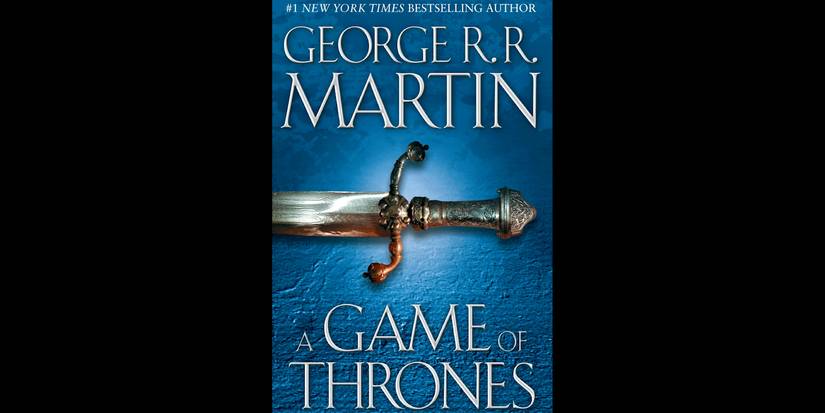 Image via Bantam Spectra
"When you play the game of thrones, you win or you die." The TV series ended poorly, and the book series remains frustratingly unfinished, though there's no denying that A Song of Ice and Fire started strong. The first book hit the ground running, serving up a juicy plot while also telling us a lot about the Seven Kings and their interconnected noble families. What begins as court intrigue steadily expands into a brutal political epic with growing magical undercurrents.
You can tell that George R.R. Martin poured a lifelong love of the genre into this book and its sequels. Practically every page is packed with memorable world-building, from the Night's Watch and towering Wall to the backstory of Valyria and the lingering memory of dragons. Then there are the years-long seasons, the whispered legends of the White Folklores, and the countless centuries of history lying beneath the present-day drama.
2 'The Golden Compass' (1995)
 Image via Alfred A. Knopf
"There are worlds beyond our own." The Golden Compass (aka Northern Lights) is one of the most philosophically rich (not to mention provocative) fantasy novels ever, yet it never feels didactic or heavy-handed. The book tells the story of the young Lyra Belacqua, who becomes caught up in a conspiracy involving kidnapped children, mysterious particles known as Dust, armored polar bears, witches, and a powerful religious organization determined to maintain control over knowledge itself.
She wields an instrument known as an alethiometer, capable of revealing any truth... provided you know how to decipher it, of course. This becomes one of the series' most potent symbols. What makes Philip Pullman's worldbuilding so compelling is the way every concept reinforces the themes. Dæmons, Dust, theology, parallel universes, and scientific inquiry all become interconnected pieces of a bold, coherent philosophical vision.
1 'The Lord of the Rings' (1954–1955)
 Image via HarperCollins
"One Ring to rule them all." Lord of the Rings was always going to claim the top spot on this list, since the genre as we know it wouldn't exist without it. Obviously, the plot is iconic now, practically a modern myth: Frodo Baggins undertakes the perilous quest to destroy the One Ring before it can return to the Dark Lord Sauron. Yet the true star of the novel might be Middle-earth itself. Every kingdom possesses its own distinct culture, every landscape carries echoes of forgotten ages, and every ruin hints at civilizations whose stories extend far beyond the immediate narrative.
The sheer amount of work and planning that went into this project is astounding, with Tolkien thinking up entire languages, religions, legends, and often gorgeous poetry, along with expansive notes and maps. So sweeping and lively was his world that thousands of writers since have used it as the model for their own.
Collider Exclusive · Middle-earth Quiz
Which Lord of the Rings
Race Do You Belong To?
Hobbit · Elf · Dwarf · Man · Orc
Middle-earth is home to many peoples — the courageous, the ancient, the stubborn, the ambitious, and the wretched. Ten questions will determine which race truly claims your soul. The answer may surprise you. Or it may confirm what you already suspected.
🌿Hobbit
🌟Elf
⚒️Dwarf
⚔️Man
💀Orc
01
What does your ideal day look like? How we rest reveals as much as how we fight.
02
How do you feel about the passing of time? Our relationship with mortality shapes everything we value.
03
Danger is approaching. Your first instinct is to: Fight, flight, or something in between — it's more revealing than you'd think.
04
You stumble upon a great treasure. What do you feel? What we desire — and what we do about it — is the true test.
05
How important is community and belonging to you? No race of Middle-earth is truly alone — but some prefer it that way.
06
How ambitious are you, honestly? Ambition is neither virtue nor vice — it depends entirely on what you want.
07
Where do you feel most at home in the natural world? Middle-earth is vast — and every race has its place within it.
08
What kind of strength do you most respect? Every race defines strength differently — and they're all at least a little right.
09
What do you want to leave behind when you're gone? Legacy is the story we tell ourselves about why any of this matters.
10
Be honest — what do you actually want most out of life? The truest question always comes last.
Middle-earth Has Spoken You Belong To…
The race that claimed the most of your answers is your true kin. If two tied, both are shown — you walk between worlds.
◆ A TIE — YOU WALK BETWEEN TWO RACES ◆
🌿
Your Race
The Hobbits
You are, at your core, a creature of comfort, community, and quiet joy — and there is nothing small about that. Hobbits are proof that heroism does not require ambition, that the bravest heart can beat inside the most unassuming chest. You value good food, warm hearths, close friends, and a world that stays largely untroubled by dark lords and quests. When adventure does find you — and it will — you rise to it not because you sought it, but because the people you love needed you to. That is not ordinary. That is the rarest kind of courage in all of Middle-earth.
🌟
Your Race
The Elves
Ancient, graceful, and carrying a weight of memory most mortals cannot fathom, you are one of the Elves. You see the world in its fullness — its beauty, its impermanence, the unbearable ache of watching everything you love eventually fade. You pursue perfection not from pride, but because excellence is how you honour the time you have been given. Others may see you as remote or melancholy. They are not wrong, exactly. But they mistake depth for distance. You feel everything — which is precisely why you have learned to carry it so quietly.
⚒️
Your Race
The Dwarves
Stubborn, proud, fiercely loyal, and possessed of a work ethic that would exhaust most other races before breakfast — you are Dwarf-kind through and through. You do not ask for approval and you do not offer it cheaply. Your loyalty, once given, is given for life. Your grudges last longer. You love deeply and defend ferociously, and the things you build — with your hands, with your sweat, with generations of accumulated craft — are made to last. Not for glory. Because anything worth doing is worth doing properly, and you have never once done anything by half measures.
⚔️
Your Race
The Race of Men
Mortal, ambitious, flawed, and magnificent — you belong to the most complicated race in Middle-earth, and that complexity is your greatest strength. Men are capable of cowardice and extraordinary bravery, of cruelty and breathtaking sacrifice, sometimes within the same breath. You feel the urgency of your finite years, and it drives you. You want to matter. You want to leave something behind. You fall, and you rise, and the rising is what defines you. Tolkien called mortality the Gift of Men — not a curse, but a fire that burns bright precisely because it does not burn forever. That fire is you.
💀
Your Race
The Orcs
Brutal, survivalist, and contemptuous of anything that can't defend itself — you answered with the instincts of an Orc, and there is a certain savage honesty in that. You do not dress up your desires in polite language or pretend you want things you don't. You want power, survival, and to never be at the bottom of any hierarchy ever again. Orcs are not evil by nature — they were made from something that was once good, and broken into this shape by forces they did not choose. What remains is fierce, territorial, and deeply aware that the world is not kind. You've made your peace with that. The question is what you do with it.







 English (US) ·