
So you read Harry Potter as a kid…or you didn't, and now you feel weird about it. Either way, young adult fiction has been doing great things for the last two decades, and most of it gets filed under "for teenagers" by people who would absolutely devour it if they just gave it ten pages. The genre has produced some of the sharpest dystopian fiction since Orwell, and fantasy world-building ambitious enough to command eight-figure film budgets.
Whether you're a total newcomer or a lapsed reader who stopped paying attention sometime immediately after the Twilight craze, the YA novels on this list are prime "dip your toe back in" reading material. They span sci-fi, fantasy, romance, and crime. They've collectively sold hundreds of millions of copies. And, they all share one quality: once you pick them up, you won’t want to put them down.
'The Hunger Games' (2008)
 Image via Scholastic Press
Katniss Everdeen is sixteen, lives in the coal-mining district of a dystopian nation called Panem, and has been keeping her family alive by hunting illegally since her father died in a mine explosion. When her younger sister's name is drawn for the Hunger Games, a televised death match where twenty-four kids fight until one survives, Katniss volunteers in her place. Suzanne Collins wrote the whole thing in present-tense first person, which gives the arena sequences a suffocating immediacy that's hard to shake. Katniss wins you over because she's calculating, as survivors often are in these kinds of stories, and the novel never pretends that makes her easy to love. She simply does what she must to keep the people she loves alive.
What makes The Hunger Games a good gateway YA novel is how cleanly Collins fuses a propulsive plot with ideas that feel timeless. The book is genuinely interested in what happens to a society that turns children's deaths into entertainment, and in what that system does to the kids who survive it. You'll finish it quickly, and then immediately understand why it blew the doors off the YA market when it came out. The movies were massive, and a prequel film, Sunrise on the Reaping, is hitting theaters this November, so it's worth revisiting the book that started it all now.
'The Fault in Our Stars' (2012)
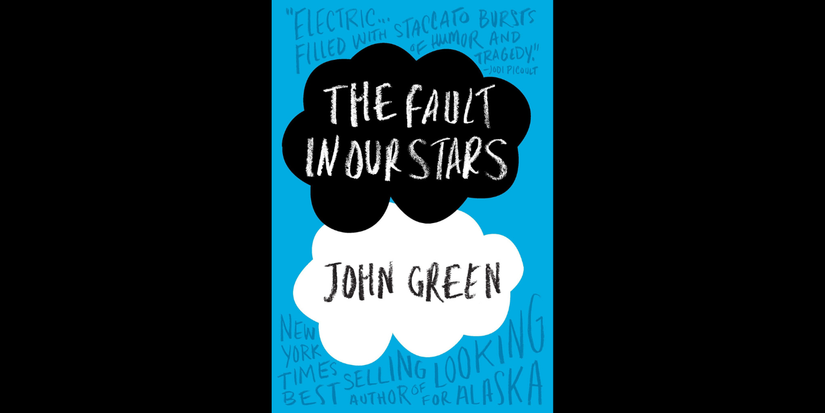 Image via Dutton Books
People who haven't read The Fault in Our Stars assume it's a tearjerker about dying teenagers. And, like, yes. It is. But this is John Green's writing, so you can expect more than just some sappy Kleenex propaganda. Hazel Grace Lancaster is sixteen and living with terminal thyroid cancer that has spread to her lungs. Augustus Waters is in remission from osteosarcoma, and he has opinions about everything because, well, he’s earned them. They're both sharp and a little pretentious in the way teenagers who read too much tend to be, and the book lets them argue about literature and mortality with an earnestness that would feel unbearable if Green weren't so good at dialogue.
It's a love story, but it's also a book about what it feels like to know your time is going to be short and to want it to matter anyway. Green is doing something here that YA is best at: taking teenagers' inner lives seriously without condescending to them. If you skipped it during the initial hype cycle because it looked too weepy, go back. The 2014 film was a phenomenon, but Green's prose and the interior of Hazel's voice are worth the read on their own.
'The Maze Runner' (2009)
 Image via Delacorte Press
A teenage boy named Thomas wakes up in a metal elevator with no memory of who he is or how he got there. He emerges into the Glade, a grassy enclosure surrounded by an enormous, ever-shifting maze full of creatures called Grievers. Nobody in the Glade remembers their life before arrival. Nobody knows who put them there. And the maze has never been solved. Author James Dashner drops you into Thomas' confusion and doles out answers at a rate that keeps you turning pages without ever giving you enough to feel comfortable. The book's greatest trick is that it trusts its own pacing; it doesn't dump any hand-holding exposition, it lets the mystery do the work.
For newcomers, The Maze Runner is an ideal entry point into the dystopian YA lane because it doesn't front-load world-building. You learn the rules of the Glade as Thomas does, piece by piece, and the plot moves fast enough that you're invested before you fully understand what's happening. It's a YA novel that converts the "I don't read much" crowd, because it operates like a thriller first and reveals its bigger ideas as it goes. The original film trilogy was a solid blockbuster franchise, but the novel's claustrophobic dread is something the big screen couldn't entirely capture.
'Everything, Everything' (2015)
 Image via Delacorte Press
Nicola Yoon does something structurally unusual with her YA hit, Everything, Everything — she tells the story through a rotating mix of traditional chapters, instant message conversations, illustrations, and book reviews her protagonist has written, which gives the novel a texture that feels distinct from almost anything else in the YA romance lane. The protagonist in question is Maddy Whittier, eighteen years old and confined to her house by a rare immunodeficiency disorder. Her mother, a doctor, has built their home into a sealed, sterile environment, and Maddy has made peace with her constraints until a boy named Olly moves in next door and starts communicating through the window.
The format mirrors the claustrophobia. You feel the walls closing in because Yoon built the book to make sure you would. The reason this book belongs on a beginner's list is how efficiently Yoon makes you feel what confinement does to a person. Maddy's world is tiny but fully realized, and her hunger for something beyond the walls isn't abstract; it's in every conversation she has with Olly, every time she looks out the window. Yoon also plays with the reader's assumptions about Maddy's illness in ways that reshape the entire story on a second read. Amandla Stenberg and Nick Robinson starred in the 2017 film, which was charming enough but flattened the book's formal inventiveness.
Collider Exclusive · The Sorting Hat Awaits Which Hogwarts House Are You? Gryffindor · Slytherin · Hufflepuff · Ravenclaw
Four houses. One destiny. The Sorting Hat has considered thousands of students — now it's your turn. Answer honestly and discover where you truly belong at Hogwarts School of Witchcraft and Wizardry.
🦁Gryffindor
🐍Slytherin
🦡Hufflepuff
🦅Ravenclaw
PLACE THE HAT →
01
What quality do you value most in yourself? Answer as honestly as you can — the Hat always knows.
ACourage — I act even when I'm afraid, because what's right matters more than what's safe. BAmbition — I know what I want and I have the drive and cunning to get there. CLoyalty — I show up for the people I love, no matter what it costs me. DWisdom — I think before I act and I'm always hungry to understand more.
NEXT QUESTION →
02
A friend is being treated unfairly. What do you do? How you protect others says everything about who you are.
AStep in immediately and confront whoever is responsible — I won't stand by. BWork out the best strategy to address it — a smart move beats a rash one. CBe by their side, support them, and help them through it however they need. DAnalyse what's actually happening and find the most reasoned, fair solution.
NEXT QUESTION →
03
What does success look like to you? What you're working toward defines who you're becoming.
ABeing remembered as someone who fought for what was right, whatever the odds. BAchieving the goals I set for myself — influence, status, and earned respect. CA life where the people I care about know I was there for them, always. DMastering my field, contributing something meaningful, and never stopping learning.
NEXT QUESTION →
04
What is your greatest fear? Fear is the most honest thing about a person.
ABeing a coward when it mattered — looking back and knowing I did nothing. BMediocrity — fading into obscurity without making my mark on the world. CLosing the people I love or letting them down when they needed me most. DIgnorance — being wrong and not knowing it, or never reaching my potential.
NEXT QUESTION →
05
The rules say no. Your gut says go. What do you do? Every institution has rules. What you do with them is a choice.
ABreak the rules — if it's the right thing to do, no rule should stop me. BFind a way to get what I want without getting caught. Rules are guidelines. CProbably follow the rules — but I'd find a way to help within them if I could. DThink it through carefully — is the rule unjust, or is my gut just impatient?
NEXT QUESTION →
06
What kind of friend are you? Who you are to the people you love is who you really are.
AThe protector — I will go to the ends of the earth for the people I care about. BThe strategist — I give sharp advice and I'm the one who figures out how to fix things. CThe constant — I'm always there, always reliable, and I never make it about me. DThe guide — I help people think things through and see perspectives they've missed.
NEXT QUESTION →
07
You look into the Mirror of Erised. What do you see? The mirror shows the deepest desire of your heart.
AYourself standing victorious, having faced the greatest challenge and won. BYourself at the height of your power — respected, successful, and in control. CYourself surrounded by everyone you love, whole and happy and together. DYourself with all the answers — every book read, every mystery solved.
NEXT QUESTION →
08
The Sorting Hat pauses. It whispers: "You could do well in any house. But what matters most to you — truly?" This is your tiebreaker. The Hat always listens.
ABravery. I want to be the kind of person who acts when others won't. BGreatness. I want to leave my mark and be more than ordinary. CBelonging. I want to be part of something good and never let my people down. DUnderstanding. I want to know the truth of things and keep growing forever.
REVEAL MY HOUSE →
The Sorting Hat Speaks Your House Has Been Chosen
After careful deliberation, the Sorting Hat has made its decision. This is the house your values, your instincts, and your particular way of being in the world were made for.
🦁 Gryffindor
You have nerve. Not the reckless kind, but the deep, quiet courage that shows up even when you're terrified — especially then.
- Gryffindors don't act because they're fearless — they act because they understand that some things are worth being afraid for.
- You stand up for people when it would be easier to look away.
- You charge toward what's right even when the odds are terrible.
- Harry, Hermione, Ron — the heroes of Hogwarts's greatest chapter — all called the tower with the scarlet and gold home. And now, so do you.
🐍 Slytherin
You are driven, sharp, and utterly clear-eyed about what you want and how to get there.
- Slytherin has long been misunderstood — painted as the house of villains when it is, at its best, the house of those who refuse to accept limits placed on them by others.
- You are resourceful, strategic, and you play the long game.
- You know your worth. You protect your own fiercely.
- The dungeon common room with its view of the Black Lake is yours — and the ambitions that will take you further than anyone expects are yours too.
🦡 Hufflepuff
You are the kind of person that makes the world genuinely better just by being in it.
- Hufflepuff is not the "safe" house or the "leftover" house — it is the house of those with the greatest heart and the most unwavering integrity.
- You show up. You work hard. You don't need glory or recognition — you do what's right because it's right.
- Your loyalty never wavers, even when tested.
- Nymphadora Tonks, Cedric Diggory, Newt Scamander — some of the wizarding world's finest. And now you join them.
🦅 Ravenclaw
Your mind is your greatest gift, and you've always known it.
- Ravenclaws are the thinkers, the questioners, the ones who find a puzzle irresistible and a good book better company than most people.
- Ravenclaw is not merely about intelligence — it's about the love of learning, the pursuit of truth, and the rare courage to admit you don't know something yet.
- You see the world with unusual clarity and depth.
- Luna Lovegood, Filius Flitwick, Rowena Ravenclaw herself — all extraordinary, all original. And so are you.
↻ RETAKE THE QUIZ
'Divergent' (2011)
 Image via Katherine Tegen Books
In a future Chicago divided into five factions based on personality traits, sixteen-year-old Beatrice Prior discovers during her aptitude test that she doesn't fit neatly into any of them. She's Divergent, which is dangerous, and when she chooses to leave her family's faction for the brutal, adrenaline-fueled Dauntless, she lands in the middle of a power struggle that threatens the entire system. Veronica Roth was twenty-two when Divergent was published, and the book has that urgent energy of a young writer sprinting full-speed at her premise and trusting it to hold up. The faction system is a neat conceit, and Tris' initiation into Dauntless gives the novel a boot-camp intensity that's hard to put down.
Divergent clicks as a starter novel because it's built around something every teenager has felt at some point: the sense that the categories everyone else slots into don't quite fit you, and that admitting it out loud might cost you. The premise is broad enough to be fun and narrow enough to sustain real tension, and Roth paces the Dauntless training sequences with escalating physical stakes that keep you reading past your bedtime. The book has been adapted into a film trilogy and spawned a cultural moment. Roth is now revisiting the world with The Sixth Faction, an alternate-universe duology hitting shelves in October 2026, so why not do the same?
'Children of Blood and Bone' (2018)
 Image via Henry Holt and Company
Tomi Adeyemi's debut, Children of Blood and Bone drops you into Orïsha, a West African-inspired fantasy kingdom where magic has been violently suppressed and the people who once wielded it, the maji, are hunted and subjugated. Zélie Adebola lost her mother to the monarchy's purge, and when she stumbles onto a chance to restore magic to her people, she takes it, even though the mission puts her on a collision course with the crown prince and his ruthless father. The novel is a big, cinematic fantasy built on Yoruba mythology, and Adeyemi wrote it with the pace of a thriller. If you've bounced off YA fantasy before because the world-building felt generic, this is the book that might change your mind.
Adeyemi's Orïsha doesn't borrow from the usual European-medieval playbook. The mythology and the politics feel fresh, and the book doesn't shy away from systemic violence or its costs, which gives the adventure stakes that feel genuinely weighty. A Paramount film adaptation directed by Gina Prince-Bythewood, with Thuso Mbedu and Viola Davis, is set for January 2027, but the novel is the thing to start with.
'One of Us Is Lying' (2017)
 Image via Delacorte Press
Five students walk into detention. Only four walk out. That's the hook for Karen M. McManus' debut, a locked-room whodunit set in a California high school where every student has a secret and the kid who dies, Simon, ran a gossip app that was about to expose all of them. The four surviving students — Bronwyn, Addy, Nate, and Cooper — become suspects, and the novel cycles through their perspectives as the investigation tightens. McManus gives each narrator a distinct voice and a genuine arc, which is harder than it sounds when you're also trying to keep a mystery airtight. The book is compulsively readable in a way that recalls early Harlan Coben, but with more teenage sensibilities.
One of Us Is Lying is the book to hand someone who says they don't read YA because they think the genre is all dystopias and love triangles. McManus writes straight-up crime fiction that happens to star high schoolers, and the fun is in watching the four narrators lie, deflect, and slowly reveal themselves under pressure. Each one is a recognizable high school archetype that the book systematically dismantles, which makes the mystery double as a sharp little character study.
'The Lightning Thief' (2005)
 Image via Hyperion Books
Percy Jackson is twelve, dyslexic, and has been kicked out of every school he's ever attended. He's also just learned that the Greek gods are real, that his absent father is one of them, and that someone has stolen Zeus' master bolt and blamed it on him. He's got about ten days to find the bolt and clear his name before the gods go to war. Rick Riordan wrote The Lightning Thief for his son, who has ADHD and dyslexia, and the book treats those traits as features of demigod heritage rather than something to be fixed. That approach landed with an entire generation of kids who saw themselves in Percy's restless, impulsive energy, and it's a big part of why the series has stayed so beloved.
The writing is funny, too. Percy's first-person voice is full of sarcasm and pre-teen bravado, and Riordan uses the Greek myths fairly irreverently. Medusa runs a roadside garden-sculpture business. Ares is a biker. The Underworld has a security line. It's a world that rewards curiosity, and the book moves fast enough that reluctant readers get hooked before they realize they're even learning mythology.
'Miss Peregrine's Home for Peculiar Children' (2011)
 Image via Quirk Books
Jacob Portman grew up listening to his grandfather's stories about a children's home on a remote Welsh island where kids had strange and wonderful abilities: a girl who could float, a boy full of bees. When his grandfather dies under horrifying circumstances, Jacob goes looking for the home and discovers that the stories were true. The children are still there, and they've been hiding in a time loop since 1940 to escape creatures called hollowgasts.
Ransom Riggs built his novel around a collection of actual vintage found photographs, which gives the book an eerie surrealism that no other YA series has managed to replicate. The images feel like artifacts, and the story grew out of them. For readers who want something weirder and more atmospheric than the typical YA fare, Miss Peregrine's Home for Peculiar Children is the one. Riggs isn't interested in clean genre categories; the book drifts between horror, fantasy, and coming-of-age in a way that keeps you slightly off-balance, and that's most of the fun.
'Harry Potter and the Sorcerer's Stone' (1998)
 Image via Scholastic Press
Yes, we're including this one and no, you don't get to skip it because you've seen the movies. You already know the broad strokes: an orphan discovers he's a wizard, gets whisked off to Hogwarts, stumbles into a conspiracy involving a dark lord who might not be as dead as everyone hopes. But the thing that actually makes Harry Potter and the Sorcerer's Stone work, the reason it turned an entire generation into readers, is how grounded the details are. The world-building is enormous, but the emotional hook is a lonely kid finally finding somewhere he belongs.
That's the trick of great YA — the stakes can be apocalyptic, but the feelings are personal and close. J.K. Rowling understood that a kid making friends on a magic train is as important as whatever Voldemort is planning, because it's the small pleasures that make you care whether the big threat ruins everything. HBO is rebooting the series this Christmas with a new cast, but the novel is the thing. Read it before you have someone else's version in your head.
Harry Potter
Release Date 2026 - 2026
Showrunner Francisca Gardiner
Directors Mark Mylod
Writers Francesca Gardiner
-

Dominic McLaughlin
Harry Potter
-

-

-






 English (US) ·