
 Image via Apple TV
Published Sep 6, 2026, 5:26 AM EDT
Sign in to your Collider account
Plenty of TV shows are good enough to recommend, but essential should mean something more. It needs to make the audience feel something long after the credits roll. This is where Apple TV has really proven itself. The streamer’s best originals are unlike anything else on TV, with unique storylines and ambitions. Many of these shows feel like they are redefining modern television in real time.
They are pushing familiar genres in unexpected directions. Apple TV’s confident approach to storytelling makes it easy for viewers to get hooked on the streamer’s offerings. That consistency is exactly what makes choosing just a handful so difficult, but these are the Apple TV shows that feel the most essential to experience at least once.
10 'Slow Horses' (2022–Present)
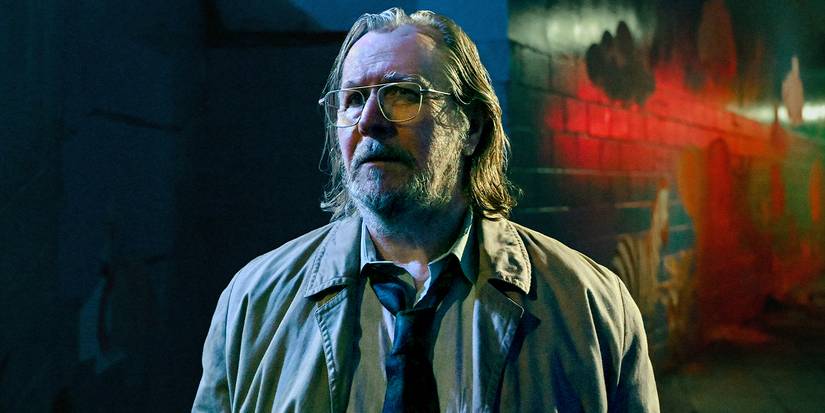 Image via Apple TV
Slow Horses has practically reinvented the spy genre with a much more grounded approach. The Apple TV series is set in Slough House, where MI5 sends agents who have messed up badly enough to derail their careers but not quite badly enough to be fired. River Cartwright (Jack Lowden) ends up there after a disastrous training exercise and quickly realizes that his new workplace is practically a professional graveyard. The man in charge, Jackson Lamb (Gary Oldman), is a brilliant former field agent who cares more about drinking than anything else, most of all work. Slow Horses dares to strip espionage of all glamour and show just how badly agents can screw up in the face of impossible stakes.
However, even then, the Slough House crew keeps getting entangled in kidnappings, assassination plots, and intelligence conspiracy theories that only they seem to care about solving. The agents are always caught between actual threats and senior intelligence officials trying to protect their own careers, especially Diana Taverner (Kristin Scott Thomas), whose relationship with Lamb turns almost every investigation into a tense battle happening behind the scenes. This constant friction is where the series really shines. Not to mention that the show never suddenly turns its rejects into capable heroes. The crew constantly makes mistakes, but the fact that they always come together to get to the bottom of things is what makes up the heart of this messy and surprisingly emotional show.
9 'Ted Lasso' (2020–Present)
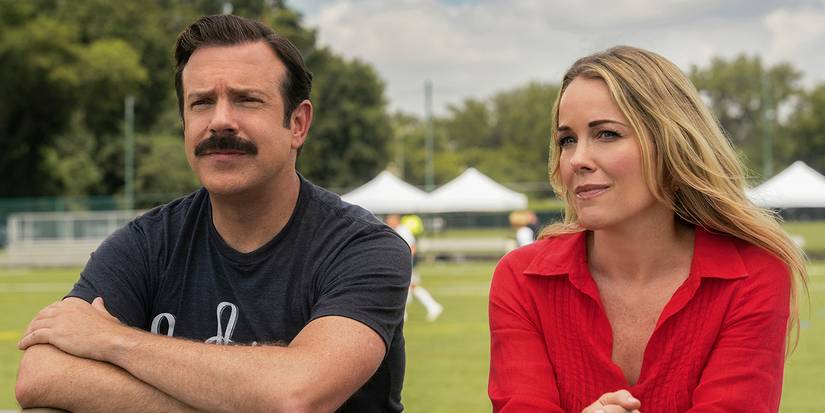 Image via Apple TV
Ted Lasso became one of Apple TV’s defining shows by turning the idea of a sports drama on its head. The series follows aggressively optimistic American football coach Ted (Jason Sudeikis), who is hired to manage AFC Richmond despite knowing practically nothing about English soccer. That’s not all, though, because he also does not realize that club owner Rebecca Welton (Hannah Waddingham) hired him specifically to fail because destroying Richmond is her way of getting revenge on her ex-husband. Ted responds to all of this in the most Ted Lasso way possible. He wins everyone over with his relentless positivity and an inherent ability to make people care about each other.
All this wholesomeness in the show could have become exhausting very quickly, but Ted Lasso never treats that as a magic fix. Rebecca has to confront what revenge is doing to her, Jamie Tartt (Phil Dunster) has to grow beyond being an incredibly talented nightmare of a teammate, and Roy Kent (Brett Goldstein) has to figure out who he is when football stops being the center of his identity. Even Ted’s endless optimism eventually starts cracking under the weight of his divorce, loneliness, and panic attacks. The show understands that being positive is easy when life is going well. However, doing it when everything hurts is the real challenge. Football is still an important part of the show, but the emotional payoff usually comes from what happens off the pitch. The show strikes the perfect balance between all these elements and is on its way to becoming a modern classic.
8 'Bad Sisters' (2022–Present)
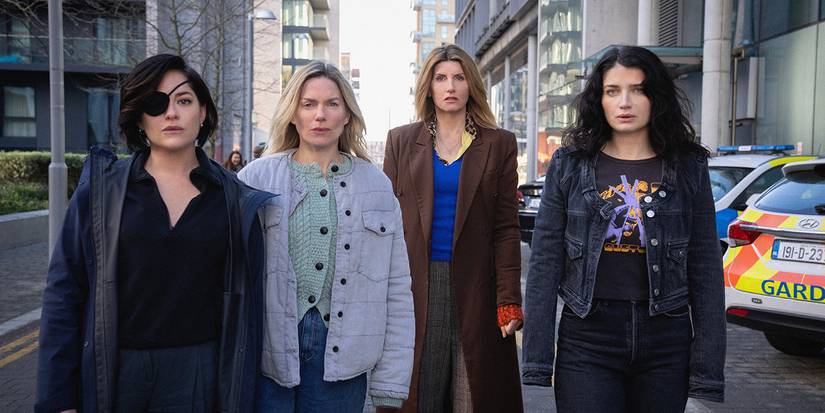 Image via Apple TV+
Bad Sisters is one of Apple TV's most unique offerings. The series revolves around the five Garvey sisters, who have remained extremely close since losing their parents at a young age. That bond is tested when Grace (Anne-Marie Duff) marries John Paul (Claes Bang), an emotionally abusive man who slowly isolates her from the rest of the family. Eva (Sharon Horgan), Ursula (Eva Birthistle), Bibi (Sarah Greene), and Becka (Eve Hewson) all despise him for different reasons, and eventually decide that Grace’s life would be considerably better if John Paul simply stopped being part of it. The interesting part, though, is that the series begins with John Paul already being dead. The real mystery is how it happened. From there, Bad Sisters constantly jumps between the sisters’ increasingly disastrous attempts to get rid of him and the present-day investigation by insurance brothers Thomas (Brian Gleeson) and Matthew Claffin (Daryl McCormack), who desperately need to prove his death was not accidental.
Every failed plan makes things worse, and John Paul somehow finds a new way to become even more unbearable just when it seems impossible to hate him any more. What makes Bad Sisters essential viewing, though, is how perfectly it walks the line between comedy and drama. The show can make the audience laugh at the sisters’ wacky schemes and then, minutes later, remind them why they became desperate enough to consider it in the first place. The Garvey sisters argue and lie to each other, but their connection never feels scripted. That chemistry gives Bad Sisters a personality and purpose that most murder mysteries just ignore. Eventually, the show becomes so much more than just its central mystery, and that’s what keeps the audience hooked.
7 'Silo' (2023–Present)
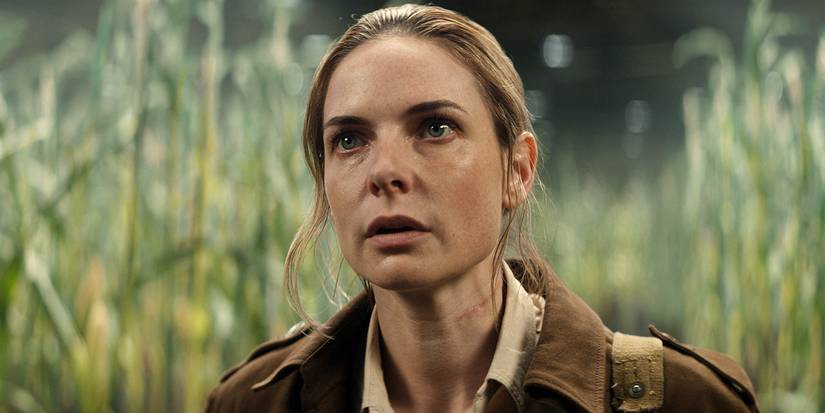 Image via Apple TV
Silo takes place in a world where most of humanity is dead, the entire world is toxic, and the last survivors live underground in a massive silo with 144 levels. The audience does not know who built this structure or what happened to the world outside because all records from before the uprising were destroyed. The only rule here is that if someone asks to go outside, they may leave, but they can never come back. That mystery only becomes more intriguing when engineer Juliette Nichols (Rebecca Ferguson) starts investigating a series of deaths and realizes that the official version of life inside the silo might not add up.
The brilliance of Silo is how much tension it creates without constantly showing the audience what is outside. Most of the danger comes from people asking the wrong questions. The viewers experience all this through Juliette’s eyes as she moves through different levels of the silo, uncovers secrets about its history, surveillance systems, and the people responsible for keeping everyone obedient. The deeper she digs, the more this place starts feeling like an incredibly elaborate prison. The show’s incredible production design is also a huge part of why Silo is impossible to stop watching. The spectacle of this isolated world creates intrigue, but the constant sense of paranoia is what drives the story forward.
6 'For All Mankind' (2019–2027)
 Image via Apple TV
For All Mankind is essential Apple TV viewing because very few shows have been this ambitious in a long time. The series begins with an alternate-history twist where the Soviet Union beats the United States to the Moon. That single defeat completely rewrites the future as NASA becomes even more aggressive, female astronauts enter the program earlier, lunar bases become permanent, and humanity keeps pushing toward milestones that took much longer in reality. The series follows astronauts including Ed Baldwin (Joel Kinnaman) and Danielle Poole (Krys Marshall), whose careers stretch across decades while space exploration evolves around them.
Now, the smartest thing For All Mankind does is jump forward roughly a decade between seasons. The audience does not just watch people reach space, because the narrative goes above and beyond that. New generations enter the picture, technology evolves, political powers shift, and by For All Mankind Season 5, Mars has its own thriving colony with thousands of residents. The scale of For All Mankind feels unlike almost anything else on TV. The series explores human ambition through massive historical turning points in a way that feels too real.
Collider Exclusive · Sci-Fi Survival Quiz Which Sci-Fi World Would You Survive? The Matrix · Mad Max · Blade Runner · Dune · Star Wars
Five universes. Five completely different ways the future went wrong — or sideways, or up in flames. Only one of them is the world your instincts were built for. Eight questions will figure out which dystopia, galaxy, or desert wasteland you'd actually make it out of alive.
💊The Matrix
🔥Mad Max
🌧️Blade Runner
🏜️Dune
🚀Star Wars
TEST YOUR SURVIVAL →
01
You sense something is deeply wrong with the world around you. What do you do? The first instinct is often the truest one.
APull on every thread until I understand the system — then figure out how to break it. BStop asking questions and start stockpiling — food, fuel, weapons. Questions don't keep you alive. CKeep my head down, observe carefully, and trust no one until I know who's pulling the strings. DStudy the patterns. Every system has a rhythm — learn it, and you learn how to survive it. EFind the people fighting back and join them. You can't fix a broken galaxy alone.
NEXT QUESTION →
02
In a world of scarcity, what resource do you guard most fiercely? What we protect reveals what we believe survival actually requires.
AKnowledge. If you understand the system, you don't need resources — you can generate them. BFuel. Everything else — movement, power, escape — runs on it. CTrust. In a world of fakes and informants, a truly reliable ally is rarer than any commodity. DWater. And after water, information — the two things empires are truly built on. EShips and credits. The galaxy is big — you survive it by being able to move through it freely.
NEXT QUESTION →
03
What kind of threat keeps you up at night? Fear is useful data — if you're honest about what you're actually afraid of.
AThat reality itself is a lie — that everything I experience has been constructed to keep me compliant. BA raid. No warning, no mercy — just the roar of engines and then nothing left. CBeing identified. Once someone with power decides you're a problem, you're already out of time. DBeing outmanoeuvred — losing a political game I didn't even know I was playing. EThe Empire tightening its grip until there's nowhere left to run.
NEXT QUESTION →
04
How do you deal with authority you don't trust? Every dystopia has a power structure. Your approach to it determines everything.
ASubvert it from the inside — learn its rules well enough to weaponise them against it. BIgnore it and stay out of its reach. The further from any power structure, the better. CAppear to comply while doing exactly what I need to do. Visibility is the enemy. DManoeuvre within it carefully. You can't beat a system you refuse to understand. EResist openly when I have to. Some things are worth the risk of being seen.
NEXT QUESTION →
05
Which environment could you actually endure long-term? Survival isn't just tactical — it's physical, psychological, and very much about where you are.
AUnderground bunkers and server rooms — cramped, artificial, but with access to everything that matters. BOpen wasteland — brutal sun, no shelter, constant movement. At least the threat is honest. CA dense, rain-soaked city where you can disappear into the crowd and nobody asks questions. DMerciless desert — extreme heat, no water, and something enormous living beneath the sand. EThe fringe — backwater planets and busy spaceports where the Empire's attention rarely reaches.
NEXT QUESTION →
06
Who do you want in your corner when things fall apart? The company you keep is the clearest signal of who you actually are.
AA tight crew of believers who've seen behind the curtain and have nothing left to lose. BOne or two people I'd trust with my life. Any more than that and someone talks. CNobody, ideally. Alliances are liabilities. I work alone unless I have no choice. DA community bound by shared hardship and mutual survival — people who need each other to last. EA ragtag team with wildly different skills and total commitment when it counts.
NEXT QUESTION →
07
Where do you draw the line — if you draw one at all? Every survivor eventually faces a moment that tests what they're actually made of.
AI won't harm the innocent — even the ones who'd report me without hesitation. BI do what I have to to protect the people I've chosen. Everything else is negotiable. CThe line shifts depending on who's asking and what's at stake. DI draw a long-term line — nothing that compromises my people's future, even if it'd help now. ESome lines, once crossed, can't be uncrossed. I know which ones they are.
NEXT QUESTION →
08
What would actually make survival worth it? Staying alive is one thing. Having a reason to is another.
AWaking others up — dismantling the illusion so no one else has to live inside it. BFinding somewhere — or someone — worth protecting. A reason to keep moving. CAnswers. Understanding what I am, what any of this means, before time runs out. DLegacy — shaping the future in a way that outlasts me by generations. EFreedom — for myself, for others, for every world still living under someone else's boot.
REVEAL MY WORLD →
Your Fate Has Been Calculated You'd Survive In…
Your answers point to the world your instincts were built for. This is the universe your temperament, your survival instincts, and your particular brand of stubbornness were made for.
The Matrix
You took the red pill a long time ago — probably before anyone offered it to you. You're a systems thinker who can't help but notice the seams in things.
- You're drawn to understanding how the system works before figuring out how to break it.
- You'd find the Resistance, or it would find you — your instinct for spotting constructed realities is the machines' worst nightmare.
- You function best when you have access to information and the freedom to act on it.
- The Matrix built an airtight prison. You'd be the one probing the walls for the door.
Mad Max
The wasteland doesn't reward the clever or the well-connected — it rewards those who are hard to kill and harder to break. That's you.
- You don't need comfort, community, or a cause larger than the next horizon.
- You need a vehicle, a clear threat, and enough fuel to outrun it — and you're good at all three.
- You are unsentimental enough to survive that world, and decent enough — just barely — to be something more than another raider.
- In the wasteland, that distinction is everything.
Blade Runner
You'd survive here because you know how to exist in moral grey areas without losing yourself completely.
- You read people accurately, keep your circle small, and ask the questions others prefer not to answer.
- In a city where humanity is a legal designation rather than a feeling, you hold onto something that keeps you functional.
- You're not a hero. But you're not lost, either.
- In Blade Runner's world, that distinction is everything.
Dune
Arrakis is the most hostile environment in the known universe — and you are precisely the kind of person it rewards.
- Patience, discipline, and political awareness are your core strengths — and on Arrakis, they're survival tools.
- You understand that the long game matters more than any single victory.
- Others come to Dune and are consumed by it. You'd learn its logic and earn its respect.
- In time, you wouldn't just survive Arrakis — you'd begin to reshape it.
Star Wars
The galaxy far, far away is vast, loud, and in a constant state of violent political upheaval — and you wouldn't have it any other way.
- You find meaning in being part of something larger than yourself — a cause, a crew, a rebellion.
- You'd gravitate toward the Rebellion, or the fringes, or whatever pocket of the galaxy still believes the Empire's grip can be broken.
- You fight — not because you have to, but because standing aside isn't something you're capable of.
- In Star Wars, that willingness is what makes all the difference.
↻ RETAKE THE QUIZ
5 'Shrinking' (2023)
 Image via Apple TV
Shrinking is based on a concept that could have gone totally wrong, but somehow, it just keeps getting better. The series follows therapist Jimmy Laird (Jason Segel), who is still grieving the death of his wife. He drinks too much, barely connects with his teenage daughter Alice (Lukita Maxwell), and becomes increasingly frustrated with sitting across from patients who keep making the same mistakes. Eventually, Jimmy decides to throw professional boundaries out the window and starts telling his clients exactly what he thinks. He interferes in their relationships, pushes them into uncomfortable decisions, and even brings some of their problems directly into his own life.
His colleague Paul (Harrison Ford) thinks this is an absolutely terrible idea, but Jimmy isn’t one to listen. Of course, that premise means there is room for humor in Shrinking, but the show is just as sentimental as it is unhinged. Paul’s strained relationship with Alive and his dynamic with fellow therapist Gaby (Jessica Williams) gradually turn the show into an ensemble about people who are all trying to move forward while carrying burdens from their past. The series is extremely comfortable in being messy, like most human emotions are. Shrinking is not reinventing television with its premise, but it does make the viewers connect with its characters in a way that feels strangely personal.
4 'Trying' (2020)
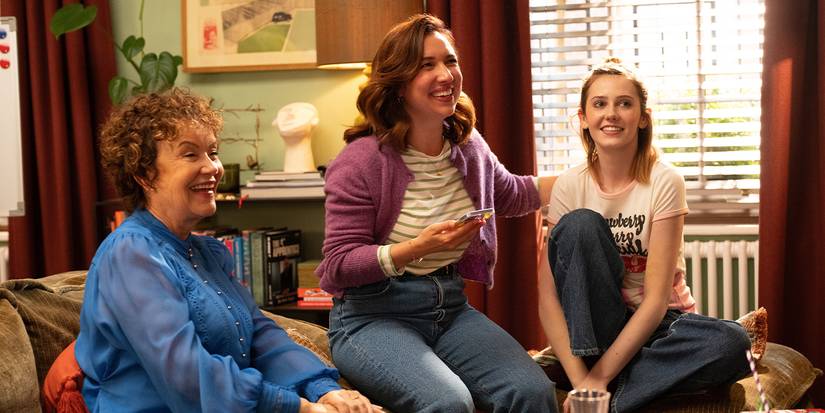 Image by Apple TV+
Trying is another Apple TV show that doesn’t need a high-stakes hook to be entertaining. The British comedy follows Nikki (Esther Smith) and Jason (Rafe Spall), a couple who desperately want a child but cannot have one biologically. After exhausting their options, they decide to adopt a child, which sends them through interviews, training sessions, evaluations, awkward family conversations, and the constant fear of someone else deciding whether they are good enough to become parents. Trying takes a complex subject and portrays it in a light-hearted tone without ever undermining its emotional, more difficult aspects. Nikki and Jason are chaotic, and maybe even immature.
However, their relationship has an effortless warmth that instantly makes the audience root for them. The adoption process is grueling and frustrating, but the couple is in for a whole new challenge when Trying Season 3 throws them directly into raising Princess and Tyler. Plenty of sitcoms stretch their original premise to the point of exhaustion, but Trying actually evolves and lets its characters move forward. Their family changes, the children grow up, and new problems replace the old ones instead of repeating them. The show is funny, sad, heartwarming, and sentimental in the best of ways. It understands every bit of the effort that goes into building and maintaining a family. That alone makes it worth the watch.
3 'Mythic Quest' (2020–2025)
 Image via Apple TV
Mythic Quest is one of the few shows that actually gets video game culture right. The workplace comedy revolves around the team behind Mythic Quest, a successful online role-playing game led by creative director Ian Grimm (Rob McElhenney) and lead engineer Poppy Li (Charlotte Nicdao). The two work with executive producer David Brittlesbee (David Hornsby), ruthless monetization head Brad Bakshi (Danny Pudi), and an office full of developers, testers, and writers whose careers depend on keeping this increasingly chaotic game alive.
This setup gives Mythic Quest an endless supply of material. The show satirizes expansion packs, streaming, monetization, online communities, creative burnout, and massive egos; all become part of the joke, but never does it to appeal to a certain demographic. The real story of Mythic Quest is about creative ownership as Ian and Poppy’s friendship becomes increasingly complicated in the face of success. The audience doesn’t need to know anything about game development to appreciate that, but anyone who does will immediately relate to the show’s themes of artistic ambition, commercial success, and absolute corporate nonsense.
2 'Pachinko' (2022–2024)
 Image via Apple TV+
Pachinko explores history through an intimate lens. The series, based on Min Jin Lee’s novel, follows multiple generations of a Korean family, with Sunja (Minha Kim and Youn Yuh-jung) at the center of it all. Sunja grows up in Korea under Japanese occupation and eventually falls for wealthy fish broker Koh Hansu (Lee Min-ho). When she discovers that he is already married, she refuses to become his mistress and instead builds a completely different life with minister Isak (Steve Sanghyun Noh) in Osaka. Decades later, the audience follows older Sunja (Youn Yuh-jung), who watches her grandson Solomon (Jin Ha) chase success in Japan while carrying the weight of a family history he doesn’t fully understand.
What makes Pachinko special is the way it moves across time without ever losing its emotional center. The series constantly places one generation beside another. A sacrifice made by Sunja decades earlier suddenly gives new meaning to the choices Solomon gets to make in the present. That structure turns the family history, poverty, discrimination, and identity into something the audience can actually feel through all these characters. The show’s visual style and its use of Korean, Japanese, and English languages perfectly complement the sweeping scale of its story.
1 'Severance' (2022–Present)
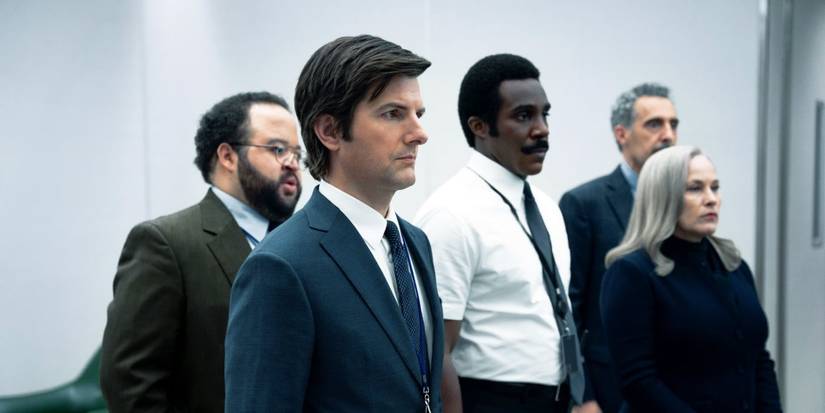 Image via Apple TV
Severance is unlike any other show on air right now, and it has only gotten better with each episode. The sci-fi psychological thriller follows Mark Scout (Adam Scott), an employee at Lumon Industries who has undergone a procedure that completely separates his work memories from his personal life. The version of Mark who enters the office, the innie, has no idea what happens outside, while the version who leaves, the outie, has no memory of the eight hours he just spent working. That arrangement initially feels like the answer to work-life balance, until the audience realizes that for the innie, it means existing inside Lumon forever. That becomes impossible to ignore once Helly R. (Britt Lower) joins Mark, Irving (John Turturro), and Dylan (Zach Cherry) in the Macrodata Refinement department.
Their job involves sorting numbers they do not understand, and incentives include bizarre things like melon bars and finger traps. However, Helly begins questioning what Lumon actually does, and that’s when Lumon’s sterile hallways and strange rules start to feel almost sinister. Severance takes its time to reveal the secrets hiding within Lumon. The show develops its seemingly absurd concept with a confidence that pays off when the puzzle pieces start coming together. The Apple TV original is already one of the defining sci-fi shows of its era with just two seasons, which goes to show how well-received its strange premise and slow-burn mystery have been with audiences.
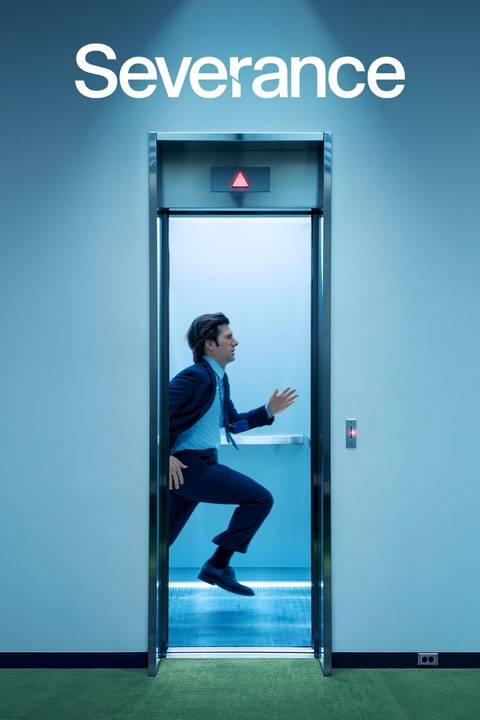
Severance
Release Date February 17, 2022
Network Apple TV
Showrunner Dan Erickson, Mark Friedman





 English (US) ·