
Originally, newspaper comic strips weren’t built for longevity, or at least longevity wasn’t expected of them. Drawn on deadline, printed on pulp, and tossed out by evening, they were never meant to outlast the morning coffee. However, the best of them did exactly that by creating strips that showed a genuine understanding of people.
As the years have gone by, these Classic Newspaper comic strips have only gotten better. These timeless masterpieces stand out from their contemporaries for their emotional honesty and sharp, observational wit. Rather than rely on cheap topic gags, they instead tap into relatable truths about childhood wonder, existential dread, workplace monotony, and the quiet comedy of everyday relationships.
Stripping away the nostalgia, these classic strips remain masterpieces at the very top of the medium. As modern media continues to evolve at breakneck speed, revisiting these classics reveals how far ahead of their time they were. This article spotlights 10 classic newspaper comic strips that are ageing like fine wine and are still relevant today.
10 Dennis the Menace

Debuting in 1951, Hank Ketcham’s Dennis the Menace was inspired by his energetic four-year-old son, creating an enduring archetype of suburban childhood chaos. Armed with a cowlick, striped overalls, and boundless curiosity, Dennis Mitchell is not truly malicious; his “menace” comes from unfiltered honesty and literal-minded logic colliding with rigid adult etiquette.
Whether he is driving his perpetually exasperated retired neighbour, Mr Wilson, to the brink of madness or dismantling household appliances to see how they work, Dennis captures the universal friction between a child’s pure wonder and an adult’s desire for peace. It’s a strip that bridges the gap between adults and children and offers something everyone can enjoy.
9 The Lockhorns

Debuting in 1968, Bill Hoest’s The Lockhorns is a masterclass in weaponising single-panel domestic realism, centring entirely on Leroy and Loretta, a perpetually exasperated married couple locked in a war of deadpan one-liners. Hoest leaned into burned, reckless shopping sprees and glacial dinner-table silences, turning marital friction into razor-sharp, unsentimental comedy.
With Bunny Hoest and illustrator Jogh Reiner at the helm for decades, the strip has aged remarkably well because its bleak, understated wit anticipates modern cringe comedy and dark relationship humour. Leroy’s slouched posture and Loretta’s dry delivery distil decades of familiar domestic grievances into timeless, punchy visual zingers.
8 FoxTrot
 Custom image created by Samantha King
From the creative mind of Bill Amend, a former physics major, came FoxTrot, an unapologetic love letter to nerd culture that brought it into the mainstream before being a “geek” was considered cool. It centred on the suburban Fox family and was driven by Jason, a ten-year-old coding prodigy and sci-fi obsessive.
The strip blends sibling rivalry, parental exasperation, and clever math jokes into fast-paced family comedy. Over the years, Amend’s art and cultural references have stayed effortlessly current. FoxTrot celebrated curiosity, sibling banter, and domestic chaos with genuine affection, securing its place as a modern classic that still feels ahead of the curve.
7 Bloom County
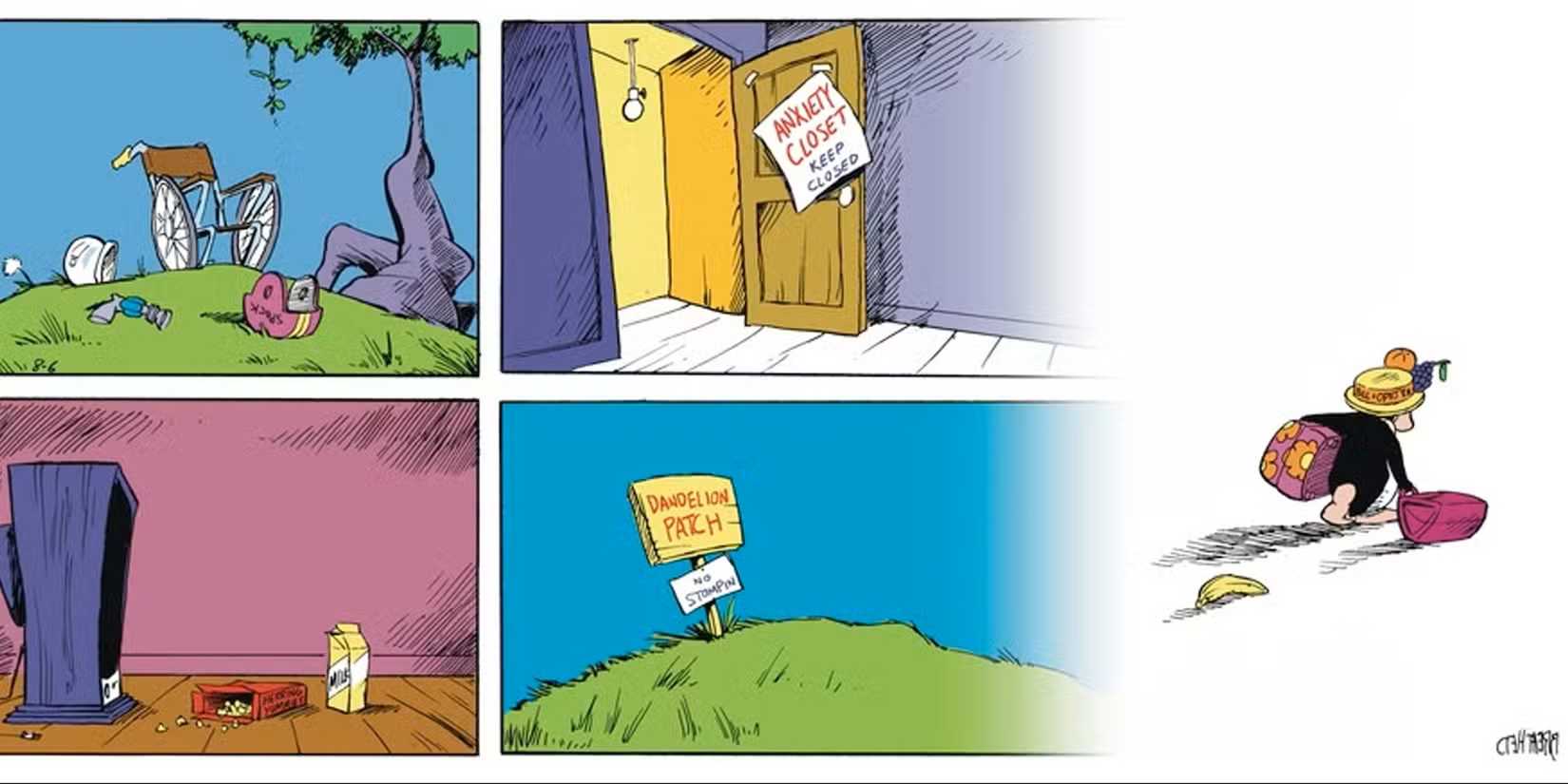
Bloom County captures the spirit of the 1980s better than any other comic strip. Packed with Reagan-era references and satire, it should have aged like milk, yet Berkeley Breathed’s Bloom County remains strikingly relevant. It features an unforgettable cast of misfits from Bloom County, including Opus the Penguin, Bill the Cat, and Cutter John, who elevate the narrative.
Though it was aimed at Baby Boomers, its mix of nostalgia, politics, and pop culture resonated with Gen X readers, who found Bill the Cat’s antics worthy of idolising. After inspiring countless strips, Bloom County has secured its place in pop culture while remaining unmatched by its contemporaries for chaotic, hilarious comedy that spans multiple generations.
6 Hägar the Horrible

Created by Dik Browne in 1973, Hägar the Horrible cleverly hides relatable suburban domesticity beneath horned helmets and medieval battleaxes. It goes against the grain by portraying Hägar as a tender-hearted, chronically overwhelmed family man juggling a demanding wife, Helga, a bookish son, Hamlet, and his dim-witted sidekick, Lucky Eddie, proving that raiding castles is just another stressful day job.
Guided today by Dik’s son, Chris Browne, the strip endures because its sharpest punchlines target timeless marital negotiations, workplace bureaucracy, and generational misunderstandings instead of dated trends. Combined with bold, expressive ink linework and deadpan comic timing, Hägar’s misadventures show no signs of ageing over half a century later.
5 Calvin and Hobbes
 Custom Image by Hannah Diffey
Bill Watterson’s strip ran only from 1985 to 1995, a single decade, yet its cultural footprint rivals strips that lasted half a century. This is largely due to how Watterson treated the Sunday comics page. He treated the Sunday comics page as fine art, which helps explain why the strip is still relevant today.
The strip featured a hyper-imaginative six-year-old and his stuffed tiger, who became a wise-cracking, philosophical companion whenever adults were away. It swung effortlessly from slapstick wagon rides down rocky cliffs to reflections on mortality, consumerism, and humanity’s impact on nature. By pushing against the rigid newspaper formats that forced cartoonists into interchangeable rectangular panels, Watterson revolutionised the medium.
Calvin and Hobbes were the main characters, but Watterson never neglected the supporting cast. Characters such as Calvin’s parents, Susie Derkins, and Miss Wormwood are properly fleshed out and feel real. Moreover, it had a perfect ending with Calvin and Hobbes going into a landscape covered with untouched snow, symbolising the world of possibilities that await them.
4 Blondie

Blondie set the template for television sitcoms, with a bumbling but lovable, somewhat dim father-husband, a smart, long-suffering wife-mother, and even a famous sandwich named after its character (the Dagwood). Launched in September 1930, Chic Young’s Blondie began as a jazz-age flapper gag before making one of the sharpest tonal pivots in comic history.
It married off its titular heroine, Dagwood Bumstead, and turned the strip into a grounded, affectionately chaotic portrait of middle-class domestic life. Disinherited by his wealthy parents and forced to deal with everyday bills, suburban neighbours, and a hair-trigger boss named Mr Dithers, Dagwood became an instant emblem of the overworked everyman.
On the other hand, Bondie evolved into a coolheaded, practical anchor that holds the household together. Blondie’s genius lies in its adaptability. The strip quietly modernised its setting and sensibilities without losing its warm, family-first core. Its raunchy satirical gags are perfect for criticising what people do today, while also being incredibly hilarious.
3 Garfield
 Custom Image by Hannah Diffey
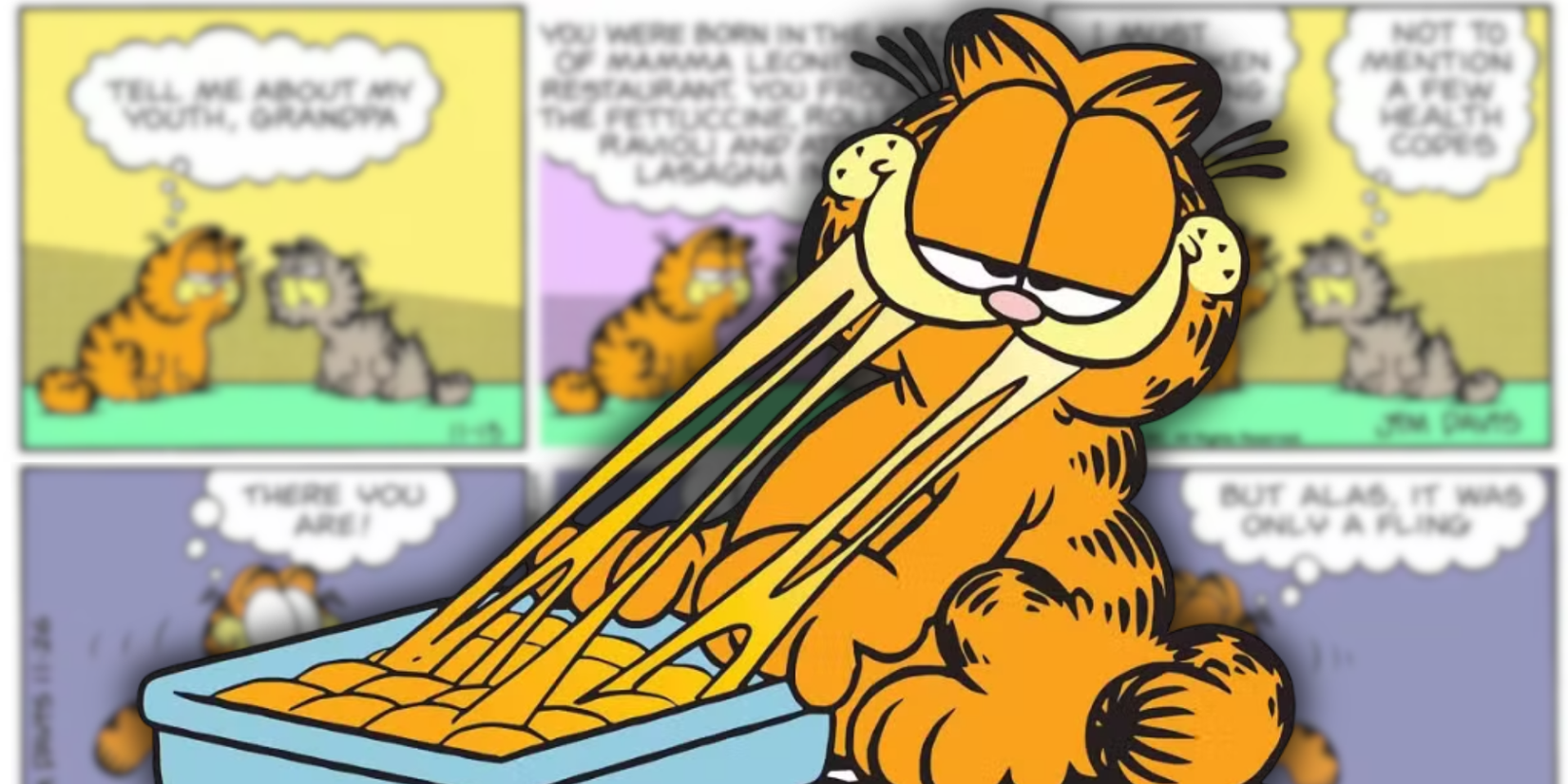
The cultural impact of Garfield is undeniably immense. It has sold a great deal of merchandise and inspired multiple adaptations that are still being released today, including the recent animated film The Garfield Movie (2024). Garfield also pioneered the use of repeated artwork, which allowed creator Jim Davis to meet deadlines more easily and keep the comic consistent.
At first glance, the strip is about a lazy orange tabby cat who loves lasagna and hates Mondays. Still, underneath it all is a strip that has stood the test of time, delivering hilarious, relatable comedy the whole family can enjoy. Its adaptability and deadpan minimalism have never gone out of fashion.
2 Peanuts
 Custom Image by Hannah Diffey
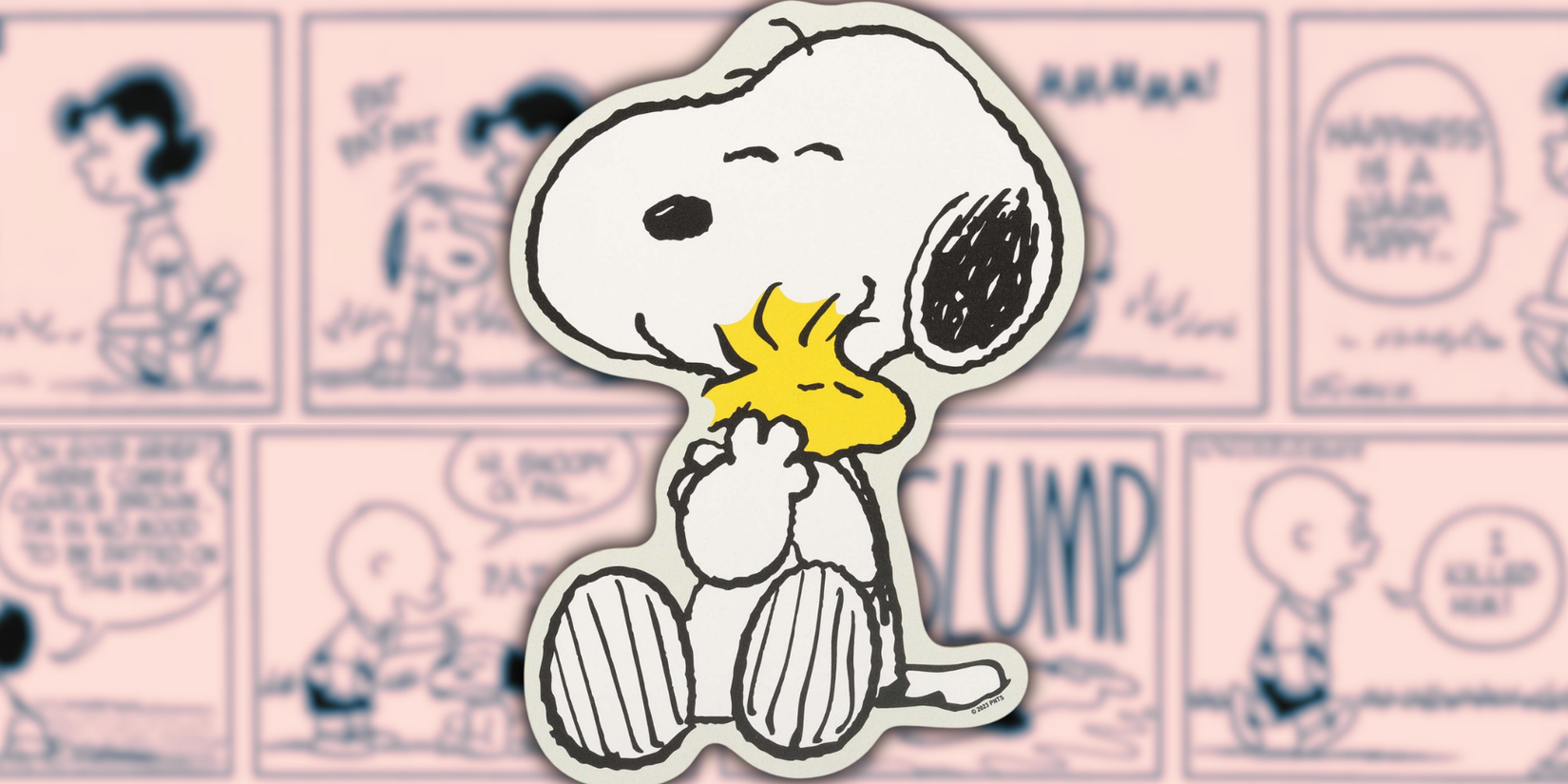
Charles Schulz’s Peanuts is a daily meditation on anxiety, unrequited love, and the persistent string of failure disguised as a children’s comic strip. Over two decades after his death, the strip remains one of the most famous comic strips of all time. Schulz pioneered multiple techniques that are still used in many comic strips today.
In Peanuts, he pioneered innovative techniques such as avoiding overtly political or technological topics and pairing them with a relatable cast of children, which helps the strip not feel dated to readers. The result of his creative techniques is that Peanuts remains popular to this day.
What makes Peanuts taste better with each passing decade is its refusal to offer cheap, sugary resolutions. Charlie Brown never actually kicks the football, the little Red-Haired Girl rarely notices him, and Snoopy’s fantasies always end back atop his doghouse. Yet there is a profound, comforting grace in that persistence. Schulz set the blueprint for creating timeless masterpieces.
1 The Far Side

Gary Larson single-handedly rewrote the rules of the funny pages with The Far Side. No other comic strip embodies the saying that “Brevity is the soul of wit” more than The Far Side. From 1980 through 1994, Larson’s magnum opus served as definitive proof that single-panel comics could be as deeply intelligent as they are hilarious.
The beauty of Larson’s Far Side lies in its universality. The strip is engineered to cut across multiple demographics, so anyone from a child to an adult could find something to chuckle at in each piece. Although The Far Side ended in 1995, Larson has, since 2020, posted new entries on his website.
Since its release, The Far Side has been a masterclass in longevity and comedy. The weirdness of The Far Side has never gone out of style. By using anthropomorphised animals to tell relatable stories and deliver social commentary, Larson made an ageless masterpiece. His commitment to unfiltered, weird, and unapologetically smart humour feels remarkably fresh, even by today’s standards.
Writer Gary Larson
Colorist Gary Larson








 English (US) ·