
 Image via Penguin Classics
Published Jul 1, 2026, 5:29 PM EDT
Michael John Petty is a Senior Author for Collider who spends his days writing, in fellowship with his local church, and enjoying each new day with his wife and daughters. At Collider, he writes features, reviews, recaps, and conducts interviews. In addition to writing about stories, Michael has told a few of his own. His novella, The Beast of Bear-tooth Mountain, was released in 2023. His Western short story, The Devil's Left Hand, received the Spur Award for "Best Western Short Fiction" from the Western Writers of America in 2025. Michael currently resides in North Idaho with his growing family.
Sign in to your Collider account
When it comes to horror, some of the best movies and television programs pull directly from the pages of pulse-pounding, don't-read-in-the-dark books that will turn your world upside down. Some of the most popular tales in horror began as novels, and they continue to inspire readers, viewers, and horror-lovers everywhere to look deeply into the dark and see what might be peering back. While not every horror novel will hold up after a considerable amount of time, we've put together our list of those that still do.
From vampires and demons to ghosts, monsters, and everything in between, the horror genre has thrived for centuries on the page. With that in mind, here are some of our favorite "classic" horror novels that have held up quite well over the years. if you haven't read them in a while, perhaps now is the time to jump back in — so long as they don't pull you in on their own.
‘The Exorcist’ (1971)
William Peter Blatty
 Image via Harper Publishing
Only two years before The Exorcist terrified viewers nationwide, William Peter Blatty first published the tale as a novel. Of course, the book and the film are quite similar, as Blatty penned both, though the novel is able to explore the deeper psychology of its characters — Father Lankester Merrin, Chris MacNeil, Father Damien Karras, and the possessed young Reagan — in ways simply not possible on the screen. Naturally, this makes everything spookier, and the suspense is off the charts.
Blatty's imagination had been sparked by an exorcism case from back in the '40s that he had heard about decades earlier. But The Exorcist grew far beyond that. As the demon Pazuzu stalks and terrorizes poor Reagan and her mother, the two priests can do nothing but battle the diabolical spirit for the souls of those it would devour. Blatty would go on to write a sequel, Legion, a book that served as the basis for the third film in the franchise, which he also directed.
‘’Salem’s Lot’ (1975)
Stephen King
 Image via Vintage Publishing
Stephen King's second novel, 'Salem's Lot is by far one of the best vampire stories ever written. While most blood-sucker fiction at the time took place in Europe, the budding "King of Horror" shipped them over (literally) to Maine for an American take on the evil creature. As Jerusalem's Lot falls prey to the will of Austrian immigrant Kurt Barlow, a vampire slowly draining the life of the small town. It may be one of King's earliest novels, but it's still arguably his best standalone tale.
Over the years, 'Salem's Lot has been adapted a handful of times for television and the big screen (with some serious departures from the source material thrown in there), but nothing quite compares to the raw prose of King himself. The novel meditates as much on the town itself, making the Lot its true protagonist, as it does Ben Mears, Father Callahan, and the rest of its human characters. As the most recent book on this list, there's a reason that many consider 'Salem's Lot to be a genuine horror classic.
‘The Haunting of Hill House’ (1959)
Shirley Jackson
 Image via Penguin
This Gothic horror will no doubt conjure some images in your mind, especially if you've already been treated by The Haunting of Hill House miniseries on Netflix. While the streaming version is quite loose in its "adaptation" (more like a "reimagining") of the material, one thing that it echoes from Shirley Jackson's novel well is the existential dread that Eleanor "Nell" Vance faces regarding reality around her. The ghosts are not quite defined, as they may be supernatural entities of psychological manifestations.
The Haunting of Hill House thrives in its depiction of the titular structure as a malevolent force, as Jackson paints a rich, psychological picture of madness and sanity. It's not the sort of "jump-scare heavy" novel that some ghost stories are, and it's certainly not as purposely defined as the miniseries, but that's part of what makes it so timeless. Just make sure you avoid an actual Hill House if you ever see one.
‘I Am Legend’ (1954)
Richard Matheson
 Image via Corgi Books
In the mid-20th century, there was no horror writer so popular or prolific as Richard Matheson. Yes, I Am Legend is another vampire story, but that's certainly not all it is. In fact, the novel serves as the foundation to many modern vampire and zombie tales alike, with a post-apocalyptic setting that will spook you as Robert Neville wanders the post-pandemic hellscape of Los Angeles. Dealing with engaging themes of human loneliness, isolation, and what it means to be a monster, this is a must-read for those who love pulpy horror.
I Am Legend was quite influential in the way that it established a scientific cause at the root of the vampire illness, a departure from the usual supernatural flare involved in such stories. As perhaps Matheson's most popular work, the novel has been adapted three times for the big screen, with Vincent Price, Charlton Heston, and Will Smith all playing the leading hero. It's a quick read, and one that horror lovers have trouble putting down.
‘Something Wicked This Way Comes’ (1962)
Ray Bradbury
 Image via Gauntlet Press
While perhaps not a novel some would traditionally think of as "horror," Something Wicked This Way Comes is a dark fantasy tale penned by Ray Bradbury. As a traveling carnival arrives in Jim and William's Midwestern town just before Halloween, the boys are forced to face their fears as the mysterious and frightening "Mr. Dark" preys upon those in Green Town. Full of childhood nostalgia and strange supernatural forces, the novel is often counted among Bradbury's best works, having influenced authors like Stephen King, R.L. Stine, and Neil Gaiman.
Something of a mix between a fantastical fairy tale and small-town horror, Something Wicked This Way Comes is a profound look at a "coming of age" story that highlights the only method to overcoming true darkness. Sure, it's maybe not as psychologically disturbing as some of the other entries here, but it (and Bradbury himself) certainly deserves its place on this list. Disney even adapted it to the screen in the '80s, so those hoping to see how Dark's Pandemonium Carnival might be brought to life.
‘The Turn of the Screw’ (1898)
Henry James
 Image via Penguin
Another haunted house tale, The Turn of the Screw perfected the idea long before Hill House. Henry James' Gothic masterpiece was originally published as a serial before it was reworked into a novel, but the content itself is largely the same. As in some of the best hauntings, James plays the line between what supernatural apparitions are real and imaginary, as an unreliable governess takes over the care of two orphaned children in Bly, only to come to believe that two ghosts aim to take them.
Long before The Turn of the Screw inspired The Haunting of Bly Manor or its other adaptations, the novella terrified readers with its ambiguity and psychological deconstruction as it meditated on things not fully explained or revealed. The spirit of this tale has been evoked again and again in the last century since, as James' signature work continues to delight and fright those who read.
‘The Strange Case of Dr. Jekyll and Mr. Hyde’ (1886)
Robert Louis Stevenson
 Image via Suzeteo Enterprises
Another novella that packs a serious punch, Robert Louis Stevenson's Gothic horror doubles as a cautionary tale of science fiction, as Gabriel John Utterson investigates the connections between Dr. Henry Jekyll and the criminal Edward Hyde. Of course, these two are actually the same man, split after Jekyll's attempts to separate his evil impulses and desires from himself. The results were far worse than the good doctor could have imagined.
The Strange Case of Dr. Jekyll and Mr. Hyde is almost a precursor to occult detective fiction, as the logically-minded Utterson uncovers the secret truth behind Jekyll and Hyde. The blend of pseudoscience and almost supernatural events turn this horror story into a thought-provoking psychological exercise, one that makes the reader consider his or her own duality. No wonder Hollywood continues to adapt this Stevenson classic.
Collider Exclusive · Horror Survival Quiz Which Horror Villain Do You Have the Best Chance of Surviving? Jason Voorhees · Michael Myers · Freddy Krueger · Pennywise · Chucky
Five killers. Five completely different ways to die — if you're not smart enough, fast enough, or self-aware enough to avoid it. Only one of them is the villain your particular set of instincts gives you a fighting chance against. Eight questions will figure out which one.
🏕️Jason
🔪Michael
💤Freddy
🎈Pennywise
🪆Chucky
TEST YOUR SURVIVAL →
01
Something feels wrong. You can't explain it — you just know. What do you do? First instincts are the difference between the survivor and the first act casualty.
ALeave immediately. I don't need to understand a threat to respect it. BStay quiet and observe. If I can see it, I can understand it. If I can understand it, I can avoid it. CStay awake. Whatever this is, I am not going to sleep until I feel safe again. DConfront it directly. Fear grows in the dark — I'd rather know what I'm dealing with. ECheck everything, trust nothing. The threat might be closer than I think — and smaller.
NEXT QUESTION →
02
Where are you most likely to find yourself when things go wrong? Setting is everything in horror. Where you are determines which rules apply.
ASomewhere remote — a cabin, a campsite, off the grid and away from people. BA quiet suburban neighbourhood where nothing ever happens. Except tonight. CIn my own head — the most dangerous place of all, depending on what's already in there. DWherever children are — because something about this place attracts the worst things. ESomewhere ordinary — a house, a toy store, a place where the last thing you'd expect is a threat.
NEXT QUESTION →
03
What is your most reliable survival asset? Every survivor has a quality the villain didn't account for. What's yours?
APhysical fitness — I can run, I can swim, I can outlast something that relies on brute persistence. BSpatial awareness — I always know the exits, the hiding spots, the fastest route out. CPsychological resilience — I've faced my worst fears before. They don't have the same power over me. DEmotional steadiness — I don't panic. Panic is what gets you caught. EScepticism — I don't underestimate threats because of how they look. Size is irrelevant.
NEXT QUESTION →
04
What kind of fear is hardest for you to fight through? Knowing your weakness is the first step to not dying because of it.
AThe unstoppable — something that will not stop, cannot be reasoned with, and is always getting closer. BThe invisible — a threat I can feel but can't locate, watching from somewhere I can't see. CThe psychological — something that uses my own mind and memories against me. DThe unknowable — something ancient, shapeless, that feeds on the fear itself. EThe mundane — a threat so ordinary-looking that no one will believe me until it's too late.
NEXT QUESTION →
05
You're with a group when things start going wrong. What's your role? Horror movies are brutally clear about who survives group situations and who doesn't.
AThe one who says "we need to leave" first — and means it, even when no one listens. BThe one who stays quiet, watches the others, and figures out the pattern before anyone else does. CThe one who holds the group together when panic sets in — because someone has to. DThe one who asks the questions nobody wants to ask — because ignoring them gets people killed. EThe one who takes the threat seriously when everyone else is laughing it off.
NEXT QUESTION →
06
What's the horror movie mistake you're most likely to make? Honest self-assessment is a survival skill. Denial is not.
AGoing back for someone — I know I shouldn't, but I can't leave them behind. BAssuming I'm safe once I've found a hiding spot. That's when it finds me. CFalling asleep when I absolutely cannot afford to. Exhaustion is its own enemy. DLetting my curiosity override my instincts — I always need to understand what I'm dealing with. EDismissing the threat because of how it looks. That's exactly what it wants.
NEXT QUESTION →
07
What's your best weapon against something that can't be stopped by conventional means? Every horror villain has a weakness. The survivors are always the ones who find it.
AThe environment itself — I use the terrain, the water, the geography against it. BPatience — I wait, I watch, and I strike at the one moment it doesn't expect. CLucidity — if I can stay in control of my own mind, it loses its primary weapon. DCourage — facing it directly, refusing to run, taking away the fear it feeds on. EImprovisation — I use whatever's at hand, however unconventional. Creativity over brute force.
NEXT QUESTION →
08
It's the final scene. You're the last one standing. How did you make it? The final survivor always has a reason. What's yours?
AI kept moving. I never stopped, never hid for too long, never let it corner me. BI figured out the pattern before anyone else did — and I used it against the thing following it. CI stayed awake, stayed lucid, and refused to give it the one thing it needed most. DI stopped being afraid of it. And the moment I did, everything changed. EI took it seriously from the start — and I never once made the mistake of underestimating it.
REVEAL MY VILLAIN →
Your Survival Odds Have Been Calculated Your Best Chance Is Against…
Your instincts, your strengths, and your particular way of thinking under pressure point to one villain you actually have a fighting chance against. Everyone else — good luck.
Jason Voorhees
Jason is relentless, but he is also predictable — and that is the gap you would exploit.
- He moves in straight lines toward his target. He doesn't strategise, doesn't adapt, doesn't outsmart. He simply pursues.
- Your ability to keep moving, use the environment, and resist the panic that freezes most victims gives you a genuine edge.
- The Crystal Lake survivors were always the ones who stopped running in circles and started thinking about terrain, water, and distance.
- You think like that. Which means Jason, for all his indestructibility, would face someone who simply refused to be where he expected.
Michael Myers
Michael watches before he moves. He is patient, methodical, and almost impossible to detect — until it's too late for anyone who isn't paying close enough attention.
- But you are paying attention. You notice the shape in the window, the car parked slightly wrong, the silence where there should be sound.
- Michael's power lies in the invisibility of ordinary suburbia — the fact that nothing ever looks wrong until it already is.
- Your spatial awareness and instinct to map every room, every exit, and every shadow before you need them is precisely the quality Laurie Strode had.
- You are not a victim waiting to happen. You are someone who already suspects something is wrong — and acts on it.
Freddy Krueger
Freddy wins by getting inside your head — using your own fears, your own memories, your own subconscious as weapons against you. That strategy requires a target who can be destabilised.
- You are harder to destabilise than most. You've faced uncomfortable truths about yourself and you haven't looked away.
- The survivors on Elm Street were always the ones who understood what was happening and chose to face it rather than flee from it.
- Freddy's greatest weakness is that his power evaporates in the presence of someone who refuses to give him the fear he feeds on.
- Your psychological resilience — the ability to stay grounded when reality itself becomes unreliable — is exactly the quality that keeps you alive here.
Pennywise
Pennywise is ancient, shapeshifting, and feeds on terror — but it has one critical vulnerability: it cannot function against someone who genuinely stops being afraid of it.
- The Losers Club didn't survive because they were braver than everyone else. They survived because they faced their fears together, and faced them honestly.
- You ask the questions others avoid. You look directly at what frightens you rather than turning away.
- That directness — the refusal to let fear fester in the dark — is Pennywise's worst nightmare.
- It chose the wrong target when it chose you. You are exactly the kind of person whose fear tastes like nothing at all.
Chucky
Chucky's greatest advantage is that nobody takes him seriously until it's already too late. He exploits the gap between how something looks and what it actually is.
- You don't have that gap. You take threats seriously regardless of how they present — and you never make the mistake of underestimating something because of its size or appearance.
- Chucky relies on surprise, on the delay between recognition and response. You close that delay faster than almost anyone.
- Your instinct to treat every unfamiliar thing with appropriate scepticism — rather than dismissing it because it seems absurd — is the exact quality that keeps you breathing.
- Against Chucky, not laughing is already winning. You are very good at not laughing.
↻ RETAKE THE QUIZ
‘The Picture of Dorian Gray’ (1890)
Oscar Wilde
 Image via Wordsworth
One of the most disturbing Gothic horrors, The Picture of Dorian Gray is Oscar Wilde's crowning literary jewel (and his only novel). Upon selling his soul to maintain his lavish, hedonistic, and depraved lifestyle into eternity, the titular figure's spiritual wickedness is imparted onto his pristine portrait rather than himself. The gross marks of a life poorly lived become evident in the picture, as Gray continues on agelessly through his life.
The Picture of Dorian Gray is a horrific depiction of remorse without repentance. As Gray becomes disillusioned with the state of his soul, he recognizes that he wishes only to be absolved of his sinful life, though he cannot come to admit his actual wrongdoing. Wilde's depiction of Gray's loneliness and depravity is one of the most harrowing in the genre, and has been used as the basis of many works since — and is about to be reimagined too.
‘Frankenstein (or The Modern Prometheus)’ (1818)
Mary Shelley
 Image via Castlesync
Few novels have had as much direct influence on the horror genre than this Gothic tragedy. Frankenstein is a masterclass in narrative style and the ability of the horror genre to speak on issues of science and philosophy within the same breath. Penned by Mary Shelley, the journey of the obsessed Dr. Victor Frankenstein turns from scientific triumph to personal catastrophe as his malevolent Creature vows to ruin the life of his creator. Dissecting the dangers of playing God has never been so profound.
Frankenstein continues to dazzle readers two centuries later, influencing countless adaptations that have remixed the material (here's what the most recent film changes from the book). Few can rival the impressive vision of Shelley here, who paints such a vivid picture that it is hard to look away. As one of horror's two most important works, Frankenstein is all you could ask for when asking: What makes a monster?
‘Dracula’ (1897)
Bram Stoker
 Image via Archibald Constable and Company
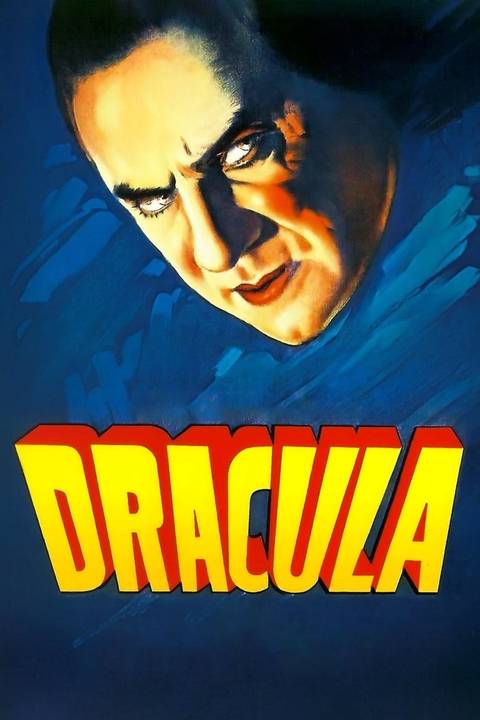
The horror novel to end all horror novels, Bram Stoker's Dracula is a classic in every sense of the word. While the tale may be somewhat familiar to many, the truth is that nearly every adaptation fundamentally misunderstands the characters. As Jonathan and Mina Harker and their allies, including Professor Abraham Van Helsing, seek to destroy the villainous vampire Count Dracula, they find themselves tasked with an impossible goal that can only be accomplished through providence itself.
As frightening as it is masterful, Dracula is well-crafted from a collection of letters, news clippings, journal entries, and other written correspondence and compiled into a narrative that the reader may feast upon as often as time allows. In one moment, Stroker evokes horrid feelings of dread and despair as Jonathan is haunted by the Count in his castle, which is only juxtaposed by the hopeful determination of the vampire hunters as they band together in their divine task. Dracula has been adapted countless times, but nothing compares to the original novel.
Dracula
Release Date February 14, 1931



 English (US) ·