Diego Pineda has been a devout storyteller his whole life. He has self-published a fantasy novel and a book of short stories, and is actively working on publishing his second novel.
A lifelong fan of watching movies and talking about them endlessly, he writes reviews and analyses on his Instagram page dedicated to cinema, and occasionally on his blog. His favorite filmmakers are Andrei Tarkovsky and Charlie Chaplin. He loves modern Mexican cinema and thinks it's tragically underappreciated.
Other interests of Diego's include reading, gaming, roller coasters, writing reviews on his Letterboxd account (username: DPP_reviews), and going down rabbit holes of whatever topic he's interested in at any given point.
Brandon Sanderson got his start back in 2005, when Tor Books published his exceptional debut novel, Elantris. Since then, he has become one of the most dominant and influential figures in modern speculative fiction, particularly prolific and downright revolutionary when it comes to his work in the fantasy genre. From his Cosmere universe to his taking over Robert Jordan's The Wheel of Time series, he's undoubtedly one of the most celebrated speculative fiction authors working today.
Plenty of things that define Sanderson's instantly recognizable style: succinct and fast-paced prose, intricately complex plotting, detailed worldbuilding that includes some of the most elaborate magic systems in the history of fantasy, and explosive climaxes are but a few such elements. It's a style that's uniquely Sanderson's own, but there are plenty of books out there that feel so much like spiritual Brandon Sanderson works that any fan of the author is virtually guaranteed to enjoy them.
'The Sword of Kaigen' (2018)
Image via M. L. Wang
In an isolated village, a teenage warrior-in-training and his mother come to question the foundation of their glorious empire after a brutal enemy invasion upends their lives. Such is the premise of M. L. Wang's self-published epic high fantasy novel The Sword of Kaigen, a deeply emotional and brutally realistic gem inspired by samurai fiction. For people who love Sanderson's standalone titles, this standalone is a must-read.
Wang's book is far darker, more brutal, and slower-paced in its first couple of hundred pages, but it so clearly shares a basic DNA with Sanderson's oeuvre that it's difficult to ignore. Much like Sanderson, Wang treats her magic system with the rigor of a natural science; and much like Sanderson, Wang's worldbuilding is in service of a hugely cinematic narrative full of riveting action scenes.
'The Thousand Names' (2013)
Image via Roc
The flintlock subgenre of fantasy is typically either set between the 17th and 19th centuries or in high fantasy worlds analogous to it, and mixes traditional magic and swords with early firearms like muskets, pistols, and cannons. Era 2 of Sanderson's Mistborn series shares elements with the flintlock subgenre that has been shaped by authors like Django Wexler, whose The Thousand Namesfollows a group fighting to reconquer the remote desert outpost that was taken by a religious rebel group.
The result of such a premise is one of the best fantasy books of the last 20 years, the first installment in Wexler's The Shadow Campaigns series. From the grueling tests of survival and cleverness that Wexler puts his characters through, to the heavily rule-bound magic system, to the strong flintlock aesthetics, there are many elements of The Thousand Names that are highly evocative of Sanderson's work.
'Wintersteel' (2020)
Image via Hidden Gnome Publishing
It's not just Wintersteel, the eighth installment in Will Wight's Cradle series: It's the entire book series that feels similar to Sanderson's work, while still remaining exquisitely unique throughout. Wintersteel finds its protagonist fighting a brutal guerrilla war as the Uncrowned King Tournament reaches its deadly climax. All of the novel's predecessors are among those fantasy books that are page-turners from start to finish, but this one is arguably the best of the bunch.
Sanderson is known for his "Sanderlanches," referring to the fact that the final section of his novels often feels like a never-ending cascade of payoffs, action, and revelations. Wintersteel is basically one entire book-length Sanderlanche, with an impeccably crafted hard magic system and a masterful interweaving of several points of view.
'Jade City' (2017)
Image via Orbit
The first novel in Fonda Lee's Green Bone Saga is the incredible Jade City, and even though fans may argue that its two sequels are substantially superior, there is arguably no book in the series that feels more Sanderson-coded than this one. Set on the island of Kekon, it's about rival crime clans fighting for control of magical jade and territory.
With her background in writing science fiction, Lee treats magic in a sort of sci-fi way, driven by abundantly clear and compelling rules, costs, and physical limitations. Add to that all of the high-stakes combat that fills the narrative (greatly inspired by the karate and kung fu that Lee holds black belts in), the wonderfully structured worldbuilding, and the flawless pacing of the plot, and there should be no room for doubt as to why so many Sanderson fans enjoy the Green Bone Saga as much as they do. A gritty, 20th-century-Asia-inspired mafia crime saga may not initially seem all that similar to Sanderson's typical high fantasy, but the similarities are enough to surprise any fan of the genre.
'The Shadow of What Was Lost' (2014)
Image via Orbit
The debut novel of Australian author James Islington was The Shadow of What Was Lost, the first book in his Licanius Trilogy. It's set twenty years after the godlike Augurs were overthrown and follows a young student who discovers that he possesses future-seeing magic right as the ancient barrier shielding the kingdom from outside threats begins to fail. Though the novel initially received only moderately positive reviews, it has only kept growing in popularity as the years have passed.
How could it not? With the deeply engaging political intrigue, the sheer number of compelling characters, the expansive world-building, and one of the best magic systems of any fantasy book from the last 15 years, The Shadow of What Was Lost really is nothing short of a masterpiece. Its layered magic system, labyrinthine puzzle-box-like plot, and ambitious scale all make it feel like a Brandon Sanderson novel, particularly filled with mind-blowing twists and surprises.
'The Black Prism' (2010)
Image via Orbit
The first installment in Brent Weeks' five-volume Lightbringer series is The Black Prism, about an emperor and religious leader who must protect a dangerous secret when an illegitimate teenage son surfaces amid a brewing civil war. Praised for its highly original color-based magic system, its level of political depth, and the enthralling complexity of its characters, The Black Prism is so irresistibly entertaining that it's practically impossible to read it and not want to immediately pick up the sequel.
Sanderson and Weeks actually splashed onto the speculative fiction scene around the same era of 2000s fantasy, and both helped greatly popularize 21st-century hard magic (a type of magic-system-writing defined by clear rules and limitations). Anyone who loved the color-based magic system from Sanderson's standalone novel Warbreaker should also love Black Prism's magic, and that's without mentioning the exquisite high-concept worldbuilding, the many big twists that fill the narrative, and the highly kinetic action.
'Master of the Five Magics' (1980)
Image via Bartizan Press
The reason why most of the books that feel like spiritual Brandon Sanderson novels come from the 21st century is because the author's work is uniquely modern in its use of hard magic, highly accessible prose, and sense of psychological realism. However, people looking for Sanderson-coded 20th-century fantasy novels needn't look any further than Lyndon Hardy's Master of the Five Magics, about a young outcast working to master all five magical disciplines of his world to save his kingdom.
It's one of the best fantasy books of the 1980s, a true pioneer in the hard magic systems that Sanderson would soon come to further revolutionize. It's charmingly nostalgic, yet its prototypical use of hard magic feels undeniably modern to the core. Where there are many fantasy books that feel like spiritual successors to Sanderson's oeuvre, Master of the Five Magics is one of those must-read gems that feel like spiritual predecessors.
'Foundryside' (2018)
Image via Random House Worlds
Foundryside, the first chapter in Robert Jackson Bennett's The Founders Trilogy, is about a high-stakes conspiracy against the powerful merchant houses who use written magic to rewrite reality, sparked by a thief who steals an important ancient artifact. Labeled by critics as "a cyberpunk novel trapped in the clothes of an epic fantasy," it should be counted as essential reading for people who love either, or both, of those subgenres.
But though it's certainly playful with its genre elements, Foundryside is undeniably a work of fantasy literature, and one that hits a remarkably similar spot as Brandon Sanderson's work, especially in comparison to Era 1 of Mistborn. Called "Scriving," the book's writing-based magic system is one of the best of any book from the last decade, and the engrossing heist plot feels highly reminiscent of Mistborn's masterful inaugural chapter, The Final Empire.
'The Will of the Many' (2023)
Image via Gallery / Saga Press
Almost a decade after The Shadow of What Was Lost marked his remarkable debut, James Islington published The Will of the Many, one of the best fantasy books of the 2020s so far. This piece of epic fantasy is about an orphaned prince hiding in an empire inspired by the Roman Republic, who infiltrates a prestigious academy in order to bring down the ruling hierarchy from within.
Critics have specifically compared The Will of the Many to Sanderson's work over the years, with particular praise for its inventive magic system, structurally perfect worldbuilding, and flawlessly paced plotting. It's the first book in Islington's ongoing Hierarchy series, complete with a good ol' Sanderlanche-style climax and wonderfully methodical prose.
'Promise of Blood' (2013)
Image via Orbit
Brian McClellan began writing when he was a teenager, starting at Wheel of Time role-playing websites. When he attended Brigham Young University to major in English, he took writing classes taught by Brandon Sanderson himself. As such, it should come as absolutely no surprise that his debut novel, Promise of Blood, feels so Sanderson-coded. In it, when a military field marshal overthrows his king in a violent coup, a brutal civil war and a conflict with neighboring nations explode onto the scene, accidentally awakening an ancient god of wrath.
The first book in McClellan's Powder Mage trilogy is one of the clearest and most undeniable spiritual siblings to Sanderson's work in all of modern fantasy, and just as much of a masterpiece as many of Sanderson's own best books. With its two impeccably-constructed hard magic systems, fast-paced and highly cinematic action, political intrigue, and brilliant use of a multi-POV structure, it checks virtually every box that any Sanderson fan could possibly expect.

 Image via Fonda Lee

 Image via M. L. Wang
 Image via Roc
 Image via Hidden Gnome Publishing
 Image via Orbit
 Image via Orbit
 Image via Orbit
 Image via Bartizan Press
 Image via Random House Worlds
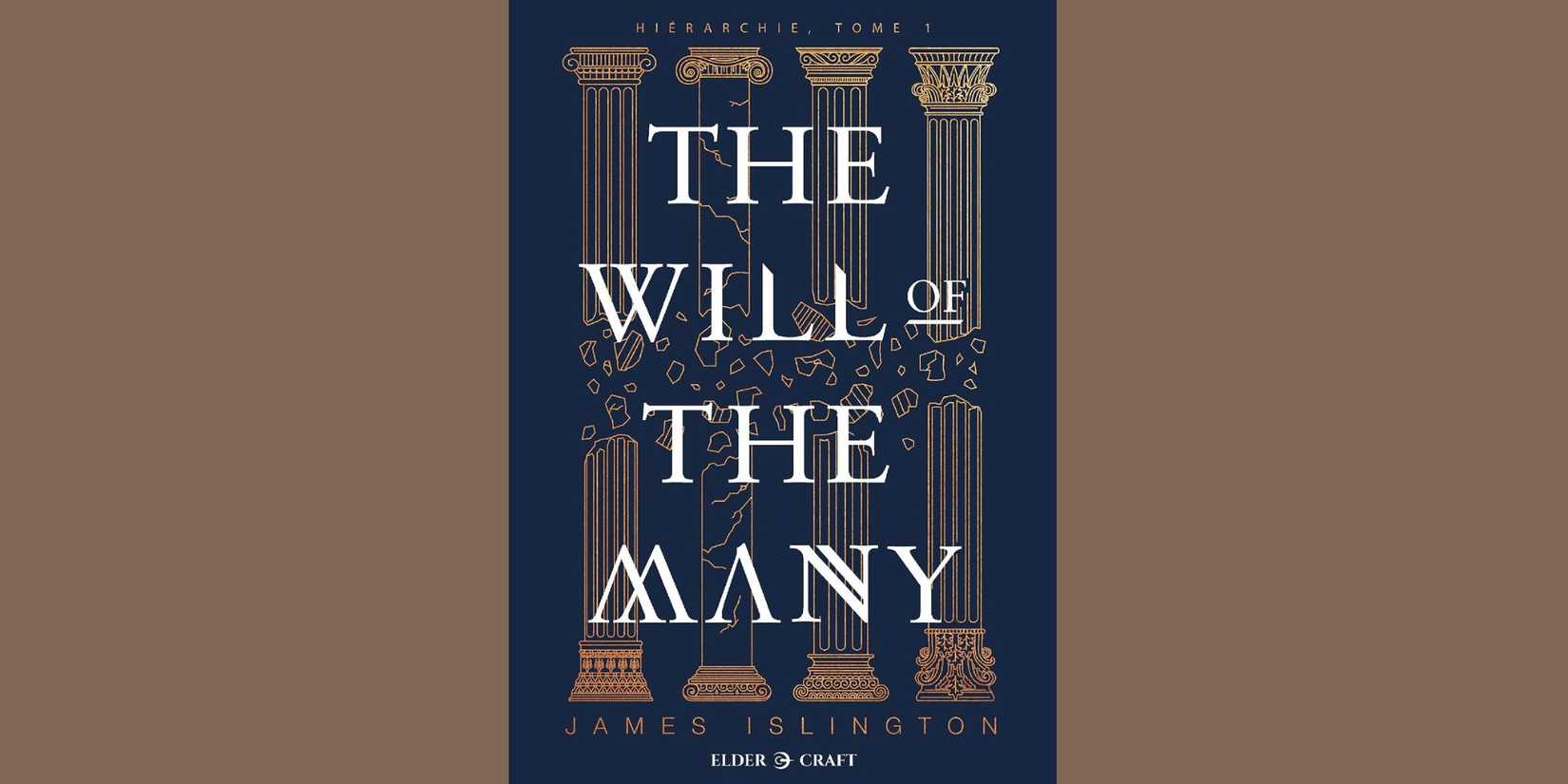 Image via Gallery / Saga Press
 Image via Orbit







 English (US) ·