
Apple TV has a strong roster of shows that ranges across genres and ideas. Some of its newest additions, like Murderbot, The Studio, and Pluribus, promise to be legendary in the grand scheme of things, rising in the ranks of binge-worthy shows that have multiple seasons. For now, though, they're still one-season wonders, and we can't really say they get better "every season."
The Apple TV shows that did get better with each new season are long-lasting, foundational, if not seminal, pieces of television, diving deep into their own lore with a good budget, steady cast, and trust in the process. These are also genre-diverse, from sci-fi epics to buddy comedies, and they are the ten binge-worthy Apple TV shows that got better every season.
10 'Bad Sisters' (2022–2024)
 Image via Apple TV
Bad Sisters is an Irish black comedy/crime/mystery series, and it's packed with incredible talent, funny jokes, and great storytelling. The show was developed by Sharon Horgan, and Season 1 was inspired by the Belgian series Clan, while Season 2 carves its own path, introducing the legendary Fiona Shaw as a vicious and dangerous new antagonist determined to expose the truth. Both seasons are a lively, touching portrait of sisterhood, complicity, and the extraordinary lengths women go to to protect one another.
Set in Dublin, Bad Sisters follows five Garvey sisters—Eva, Grace, Ursula, Bibi, and Becka—whose bonds and nerves are tested when Grace's monstrous husband, John Paul (Claes Bang), turns up dead. The story unfolds in two ways, following a present-day life insurance investigation and a series of darkly comic flashbacks revealing the sisters' many failed attempts to get rid of John Paul. This type of structure continues to give with every episode, answering one question while raising three more. Season 2 is a bit more strained but still worth the watch, with the show's emotional core staying firmly rooted in the sisters' bond. Bad Sisters will make you laugh at something that should be horrifying, showing how humor holds a place in our lives that is beyond cheap laughs.
9 'Trying' (2020–Present)
 Image by Apple TV+
With four completed seasons and the fifth one in production, Trying is one of the longest-lasting Apple TV shows, yet one of the rare few that have been heard of. Trying is mostly recommended through word-of-mouth, and whoever gets into it finds it hard to drop, which is made even easier with its half-hour episodes, making each season feel like it was designed to be perfectly bingeable. Trying possesses touching emotional honesty, a trick it uses greatly to not just tell a moving story of two people trying to start a family, but to sneak up on you and make you a lifelong fan.
Trying follows Nikki (Esther Smith) and Jason (Rafe Spall), a lovable but slightly chaotic London couple in their thirties, who discover they are unable to conceive a child. After exhausting all possible options, they decide to adopt—only to find the process more bewildering, emotionally brutal, and unexpectedly funnier than anything they've ever faced. Their journey through the UK adoption system unfolds alongside a wonderfully dysfunctional circle of friends and family; Smith and Spall have incredible chemistry, and the series grows in depth and creative ambition with each season. Trying Season 4 includes a significant time jump, which is exactly the type of bold, creative gamble that most shows never take. If you haven't started it yet, set aside a weekend because you'll probably go through all four seasons in no time.
8 'Shrinking' (2023–Present)
 Image via Apple TV
Shrinking was created by Bill Lawrence, the man responsible for Ted Lasso and Scrubs (among other shows), but his co-creators are an unusual pairing—Jason Segel is one, and he also stars as the lead in Shrinking, but the other is Brett Goldstein, who plays the moody footballer with a heart of gold, Roy Kent, in Ted Lasso. This trio gives Shrinking something genuinely rare—it's a show that makes you feel better after watching it. The comedy is witty and character-driven, while the emotional moments have real weight.
Shrinking follows Jimmy Laird (Segel), a therapist and father who is barely functioning after his wife's sudden death. Unable to process his grief in a healthy manner, he starts doing the professionally unethical thing: telling his patients exactly what he thinks and inserting himself directly into their lives. His colleagues, the gruff veteran therapist Paul Rhoades (Harrison Ford) and the sharp, empathetic Gaby (Jessica Williams), are both horrified and inspired by his unconventional approach. The seasons meaningfully build on one another, always providing new perspectives on grief, healing, and love, and demonstrating that the show still has more emotional territory to explore.
7 'Foundation' (2021–Present)
 Image via Apple TV+
Foundation is, simply stated, one of the most visually breathtaking shows on television. Its production design, visual effects, and scope can't be described as anything less than cinematic. It's also a brilliant example of a show that truly gets better with each season: it learned from its early growing pains by tightening the storytelling, raising the stakes and making them even more personal, and giving the cast (especially Lee Pace) hands untied to go iconic and inimitable in their performances. Foundation is a show that requires patience to fully appreciate, but once you're hooked, it's a captivating experience.
Based on Isaac Asimov's iconic novel series, Foundation unfolds in a galaxy-spanning future world where mathematician Hari Seldon (Jared Harris) predicts the fall of a galactic empire through his science of psychohistory. Exiled with a group of scholars to the edge of the galaxy, they establish the Foundation—a beacon of knowledge intended to shorten the coming dark age. The show spans centuries, following multiple storylines simultaneously, from Seldon's disciples across generations to the Empire's rulers as they grapple with Seldon's prophecy. With Season 4 confirmed and a story planned across many seasons, Foundation promises to be a generational commitment worth making.
6 'The Morning Show' (2019–Present)
 Image via Apple TV
The Morning Show is the grandparent of Apple shows, being one of the first to be commissioned by the streamer. While it's popular, it feels like it could have more viewers overall; beyond its star-studded main cast that gives the show its best performances, The Morning Show has a genuine knack for making large, abstract cultural debates feel urgent and personal. Using its broadcast news setting, the show puts a lens on power, accountability, and complicity, with particular arcs tackled in every season, from the Me Too movement and COVID to cybersecurity and AI.
The Morning Show puts a spotlight on American breakfast television when beloved anchor Mitch Kessler (Steve Carell) is fired following sexual misconduct allegations. His longtime co-anchor, Alex Levy (Jennifer Aniston), scrambles to protect her position and shape the narrative, but the network introduces the volatile outsider Bradley Jackson (Reese Witherspoon) as a potential replacement, causing the two to butt heads and feel friction. Aniston and Witherspoon deliver heartwarming and simultaneously infuriating characters we love to cheer for; The Morning Show is full of heart and real-life weight, and it's a perfect binge-watch.
Collider Exclusive · Sci-Fi Survival Quiz Which Sci-Fi World Would You Survive? The Matrix · Mad Max · Blade Runner · Dune · Star Wars
Five universes. Five completely different ways the future went wrong — or sideways, or up in flames. Only one of them is the world your instincts were built for. Eight questions will figure out which dystopia, galaxy, or desert wasteland you'd actually make it out of alive.
💊The Matrix
🔥Mad Max
🌧️Blade Runner
🏜️Dune
🚀Star Wars
TEST YOUR SURVIVAL →
01
You sense something is deeply wrong with the world around you. What do you do? The first instinct is often the truest one.
APull on every thread until I understand the system — then figure out how to break it. BStop asking questions and start stockpiling — food, fuel, weapons. Questions don't keep you alive. CKeep my head down, observe carefully, and trust no one until I know who's pulling the strings. DStudy the patterns. Every system has a rhythm — learn it, and you learn how to survive it. EFind the people fighting back and join them. You can't fix a broken galaxy alone.
NEXT QUESTION →
02
In a world of scarcity, what resource do you guard most fiercely? What we protect reveals what we believe survival actually requires.
AKnowledge. If you understand the system, you don't need resources — you can generate them. BFuel. Everything else — movement, power, escape — runs on it. CTrust. In a world of fakes and informants, a truly reliable ally is rarer than any commodity. DWater. And after water, information — the two things empires are truly built on. EShips and credits. The galaxy is big — you survive it by being able to move through it freely.
NEXT QUESTION →
03
What kind of threat keeps you up at night? Fear is useful data — if you're honest about what you're actually afraid of.
AThat reality itself is a lie — that everything I experience has been constructed to keep me compliant. BA raid. No warning, no mercy — just the roar of engines and then nothing left. CBeing identified. Once someone with power decides you're a problem, you're already out of time. DBeing outmanoeuvred — losing a political game I didn't even know I was playing. EThe Empire tightening its grip until there's nowhere left to run.
NEXT QUESTION →
04
How do you deal with authority you don't trust? Every dystopia has a power structure. Your approach to it determines everything.
ASubvert it from the inside — learn its rules well enough to weaponise them against it. BIgnore it and stay out of its reach. The further from any power structure, the better. CAppear to comply while doing exactly what I need to do. Visibility is the enemy. DManoeuvre within it carefully. You can't beat a system you refuse to understand. EResist openly when I have to. Some things are worth the risk of being seen.
NEXT QUESTION →
05
Which environment could you actually endure long-term? Survival isn't just tactical — it's physical, psychological, and very much about where you are.
AUnderground bunkers and server rooms — cramped, artificial, but with access to everything that matters. BOpen wasteland — brutal sun, no shelter, constant movement. At least the threat is honest. CA dense, rain-soaked city where you can disappear into the crowd and nobody asks questions. DMerciless desert — extreme heat, no water, and something enormous living beneath the sand. EThe fringe — backwater planets and busy spaceports where the Empire's attention rarely reaches.
NEXT QUESTION →
06
Who do you want in your corner when things fall apart? The company you keep is the clearest signal of who you actually are.
AA tight crew of believers who've seen behind the curtain and have nothing left to lose. BOne or two people I'd trust with my life. Any more than that and someone talks. CNobody, ideally. Alliances are liabilities. I work alone unless I have no choice. DA community bound by shared hardship and mutual survival — people who need each other to last. EA ragtag team with wildly different skills and total commitment when it counts.
NEXT QUESTION →
07
Where do you draw the line — if you draw one at all? Every survivor eventually faces a moment that tests what they're actually made of.
AI won't harm the innocent — even the ones who'd report me without hesitation. BI do what I have to to protect the people I've chosen. Everything else is negotiable. CThe line shifts depending on who's asking and what's at stake. DI draw a long-term line — nothing that compromises my people's future, even if it'd help now. ESome lines, once crossed, can't be uncrossed. I know which ones they are.
NEXT QUESTION →
08
What would actually make survival worth it? Staying alive is one thing. Having a reason to is another.
AWaking others up — dismantling the illusion so no one else has to live inside it. BFinding somewhere — or someone — worth protecting. A reason to keep moving. CAnswers. Understanding what I am, what any of this means, before time runs out. DLegacy — shaping the future in a way that outlasts me by generations. EFreedom — for myself, for others, for every world still living under someone else's boot.
REVEAL MY WORLD →
Your Fate Has Been Calculated You'd Survive In…
Your answers point to the world your instincts were built for. This is the universe your temperament, your survival instincts, and your particular brand of stubbornness were made for.
The Matrix
You took the red pill a long time ago — probably before anyone offered it to you. You're a systems thinker who can't help but notice the seams in things.
- You're drawn to understanding how the system works before figuring out how to break it.
- You'd find the Resistance, or it would find you — your instinct for spotting constructed realities is the machines' worst nightmare.
- You function best when you have access to information and the freedom to act on it.
- The Matrix built an airtight prison. You'd be the one probing the walls for the door.
Mad Max
The wasteland doesn't reward the clever or the well-connected — it rewards those who are hard to kill and harder to break. That's you.
- You don't need comfort, community, or a cause larger than the next horizon.
- You need a vehicle, a clear threat, and enough fuel to outrun it — and you're good at all three.
- You are unsentimental enough to survive that world, and decent enough — just barely — to be something more than another raider.
- In the wasteland, that distinction is everything.
Blade Runner
You'd survive here because you know how to exist in moral grey areas without losing yourself completely.
- You read people accurately, keep your circle small, and ask the questions others prefer not to answer.
- In a city where humanity is a legal designation rather than a feeling, you hold onto something that keeps you functional.
- You're not a hero. But you're not lost, either.
- In Blade Runner's world, that distinction is everything.
Dune
Arrakis is the most hostile environment in the known universe — and you are precisely the kind of person it rewards.
- Patience, discipline, and political awareness are your core strengths — and on Arrakis, they're survival tools.
- You understand that the long game matters more than any single victory.
- Others come to Dune and are consumed by it. You'd learn its logic and earn its respect.
- In time, you wouldn't just survive Arrakis — you'd begin to reshape it.
Star Wars
The galaxy far, far away is vast, loud, and in a constant state of violent political upheaval — and you wouldn't have it any other way.
- You find meaning in being part of something larger than yourself — a cause, a crew, a rebellion.
- You'd gravitate toward the Rebellion, or the fringes, or whatever pocket of the galaxy still believes the Empire's grip can be broken.
- You fight — not because you have to, but because standing aside isn't something you're capable of.
- In Star Wars, that willingness is what makes all the difference.
↻ RETAKE THE QUIZ
5 'Silo' (2023–Present)
 Image via Apple TV
Silo is a dystopian sci-fi drama that, despite having only two seasons so far, is incredibly worthy of a binge-watch and promises to be bigger and better in the upcoming two seasons that were announced. Silo was signed as a four-season idea, and it's conceived to end with the conclusion of Season 4, giving viewers the rare assurance of a planned and, hopefully, satisfying ending. You'll love watching it episode after episode because it focuses on character development, though it also owes its outstanding quality to the atmosphere and set design, which are so immersive that you can physically feel the claustrophobia of the silo.
Silo was adapted from Hugh Howey's bestselling Wool trilogy, and it's set in a post-apocalyptic future where the last 10,000 people on Earth live in a miles-deep underground silo. No one knows why it was built, who built it, or what truly happened to the surface above; many learn that asking those questions carries fatal consequences. Rebecca Ferguson stars as Juliette Nichols, a brilliant mechanical engineer who starts unveiling the mystery after her boyfriend is killed under suspicious circumstances and tumbles into a conspiracy that reaches the very top of the silo's ruthless hierarchy. Season 2 dramatically expands the scope, and Ferguson is one of the most compelling presences on television, making Juliette a protagonist you'd follow anywhere.
4 'Ted Lasso' (2020–Present)
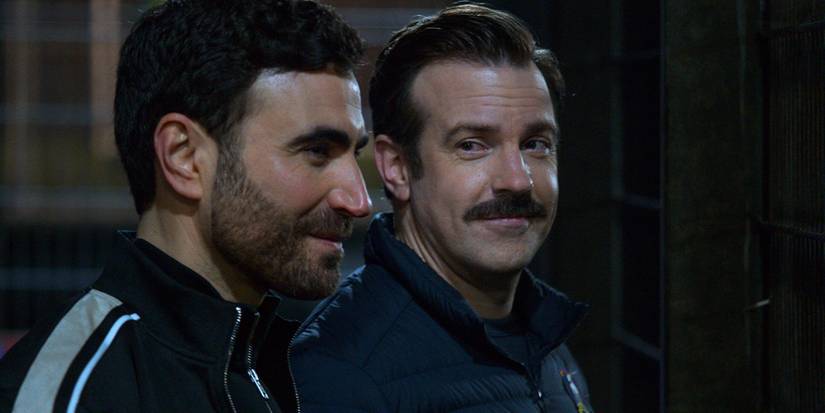 Image via Apple TV+
One of the most beloved Apple TV shows is Ted Lasso, the streamer's first genuine cultural phenomenon; it won back-to-back Emmys for Outstanding Comedy Series for its first two seasons and became a global cornerstone of optimistic, heartfelt comedy that loves its characters. Ted Lasso manages something nearly impossible: being wildly funny and emotionally relatable at the same time, with characters so well-done and beautiful that even those minor ones feel fully alive. It is the rare show you can recommend with confidence to almost anyone, sports fan or not, because it works just as well on all levels. Season 2 in particular is widely considered one of the finest seasons of television in the 2020s.
Jason Sudeikis stars as the titular character Ted Lasso, a relentlessly optimistic American college football coach with zero soccer experience, hired to manage AFC Richmond, a struggling English Premier League club. While new owner Rebecca Welton (Hannah Waddingham) hires Lasso as a form of sabotage after gaining her husband's club in their divorce, she is stumped by Ted's high emotional intelligence and irresistible charm. The show evolves through emotional arcs across seasons: Season 1 is about earning trust; Season 2 deepens the psychological landscape by focusing on mental health; and Season 3 gives conclusions and bravery to its ensemble. Wholesome, profound, and superbly entertaining, Ted Lasso is the show to binge-watch whenever.
3 'For All Mankind' (2019–Present)
 Image via Apple TV
No other show on television covers as much literal and figurative ground as For All Mankind. The show functions simultaneously as a sci-fi epic, political thriller, domestic drama, and meditation on ambition and sacrifice. Created by Ronald D. Moore (Battlestar Galactica), this ensemble effort with a beautiful production value was conceived from conversations Moore had with a former astronaut, discussing the possibilities of the Soviet Union having won the Space Race. This alternate history series is another veteran of Apple TV that feels heavily underrated but is a gem to watch.
For All Mankind imagines an alternate timeline in which the Soviet Union beats the United States to the Moon in 1969, sparking a perpetual Space Race. Each season jumps roughly a decade into the future; the beginning covers the chaotic late 1960s and '70s as a desperate NASA scrambles to keep up with the USSR; later, the show escalates to an ideological Cold War standoff in the 1980s, races to Mars in the early '90s, and is set in a Martian colony hit by labor politics and class conflict in the 2000s. The time-jump structure means every new season arrives with fresh characters, redefined power dynamics, and a world shaped by the consequences of the one before it; this interesting structure keeps the series fresh throughout, always keeping viewers on their toes.
2 'Slow Horses' (2022–Present)
 Image via Apple TV
Slow Horses is one of the rarest things on television: a show that obviously gets better with each new installment. Slow Horses is genius, though unusual in tone—tense, hilarious, and moving, caring deeply for its cast of misfits. The best part is that, unlike most prestige dramas, Slow Horses doesn't keep viewers waiting years between installments; the production shoots two seasons back-to-back, each telling a self-contained story by adapting a new Mick Herron novel and delivering a fresh espionage thriller with greater personal stakes and a wonderfully dark satire.
Based on Mick Herron's acclaimed Slough House novel series, Slow Horses follows the dysfunctional MI5 agents of Slough House. Slough House is the agency's dumping ground, where disgraced intelligence operatives are sent to push papers until they resign or fade away. In charge of Slough House is Jackson Lamb (Gary Oldman), a genius-level agent who is also ridiculously unkempt, obnoxious, and possibly the most compelling character on television. Kristin Scott Thomas is excellent as the icy-cold MI5 chief Diana Taverner, and Jack Lowden provides the show its moral compass as the earnest, constantly outdone River Cartwright. Slow Horses is one of the most enjoyable ongoing binges on television, and Oldman is at the top of his already extraordinary career.
1 'Severance' (2022–Present)
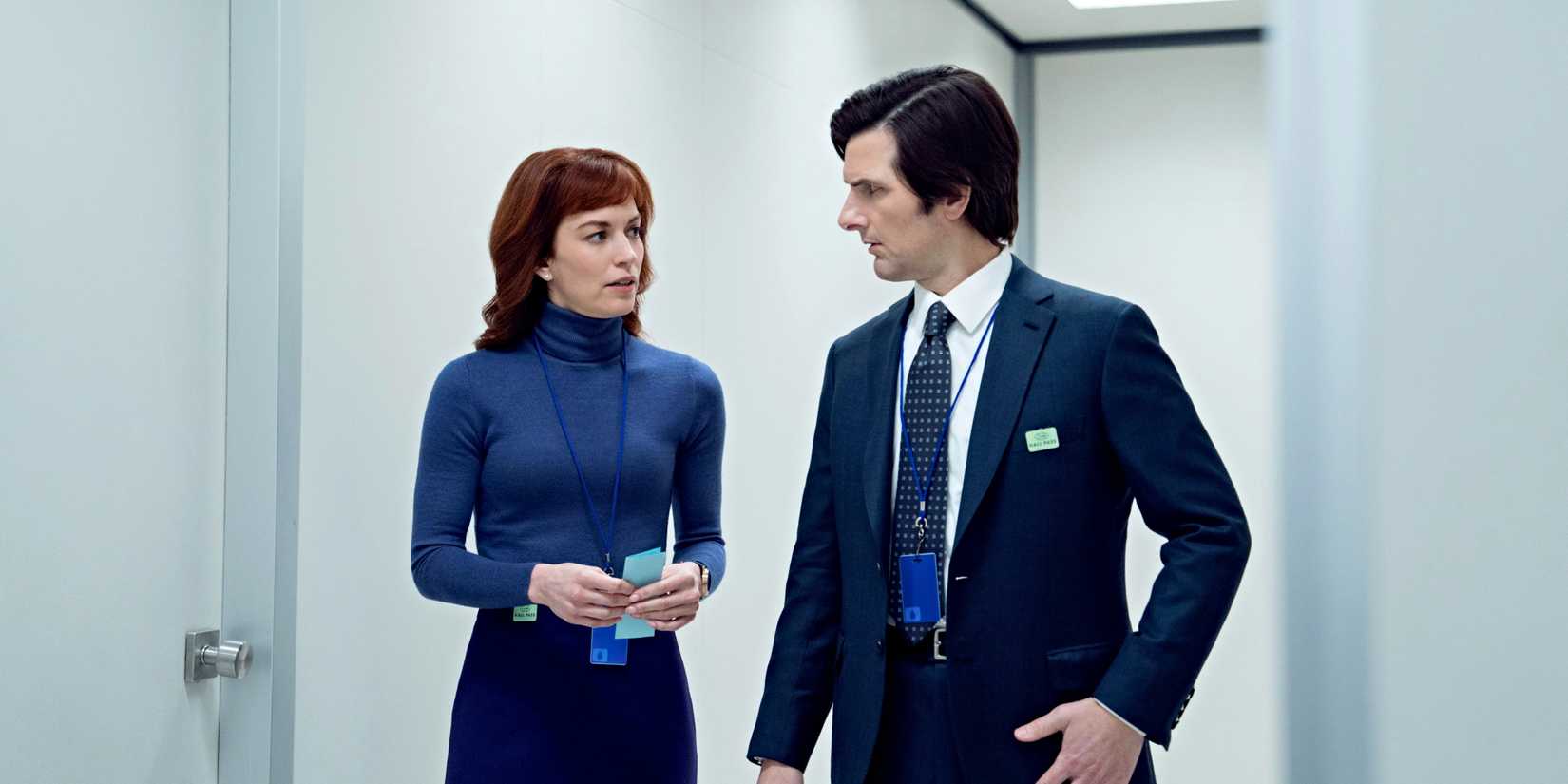 Image via Apple TV
There's nothing quite like Severance. Its corporate dystopia, which is equal parts Kafka, Kubrick, and Office Space, is both a surreal nightmare and a satirical take on modern workplace culture. The show is visually stunning, narratively perfect, and performed beautifully by each of its cast members. And despite the story having only two seasons so far, it's incredibly binge-worthy and rewatchable, chock-full of hidden gems, symbolism, and Easter Eggs to keep you entertained until Seasons 3 and 4. No streaming original has escalated in ambition, cultural impact, and quality more dramatically across its seasons.
Severance follows Mark Scout (Adam Scott), an employee at the mysterious Lumon Industries, who undergoes a radical surgical procedure that divides his consciousness into two. His "innie"—the version of him that exists only inside Lumon's sterile, retro-futuristic offices—has no memory of his outside life, while his "outie" arrives at work each morning and immediately ceases to exist within. When a new employee, Helly R. (Britt Lower), arrives and begins violently resisting her own severance, Mark and his colleagues Dylan (Zach Cherry) and Irving (John Turturro) are drawn into a conspiracy that challenges everything they believe about Lumon and themselves. Identity, philosophy, love, grief—Severance takes so many relatable motifs and turns the show into a relatable piece of art, one that makes us laugh, cry, and think.
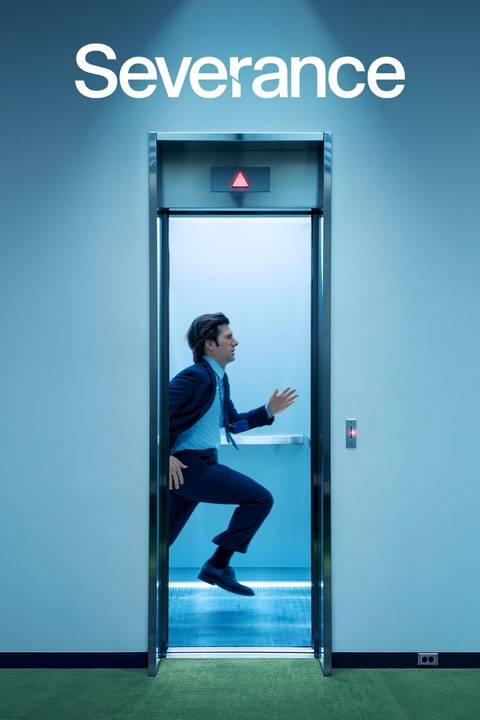
Severance
Release Date February 17, 2022
Network Apple TV
Showrunner Dan Erickson, Mark Friedman

![After 4 Years, Netflix's 'Gears of War' Movie Is Officially Happening [Exclusive]](https://static0.colliderimages.com/wordpress/wp-content/uploads/2026/04/gears-of-war.jpg?w=1600&h=900&fit=crop)


 English (US) ·