
 Image via Warner Bros. Pictures
Published Aug 13, 2026, 8:17 AM EDT
Diego Pineda has been a devout storyteller his whole life. He has self-published a fantasy novel and a book of short stories, and is actively working on publishing his second novel.
A lifelong fan of watching movies and talking about them endlessly, he writes reviews and analyses on his Instagram page dedicated to cinema, and occasionally on his blog. His favorite filmmakers are Andrei Tarkovsky and Charlie Chaplin. He loves modern Mexican cinema and thinks it's tragically underappreciated.
Other interests of Diego's include reading, gaming, roller coasters, writing reviews on his Letterboxd account (username: DPP_reviews), and going down rabbit holes of whatever topic he's interested in at any given point.
Sign in to your Collider account
Since the very birth of cinema as a storytelling medium, the Western genre has been one of the most popular and prolific. After all, these are stories that pretty much anyone and everyone can find compelling if done right: exciting stories of crime, freedom, action, and righteous heroes making sure that outlaws are forced to face justice.
Whether it's a genre-defining Hollywood classic like The Searchers, a modern neo-Western like the Oscar-winning No Country for Old Men, or even a non-American masterpiece like The Good, the Bad and the Ugly, the best Western movies in film history are all essential viewing for those interested in understanding the history of one of cinema's most important and prominent genres.
10 'Django Unchained' (2012)
Though the 20th century was the one that produced the vast majority of history's greatest Western films, having seen the peak of the genre's popularity, there have been plenty of fantastic Westerns throughout the 21st century. And of course, who could be responsible for one of the best if not Quentin Tarantino, a filmmaker who has always been heavily inspired by the genre? It is, of course, Django Unchained.
The Western DNA has always been deeply baked into Tarantino's style, but nowhere does he play with those influences more gleefully than in Django Unchained. One of the most perfect Westerns since 2000, it's an impeccably-performed and perfectly-directed gem executed with fiery style. It's inventive, it's pulpy, it's action-packed, and it's incredibly entertaining from beginning to end.
9 'Rio Bravo' (1959)
 Image via Warner Bros.
Howard Hawks was one of the greatest filmmakers of Hollywood's Golden Age, a director with such a consistent vision that he was essential to the birth of auteur theory. Rio Bravo was one of his last films, and it still remains one of his very best. It's one of John Wayne's best Westerns, a film so great that Hawks later recycled the idea twice, with El Dorado and Rio Lobo.
A masterclass in how to craft an intensely character-driven Western, Rio Bravo is a classic that contains pretty much every single quintessential Western trope, and that's precisely why it's such a must-see. That may make it sound unoriginal, but the wonders that Hawks does with those traditional tropes over the course of an enthralling two-and-a-half hours makes it clear why Rio Bravo has aged as well as it has.
8 'The Searchers' (1956)
 Image via Warner Bros. Pictures
Many people's favorite John Wayne classic is John Ford's The Searchers, a sort of proto-revisionist Western so self-analytical and meta that it's shocking that it was produced during Hollywood's Golden Age. Never did that period of film history see a Western so willing to not just analyze, but outright critique some of the negative elements of what the genre had come to represent up to that point.
Indeed, The Searchers is all about the moral grayness of frontier justice, the destructive nature of racism, and the tragedy of the traditional Western hero that is capable of saving civilization but not of living within it. Culminating in one of the most perfect final movie shots of the 20th century, it's a masterpiece that even those who think they don't like Westerns should check out at least once in their lives.
7 'No Country for Old Men' (2007)
 Image via Miramax Films
Joel and Ethan Coen are another pair of modern filmmakers who have always worn their Western influences on their sleeves, and resulting in some of the best Western and Western-coded films of their time. One such film is No Country for Old Men, a movie so phenomenal that it made its way to an admirable four Academy Award victories, including Best Picture.
What makes No Country such a special neo-Western is the way it cleverly and subtly blends and juxtaposes neo-Western and neo-noir aesthetics, all in the favor of a story about aging and the dark side of progress. There wasn't a much more perfect possible combination of genres to tell that sort of story, resulting in one of the most perfect thrillers released since 2000.
6 'Unforgiven' (1992)
 Image via Warner Bros.
Since his debut in the Western genre all the way back in the mid-'60s, Clint Eastwood rapidly established himself as one of the genre's poster boys. And in the early '70s, Eastwood also established himself as one of Westerns' most prominent directors. That journey culminated in the Best Picture Oscar-winning Unforgiven, far and away one of the most important revisionist Westerns ever made.
Featuring what's arguably Eastwood's best performance and best direction in any Western, Unforgiven exposes the moral nuances of the archetypal Western hero and explores the ugliness of the violence that has always been inherent to the genre. It's one of the most perfect Western movies of all time, a dissection of the Wild West that's still unlike anything else the genre has ever produced.
Collider Exclusive · Oscar Best Picture Quiz
Which Oscar Best Picture
Is Your Perfect Movie?
Parasite · Everything Everywhere · Oppenheimer · Birdman · No Country
Five Oscar Best Picture winners. Five completely different visions of what cinema can be — and what it can do to you. One of them is the film that was made for the way your mind works. Ten questions will figure out which one.
🪜Parasite
🌀Everything Everywhere
☢️Oppenheimer
🐦Birdman
🪙No Country for Old Men
FIND YOUR FILM →
01
What kind of film experience do you actually want? The best movies don't just entertain — they leave something behind.
ASomething that pulls the rug out — that makes me think I'm watching one kind of film and then reveals I'm watching another entirely. BSomething overwhelming — funny, sad, absurd, and genuinely moving, all at once. CSomething grand and weighty — a film that makes me feel the full scale of what I'm watching. DSomething formally daring — a film that pushes what cinema can even do. ESomething lean and relentless — pure tension with no wasted frame.
NEXT QUESTION →
02
Which idea grabs you most in a film? Great films are driven by a central obsession. What's yours?
AClass, inequality, and what people are willing to do when desperation meets opportunity. BIdentity, family, and the chaos of trying to hold your life together when everything is falling apart. CGenius, moral responsibility, and the catastrophic weight of a decision you can never take back. DEgo, legacy, and the terror of becoming irrelevant while you're still alive to watch it happen. EEvil, chance, and whether moral order actually exists or if we just tell ourselves it does.
NEXT QUESTION →
03
How do you like your story told? Form is content. The way a story is shaped changes what it means.
AGenre-twisting — I want it to start in one lane and migrate into something completely different. BMaximalist and genre-blending — comedy, action, drama, sci-fi, all in one ride. CEpic and non-linear — cutting between timelines, building a mosaic of cause and consequence. DA single unbroken flow — I want to feel like I'm living it in real time, no cuts to safety. ESpare and precise — every scene doing exactly what it needs to do and nothing more.
NEXT QUESTION →
04
What makes a truly great antagonist? The opposition defines the protagonist. What kind of opposition fascinates you?
AA system — invisible, structural, and almost impossible to fight because it has no single face. BThe self — the ways we sabotage, abandon, and fail the people we love most. CHistory — the unstoppable momentum of events that no single person can stop or redirect. DThe industry — the machinery of culture that chews up talent and spits out irrelevance. EPure, implacable evil — a force so certain of itself it becomes almost philosophical.
NEXT QUESTION →
05
What do you want from a film's ending? The final note is the one that lingers. What do you want it to sound like?
AShock and inevitability — a conclusion that recontextualises everything that came before it. BEarned emotion — I want to cry, laugh, and feel genuinely hopeful, even if the world is a mess. CDevastation and grandeur — an ending that makes me sit in silence for a few minutes after. DAmbiguity — something that leaves enough open that I'm still thinking about it days later. EBleakness — an honest refusal to pretend the world is tidier than it actually is.
NEXT QUESTION →
06
Which setting pulls you in most? Where a film takes place shapes everything — mood, stakes, what's even possible.
AA gleaming modern city with a hidden underside — beauty masking rot, wealth masking desperation. BA collapsing suburban life that opens onto something infinite — the multiverse of a single ordinary person. CThe corridors of power and science at a world-historical turning point — where decisions echo for decades. DThe grimy, alive chaos of New York and Hollywood — fame as both destination and trap. EVast, indifferent landscape — desert and highway where violence arrives without warning or reason.
NEXT QUESTION →
07
What cinematic craft impresses you most? Every great film has a signature — a technical or artistic element that makes it unmistakable.
AProduction design and mise-en-scène — every frame composed to carry meaning beneath the surface. BEditing and tonal control — the ability to move between registers without losing the audience. CScore and sound design — music that becomes inseparable from the dread and awe of what you're watching. DCinematography as performance — the camera not recording events but participating in them. ESilence and restraint — what's left unsaid and unshown doing more work than any dialogue could.
NEXT QUESTION →
08
What kind of main character do you root for? The protagonist is the lens. Who you choose to follow says something about you.
ASomeone smart and resourceful who makes increasingly dangerous decisions under pressure. BSomeone overwhelmed and ordinary who turns out to be capable of something extraordinary. CA brilliant, tortured figure whose gifts and flaws are inseparable from each other. DA self-destructive artist whose ego is both their superpower and their undoing. EA quiet, principled person trying to make sense of a world that has stopped making sense.
NEXT QUESTION →
09
How do you feel about a film that takes its time? Pace is a choice. Some films sprint; others let tension accumulate slowly, deliberately.
AI love a slow build when I know the payoff is going to be seismic — patience for a devastating reveal. BGive me relentless momentum — I want to feel breathless and emotionally spent by the end. CEpic runtime doesn't scare me — if the material demands three hours, give me three hours. DI want it to feel propulsive even when nothing is technically happening — restless energy throughout. EDeliberate and unhurried — I want dread to accumulate in the spaces between the action.
NEXT QUESTION →
10
What do you want to feel walking out of the cinema? The best films leave a mark. What kind of mark do you want?
AUnsettled — like I've just seen something I can't fully explain but can't stop thinking about. BMoved and energised — like the film reminded me what actually matters and gave me something to hold onto. CHumbled — like I've been in the presence of something genuinely important and overwhelming. DExhilarated — like I've just seen cinema doing something it's never quite done before. EHaunted — like a cold, quiet dread that stays with me for days.
REVEAL MY FILM →
The Academy Has Decided Your Perfect Film Is…
Your answers have pointed to one Oscar Best Picture winner above all others. This is the film that was made for the way your mind works.
Parasite
You are drawn to films that operate on multiple levels simultaneously — that begin in one genre and quietly, brilliantly migrate into another. Bong Joon-ho's Parasite is a film about class, desire, and the architecture of inequality that manages to be darkly funny, deeply suspenseful, and genuinely shocking across a single extraordinary running time. Your instinct is for cinema that hides its true intentions until the moment it's ready to reveal them. Parasite is exactly that — a film that rewards close attention and punishes assumptions, right up to its devastating final image.
Everything Everywhere All at Once
You want it all — and this film gives you all of it. The Daniels' Everything Everywhere All at Once is one of the most maximalist films ever made: action comedy, multiverse sci-fi, family drama, existential crisis, and a genuinely earned emotional core that sneaks up on you amid the chaos. You are someone who responds to ambition, who doesn't want cinema to choose between being entertaining and being meaningful. This film refuses that choice entirely. It is overwhelming by design, and its overwhelming nature is precisely the point — because the feeling of being crushed by infinite possibility is exactly what it's about.
Oppenheimer
You are drawn to cinema on a grand scale — films that understand history not as a backdrop but as a force, and that place their characters inside that force and watch what happens. Christopher Nolan's Oppenheimer is a film about the terrifying gap between what we can do and what we should do, told with the full weight of one of the most consequential moments in human history behind it. You want your films to feel important without feeling self-important — to earn their ambition through sheer craft and the gravity of their subject. Oppenheimer does exactly that. It is enormous, complicated, and refuses easy comfort.
Birdman
You are drawn to films that foreground their own construction — that make the how of the filmmaking part of the what it's about. Alejandro González Iñárritu's Birdman, shot to appear as a single continuous take, is cinema examining itself through the cracked mirror of a fading actor's ego. You respond to formal daring, to the feeling that a film is doing something that probably shouldn't be possible. Michael Keaton's performance and Emmanuel Lubezki's restless camera create something genuinely unlike anything else — a film that is simultaneously about creativity, relevance, self-destruction, and the impossibility of ever truly knowing if your work means anything at all.
No Country for Old Men
You are drawn to cinema that trusts silence, that refuses to explain itself, and that treats dread as a form of meaning. The Coen Brothers' No Country for Old Men is a film about the arrival of a new kind of evil — implacable, arbitrary, and utterly indifferent to the moral frameworks we use to make sense of the world. It is one of the most formally controlled films ever made, and its controlled restraint is what makes it so terrifying. You want your films to haunt you, not comfort you. You are not interested in resolution if resolution would be dishonest. No Country for Old Men is honest in a way that most cinema never dares to be.
↻ RETAKE THE QUIZ
5 'The Man Who Shot Liberty Valance' (1962)
 Image via Paramount Pictures
Another John Ford masterpiece, The Man Who Shot Liberty Valance was released right after the end of Hollywood's Golden Age. But even though it looks, sounds, and often feels like a product of Classical Hollywood, it's thematically and conceptually a euology for that very era. Bolstered by John Wayne and Jimmy Stewart at their very best, it's one of those Western movies that are a masterclass in filmmaking.
Quite intentionally, Ford gives his movie the texture and aesthetics of a Western produced within the Hollywood studio system of the '50s. However, underneath that visually stunning surface lies a brilliant deconstruction of the mythology of the American West. It's at once a loving farewell to the Golden Age of Westerns and a subtle critique of the lies and myths that it constructed.
4 'Butch Cassidy and the Sundance Kid' (1969)
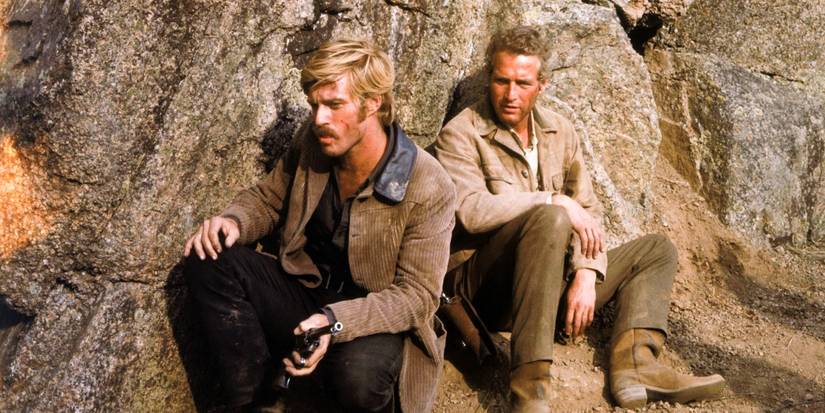 Image via 20th Century Studios
Yet another one of the most perfect and groundbreaking revisionist Westerns ever made, George Roy Hill's Butch Cassidy and the Sundance Kid is one of the best blockbuster Western movies ever. Aside from being anchored by Paul Newman and Robert Redford, one of the most iconic duos in the history of Hollywood cinema, the movie also benefits from having a masterful screenplay penned by William Goldman, one of the best screenwriters to have ever done it.
As irresistibly entertaining and lighthearted as it is a poignant swan song to the Wild West, Butch Cassidy and the Sundance Kid is one of the defining American masterpieces of the 1960s. From the hugely memorable and quotable dialogue, to the complex character work, to the riveting action scenes, to Newman and Redford's unforgettable performances, it's undoubtedly one of the best Westerns in film history.
3 'The Treasure of the Sierra Madre' (1948)
 Image via Warner Bros.
A pioneering Western noir masterpiece, John Huston's The Treasure of the Sierra Madre is one of the best and most acclaimed dramas from Hollywood's Golden Age. It's one of the best classic movie masterpieces with great acting, starring a top-tier Humphrey Bogart in one of the most daring against-type performances that this period of Hollywood cinema ever saw.
One of the very first Hollywood productions ever to be shot on location outside of the United States, Treasure of the Sierra Madre has aged beautifully as one of the most visually striking, sharply humorous, and exquisitely creative Western dramas the big screen has ever seen. It's a raw, unflinching character study far darker and more subversive than anything else the studio system produced at the time.
2 'Once Upon a Time in the West' (1968)
 Image via Paramount Pictures
Italian filmmaker Sergio Leone was the father of the spaghetti Western, and many cinephiles would confidently call him the greatest Western filmmaker who ever lived. For proof of why, one needn't look a lot further than Once Upon a Time in the West, one of the last movies that Leone ever made. It's a massive swan song to the traditional Western genre as a whole, and what a swan song it is.
With a gripping three-hour-long narrative culminating in one of the best Western movie endings of all time, Once Upon a Time in the West is not only the perfect farewell to the classical form of the genre, but also a fantastic spaghetti Western in itself. Stylistically, structurally, and narratively revolutionary in every way imaginable, it's a subversive, perfectly acted and directed, and downright operatic masterpiece that anyone and everyone interested in Westerns should check out.
1 'The Good, the Bad and the Ugly' (1966)
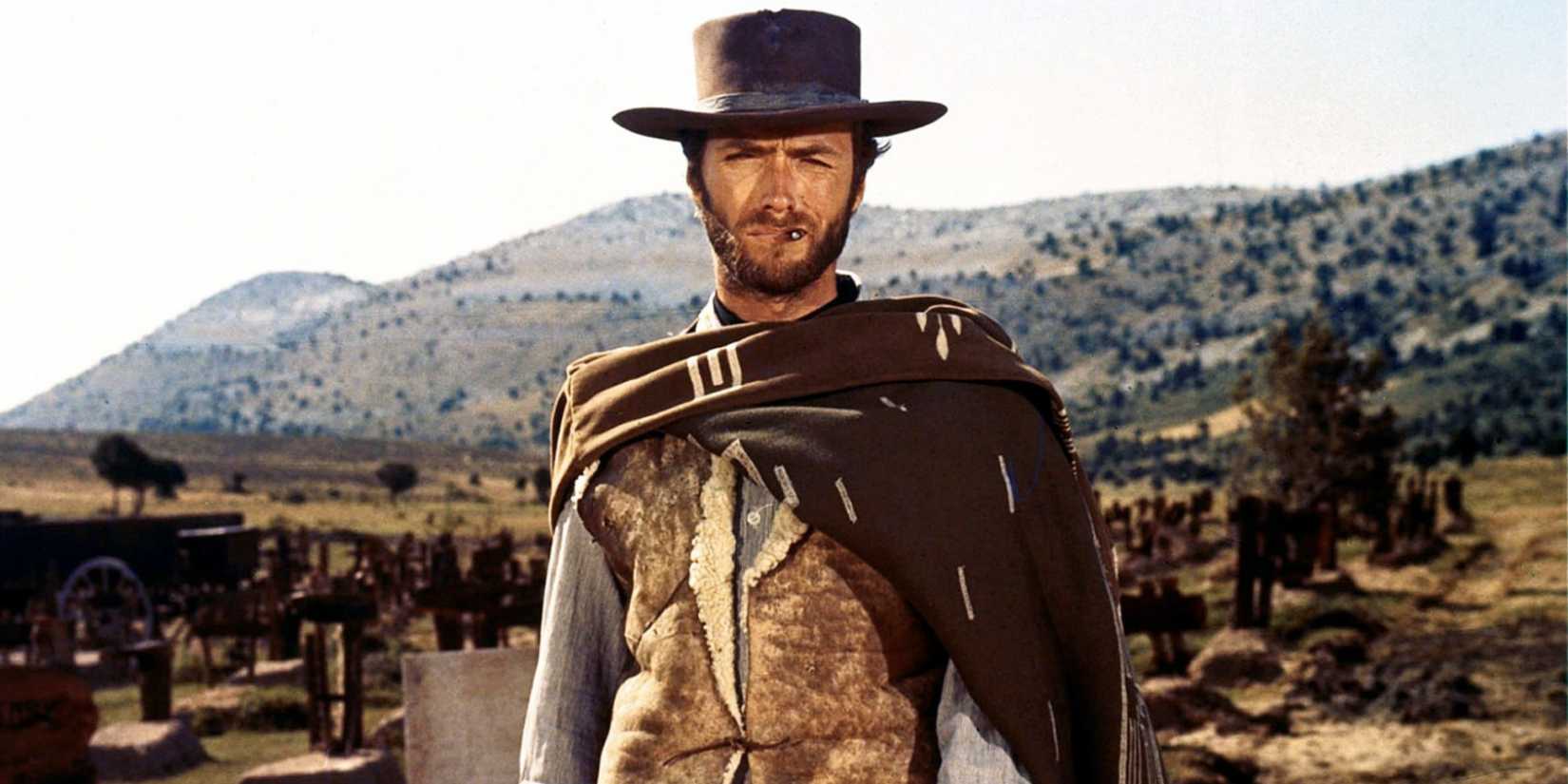 Image via Produzioni Europee Associati
As phenomenal as Once Upon a Time in the West is, there's no film quite like The Good, the Bad and the Ugly. Far from just being the greatest Western movie in film history, many would go so far as to say it's one of the greatest films of all time in general, regardless of genre. It's Sergio Leone's undisputed magnum opus, Clint Eastwood's most iconic flim, and the most universally-beloved Western the big screen has ever seen.
Where can one even begin singing The Good, the Bad and the Ugly's praises? Incredible performances all across the board, some of the most engrossing action scenes in the genre's history, a transcendental score by the legendary Ennio Morricone, and one of those movie endings that are true masterpieces—what more could anyone possibly want?


 English (US) ·