
The 1990s were something of a boom time for thrillers. Legal thrillers turned lawyers into blockbuster protagonists, serial-killer novels reached new levels of psychological darkness, erotic thrillers performed well at the box office, and forensic investigators emerged as some of crime fiction's most compelling heroes.
The result was a solid slate of entertaining novels, from Sherlock Holmes-inspired historical fiction of The Alienist to the futuristic forensics of Naked in Death. The best of the bunch hold up today, and are worth checking out if you're one of the genre's diehard fans.
10 'Along Came a Spider' (1993)

"It's all right to put the weight of the world on your shoulders sometimes, if you know how to take it off." Before Alex Cross became a bestseller list fixture, James Patterson introduced the Washington, D.C. detective in Along Came a Spider (later made into a solid movie starring Morgan Freeman). Here, Cross becomes involved in the investigation after two children from an elite private school are kidnapped by Gary Soneji, a math teacher obsessed with becoming infamous.
However, what initially appears to be a relatively straightforward kidnapping soon develops into a much stranger case involving psychological manipulation, competing motives, and revelations that continually force Cross to reconsider what he believes. Along the way, Patterson keeps readers hooked with his signature tricks: short chapters, rapid pacing, dramatic reversals, and a compelling antagonist. Some 26 sequels would eventually follow.
9 'Naked in Death' (1995)

"Her pulse jumped, as if it had nothing to do with the rest of her." The In Death series is a sprawling crime saga written by J.D. Robb, the pen name of Nora Roberts. There are now a whopping 60 novels in the cycle, and they all began with this one. Naked in Death sees Lieutenant Eve Dallas investigating the murder of a woman whose death appears connected to someone with considerable wealth and influence. Soon, there are more victims, and Eve must navigate mounting political pressure, as well as her own growing relationship with the mysterious billionaire Roarke.
While some plot points come straight out of classic crime fiction, Robb makes them feel fresh by packaging them within a futuristic setting. This novel is set in the year 2058, replete with holo screens, flying cards, super-advanced forensic tech, and the lingering echoes of a destructive Urban War.
8 'Postmortem' (1990)

"The dead have never bothered me. It's the living that I fear." This was the debut novel by the prolific Patricia Cornwell, and it introduced readers to her iconic character, medical examiner Dr. Kay Scarpetta. In this one, she is investigating a series of murders in Richmond, Virginia, where an unidentified killer appears to be targeting women inside their homes. With conventional investigative methods producing few answers, microscopic evidence and emerging forensic technologies become increasingly important.
Along the way, Cornwell wrings a lot of suspense out of scientific evidence and the mechanics of pathology, paving the way for the likes of CSI. Indeed, back in 1990, this emphasis felt unusually fresh, helping popularize a style of forensic thriller that would later become ubiquitous across books and television. In other words, Postmortem was an essential contribution to thriller writing.
7 'Intensity' (1995)

"Power is cool indifference to their suffering." This grim thriller (verging on horror) was written by the mega-bestselling Dean Koontz, author of blockbusters like Watchers and Odd Thomas. With Intensity, he strove to write a thriller that maintained a high level of tension throughout, and he certainly succeeded. The plot hurtles from one scene to the next, telling the story of psychology student Chyna Shepherd, who visits a friend's family when a violent intruder enters their isolated home.
The villain here is a brutal serial killer named Edgler Foreman Vess, an extreme hedonist who believes that life must be lived as intensely as possible. It's in pursuit of this that he kidnaps and murders multiple people. All in all, this book's breakneck approach earned the book a lot of fans, and some have even suggested that it might have been an inspiration for Alexandre Aja's 2003 cult film High Tension.
6 'Hannibal' (1999)

"The tragedy is not to die, but to be wasted." This was the third book in the Hannibal Lecter series, arriving more than a decade after The Silence of the Lambs. In the story, years have passed since Lecter's escape, and Clarice Starling's FBI career has become increasingly precarious. Meanwhile, Mason Verger, one of Lecter's surviving victims, has devoted his enormous resources to finding him. These separate threads gradually converge as Lecter's apparently comfortable existence in Florence becomes impossible to maintain.
The decision to place Lecter outside of captivity switches things up a lot, and helps Hannibal attain its own distinct identity apart from its predecessors. At the same time, author Thomas Harris serves up prose just as good as anything from the earlier installments. His writing style here is rich and baroque, nicely reflecting Lecter's creepily elegant tastes.
5 'The Alienist' (1994)

"The defenders of decent society and the disciples of degeneracy are often the same people." This one was adapted into a TV show in 2018 starring Daniel Brühl and Dakota Fanning, though the book is stronger. The Alienist transports readers to New York City in 1896, when forensic science was still a relatively new field. There, psychologist (or "alienist") Dr. Laszlo Kreizler is part of a team looking into a series of murders. Rather than simply hunting for physical clues, Kreizler attempts to construct a psychological profile of the unknown killer.
Along the way, a bunch of great historical cameos drop by, including Theodore Roosevelt and J.P. Morgan. Indeed, the whole period setting is meticulously researched and richly realized, while the plot is absorbing and the mysteries juicy. It's a tale very much in the tradition of Sherlock Holmes, with a focus on the protagonist's rationality and knack for solving puzzles.
4 'The Firm' (1991)
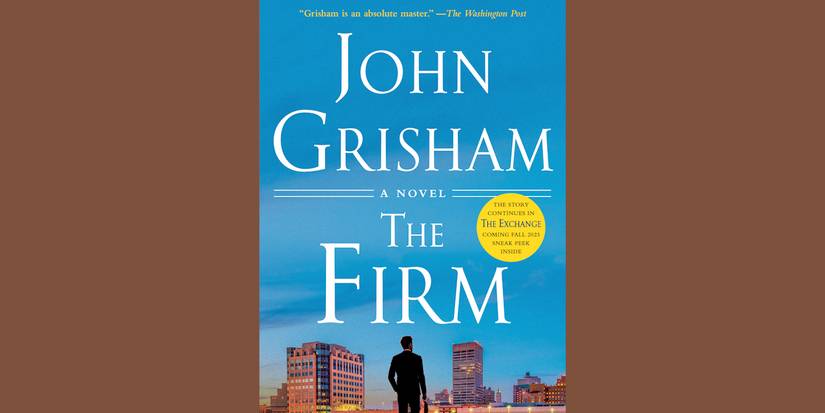
"Some of our clients have not been saints, but no lawyer can dictate morals to his client." This is the book that put John Grisham on the map. The Firm broke major ground by taking the world of corporate law (hardly an obvious setting for breathless suspense) and turning it into the foundation of an irresistible conspiracy thriller. The plot focuses on Mitch McDeere, a brilliant young Harvard Law graduate offered an exceptionally lucrative position at a small Memphis firm.
However, as the truth emerges, Mitch discovers that accepting the job was considerably easier than leaving it. From here, Grisham relentlessly ratchets up the suspense, and the pages fly by. All told, The Firm was the biggest commercial hit novel of 1991, spending a full 47 weeks on the NYT bestseller list. A movie adaptation starring Tom Cruise swiftly followed.
3 'Lies of Silence' (1990)

"By voicing his daydreams he had made them real." Set against the Troubles in Northern Ireland, Lies of Silence introduces us to average Joe Michael Dillon, who manages a Belfast hotel while quietly planning to leave both his unhappy marriage and Northern Ireland behind. Those plans collapse when IRA members invade his home and hold his wife hostage. Soon, they're forcing Michael to participate in a plot that could kill numerous innocent people.
In contrast to your average action-packed thriller, Lies of Silence is propelled by moral tension and impossible choices. The plot is not afraid to delve into some seriously dark places. That said, writer Brian Moore takes a sensitive, intelligent approach to the difficult subject matter, and also conveys it through taut, economical prose. For all these reasons, the novel was widely acclaimed, and was shortlisted for the Booker Prize.
2 'The Green Mile' (1996)
 Image via Signet Books
"Time takes it all, whether you want it to or not." The Green Mile straddles multiple genres: thriller, historical drama, character study, supernatural horror, nailing all of them. Set primarily in 1932, the story is narrated by Paul Edgecombe, a corrections officer supervising death row at Cold Mountain Penitentiary. His understanding of the world changes after the arrival of John Coffey, an enormous but gentle prisoner convicted of murdering two young girls.
Stephen King builds this premise into one of his most bittersweet books, one that Frank Darabont turned into a similarly great film. It's deeply emotional and frequently tense, though here much of the 'heart in your throat' suspense comes through the growing sense of inevitability as Coffey's execution date approaches. For this reason, The Green Mile has amassed a fanbase far beyond King's usual admirers. Indeed, in 2003 the British public voted it onto the BBC's Big Read list of the most-beloved novels.
1 'The Secret History' (1992)
 Image via Vintage Books
"Beauty is terror. Whatever we call beautiful, we quiver before it." With this gem, author Donna Tartt constructs an inverted mystery concerned with why a group of intelligent students killed their friend, how they convince themselves it is necessary, and what happens to their minds in the wake of the crime. The main character is Richard Papen, who arrives at an elite Vermont college and becomes fascinated by an exclusive clique of classics students studying under the charismatic professor Julian Morrow, soon becoming seduced by their intelligence and sophistication.
However, the group's quest for knowledge takes them to dark places, and they become arrogant, superior. Eventually, guilt, paranoia, resentment, and fear begin destroying them all from within. All in all, The Secret History is an incredibly immersive and well-written story, not just one of the best thrillers of the '90s but one of the best novels, period.
Collider Exclusive · Oscar Best Picture Quiz
Which Oscar Best Picture
Is Your Perfect Movie?
Parasite · Everything Everywhere · Oppenheimer · Birdman · No Country
Five Oscar Best Picture winners. Five completely different visions of what cinema can be — and what it can do to you. One of them is the film that was made for the way your mind works. Ten questions will figure out which one.
🪜Parasite
🌀Everything Everywhere
☢️Oppenheimer
🐦Birdman
🪙No Country for Old Men
FIND YOUR FILM →
01
What kind of film experience do you actually want? The best movies don't just entertain — they leave something behind.
ASomething that pulls the rug out — that makes me think I'm watching one kind of film and then reveals I'm watching another entirely. BSomething overwhelming — funny, sad, absurd, and genuinely moving, all at once. CSomething grand and weighty — a film that makes me feel the full scale of what I'm watching. DSomething formally daring — a film that pushes what cinema can even do. ESomething lean and relentless — pure tension with no wasted frame.
NEXT QUESTION →
02
Which idea grabs you most in a film? Great films are driven by a central obsession. What's yours?
AClass, inequality, and what people are willing to do when desperation meets opportunity. BIdentity, family, and the chaos of trying to hold your life together when everything is falling apart. CGenius, moral responsibility, and the catastrophic weight of a decision you can never take back. DEgo, legacy, and the terror of becoming irrelevant while you're still alive to watch it happen. EEvil, chance, and whether moral order actually exists or if we just tell ourselves it does.
NEXT QUESTION →
03
How do you like your story told? Form is content. The way a story is shaped changes what it means.
AGenre-twisting — I want it to start in one lane and migrate into something completely different. BMaximalist and genre-blending — comedy, action, drama, sci-fi, all in one ride. CEpic and non-linear — cutting between timelines, building a mosaic of cause and consequence. DA single unbroken flow — I want to feel like I'm living it in real time, no cuts to safety. ESpare and precise — every scene doing exactly what it needs to do and nothing more.
NEXT QUESTION →
04
What makes a truly great antagonist? The opposition defines the protagonist. What kind of opposition fascinates you?
AA system — invisible, structural, and almost impossible to fight because it has no single face. BThe self — the ways we sabotage, abandon, and fail the people we love most. CHistory — the unstoppable momentum of events that no single person can stop or redirect. DThe industry — the machinery of culture that chews up talent and spits out irrelevance. EPure, implacable evil — a force so certain of itself it becomes almost philosophical.
NEXT QUESTION →
05
What do you want from a film's ending? The final note is the one that lingers. What do you want it to sound like?
AShock and inevitability — a conclusion that recontextualises everything that came before it. BEarned emotion — I want to cry, laugh, and feel genuinely hopeful, even if the world is a mess. CDevastation and grandeur — an ending that makes me sit in silence for a few minutes after. DAmbiguity — something that leaves enough open that I'm still thinking about it days later. EBleakness — an honest refusal to pretend the world is tidier than it actually is.
NEXT QUESTION →
06
Which setting pulls you in most? Where a film takes place shapes everything — mood, stakes, what's even possible.
AA gleaming modern city with a hidden underside — beauty masking rot, wealth masking desperation. BA collapsing suburban life that opens onto something infinite — the multiverse of a single ordinary person. CThe corridors of power and science at a world-historical turning point — where decisions echo for decades. DThe grimy, alive chaos of New York and Hollywood — fame as both destination and trap. EVast, indifferent landscape — desert and highway where violence arrives without warning or reason.
NEXT QUESTION →
07
What cinematic craft impresses you most? Every great film has a signature — a technical or artistic element that makes it unmistakable.
AProduction design and mise-en-scène — every frame composed to carry meaning beneath the surface. BEditing and tonal control — the ability to move between registers without losing the audience. CScore and sound design — music that becomes inseparable from the dread and awe of what you're watching. DCinematography as performance — the camera not recording events but participating in them. ESilence and restraint — what's left unsaid and unshown doing more work than any dialogue could.
NEXT QUESTION →
08
What kind of main character do you root for? The protagonist is the lens. Who you choose to follow says something about you.
ASomeone smart and resourceful who makes increasingly dangerous decisions under pressure. BSomeone overwhelmed and ordinary who turns out to be capable of something extraordinary. CA brilliant, tortured figure whose gifts and flaws are inseparable from each other. DA self-destructive artist whose ego is both their superpower and their undoing. EA quiet, principled person trying to make sense of a world that has stopped making sense.
NEXT QUESTION →
09
How do you feel about a film that takes its time? Pace is a choice. Some films sprint; others let tension accumulate slowly, deliberately.
AI love a slow build when I know the payoff is going to be seismic — patience for a devastating reveal. BGive me relentless momentum — I want to feel breathless and emotionally spent by the end. CEpic runtime doesn't scare me — if the material demands three hours, give me three hours. DI want it to feel propulsive even when nothing is technically happening — restless energy throughout. EDeliberate and unhurried — I want dread to accumulate in the spaces between the action.
NEXT QUESTION →
10
What do you want to feel walking out of the cinema? The best films leave a mark. What kind of mark do you want?
AUnsettled — like I've just seen something I can't fully explain but can't stop thinking about. BMoved and energised — like the film reminded me what actually matters and gave me something to hold onto. CHumbled — like I've been in the presence of something genuinely important and overwhelming. DExhilarated — like I've just seen cinema doing something it's never quite done before. EHaunted — like a cold, quiet dread that stays with me for days.
REVEAL MY FILM →
The Academy Has Decided Your Perfect Film Is…
Your answers have pointed to one Oscar Best Picture winner above all others. This is the film that was made for the way your mind works.
Parasite
You are drawn to films that operate on multiple levels simultaneously — that begin in one genre and quietly, brilliantly migrate into another. Bong Joon-ho's Parasite is a film about class, desire, and the architecture of inequality that manages to be darkly funny, deeply suspenseful, and genuinely shocking across a single extraordinary running time. Your instinct is for cinema that hides its true intentions until the moment it's ready to reveal them. Parasite is exactly that — a film that rewards close attention and punishes assumptions, right up to its devastating final image.
Everything Everywhere All at Once
You want it all — and this film gives you all of it. The Daniels' Everything Everywhere All at Once is one of the most maximalist films ever made: action comedy, multiverse sci-fi, family drama, existential crisis, and a genuinely earned emotional core that sneaks up on you amid the chaos. You are someone who responds to ambition, who doesn't want cinema to choose between being entertaining and being meaningful. This film refuses that choice entirely. It is overwhelming by design, and its overwhelming nature is precisely the point — because the feeling of being crushed by infinite possibility is exactly what it's about.
Oppenheimer
You are drawn to cinema on a grand scale — films that understand history not as a backdrop but as a force, and that place their characters inside that force and watch what happens. Christopher Nolan's Oppenheimer is a film about the terrifying gap between what we can do and what we should do, told with the full weight of one of the most consequential moments in human history behind it. You want your films to feel important without feeling self-important — to earn their ambition through sheer craft and the gravity of their subject. Oppenheimer does exactly that. It is enormous, complicated, and refuses easy comfort.
Birdman
You are drawn to films that foreground their own construction — that make the how of the filmmaking part of the what it's about. Alejandro González Iñárritu's Birdman, shot to appear as a single continuous take, is cinema examining itself through the cracked mirror of a fading actor's ego. You respond to formal daring, to the feeling that a film is doing something that probably shouldn't be possible. Michael Keaton's performance and Emmanuel Lubezki's restless camera create something genuinely unlike anything else — a film that is simultaneously about creativity, relevance, self-destruction, and the impossibility of ever truly knowing if your work means anything at all.
No Country for Old Men
You are drawn to cinema that trusts silence, that refuses to explain itself, and that treats dread as a form of meaning. The Coen Brothers' No Country for Old Men is a film about the arrival of a new kind of evil — implacable, arbitrary, and utterly indifferent to the moral frameworks we use to make sense of the world. It is one of the most formally controlled films ever made, and its controlled restraint is what makes it so terrifying. You want your films to haunt you, not comfort you. You are not interested in resolution if resolution would be dishonest. No Country for Old Men is honest in a way that most cinema never dares to be.
↻ RETAKE THE QUIZ





 English (US) ·