
The modern world of television entertainment is a never-ending cycle of new releases, trending titles, and must-see premieres. Trying to keep up with every single new series is an impossible ordeal that necessitates some shows being missed. Whether it is due to overzealous critical dismissal, off-putting subject matter, or just sheer bad timing, these ten miniseries seem to have fallen through the cracks for most people.
Ranging from confronting crime series that thrive with their grim basis on true stories to high-concept science-fiction dramas that explore several issues befalling humanity with unique insights and bold conviction, these miniseries will leave you wondering why you didn’t watch them sooner when you finally get to them. Whether they’ve been crammed into backways of the watchlist for years, overlooked on many a scroll through the streaming services’ catalogs, or simply gone completely unnoticed, these limited series are overdue for a watch if you haven’t seen them yet.
10 'Devs' (2020)
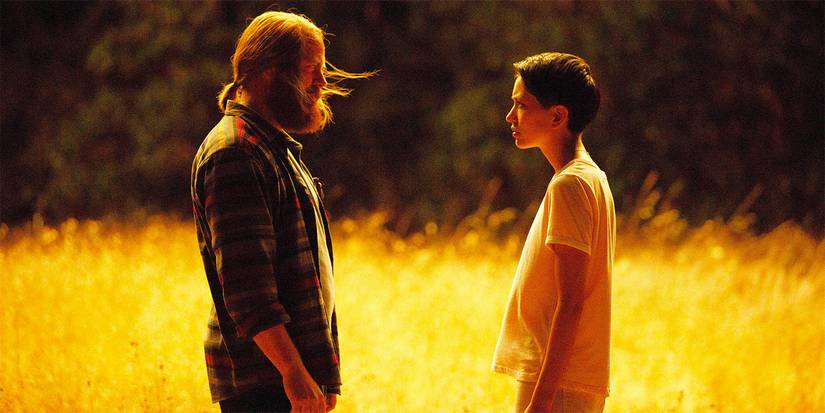 Image via FX
Released in 2020, it is easy to see how Devs struggled to captivate the masses, given it is a dark, cerebral, and pessimistic mystery that was released at a time when the world was craving comfort. What is a shame is how the miniseries has never found any semblance of success or popularity in the ensuing years, especially given its timely ideas of corporate morality and malpractice, technological progress, and existential anxieties tied to determinism and free will.
Running over the course of eight episodes, it follows software engineer Lily Chan (Sonoya Mizuno) as she begins investigating the company she works for when her boyfriend, a colleague, commits suicide after his first day in a new role. Layered with writer-director Alex Garland’s trademark complexity and philosophical pondering, while also flaunting a stunning treat of grounded sci-fi spectacle, Devs is one of the most underrated series of the decade thus far.
9 'The Outsider' (2019)
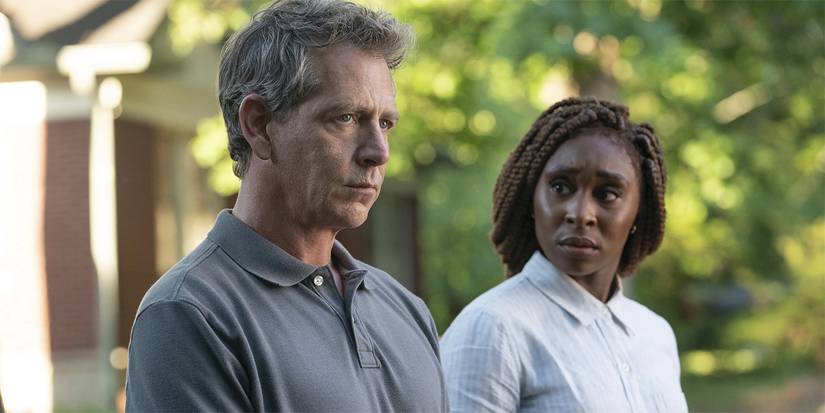 Image via HBO
An adaptation of Stephen King’s eerie mystery novel of the same name, The Outsider glistens as something of a hidden gem in HBO’s stunning catalogue of small-screen titles. Its first several episodes are particularly compelling, unfolding as suburban family man Terry Maitland (Jason Bateman) is charged with the brutal murder of a child. However, when Maitland is able to provide video evidence suggesting his innocence that is in stark contrast with the evidence the police have, Detective Anderson (Ben Mendelsohn) starts working with Holly Gibney (Cynthia Erivo), a mystic P.I., to find the truth.
There is no doubt that the miniseries is at its best at the start, when the eerie sense of inhuman evil is lurking just on the periphery of the story, and audiences are enthralled by Maitland’s drive to prove his innocence. Even as the series evolves into more of a supernatural horror, however, it remains compelling, grounded in strong performances, sharp writing, and a pervasive sense of dread.
8 'A Very English Scandal' (2018)
 Image via Prime Video
Given it serves as a dramatization of a real-life murder plot tied to issues of sexuality and manipulation, A Very English Scandal has no real right to be as hysterically funny as it is. A wickedly entertaining three-part series, it unfolds throughout the late 60s and 70s as politician Jeremy Thorpe (Hugh Grant) tries to have his former lover, Norman Josiffe (Ben Whishaw), killed after facing blackmail from him. When the murder plot goes awry, Thorpe and his co-conspirators find themselves in the midst of a career-ruining scandal.
Running with what is effectively a runtime of three hours, the miniseries ensnares viewers with its wonderful wit, using its shocking true story basis as a catalyst for satirical wrath, skewering the public image, anxiety, and moral corrosion of political power. That being said, it never cheapens the tragic reality many homosexuals in Britain and around the world faced throughout the mid-20th century, making A Very English Scandal one of the more undervalued hit miniseries of the 2010s.
7 'Dopesick' (2021)
 Image via Hulu
Epic in scope and entirely unflinching in its conviction, Dopesick delivers an all-encompassing, dramatic observation on the epicenter of America’s devastating opioid crisis, examining everything from the morally bankrupt boardrooms of Purdue Pharma to the tragic events the drug has on a Virginia mining community. Its multidimensional storytelling gives tremendous weight to the series, allowing the health crisis to be explored from a multitude of angles with incredible efficiency and impact, without ever failing to highlight the significance of any one character’s experiences.
This is ultimately a testament to creator Danny Strong’s incredible vision for the eight-part series and the work of the astonishing ensemble cast who ensure every key plot detail and emotional beat land with devastating effect. Despite its critical acclaim and award-season success, Dopesick has somewhat drifted from public consciousness, whereas other miniseries of the time, like Chernobyl and The Queen’s Gambit, have endured. For anyone yet to see it, the Hulu original series is a masterpiece of small-screen drama that is meticulously constructed, absolutely harrowing, and truly quintessential.
6 'The Little Drummer Girl' (2018)
 Image via BBC One
Directed by the visual panache of director Park Chan-wook and based on the espionage intensity of John le Carré’s novel, The Little Drummer Girl aired in 2018 as a richly nuanced descent into the treacherous world of geopolitical conflict and psychological warfare. Florence Pugh stars as Charlie, an aspiring English actress with strong political ideals who is recruited by Mossad while on holiday and tasked with infiltrating a Palestinian group plotting terrorist attacks throughout Europe.
With a supporting cast that includes Alexander Skarsgård, Michael Shannon, and Charles Dance, The Little Drummer Girl shines not only as an addictive slow-burn of anxiety, high-stakes tension, and spycraft, but as a captivating drama anchored by great performances as well. Also buoyed by immaculate set design and visual splendor, the 2018 miniseries immerses viewers in the tumultuous world of the Middle East in the 1970s. Given its list of stars and its political relevance in modern times, it’s safe to say The Little Drummer Girl would be a monumental television sensation were it to be released today.
Collider Exclusive · TV Medicine Quiz Which Fictional Hospital Would You Work Best In? The Pitt · ER · Grey's Anatomy · House · Scrubs
Five hospitals. Five completely different ways medicine goes sideways on television — brutal, chaotic, romantic, brilliant, and ridiculous. Only one of them is the ward your instincts were built for. Eight questions will figure out exactly where you belong.
🚨The Pitt
🏥ER
💉Grey's
🔬House
🩺Scrubs
FIND YOUR HOSPITAL →
01
A critical patient comes through the door. What's your first instinct? Medicine under pressure reveals who you actually are.
AStay completely present — block everything else out and work through it step by step, right now. BTriage fast and delegate — get the right people on the right problems immediately. CTrust my gut and move — I work best when I stop overthinking and just act. DAsk the question everyone else is ignoring — what's the thing that doesn't fit? ETake a breath, make a joke to cut the tension, and then get to work — panic helps no one.
NEXT QUESTION →
02
Why did you go into medicine in the first place? The honest answer says more about you than the one you'd give in an interview.
ABecause I wanted to be where it matters most — right at the edge, when someone's life is actually on the line. BBecause I wanted to help people — genuinely, one patient at a time, in a system that makes it hard. CBecause I was drawn to the intensity of it — the stakes, the drama, the feeling of being fully alive. DBecause medicine is the most interesting puzzle there is — and I needed a problem worth solving. EBecause I wanted to make a difference — and also, honestly, I didn't know what else to do with my life.
NEXT QUESTION →
03
What do you actually want from the people you work with? Who you want beside you under pressure is who you are.
ACompetence and calm — I need people who don't fall apart when things get bad. BTrust and reliability — I want to know that when I pass something off, it's handled. CConnection — I want colleagues who become family, even if that gets complicated. DIntelligence and the willingness to be challenged — I have no interest in people who just agree with me. EFriendship — people I actually like spending twelve hours a day with, because those hours are going to happen either way.
NEXT QUESTION →
04
You lose a patient you fought hard to save. How do you carry it? Every doctor who's worked a long shift has had to answer this question.
AI carry it. All of it. I don't look for ways to put it down — that weight is part of doing this work honestly. BI process it and move — you have to, or the next patient suffers for the one you just lost. CI feel it deeply and lean on the people around me — I don't think you're supposed to handle that alone. DI go back over every decision — not to punish myself, but because I need to understand what I missed. EI grieve it genuinely, find some way to laugh about something unrelated, and try to be kind to myself — imperfectly.
NEXT QUESTION →
05
How would your colleagues describe the way you work? Your reputation on the floor is usually more accurate than your self-image.
AIntense and completely present — no small talk during a shift, but exactly who you want there. BSteady and dependable — not the flashiest in the room but never the one who drops something. CPassionate and occasionally chaotic — brilliant on the hard cases, prone to drama everywhere else. DBrilliant and difficult — right more often than anyone else, and everyone knows it, including me. EWarm and self-deprecating — not the most intimidating presence, but genuinely good at this and easy to like.
NEXT QUESTION →
06
How do you feel about hospital protocol and procedure? Every institution has rules. What you do with them is a choice.
AProtocol is the floor, not the ceiling — I follow it until the patient needs something it can't provide. BI respect it — the system is broken in places, but the structure is there for a reason and I work within it. CI follow it until my instincts tell me not to — and my instincts are usually right, even when they cause problems. DRules are for people who haven't thought hard enough about when to break them. EI try to follow it and mostly do — with a few memorable exceptions that still come up in meetings.
NEXT QUESTION →
07
What does this job cost you personally? Nobody works in medicine without paying a price. What's yours?
AEverything outside these walls — I've given this job my full attention and the rest of my life has gone around it. BMy idealism, mostly — I came in believing the system could be fixed and I've made a complicated peace with that. CStability — my personal life has been as chaotic as the OR, and that's not entirely a coincidence. DMy relationships — I am not easy to know, and the people who've tried to would probably agree. EMy sense of gravity — I use humour as a coping mechanism, which not everyone appreciates in a hospital.
NEXT QUESTION →
08
At the end of a long shift, what keeps you coming back? The answer to this question is the most honest thing about you.
AThe fact that it's real — that nothing else I could be doing would matter this much, right now, today. BThe patients — individual human beings who needed something and got it because I was there. CThe people I work with — I have walked through impossible things with these people and I'd do it again. DThe next unsolved case — there's always another puzzle, and I'm not done yet. EBecause despite everything — the exhaustion, the loss, the absurdity — I actually love this job.
REVEAL MY HOSPITAL →
Your Assignment Has Been Made You Belong In…
Your answers have pointed to one fictional hospital above all others. This is the ward your instincts, your temperament, and your particular brand of dysfunction were built for.
The Pitt
You are built for the most unsparing version of emergency medicine television has ever shown — one that puts you inside a single fifteen-hour shift and doesn't let you look away.
- You need your work to be real, not romanticised — meaning over drama, honesty over aesthetics.
- You find purpose inside the work itself, not in the chaos surrounding it.
- You've made peace with the fact that this job takes from you constantly, and gives back in ways that are harder to name.
- Pittsburgh Trauma Medical Center demands exactly that kind of person — and you would not want to be anywhere else.
ER
You are the person who keeps the whole floor running — not the most brilliant in the room, but possibly the most essential.
- You show up, do the work, absorb the losses, and come back the next day without needing the job to be anything other than what it is.
- You care about patients as individual human beings, not as cases to solve or dramas to live through.
- You believe in the system even when it fails you — and you understand that emergency medicine is about holding the line just long enough.
- ER is television about endurance. You have it.
Grey's Anatomy
You came to medicine with your whole self — your ambition, your emotions, your relationships, your history — and you have never quite managed to leave any of it at the door.
- You feel things fully and form deep attachments to the people you work with.
- Your personal and professional lives are permanently, chaotically entangled — and that entanglement drives both your greatest disasters and your most remarkable saves.
- You understand that extraordinary medicine often happens at the intersection of clinical skill and profound human connection.
- It's messy at Grey Sloan. You would not have it any other way.
House
You are drawn to the problem above everything else — the symptom that doesn't fit, the diagnosis hiding underneath the obvious one.
- You're not primarily motivated by the patient as a person — though you are capable of caring, even if you'd deny it.
- You work best when the stakes are highest and the standard answer is wrong.
- Princeton-Plainsboro exists to house one extraordinary, impossible mind — and everyone around that mind is there because they're smart enough to keep up.
- The only way forward here is to think harder than everyone else in the room. That is exactly what you do.
Scrubs
You understand that medicine is tragic and absurd in almost equal measure — and that the only sane response is to hold both of those things at the same time.
- You are warm, self-aware, and funnier than most people in your field.
- You use humour to get through terrible moments — and at Sacred Heart, that's not a flaw, it's a survival strategy.
- You lean on the people around you and let them lean back. The laughter and the grief are genuinely inseparable here.
- Scrubs is a show about learning to become someone worthy of the job. You are still very much in the middle of that process — which is exactly right.
↻ RETAKE THE QUIZ
5 'We Own This City' (2022)
 Image via HBO
While it was well promoted ahead of its release, We Own This City quickly dwindled as a critically mixed television misfire that was lamented by many for its overly elaborate storytelling and its time-jumping structure. Granted, the six-episode miniseries is merciless on viewers who can’t maintain their attention, but for viewers who love true crime, social commentary regarding the efficiency and morality of the police force, and a cutting dissection of how American institutions are hamstrung by bureaucratic process, We Own This City is perfection.
The story itself revolves around the Baltimore Police Department’s Gun Trace Task Force, a unit headed for a time by Sgt. Wayne Jenkins (Jon Bernthal), that uses their authority to profit from street crime and run corrupt operations. Tracking the squad from Jenkins’ initiation through to their eventual apprehension at the hands of the FBI, We Own This City is a poignant and timely reflection of police corruption that uses its true-story basis to illustrate the many faults in the system while never simplifying the characters to be heroes or villains.
4 'Generation Kill' (2007)
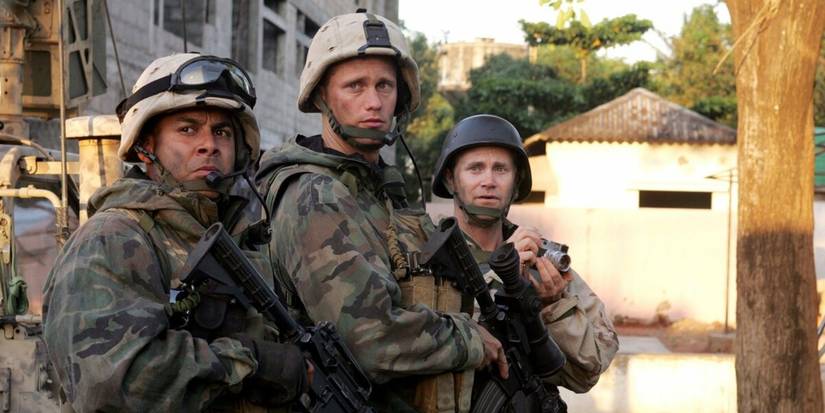 Image via HBO
HBO has long been expert at delivering mindful depictions of war, with such series as Band of Brothers and The Pacific marking two of the network’s more notable releases. Generation Kill belongs firmly entrenched in the same conversation as those series, with the 2007 release unfolding with a basis on Evan Wright’s non-fiction book documenting his time as an embedded reporter with the U.S. Marine Corps’ 1st Reconnaissance Battalion in the first weeks of the Iraq War.
What the series may lack in huge production expenditure, it more than makes up for with its commitment to realism. It actively focuses on the monotonous malaise soldiers experience for hours on end as they wait for orders, which often come through miscommunication and result in further waiting as poor resource management and bureaucratic red tape prevent them from acting swiftly. In many respects, Generation Kill is almost frustrating, but it excels as a grounded and unglamorous immersion in the life of a soldier in modern warfare, and it should be heralded among the finest miniseries ever made.
3 'Station Eleven' (2021)
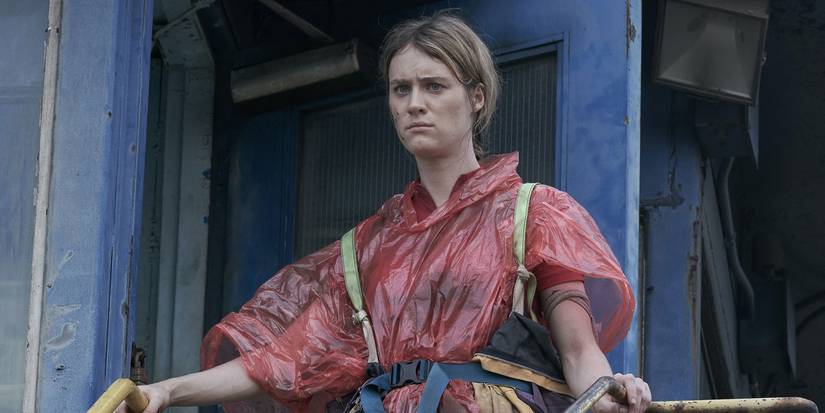 Image via HBO Max
For many years, post-apocalyptic drama has been a defining trend of television entertainment, with many series emphasizing the high-stakes dread and fight-to-the-death desperation of a world where civilization has collapsed and what remains of humanity is barely clinging onto their morality. Station Eleven is something of a refreshment from that. Based on Emily St. John Mandel’s novel, it unfolds in the aftermath of a devastating flu as a group of traveling performers ventures between settlements to entertain survivors. Their peaceful existence is put under threat when they are targeted by the leader of a violent cult.
Even as Station Eleven does indulge in life-and-death suspense, the miniseries always has a firm grounding in the central idea that humanity values art and enlightenment, and the pursuit of these gifts is pivotal to our species’ survival. In many respects, the series is delicate and gentle, prioritizing healing and human connection over brutality and conflict. It is ultimately a profound tale of hope and prosperity amid desperate times that stands as one of the finest post-apocalyptic dramas the medium has ever seen.
2 'The Corner' (2000)
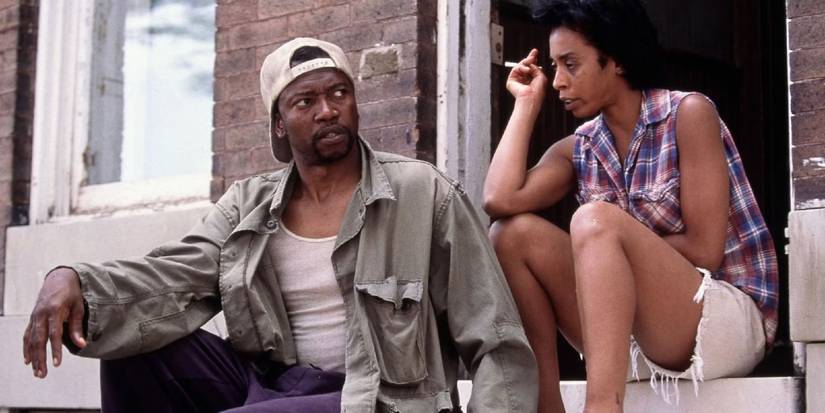 Image via HBO
Poignant, powerful, and desperately tragic, The Corner leans on its basis on David Simon’s non-fiction book to present a harrowing and heartbreaking portrayal of drug abuse and poverty in America. It follows the McCulloughs, a family battling with issues of heroin addiction and economic hardship who struggle to cope while living in the proximity of a raging drug war in West Baltimore.
Defined by its staggering authenticity, The Corner imposes itself on viewers as a raw and confronting look at real-life drama, a brutally aching story of despair that never treats its characters with anything short of the utmost humanity. The sense of decency and flailing hope embedded in each of the characters only makes the turmoil they all face and succumb to all the more devastating. The Corner is a viscerally upsetting viewing experience, but it is one that grants a sense of enlightened humanity regarding the often demonized issue of addiction, and stands as one of the greatest miniseries in HBO’s history despite its forgotten standing.
1 'Unbelievable' (2019)
 Image via Netflix
Its confronting material makes it understandable that so many have been intrigued by Unbelievable but never committed to watching it, but the artistry and impact with which it handles its grueling true story is a triumph to behold. Based on the 2008-2011 Washington and Colorado serial rape cases, it unfolds as sexual assault survivor Marie Adler (Kaitlyn Dever) is pressured to recant her report only to then face charges for lodging a false accusation. As she endures a hellish experience with the law while struggling to overcome her trauma, two Colorado-based detectives begin investigating a series of rapes.
Unbelievable is fundamentally a scorching indictment of the legal system, particularly the trials and tribulations it inflicts on victims of sexual assault who come forward to report the heinous, inhuman act they endure. Furthermore, it acts as a meticulously designed and faultless illustration of how different people process trauma, earning widespread praise for its authenticity in this regard, which is a testament to both the writing and performances. It is one of the most powerful miniseries ever made, one that is incredibly difficult to watch, but enlightening and rewarding as well.

Unbelievable
Release Date 2019 - 2018
Directors Michael Dinner








 English (US) ·