
During the 1940s, the classic film noir genre was a favorite among film fans and reached its peak of popularity during the 1950s, which marked the release of some of the greatest contributions to the genre, such as In a Lonely Place starring Humphrey Bogart and Gloria Grahame, Alfred Hitchcock's Strangers on a Train, and Stanley Kubrick's The Killing. Known for its hard-boiled detectives, femme fatales, and unforgettable dialogue, classic film noir movies captured the darker side of postwar America while pushing the boundaries of both storytelling and the art of filmmaking to new, unprecedented heights.
Whether it's exploring corruption or obsession, or the consequences of greed and power, the most enduring classic film noir movies of the 1950s, including Kiss Me Deadly, The Big Heat, and The Asphalt Jungle, continue to captivate generations of audiences with their timeless performances, iconic visual style, and overall artistic brilliance. From Ida Lupino's underrated noir thriller, The Hitch-Hiker, to Billy Wilder's Oscar-winning classic, Sunset Boulevard, these are the ten best classic film noir movies from the 1950s that every movie lover and newcomer to the genre should experience.
10 'The Hitch-Hiker' (1953)
 Image via RKO Pictures
The Hitch-Hiker is a slow-burning noir thriller directed and co-written by Ida Lupino, who is the only woman to have ever directed a classic film noir. Based on the 1950 killing spree of Billy Cook, the movie stars Edmund O'Brien and Frank Lovejoy as friends Ray and Gilbert who, while on a fishing trip, pick up a hitchhiker, played by Perry Mason star William Talman, who they later discover is a sociopathic killer on the run. Although the film's backdrop isn't the traditional dark city streets or alleyways, its immersive black-and-white cinematography, desolate desert landscapes, and shadow-filled compositions reinforce the sense of isolation and hopelessness that defines the film noir genre.
Rather than relying on physical action, the film's suspense comes from constant psychological pressure and the killer's unpredictable behavior, which keeps both the characters and the audience in a state of anxiety, making every scene feel dangerous. Although it runs just over 70 minutes, The Hitch-Hiker wastes no time with unnecessary subplots and delivers relentless suspense, psychological depth, and striking realism within a lean, tightly constructed story, and has rightfully earned the reputation as one of the most influential and enduring examples of 1950s film noir.
9 'Kiss Me Deadly' (1955)
 Image via United Artists
Robert Aldrich's Kiss Me Deadly is an essential 1950s noir classic that pushes the film noir genre to its darkest and most unsettling extremes by combining hard-boiled detective fiction with Cold War paranoia, creating a story that feels both thrilling and deeply disturbing. The movie is based on Mickey Spillane's 1952 crime novel of the same name and stars Ralph Meeker as a private detective, Mike Hammer, who investigates a mysterious murder that leads him into a dangerous web of crime, corruption, and a secret so powerful it threatens everyone who seeks it.
The film's shocking and ambiguous ending, the mysterious glowing box at the center of the story, remains one of the most memorable finales in film noir history. Another notable quality of the film is its stark cinematography, which, paired with dramatic lighting and nighttime urban settings, creates a mood of tension and unease, making its atmosphere one of the film's greatest strengths. Aldrich's use of unusual camera angles, rapid pacing, and explosive moments of violence gives the film an intensity that was groundbreaking for its time and ultimately sets it apart from other classic noir films.
8 'Pickup on South Street' (1953)
 Image via 20th Century Studios
Pickup on South Street is another noir-and-Cold War paranoia hybrid that ranks among the best classic noir films of the 1950s and is known for its combination of unnerving drama, sharp social commentary, and a visual style and moral complexity that define the noir world. The story follows skilled pickpocket Skip McCoy (Richard Widmark), who unknowingly steals a classified microfilm being sought by communist spies and becomes entangled in a conflict much bigger than himself.
Instead of focusing on spies or government agents, Pickup on South Street explores how ordinary criminals become caught in global political conflict, giving the story both realism and broader significance without sacrificing character development. Visually, Pickup on South Street showcases classic noir style through its shadowy interiors and gritty atmosphere, creating relentless tension while also emphasizing the harsh realities of urban life. Between its memorable performances, striking visual style, and unique blend of crime and political tension, Pickup on South Street remains one of the best achievements of 1950s film noir and a lasting influence on the crime thriller genre.
7 'The Asphalt Jungle' (1950)
 Image via MGM Studios
John Huston's Oscar-nominated noir classic The Asphalt Jungle is a brilliantly constructed heist story that is celebrated for its realistic characters and its deeply pessimistic view of crime and human ambition. The movie follows a group of professional criminals who are brought together by a recently paroled criminal mastermind, Erwin "Doc" Riedenschneider (Sam Jaffe), to execute a carefully planned jewel robbery, but despite their tedious plotting, the seemingly foolproof plan takes an unexpected turn that could cost them everything.
Unlike other classic noir films, The Asphalt Jungle doesn't focus on one single character and instead gives each member of the gang of misfits distinct motivations and personalities, revealing how personal weaknesses and vices ultimately undermine even the best-laid plans. The Asphalt Jungle has had a lasting influence on countless crime and heist films, establishing storytelling techniques and character-driven narratives that filmmakers continue to emulate today. Its ingenious blend of intensity, unforgettable performances, notably by Jaffe and Sterling Hayden, and timeless themes of human nature has secured its reputation as a definitive example of 1950s film noir.
6 'In a Lonely Place' (1950)
 Image via Columbia Pictures
Humphrey Bogart stars in Nicholas Ray's near perfect film noir movie In a Lonely Place as a troubled but brilliant screenwriter, Dixon Steele, whose volatile temper makes him the prime suspect in the recent murder of a woman who was last seen at his home the night she went missing. When his neighbor, Laurel Gray (Gloria Grahame), vouches for his whereabouts, the two begin to fall in love, but their relationship is gradually poisoned by suspicion, fear, and Steele's inability to control his anger. In a Lonely Place is one of the few noir classics that doesn't center around solving a crime but instead lures audiences in with its exploration of how emotional instability and mistrust can destroy even genuine love.
Unlike the tough guys and cynical private eyes he often played, Bogie gives one of the most complex and vulnerable performances of his career, making it one of Bogart's finest films. Grahame delivers an equally compelling performance as Gray, conveying the gradual shift from romance to fear with subtle emotional depth. Over time, In a Lonely Place has come to be recognized as a masterpiece not only of film noir but of American cinema as a whole. Its emotionally rich storytelling, intriguing performances, and nuanced depiction of damaged relationships continue to resonate with audiences, forging its place as one of the most defining films of the 1950s.
Collider Exclusive · Oscar Best Picture Quiz
Which Oscar Best Picture
Is Your Perfect Movie?
Parasite · Everything Everywhere · Oppenheimer · Birdman · No Country
Five Oscar Best Picture winners. Five completely different visions of what cinema can be — and what it can do to you. One of them is the film that was made for the way your mind works. Ten questions will figure out which one.
🪜Parasite
🌀Everything Everywhere
☢️Oppenheimer
🐦Birdman
🪙No Country for Old Men
FIND YOUR FILM →
01
What kind of film experience do you actually want? The best movies don't just entertain — they leave something behind.
ASomething that pulls the rug out — that makes me think I'm watching one kind of film and then reveals I'm watching another entirely. BSomething overwhelming — funny, sad, absurd, and genuinely moving, all at once. CSomething grand and weighty — a film that makes me feel the full scale of what I'm watching. DSomething formally daring — a film that pushes what cinema can even do. ESomething lean and relentless — pure tension with no wasted frame.
NEXT QUESTION →
02
Which idea grabs you most in a film? Great films are driven by a central obsession. What's yours?
AClass, inequality, and what people are willing to do when desperation meets opportunity. BIdentity, family, and the chaos of trying to hold your life together when everything is falling apart. CGenius, moral responsibility, and the catastrophic weight of a decision you can never take back. DEgo, legacy, and the terror of becoming irrelevant while you're still alive to watch it happen. EEvil, chance, and whether moral order actually exists or if we just tell ourselves it does.
NEXT QUESTION →
03
How do you like your story told? Form is content. The way a story is shaped changes what it means.
AGenre-twisting — I want it to start in one lane and migrate into something completely different. BMaximalist and genre-blending — comedy, action, drama, sci-fi, all in one ride. CEpic and non-linear — cutting between timelines, building a mosaic of cause and consequence. DA single unbroken flow — I want to feel like I'm living it in real time, no cuts to safety. ESpare and precise — every scene doing exactly what it needs to do and nothing more.
NEXT QUESTION →
04
What makes a truly great antagonist? The opposition defines the protagonist. What kind of opposition fascinates you?
AA system — invisible, structural, and almost impossible to fight because it has no single face. BThe self — the ways we sabotage, abandon, and fail the people we love most. CHistory — the unstoppable momentum of events that no single person can stop or redirect. DThe industry — the machinery of culture that chews up talent and spits out irrelevance. EPure, implacable evil — a force so certain of itself it becomes almost philosophical.
NEXT QUESTION →
05
What do you want from a film's ending? The final note is the one that lingers. What do you want it to sound like?
AShock and inevitability — a conclusion that recontextualises everything that came before it. BEarned emotion — I want to cry, laugh, and feel genuinely hopeful, even if the world is a mess. CDevastation and grandeur — an ending that makes me sit in silence for a few minutes after. DAmbiguity — something that leaves enough open that I'm still thinking about it days later. EBleakness — an honest refusal to pretend the world is tidier than it actually is.
NEXT QUESTION →
06
Which setting pulls you in most? Where a film takes place shapes everything — mood, stakes, what's even possible.
AA gleaming modern city with a hidden underside — beauty masking rot, wealth masking desperation. BA collapsing suburban life that opens onto something infinite — the multiverse of a single ordinary person. CThe corridors of power and science at a world-historical turning point — where decisions echo for decades. DThe grimy, alive chaos of New York and Hollywood — fame as both destination and trap. EVast, indifferent landscape — desert and highway where violence arrives without warning or reason.
NEXT QUESTION →
07
What cinematic craft impresses you most? Every great film has a signature — a technical or artistic element that makes it unmistakable.
AProduction design and mise-en-scène — every frame composed to carry meaning beneath the surface. BEditing and tonal control — the ability to move between registers without losing the audience. CScore and sound design — music that becomes inseparable from the dread and awe of what you're watching. DCinematography as performance — the camera not recording events but participating in them. ESilence and restraint — what's left unsaid and unshown doing more work than any dialogue could.
NEXT QUESTION →
08
What kind of main character do you root for? The protagonist is the lens. Who you choose to follow says something about you.
ASomeone smart and resourceful who makes increasingly dangerous decisions under pressure. BSomeone overwhelmed and ordinary who turns out to be capable of something extraordinary. CA brilliant, tortured figure whose gifts and flaws are inseparable from each other. DA self-destructive artist whose ego is both their superpower and their undoing. EA quiet, principled person trying to make sense of a world that has stopped making sense.
NEXT QUESTION →
09
How do you feel about a film that takes its time? Pace is a choice. Some films sprint; others let tension accumulate slowly, deliberately.
AI love a slow build when I know the payoff is going to be seismic — patience for a devastating reveal. BGive me relentless momentum — I want to feel breathless and emotionally spent by the end. CEpic runtime doesn't scare me — if the material demands three hours, give me three hours. DI want it to feel propulsive even when nothing is technically happening — restless energy throughout. EDeliberate and unhurried — I want dread to accumulate in the spaces between the action.
NEXT QUESTION →
10
What do you want to feel walking out of the cinema? The best films leave a mark. What kind of mark do you want?
AUnsettled — like I've just seen something I can't fully explain but can't stop thinking about. BMoved and energised — like the film reminded me what actually matters and gave me something to hold onto. CHumbled — like I've been in the presence of something genuinely important and overwhelming. DExhilarated — like I've just seen cinema doing something it's never quite done before. EHaunted — like a cold, quiet dread that stays with me for days.
REVEAL MY FILM →
The Academy Has Decided Your Perfect Film Is…
Your answers have pointed to one Oscar Best Picture winner above all others. This is the film that was made for the way your mind works.
Parasite
You are drawn to films that operate on multiple levels simultaneously — that begin in one genre and quietly, brilliantly migrate into another. Bong Joon-ho's Parasite is a film about class, desire, and the architecture of inequality that manages to be darkly funny, deeply suspenseful, and genuinely shocking across a single extraordinary running time. Your instinct is for cinema that hides its true intentions until the moment it's ready to reveal them. Parasite is exactly that — a film that rewards close attention and punishes assumptions, right up to its devastating final image.
Everything Everywhere All at Once
You want it all — and this film gives you all of it. The Daniels' Everything Everywhere All at Once is one of the most maximalist films ever made: action comedy, multiverse sci-fi, family drama, existential crisis, and a genuinely earned emotional core that sneaks up on you amid the chaos. You are someone who responds to ambition, who doesn't want cinema to choose between being entertaining and being meaningful. This film refuses that choice entirely. It is overwhelming by design, and its overwhelming nature is precisely the point — because the feeling of being crushed by infinite possibility is exactly what it's about.
Oppenheimer
You are drawn to cinema on a grand scale — films that understand history not as a backdrop but as a force, and that place their characters inside that force and watch what happens. Christopher Nolan's Oppenheimer is a film about the terrifying gap between what we can do and what we should do, told with the full weight of one of the most consequential moments in human history behind it. You want your films to feel important without feeling self-important — to earn their ambition through sheer craft and the gravity of their subject. Oppenheimer does exactly that. It is enormous, complicated, and refuses easy comfort.
Birdman
You are drawn to films that foreground their own construction — that make the how of the filmmaking part of the what it's about. Alejandro González Iñárritu's Birdman, shot to appear as a single continuous take, is cinema examining itself through the cracked mirror of a fading actor's ego. You respond to formal daring, to the feeling that a film is doing something that probably shouldn't be possible. Michael Keaton's performance and Emmanuel Lubezki's restless camera create something genuinely unlike anything else — a film that is simultaneously about creativity, relevance, self-destruction, and the impossibility of ever truly knowing if your work means anything at all.
No Country for Old Men
You are drawn to cinema that trusts silence, that refuses to explain itself, and that treats dread as a form of meaning. The Coen Brothers' No Country for Old Men is a film about the arrival of a new kind of evil — implacable, arbitrary, and utterly indifferent to the moral frameworks we use to make sense of the world. It is one of the most formally controlled films ever made, and its controlled restraint is what makes it so terrifying. You want your films to haunt you, not comfort you. You are not interested in resolution if resolution would be dishonest. No Country for Old Men is honest in a way that most cinema never dares to be.
↻ RETAKE THE QUIZ
5 'Strangers on a Train' (1951)
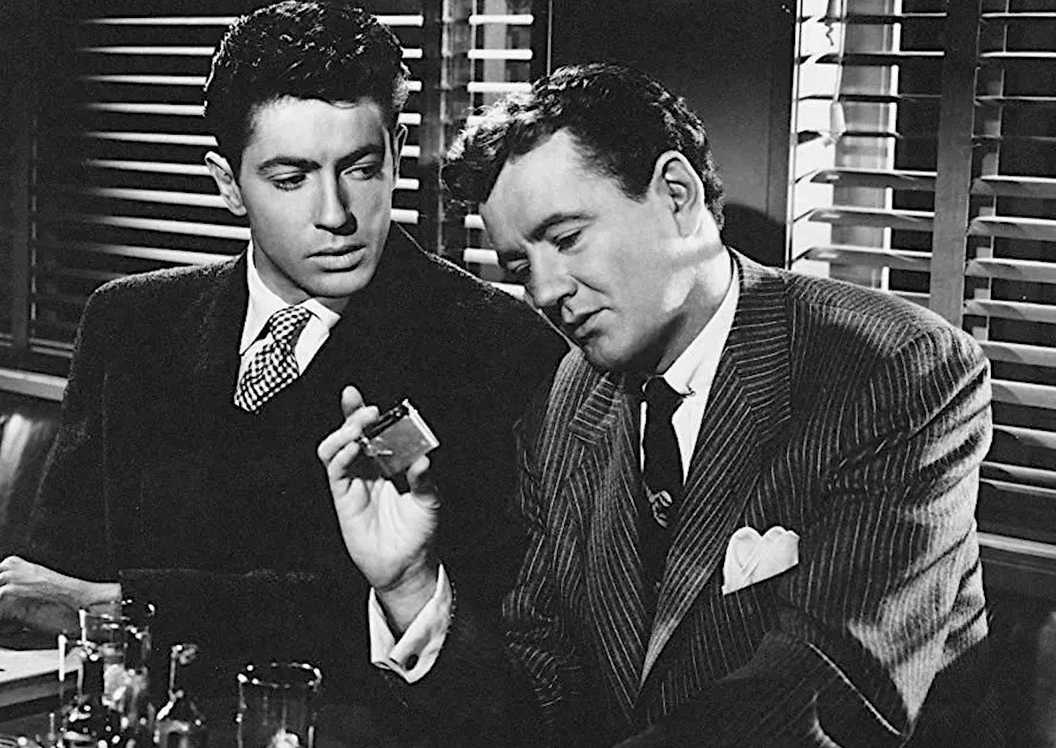
The Master of Suspense's classic noir thriller Strangers on a Train is one of the greatest contributions to the film noir genre and flawlessly demonstrates Alfred Hitchcock's ability to transform an ordinary encounter into an escalating web of fear and manipulation. Farley Granger stars as a famous tennis player, Guy Haines, who, after a chance encounter with a sophisticated sociopath, Bruno Antony (Robert Walker) on a train ride home, becomes an unwilling participant in an inescapable game of murder and sheer madness. While Strangers on a Train is often classified as a psychological thriller, its noir atmosphere and exploration of human darkness have essentially made it a lasting classic of the film noir tradition.
Strangers on a Train showcases many hallmarks of noir, including dramatic black-and-white cinematography, expressive shadows, and inventive camera work that heightens the sense of unease. Hitchcock's meticulous direction builds suspense through visual storytelling rather than relying on violence, culminating in several unforgettable sequences, including the famous runaway carousel climax. While the entire cast deliver sensational performances, Walker runs away with the show with his unsettling but alluring performance as Antony, who is considered to be one of Hitchcock's most intimidating villains of all time.
4 'The Big Heat' (1953)
 Image via Columbia Pictures
Fritz Lang's The Big Heat is a cross between a hard-hitting crime story and a powerful examination of corruption and revenge, making it a definitive masterclass of classic film noir. Glenn Ford stars as an honest police detective Dave Bannion, whose investigation into a fellow officer's apparent suicide uncovers a web of organized crime and political corruption that reaches the highest levels of the city. When tragedy strikes his own family, Bannion loses his faith in the very system he has dedicated his life to serving and embarks on a relentless quest for justice and revenge.
Although Bannion is one of noir's more principled protagonists, his pursuit of vengeance gradually blurs the line between justice and obsession, giving The Big Heat an unusual but effective edge. The film also features memorable supporting characters, particularly Gloria Grahame as Debby Marsh, whose emotional transformation from a mobster's glamorous companion to a courageous and selfless ally not only provides the story with both depth and humanity but also defies the traditional blueprint of the femme fatale. Lee Marvin delivers a chilling performance as the ruthless gangster Vince Stone, conveying a quiet rage and a menacing stare that never fails to stir up an uneasy feeling in audiences.
3 'The Killing' (1956)
 Image via United Artists
Sterling Hayden stars in Stanley Kubrick's innovative noir The Killing as a career-criminal, Johnny Clay, who recruits a group of criminals, each with their own expertise for one last job before he settles down with his fiancé (Coleen Gray). Even though they go to great lengths and plan everything down to the finest detail, unforeseen mistakes, betrayal, and human weakness gradually unravel the seemingly perfect caper. One of the film's unique qualities is its innovative narrative structure, which tells the story from multiple perspectives and shifts back and forth in time, allowing viewers to see how separate events converge into a single disastrous outcome.
The film's influence extends far beyond the 1950s and shaped later heist movies through its non-linear storytelling, ensemble cast, and emphasis on meticulous planning undone by chance. Kubrick's precise direction, economical pacing, and carefully orchestrated suspense keep the tension building from the opening scene to the film's famously ironic conclusion, deeming it to be a crucial entry in the world of classic noir. With its masterful direction, groundbreaking story structure, and powerful themes of fate and failure, The Killing remains one of the defining entries of film noir as well as one of the greatest crime films ever made.
2 'Touch of Evil' (1958)
 Image via Universal Pictures
Orson Welles' Touch of Evil is a profound examination of moral compromise and institutional decay and is considered by many to be the final greatest film of the classic film noir era. Set in a seedy U.S.–Mexico border town, the movie follows a Mexican narcotics' investigator, Miguel Vargas (Charlton Heston), who clashes with corrupt police captain Hank Quinlan (Orson Welles) while investigating a deadly bombing. As Vargas uncovers evidence of corruption and abuse of power, he finds himself drawn into a dangerous struggle against a respected lawman whose methods have become increasingly unethical, putting himself and his new bride (Janet Leigh) in potential danger.
Touch of Evil features a collection of morally complex characters, notably Quinlan, who Welles flawlessly portrays as a brilliant detective whose belief that the ends justify the means has led him into corruption and moral decay, making him one of the most unforgettable figures in classic noir cinema. Heston gives a powerhouse performance as Vargas, who serves as Quinlan's ethical opposite, creating a compelling conflict between justice and power that drives the story. Initially, Touch of Evil wasn't a major success, but over the years, it has had an enormous influence on later crime dramas and neo-noir cinema, inspiring generations of filmmakers with its bold visual techniques and complex storytelling, making it a staple of the classic film noir genre.
1 'Sunset Boulevard' (1950)
.jpg?q=49&fit=crop&w=825&dpr=2) Image via Paramount Pictures
Image via Paramount PicturesBilly Wilder's Oscar-winning noir Sunset Boulevard stands apart from the traditional crime noir by turning its focus toward the dark side of the entertainment industry while retaining the genre's signature atmosphere of fatalism and moral ambiguity, cementing its place as one of the greatest classic noirs of the 1950s. William Holden stars as an aspiring screenwriter, Joe Gillis, who agrees to write a comeback script for a former silent film star, Norma Desmond (Gloria Swanson). As Gillis welcomes Desmond's expensive gifts and constant doting, her affection soon turns into an obsession that makes Gillis realize that he's made a deal with the devil.
While the stunning cinematography by John F. Seitz and Wilder's impeccable direction and artful storytelling are crucial to the power of the film, Swanson's comeback performance is undoubtedly the main attraction in Sunset Boulevard. Swanson, who was also a former silent film star herself, delivers an iconic performance as a once bright star whose inability to accept her fate has led to her living a life consumed by loneliness and delusion, creating one of cinema's most memorable and tragic characters. Sunset Boulevard was a major success and earned eleven Academy Award nominations, including Best Picture, Best Director, and Best Actress, and went on to win for Best Story and Screenplay, Best Art Direction, and Best Original Score.

Sunset Boulevard
Release Date August 10, 1950
Runtime 110 minutes
Director Billy Wilder
Writers Charles Brackett, Billy Wilder, D.M. Marshman Jr.
-

Gloria Swanson
Norma Desmond
-
William Holden
Joe Gillis





 English (US) ·