
.jpg?&fit=crop&w=1600&h=900) Image via Sandrew Film & Teater
Image via Sandrew Film & Teater
Published Jun 23, 2026, 11:26 PM EDT
Ryan Heffernan is a Senior Writer at Collider. Storytelling has been one of his interests since an early age, with his appreciation for film and television becoming a particular interest of his during his teenage years.
This passion saw Ryan graduate from the University of Canberra in 2020 with an Honours Degree in Film Production. In the years since, he has found freelance work as a videographer and editor in the Canberra region while also becoming entrenched in the city's film-making community.
In addition to cinema and writing, Ryan's other major interest is sport, with him having a particular love for Australian Rules football, Formula 1, and cricket. He also has casual interests in reading, gaming, and history.
Sign in to your Collider account
The nature, experiences, and allure of childhood have, for many decades, been one of the most pointed and powerful ideas cinema has explored. It is no surprise that many of the films that have explored youth the best exude an arresting sense of nostalgic yearning, hearkening to the ideal of childhood’s unburdened freedom to capture an air of wonder, possibility, and fun. However, many of the best movies to examine the theme also come with meditations on the loss of innocence, the pressures of family, and the numbing nature in which a child’s naivety clashes with the harshness of reality.
Ranging from underrated classics of the 21st century to iconic blockbusters of the 1980s, these tales of youth are the best depictions of childhood cinema has ever seen. Furthermore, with films from France, Japan, Ireland, Iran, and Sweden as well as America featuring prominently, this collection of movies also showcases the universality of the appeal of childhood as a time of excitement, wonder, and discovery.
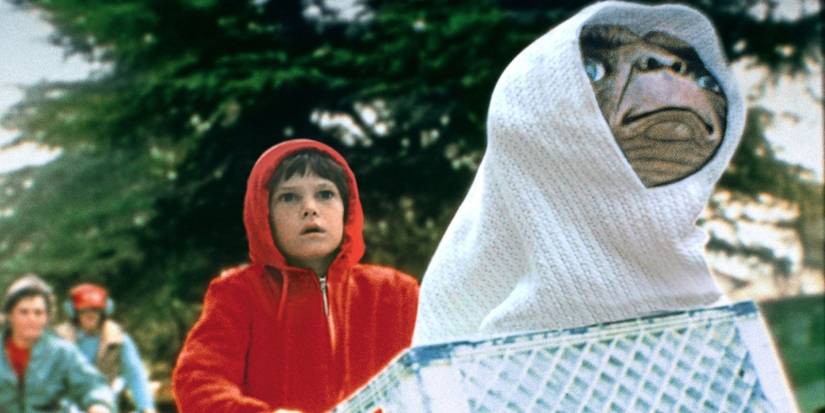 Image via Universal Pictures
Marking one of the most iconic titles in Hollywood history, E.T. the Extra-Terrestrial shines not only as a stunning sci-fi blockbuster, but as one of the most mesmerizing and immersive portrayals of childhood to have ever graced mainstream cinema. Entwined in the magical tale of alien companionship and the efforts to elude government agents, it epitomizes the sheer wonder and adventure of youth with a magnetism that makes everyone who views it feel like a child again.
Steven Spielberg is obviously a master of conjuring such a sense of imaginative awe, but one thing he does brilliantly in E.T. is grounding the movie in moments of heartbreaking drama and, at times, even confronting terror. It captures the full array of experiences and emotions children go through, rather than just romanticizing feelings of glee and excitement. Further supported by the exquisite, characterful puppetry of E.T. and Spielberg’s use of perspective that plants the audience in young Elliott’s (Henry Thomas) view of the world, E.T. the Extra-Terrestrial is the finest display of childhood awe that blockbuster cinema has ever seen.
'The Quiet Girl' (2022)
 Image via Break Out Pictures
While it received widespread critical acclaim and even netted an Academy Award nomination, The Quiet Girl has gone largely unnoticed despite delivering a beautifully poignant exploration of childhood fragility. As one of many siblings living in an impoverished and bitterly dysfunctional household in rural Ireland, Cáit (Catherine Clinch) has grown withdrawn and reclusive. To unburden the stress her family is enduring as her mother manages another pregnancy, she is sent to live with aging distant relatives Eibhlín (Carrie Crowley) and Seán Kinsella (Andrew Bennett) on their farm, where she begins to blossom in their care.
Understated, restrained, and deftly delicate, The Quiet Girl uses its subdued realism to weave an emotionally enrapturing story of neglect, love, and discovery. It marks a masterful directorial debut from Colm Bairéad, who lingers on moments of nuance, connection, and secluded beauty with complete control, conjuring moving sequences where muted gestures and unspoken words become profoundly powerful. It is thematically confronting in how it explores turmoil and mistreatment through the eyes of a child, but it soars with its touching found-family dynamic that finds the warmth and love of childhood even within difficult circumstances.
'Au revoir les enfants' (1987)
 Image via MK2 Diffusion
With its title translating to “Goodbye Children,” Au revoir les enfants is a somber and sobering descent into the fragility of childhood in the midst of sweeping turmoil and political tension. Set in a French boarding school during WWII, it follows the strained bond that develops between Julien (Gaspard Manesse) and Jean (Raphaël Fejtő), a socially awkward student new to the school who Julien discovers to be a Jew in hiding.
Rather than drifting on sentiment, Au revoir les enfants depicts boyhood in its reality, portraying the students as bawdy, mischievous, and cheekily troublesome youths striving to prove their masculinity to one another. The way director Louis Malle captures this gallivanting while still illustrating the innocence of the characters is astonishing, as is the devastating climax, which shows how innocence doesn’t fade gradually, but often shatters against accountability and brutality.
'Boyhood' (2014)
 Image via IFC Films
A masterful encapsulation of childhood and coming-of-age that was ambitiously filmed over 12 years, following the same actors from grade school to young adulthood, Boyhood offers a fluid and grounded depiction of the life of a child. Told through a series of vignettes that capture family gatherings, road trips, birthday parties, and schooling milestones, it follows Mason’s (Ellar Coltrane) formative experiences as he and his sister grow up from being little kids to teenagers on the brink of college.
The stunning scope of the film, presented over the course of a 165-minute runtime, unfolds like a memory of childhood, a blurry yet beautiful procession of important moments that emphasize the quaint details of life. True to director Richard Linklater’s style, Boyhood is a feat of naturalism in cinema, an exploration of the highs and lows of an upbringing under divorced parents that wrestles with the flawed humanity of all its characters through a lens of arresting authenticity.
Collider Exclusive · Oscar Best Picture Quiz
Which Oscar Best Picture
Is Your Perfect Movie?
Parasite · Everything Everywhere · Oppenheimer · Birdman · No Country
Five Oscar Best Picture winners. Five completely different visions of what cinema can be — and what it can do to you. One of them is the film that was made for the way your mind works. Ten questions will figure out which one.
🪜Parasite
🌀Everything Everywhere
☢️Oppenheimer
🐦Birdman
🪙No Country for Old Men
FIND YOUR FILM →
01
What kind of film experience do you actually want? The best movies don't just entertain — they leave something behind.
ASomething that pulls the rug out — that makes me think I'm watching one kind of film and then reveals I'm watching another entirely. BSomething overwhelming — funny, sad, absurd, and genuinely moving, all at once. CSomething grand and weighty — a film that makes me feel the full scale of what I'm watching. DSomething formally daring — a film that pushes what cinema can even do. ESomething lean and relentless — pure tension with no wasted frame.
NEXT QUESTION →
02
Which idea grabs you most in a film? Great films are driven by a central obsession. What's yours?
AClass, inequality, and what people are willing to do when desperation meets opportunity. BIdentity, family, and the chaos of trying to hold your life together when everything is falling apart. CGenius, moral responsibility, and the catastrophic weight of a decision you can never take back. DEgo, legacy, and the terror of becoming irrelevant while you're still alive to watch it happen. EEvil, chance, and whether moral order actually exists or if we just tell ourselves it does.
NEXT QUESTION →
03
How do you like your story told? Form is content. The way a story is shaped changes what it means.
AGenre-twisting — I want it to start in one lane and migrate into something completely different. BMaximalist and genre-blending — comedy, action, drama, sci-fi, all in one ride. CEpic and non-linear — cutting between timelines, building a mosaic of cause and consequence. DA single unbroken flow — I want to feel like I'm living it in real time, no cuts to safety. ESpare and precise — every scene doing exactly what it needs to do and nothing more.
NEXT QUESTION →
04
What makes a truly great antagonist? The opposition defines the protagonist. What kind of opposition fascinates you?
AA system — invisible, structural, and almost impossible to fight because it has no single face. BThe self — the ways we sabotage, abandon, and fail the people we love most. CHistory — the unstoppable momentum of events that no single person can stop or redirect. DThe industry — the machinery of culture that chews up talent and spits out irrelevance. EPure, implacable evil — a force so certain of itself it becomes almost philosophical.
NEXT QUESTION →
05
What do you want from a film's ending? The final note is the one that lingers. What do you want it to sound like?
AShock and inevitability — a conclusion that recontextualises everything that came before it. BEarned emotion — I want to cry, laugh, and feel genuinely hopeful, even if the world is a mess. CDevastation and grandeur — an ending that makes me sit in silence for a few minutes after. DAmbiguity — something that leaves enough open that I'm still thinking about it days later. EBleakness — an honest refusal to pretend the world is tidier than it actually is.
NEXT QUESTION →
06
Which setting pulls you in most? Where a film takes place shapes everything — mood, stakes, what's even possible.
AA gleaming modern city with a hidden underside — beauty masking rot, wealth masking desperation. BA collapsing suburban life that opens onto something infinite — the multiverse of a single ordinary person. CThe corridors of power and science at a world-historical turning point — where decisions echo for decades. DThe grimy, alive chaos of New York and Hollywood — fame as both destination and trap. EVast, indifferent landscape — desert and highway where violence arrives without warning or reason.
NEXT QUESTION →
07
What cinematic craft impresses you most? Every great film has a signature — a technical or artistic element that makes it unmistakable.
AProduction design and mise-en-scène — every frame composed to carry meaning beneath the surface. BEditing and tonal control — the ability to move between registers without losing the audience. CScore and sound design — music that becomes inseparable from the dread and awe of what you're watching. DCinematography as performance — the camera not recording events but participating in them. ESilence and restraint — what's left unsaid and unshown doing more work than any dialogue could.
NEXT QUESTION →
08
What kind of main character do you root for? The protagonist is the lens. Who you choose to follow says something about you.
ASomeone smart and resourceful who makes increasingly dangerous decisions under pressure. BSomeone overwhelmed and ordinary who turns out to be capable of something extraordinary. CA brilliant, tortured figure whose gifts and flaws are inseparable from each other. DA self-destructive artist whose ego is both their superpower and their undoing. EA quiet, principled person trying to make sense of a world that has stopped making sense.
NEXT QUESTION →
09
How do you feel about a film that takes its time? Pace is a choice. Some films sprint; others let tension accumulate slowly, deliberately.
AI love a slow build when I know the payoff is going to be seismic — patience for a devastating reveal. BGive me relentless momentum — I want to feel breathless and emotionally spent by the end. CEpic runtime doesn't scare me — if the material demands three hours, give me three hours. DI want it to feel propulsive even when nothing is technically happening — restless energy throughout. EDeliberate and unhurried — I want dread to accumulate in the spaces between the action.
NEXT QUESTION →
10
What do you want to feel walking out of the cinema? The best films leave a mark. What kind of mark do you want?
AUnsettled — like I've just seen something I can't fully explain but can't stop thinking about. BMoved and energised — like the film reminded me what actually matters and gave me something to hold onto. CHumbled — like I've been in the presence of something genuinely important and overwhelming. DExhilarated — like I've just seen cinema doing something it's never quite done before. EHaunted — like a cold, quiet dread that stays with me for days.
REVEAL MY FILM →
The Academy Has Decided Your Perfect Film Is…
Your answers have pointed to one Oscar Best Picture winner above all others. This is the film that was made for the way your mind works.
Parasite
You are drawn to films that operate on multiple levels simultaneously — that begin in one genre and quietly, brilliantly migrate into another. Bong Joon-ho's Parasite is a film about class, desire, and the architecture of inequality that manages to be darkly funny, deeply suspenseful, and genuinely shocking across a single extraordinary running time. Your instinct is for cinema that hides its true intentions until the moment it's ready to reveal them. Parasite is exactly that — a film that rewards close attention and punishes assumptions, right up to its devastating final image.
Everything Everywhere All at Once
You want it all — and this film gives you all of it. The Daniels' Everything Everywhere All at Once is one of the most maximalist films ever made: action comedy, multiverse sci-fi, family drama, existential crisis, and a genuinely earned emotional core that sneaks up on you amid the chaos. You are someone who responds to ambition, who doesn't want cinema to choose between being entertaining and being meaningful. This film refuses that choice entirely. It is overwhelming by design, and its overwhelming nature is precisely the point — because the feeling of being crushed by infinite possibility is exactly what it's about.
Oppenheimer
You are drawn to cinema on a grand scale — films that understand history not as a backdrop but as a force, and that place their characters inside that force and watch what happens. Christopher Nolan's Oppenheimer is a film about the terrifying gap between what we can do and what we should do, told with the full weight of one of the most consequential moments in human history behind it. You want your films to feel important without feeling self-important — to earn their ambition through sheer craft and the gravity of their subject. Oppenheimer does exactly that. It is enormous, complicated, and refuses easy comfort.
Birdman
You are drawn to films that foreground their own construction — that make the how of the filmmaking part of the what it's about. Alejandro González Iñárritu's Birdman, shot to appear as a single continuous take, is cinema examining itself through the cracked mirror of a fading actor's ego. You respond to formal daring, to the feeling that a film is doing something that probably shouldn't be possible. Michael Keaton's performance and Emmanuel Lubezki's restless camera create something genuinely unlike anything else — a film that is simultaneously about creativity, relevance, self-destruction, and the impossibility of ever truly knowing if your work means anything at all.
No Country for Old Men
You are drawn to cinema that trusts silence, that refuses to explain itself, and that treats dread as a form of meaning. The Coen Brothers' No Country for Old Men is a film about the arrival of a new kind of evil — implacable, arbitrary, and utterly indifferent to the moral frameworks we use to make sense of the world. It is one of the most formally controlled films ever made, and its controlled restraint is what makes it so terrifying. You want your films to haunt you, not comfort you. You are not interested in resolution if resolution would be dishonest. No Country for Old Men is honest in a way that most cinema never dares to be.
↻ RETAKE THE QUIZ
'Fanny and Alexander' (1982)
 Image via Sandrew Film & Teater
Initially released as a five-hour miniseries by Swedish maestro Ingmar Bergman, Fanny and Alexander was trimmed down to a stunning three-hour realization of childhood that contrasts the wondrous freedom of youth against the intimidating vulnerability of helplessness in a world ruled by adults. Set in the early 20th century, it follows siblings Alexander (Bertil Guve) and Fanny Ekdahl (Pernilla Allwin) as they navigate the tumultuous shifts in their peaceful family life in the aftermath of their father’s death and their mother’s marriage to a strict bishop.
Bergman’s ability to explore dichotomy is on full display. The movie dissects both an adult’s vision of the world against a child’s and explores the stark difference between the warmth and tenderness of motherhood and the cold, masculine sterility of fatherhood. Further strengthened by its ability to weave together fantasy and reality, Fanny and Alexander is a masterclass in childhood wonder and a masterpiece of international cinema.
'I Was Born, But…' (1932)
 Image via Shochiku
Through its reliance on visual storytelling, particularly in performance, silent comedy cinema often holds a striking sense of sincerity that is emotionally captivating. That is certainly the case with I Was Born, But…, an underrated masterpiece from Japanese filmmaking genius Yasujirō Ozu that unfolds as two young brothers move to Tokyo with their father when he is transferred. As they navigate issues of bullying and social cliques, they must also reckon with a soul-shattering reality when they discover their father, whom they idolize, is routinely ridiculed in his workplace.
Amongst their peers, the boys strive for masculinity. Acts of truancy and aspirations of strength display their desire for power in their naïve vision of the world. But their innocence is inescapable when they are exposed to the true callousness of the world through their father’s mistreatment and their complex feelings of shame, anger, and reluctant acceptance. The fact that the story transpires with such elegance and resonance despite not having dialogue is incredible, making I Was Born, But… a monumental achievement of cinema and a powerful exploration of childhood.
'Children of Heaven' (1997)
 Image via Miramaz Films
While it has perhaps gone unnoticed by the masses, Iranian cinema has been a beacon of excellence in the form on the international stage for many years now. One of the country’s defining masterpieces is Children of Heaven, a poignant and ensnaring family picture of profound humanism. When Ali (Amir Farrokh Hashemian) loses his sister’s shoes while running errands, the two siblings concoct a scheme to keep the accident hidden from their parents. When it becomes increasingly difficult to keep the ruse going, Ali enters a running race to win new shoes.
Anchored by the captivating performances of the two young stars, Children of Heaven enthralls viewers in the adorable yet visceral stakes of the lost shoes, using the issue to explore childhood morality, sibling bonds, and the fine balance between innocence and accountability. Exuding an air of wonder, charm, and joyous adventure with sublime tenderness, the Iranian film is an emotionally gripping immersion into the ideals and troubles of childhood.
'Stand By Me' (1986)
 Image via Columbia Pictures
Directed by Rob Reiner and based on the Stephen King novella The Body, Stand by Me explores a fascinating stage of a child’s development, the fleeting moment on the cusp of adolescence as youthful curiosity clashes with teenage recklessness. Following four friends as they venture into the woods to see a dead body, its premise is laced with an interest in violence that so many young boys think makes them manly, but its execution is defined by the boys’ underlying innocence and their beautiful friendship.
Reiner’s direction makes the film a masterful immersion in the emotions of youth that is nostalgic and piercing without relying on sentiment. Its tragic finale, punctuated by the beautifully worded observation, “I never had any friends later on like the ones I had when I was twelve. Jesus, does anyone?” which embodies the perfection of Stand by Me and the precision with which it captures the essence of boyhood in all its bittersweet glory.
'Cinema Paradiso' (1988)
 Image via Titanus
An ode to cinema and the influences in childhood that shape our lives, Cinema Paradiso is a gorgeous and soulful drama of human connection, community, and the uniting force of art. After hearing about the death of the projectionist from his hometown, an Italian director reflects on his childhood and his formative relationship with Alfredo (Philippe Noiret), who cultivated his passion for cinema and helped him in his adolescence as he struggled with the agony of first love.
Complemented by Ennio Morricone’s beautiful score, Cinema Paradiso relishes the journey of life and the way the memories of youth, infused with an idealized air of mischief, magic, and wonder, last a lifetime. Its final act, following the director as he returns to his hometown to attend Guido’s funeral, becomes a bittersweet meditation on the fragility of childhood recollections against the brutality of the passage of time. Made truly unforgettable by its astonishing final moments that encapsulate the glory of cinema and memory, Cinema Paradiso is a heartwarming depiction of childhood at its most wondrous and pure.
'The 400 Blows' (1959)
 Image via Cocinor
Authentic and compassionate in its examination of childhood innocence in the harshness of the real world, The 400 Blows is viewed by many as being the ultimate exploration of youth in cinema. Directed by French filmmaking legend François Truffaut, it follows young Antoine (Jean-Pierre Léaud), a neglected boy misunderstood by his parents and tormented by his teacher due to his rebellious behavior, as he abandons his schooling and embarks on a life of petty crime that leads him to a juvenile detention center.
Under Truffaut’s sympathetic lens, Antoine’s story isn't presented as a nihilistic tragedy, but as a complex and sincere examination of troubled youth where reckless decisions and inevitable consequences are offset by beats of friendship, camaraderie, and innocent joy. The 400 Blows holds strong criticisms of the world, but it places them at the feet of adults rather than at the whims of a child’s struggles. In doing this, it balances misbehavior with vulnerability, and emerges as the most piercing, powerful, and essential depiction of childhood.








 English (US) ·