
Across decades of publication, Batman evolved from pulp detective to the psychological cornerstone of the DC universe, with landmark arcs that reshaped his mythos. In the 1980s, Frank Miller’s The Dark Knight Returns and Year One replaced Silver Age camp with grit, while Alan Moore’s The Killing Joke redefined the Joker and Barbara Gordon forever.
Beyond tonal reinvention, pivotal Batman storylines have repeatedly driven major structural changes throughout DC continuity. From reimagining former Robin Jason Todd as Red Hood to introducing Bane, who would push the Dark Knight to his absolute limits, these stories are among the most important not only in Batman's mythos but in DC as a whole.
This article spotlights 10 Batman storylines that changed DC forever, cementing Batman as a pop culture icon and one of DC’s front-runners. As one of DC’s biggest superheroes, his stories have had a monumental impact on the universe, sending ripples through every corner and affecting multiple characters.
11 Batman: The Court of Owls
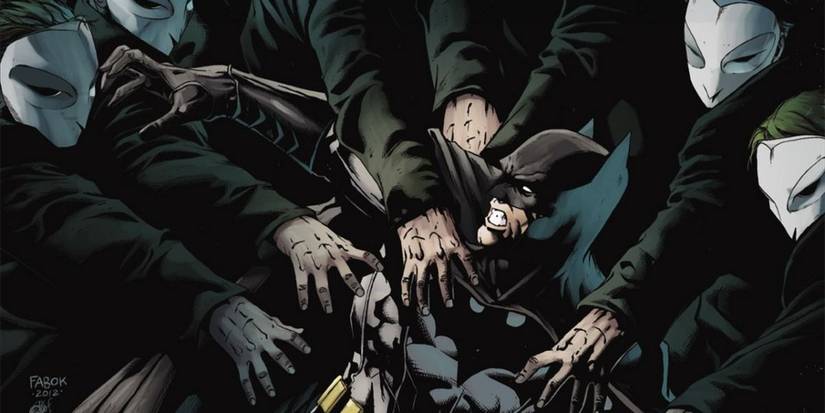
Scott Snyder and Greg Capullo’s reboot of the mainline Batman series during 2011’s New 52 era shook up the entire comic book world. The Court of Owls emerged as one of DC’s most influential and compelling stories. The storyline makes perfect use of one of the best new DC villain groups in decades to deliver a stellar Batman run.
The Court of Owls shattered Bruce Wayne’s belief that he truly knew Gotham City and reshaped what readers thought of Gotham City and its history. Bruce uncovers a centuries-old cabal of wealthy elites who secretly ruled Gotham since colonial times, enforced by undead assassins called Talons who view Batman as a trespasser on their domain.
Ultimately, Scott Snyder and Greg Capullo set a standard for what a modern Batman run should be while simultaneously creating one of the best new additions to the Batman mythos. Ominous, dark, and mind-bending, The Court of Owls shaped the landscape of the DC universe.
10 Batman R.I.P. / Final Crisis

Executed in tandem between 2008 and 2009, Grant Morrison’s Batman R.I.P. and Final Crisis form an ambitious, meta-textual deconstruction of Bruce Wayne’s mind and mortality. The storyline pits Batman against the Black Glove organisation and culminates in his supposed death in Final Crisis.
Set immediately before the events of Final Crisis, Batman: RIP shows a beaten, exhausted Batman forced into a confrontation with the New Gods. It also sets off the events of Battle for the Cowl, where various heroes fought against each other for the mantle following Bruce’s demise, and Dick Grayson emerged victorious.
After learning of Orion’s death, Batman was seemingly killed while helping defeat Darkseid in Final Crisis #6, but he was simply blasted through the time stream via Darkseid’s Omega Beam. Doctor Hurt becomes a mysterious and formidable antagonist for Dick Grayson and Damian Wayne, leading to Bruce’s eventual return and the formation of Batman Inc.
9 Batman and Son

Batman and Son features one of the most jaw-dropping reveals in comic history: that Batman has a son. This storyline expands on plot threads from the earlier novel Son of the Demon, reintroducing his son, Ibn al Xu’ffasch, as Damian Wayne. Damian Wayne would go on to become a favourite character and addition to the Batman family.
The story kicks off with Batman returning from a trip across the world with Nightwing and Robin, only to meet his alleged son, Damian al Ghul. His mother is Talia al Ghul, the daughter of Ra’s al Ghul, and he chooses to live with Batman for a while, even expressing interest in becoming Robin.
After a battle with Ra’s and the League of Assassins, Bruce tries to bond with Damian. While Tim Drake thinks Batman would prefer his real son as Robin, Bruce says Damian is too hot-headed and inexperienced. Though he had a polarising introduction, Damian would see immense growth after his time with his father, becoming a mainstay in the DC universe.
8 Batman: Under the Hood
7
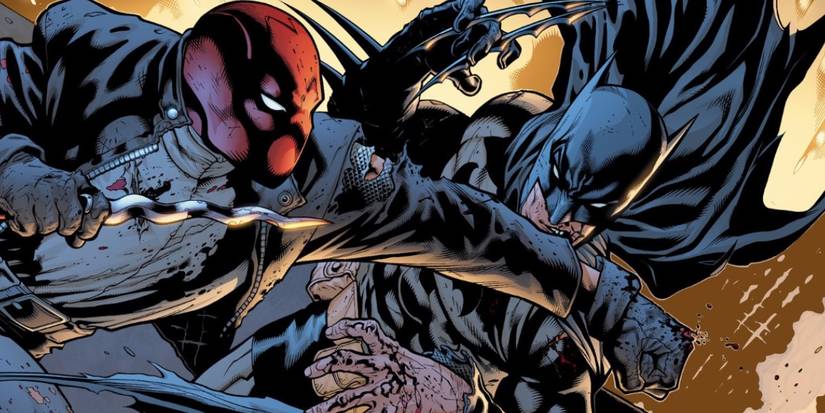
In Batman: Under the Hood, Batman’s second Robin, Jason Todd, is resurrected seventeen years after his brutal murder. Jason Todd returns as the ruthless vigilante known as Red Hood. Under the Hood centres on Batman confronting his greatest failure: his inability to prevent Jason Todd’s death.
The story begins with Jason ruthlessly killing criminals, twisting Batman’s ideology through his immense hatred and need for vengeance. The narrative questions his methods and Batman’s no-kill rule as an effective deterrent against crime. Culminating in a heartbreaking confrontation between Jason and Bruce, Under the Hood forever reshapes the Bat-Family dynamic and Batman’s mythos.
6 Batman: No Man’s Land
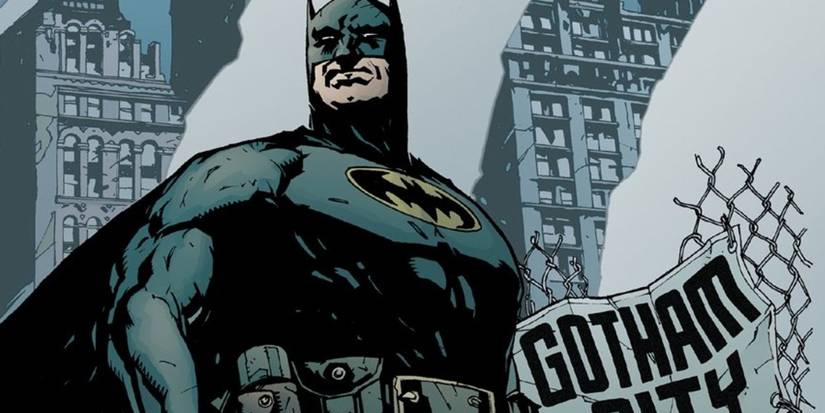
Batman: No Man’s Land is a family crossover event in which Gotham City is cut off from the United States and turned into an “open-air prison” filled with crime. After the consecutive disasters in Contagion, Legacy, and Cataclysm, Gotham became a lawless wasteland, divided into territories controlled by gangs and crime lords competing for power.
No Man’s Land stands out because it cuts off Bruce Wayne from his resources, leaving the Bat-Family to survive on cunning, alliances, and street-level tactics. After months of lobbying Washington without success, Batman returns to find Commissioner Gordon holding Gotham together with a loyal band of cops, the Blue Boys, while Oracle runs intelligence and communications.
Furthermore, No Man’s Land left an indelible mark on DC continuity through major character introductions and status quo shifts. It introduced Cassandra Cain, a silent, lethal martial artist who became the new Batgirl, and also Harley Quinn from Batman: The Animated Series into the mainstream DC comic continuity for the first time.
5 Batman: Knightfall
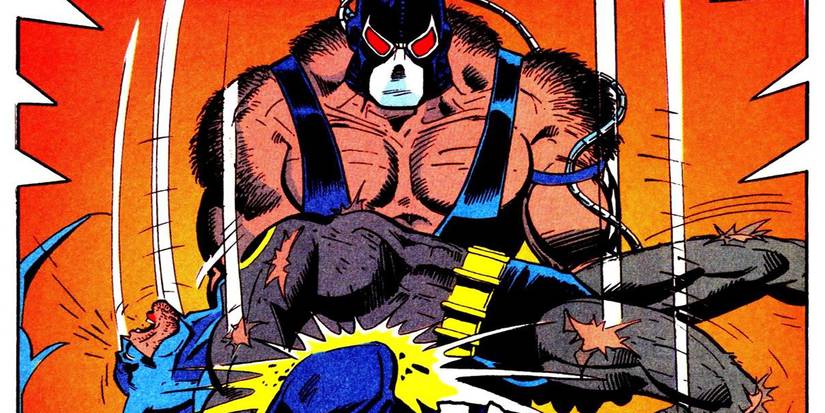
The 1990s were a crazy time for superhero comics, where many mainstream superheroes were pushed to their breaking points. Hal Jordan lost his mind, Superman died, and Spider-Man got tangled in an endless clone saga. Batman: Knightfall didn't just introduce Bane; it birthed a character who would make comic book history as the man who broke the Bat.
In the story, Bane orchestrates a breakout at Arkham Asylum, releasing all of Batman’s Rogues to terrorise Gotham City. Batman has to spend several days chasing down criminals without rest, leaving him exhausted. A worn-out Batman then arrives home only to be ambushed by Bane. Bane famously broke Batman’s spine over his knees,
The panel where Bane broke Batman’s spine is one of the most iconic in comic book history. The story featured Batman at his lowest and cemented Bane as a horrific force of Nature, forcing the Dark Knight to recover and reclaim his mantle from Azrael, a brutal anti-hero, who took over as Batman after he got incapacitated.
4 Batman: A Death in the Family

Jim Starlin and Jim Aparo’s 1988 storyline, Batman: A Death in the Family, let readers decide the fate of Batman’s second Robin, Jason Todd. The story’s impact on the Batman mythos is immense. The story features Batman’s greatest failure and a tragedy that would haunt him for years to come.
For decades, Batman and his allies seemed invincible. Batman and Robin slipped out of danger in story after story, and their risky crusade rarely came at a real cost. Then the Joker lured Jason into a trap using his mother, beat him with a crowbar, and left them both inside a building rigged to explode, which Batman could not prevent.
Readers voted, and by a narrow margin, Jason died. Killing a child hero was unprecedented, and it permanently darkened Batman’s world, leaving guilt and failure at its centre. The story also cleared the way for Tim Drake to become the third Robin and, years later, for Jason’s return as the Red Hood.
3 Batman: The Killing Joke

Published in 1988, The Killing Joke is one of Alan Moore’s most impactful works, offering a definitive version of the Dark Knight and the Joker’s relationship and giving the Clown Prince of Crime an iconic origin story. In the story, the Joker assaults and paralyses Batgirl in an attempt to drive Commissioner Gordon to insanity.
The Joker is revealed to be a failed comedian driven insane, giving birth to his philosophy that “one bad day” is all it takes to create the Joker. This masterpiece forever redefines Barbara Gordon as a character, explores the differences between Batman and the Joker, and permanently changes their dynamic.
2 Batman: Year One

In 1987, after DC rebooted its universe with Crisis on Infinite Earths, Batman: Year One became the first canon Batman story released. Frank Miller and David Mazzucchelli reimagined Batman’s origin story, showing how he became the Batman people know today. It explored how he created his Batman identity while also touching on the character’s psychological trauma and turmoil.
The story follows a young, inexperienced Batman struggling to make an impact on Gotham as a symbol of vengeance. Since its release, Batman: Year One has become the blueprint for superhero origin stories. It offers an unparalleled look at Batman’s motivations, his connection to Gotham, and his relationship with Jim Gordon.





 English (US) ·