
Anime has a long tradition of presenting morally gray protagonists who save the day while committing acts that would earn them a one-way ticket to The Hague in the real world. These characters rack up violations of the Geneva Conventions faster than most villains do. Yet somehow, through tragic backstories, charisma, or narrative audacity, fans end up rooting for them anyway.
The truth is, anime often thrives in morally gray zones. When the stakes are planetary survival, the dismantling of tyrannical empires, or the breaking of endless cycles of hatred, “heroism” starts looking a lot like calculated atrocity. Writers know this, and the best ones lean into it - never fully excusing the bloodshed, but refusing to sanitize it either.
This list isn’t about defending the indefensible. It’s about acknowledging the uncomfortable reality: some of anime’s most unforgettable heroes would be standing trial for war crimes if their worlds had an International Criminal Court. And yet fans keep watching, keep debating, and keep loving them.
Kiritsugu Emiya (Fate/Zero)

Kiritsugu Emiya’s pursuit of world peace through the Holy Grail War is built on acts that would earn him multiple war crimes convictions. He bombs the Hyatt Hotel to eliminate Kayneth El-Melloi Archibald, killing innocent guests and staff in the process. He shoots down a plane carrying Natalia Kaminski and Magus’s ghoul-infected victims, sacrificing her and willfully killing protected civilians.
His broader mercenary career includes assassinations, bombings, and targeted killings of heretical magi without trial, often in civilian areas. Kiritsugu’s tragedy lies in his shattered idealism. Childhood horrors, his father’s experiments, and Natalia’s death teach him that saving the many requires sacrificing the few. He’s not cruel for pleasure; every kill is weighed against a dream of ending war forever.
That internal conflict, brooding, self-loathing, yet unyielding, makes him profoundly human. His clashes with Saber highlight the cost: chivalry versus pragmatism, honor versus results. Factually, his methods leave thousands dead across conflicts. He forces viewers to confront ugly truths; real peacemakers often have the bloodiest hands. He’s loved because his brokenness feels authentic in a genre of shining heroes.
Tanya von Degurechaff (Saga of Tanya the Evil)

Tanya von Degurechaff’s military record would bring her before an international tribunal. The Arene City operation remains an example. After the Empire issues an evacuation order and declares the remaining population lawful military targets, Tanya directs a prolonged combined-arms assault and precision mage strike. This reduces significant portions of the city to rubble and inflicts heavy civilian casualties.
This operation violates core prohibitions on indiscriminate attacks and on striking civilian objects that are not military targets. Beyond Arene, Tanya consistently exploits legal protections to gain a battlefield advantage. She has employed false surrender signals, misrepresented protected status to draw enemies into traps, and created situations designed to provoke violations of the laws of war on the opposing side.
Yet despite this grim ledger, Tanya remains one of the most compelling protagonists in modern isekai. She is not motivated by sadism or ideology; she’s just a former Japanese salaryman reincarnated into the body of a child. Fans gravitate toward her because she consistently outmaneuvers both human armies and a literal god, transforming war crimes into elegant strategic victories.
Alucard (Hellsing)

Alucard is a remorseless engine of violence. He massacres Millennium’s Nazi vampires and human forces in London, devouring souls, torturing foes, and unleashing bloodbaths that kill indiscriminately. His glee in slaughter, impaling, mutilating, and absorbing enemies is a crime against humanity. He executes SWAT teams, taunts Integra about unleashing him on humans, and revels in cruelty.
He fights monsters, but his methods make him one. As Vlad the Impaler is reborn, his historical atrocities carry over. Yet he’s magnetic. With the swagger of Crispin Freeman’s voice, the baroque violence, he’s honest about being a monster. No fake redemption; he serves Integra by choice, finding purpose in controlled savagery.
Hellsing Ultimate lets him revel without guilt, giving fans a cathartic spectacle. Viewers adore him for owning his monstrosity in a genre full of moral posturing. Legally indefensible; genocide-level body count. Emotionally, he’s the necessary evil that hunts worse evils. That unapologetic edge makes him unforgettable.
Saitama (One-Punch Man)

Saitama’s one-punch victories cause apocalyptic collateral damage. Boros’ fight levels vast areas; Garou clashes and Monster Association arcs leave cities in ruins. His Serious Punch exchanges threaten to destroy the planet. Such banned attacks are expected to cause excessive damage to civilian objects; Saitama doesn’t evacuate, assess, or minimize fallout; he ends threats instantly, often walking away from the wreckage.
He became a hero for fun, but boredom and existential emptiness make him indifferent to consequences. Saitama is a beloved character for subverting shonen entirely. No screaming power-ups, no tragic backstory; just a bald guy in a cape buying groceries. His deadpan humor, bargain-hunting, and quiet frustration with being unbeatable are endlessly relatable.
The satire cuts deep: d true power isolates. This makes one overlook the leveled skyscrapers because the joke is that saving the world shouldn’t require bureaucracy or glory. Legally, he’d face tribunals for environmental devastation and disproportionate force. In-story, he’s the most grounded hero in a ridiculous world, and that simplicity makes One-Punch Man brilliant.
Spike Spiegel (Cowboy Bebop)

Spike Spiegel operates in the legal gray zone of bounty hunting. As a former Red Dragon Syndicate enforcer, he carried out assassinations, hits, and syndicate operations involving murder without trial. After faking his death to escape, he continues killing bounties on sight rather than capturing them alive, engaging in shootouts that endanger civilians.
Under customary humanitarian law, willful killing outside lawful combat and targeted killings without due process raise serious issues, plus his Syndicate history implicates him in organized crime offenses like murder and racketeering. He’s not a soldier in declared war, but his body count and disregard for procedure would land him charges for extrajudicial executions and reckless endangerment.
However, Spike remains iconic because of the melancholy that defines him. The jazz soundtrack, the cigarette, the half-smile; all added up to his charisma. He’s adored for the cool detachment, the buried pain, and the way he carries regrets like a worn coat. Legally indefensible; a serial killer with a license. Narratively, nonetheless, one of anime’s most human characters.
Goku (Dragon Ball)

Goku’s battles routinely cause catastrophic collateral damage. From the Saiyan Saga onward, his fights level cities, shatter landscapes, and threaten entire planets. Super Saiyan 3’s power shakes Earth violently, and later forms cause global tremors. While the series rarely shows explicit civilian deaths, such attacks are expected to cause excessive incidental civilian harm.
He’s not malicious; he’s a pure-hearted fighter who gives enemies chances and protects Earth when it counts. But his disregard for collateral, allowing battles in populated zones or powering up without restraint, would be criminal negligence or reckless endangerment in reality. Fans adore Goku because his innocence shines through the chaos. He fights for fun and friendship, not conquest.
That cheerful optimism in a high-stakes shonen world is magnetic. The tone keeps destruction cartoonish rather than grim, so viewers laugh off flattened cities. Legally, he’d be prosecuted for massive property damage and endangerment. Anecdotally, he’s the ultimate good guy whose power outpaces his caution.
Guts (Berserk)
 Custom image by J.R. Waugh
Guts’ early run with the Band of the Hawk straight-up lands him in war-crimes territory by any modern standard. He’s one of Griffith’s best blades in that mercenary outfit, and they spend years fighting in what’s clearly the Hundred Years’ War dialed to eleven: breaching castles, raiding enemy regions, burning villages to ash, and leaving civilian areas in ruins.
The manga shows them taking Doldrey Fortress and other big strongholds, and it’s pretty obvious there’s a ton of nasty stuff happening off-panel; the kind of thing mercenary companies did as standard practice back then. Today, that would get anyone hauled in front of The Hague.
What keeps people obsessed with Guts is that Miura never lets him wash the blood off. Every time that Dragonslayer comes down, viewers feel the trauma, the guilt, the barely-contained rage behind it. He’s not a shining knight or a savior. He’s just a broken, stubborn survivor dragging himself through hell, trying to keep Casca alive and make Griffith pay.
Eren Yeager (Attack on Titan)
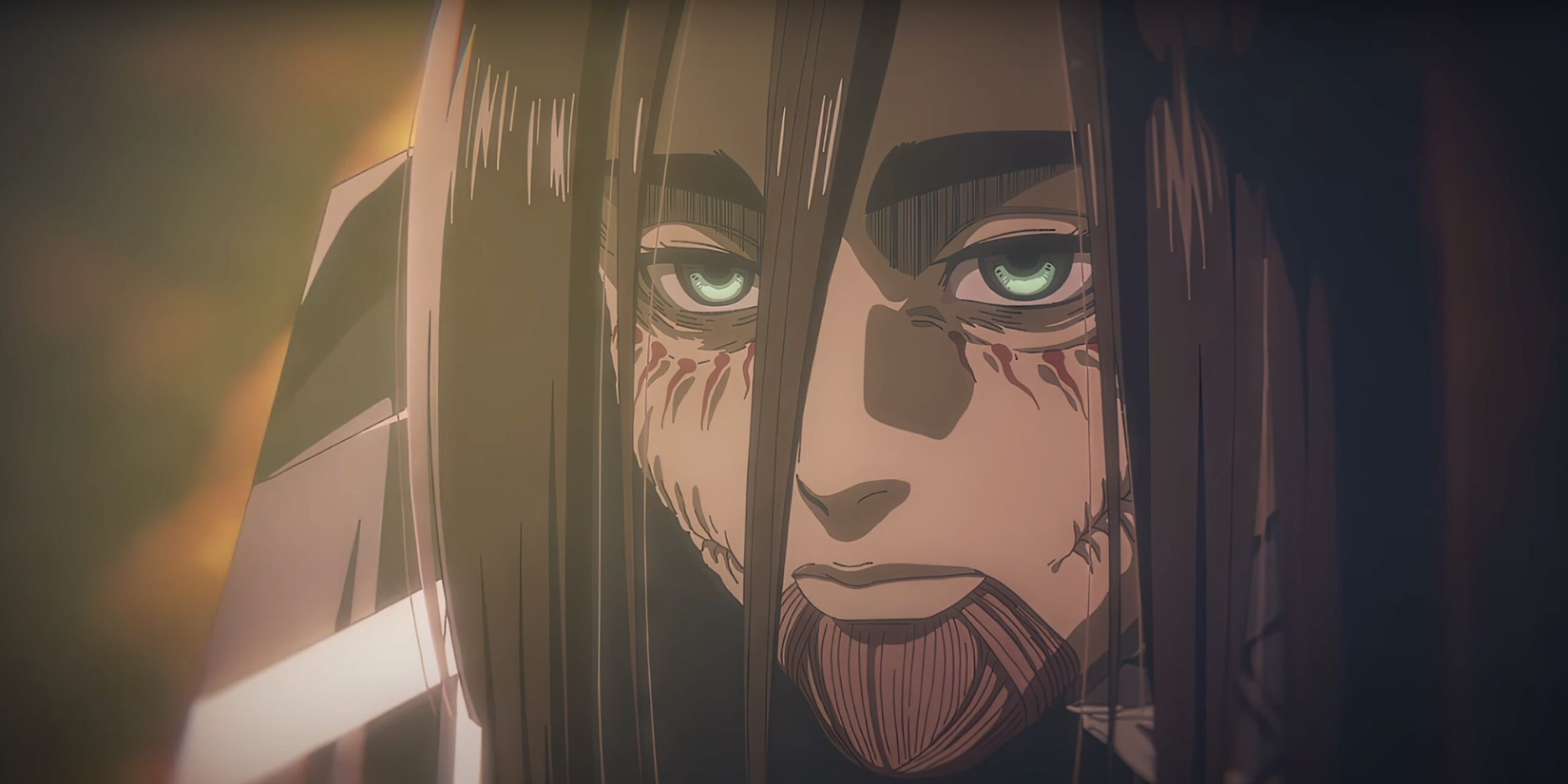
Eren’s story ends with the Rumbling; millions of Colossal Titans flattening about 80% of the world outside Paradis, specifically going after non-Eldians in what’s hard to call anything but genocide. Before that, he already turned Liberio into a massacre, smashing through civilians and world leaders with Titans in a completely indiscriminate attack.
Then he helps build the Yeagerists on a foundation of assassinations, coups, and hardcore propaganda. Even earlier, kid Eren straight-up murders kidnappers, and later he loses control in Titan form and ends up killing civilians in Stohess. When people break down the Rumbling legally, it’s usually seen as a deliberate, systematic attack on civilian populations, not just “war”.
Fans still can’t let Eren go because Isayama never pretends the trauma isn’t real. Watching his mom get eaten in front of him, then slowly learning the entire planet hates Eldians and wants them gone; it’s genuinely heartbreaking how that turns him into what he becomes. He’s not just “evil.” He’s someone completely chained to his own idea of freedom.
Light Yagami (Death Note)
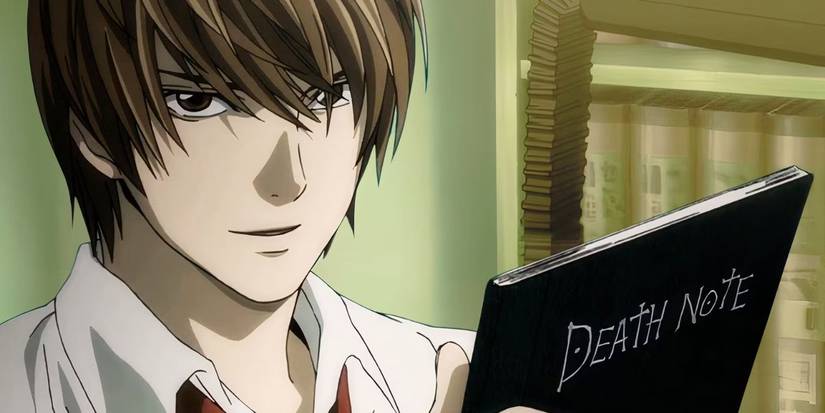
Light Yagami’s time as Kira starts with him thinking he’s delivering vigilante justice, but it very quickly turns into full-on global tyranny. He ends up killing well over 100,000 people with the Death Note; tons of criminals, but also FBI agents like Raye Penber, innocent people like Naomi Misora and Lind L. Tailor, and anyone who gets in his way.
The way he systematically takes out journalists, detectives, critics, and anyone who publicly resists Kira makes it hard to argue this isn’t a widespread and systematic attack on civilians. This, under modern definitions, puts it squarely in crimes-against-humanity territory when he starts targeting entire groups of people who won’t bow to Kira’s rule.
He doesn’t stop at actual violent offenders either; he kills non-violent criminals like embezzlers, and later he wipes out the entire Yotsuba Group after they’re already in custody: zero due process, zero mercy, just judgment from on high. What keeps Light so magnetic is the sheer charisma and brainpower he brings to the table.






:quality(85):upscale()/2026/02/02/940/n/1922153/tmp_2bS324_5518251436641b44_Photo_Grid_3_Up_-_Burgundy_Green-2-Photo_Grid_4up_Main_-_Green_Burgundy_1_.jpeg)
 English (US) ·