

Published Mar 4, 2026, 3:36 PM EST
Brad LaCour is a Senior List Writer for Collider. Based out of Los Angeles, California, Brad lives close enough to the stars but is too busy to find out where exactly they live. Brad is fairly certain he's seen Paul Stanley twice in a grocery store, but was too afraid to ask.
Whether it was comedy, action, or drama, the 1980s delivered iconic films that have lost none of their appeal almost fifty years later. Movies like Raiders of the Lost Ark were introducing movie-goers to new matinee heroes, while dramas such as Raging Bull confirmed exciting new talent had set up permanent residency in Hollywood. So it’s understandable that in a crowded lineup, a few masterpieces could be overlooked after enough time.
From quiet, contemplative character studies to white-knuckle thrillers, the following are ten '80s movie masterpieces you forgot existed. Many of the films below won Academy Awards or can be found on popular streamers, but they don’t get nearly as much love as other classics from the same decade.
‘Ordinary People’ (1980)
 Image via Paramount Pictures
Although an award-winning, critically praised film for its time, Ordinary People didn’t hold on to the same relevance as other movies released the same year. Based on the novel by Judith Guest, the film follows the Jarrett family as they attempt to recover from the death of one son, which led to the suicide attempt of the youngest son, Conrad (Timothy Hutton). While Conrad recovers with the aid of counseling, his parents, Beth (Mary Tyler Moore) and Calvin (Donald Sutherland), face inner conflict on how to move forward.
Ordinary People explores the pain, guilt, and denial that consume a family after a tragic accident leaves each member grieving differently. The directorial debut of Robert Redford, Ordinary People would go on to win four Academy Awards, including top honors for Best Picture, famously beating Martin Scorsese's Raging Bull. The award wasn’t received without some controversy, with many feeling that Scorsese's masterpiece, still widely celebrated today, was more deserving.
‘Streets of Fire’ (1984)
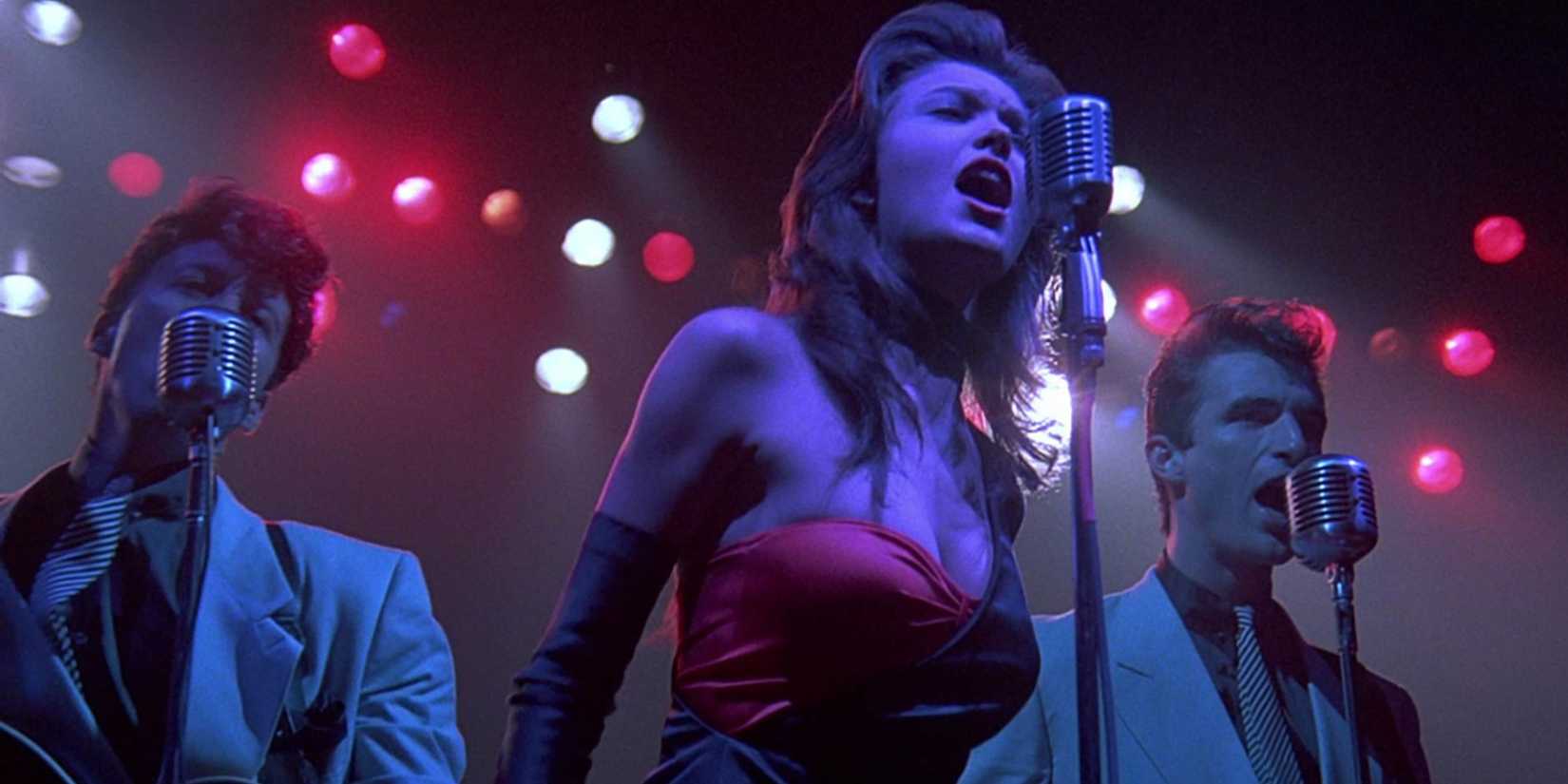 Image via Universal Pictures
It's difficult to imagine that a hard-boiled crime movie described as a “Rock & Roll Fable” could be forgotten, but Streets of Fire is rarely mentioned. Set in an alternate time period that has pieces of 1950’s fashion mixed with a gritty, modern sensibility, Streets of Fire sees Ellen Aim (Diane Lane), captured by the Bombers, a street gang led by Raven Shaddock (Willem Dafoe). Ellen’s ex, Tom Cody (Michael Paré), reluctantly agrees to save her, but his rescue mission stirs up old feelings.
If you ever wanted to see Rick Moranis unironically play a tough-talking character, it’s time to watch Streets of Fire. With broad characters who live in a quasi–steampunk fantasy of urban decay, Streets of Fire is a buffet of different styles and influences that is an overload to the senses. The film isn’t going to be for everyone, but as an ambitious piece of fiction that exists in a category of its own, Streets of Fire should have a larger footprint in history.
‘Talk Radio’ (1988)
 Image via Universal Pictures
While Director Oliver Stone became a household name with movies like Platoon and Wall Street, his film adaptation of the play Talk Radio is equally worthy of accolades. The movie opens up on a big night for Barry Champlain (Eric Bogosian), a controversial radio talk show host whose show is on the cusp of national syndication. In between heated calls with listeners, Barry reflects on the pivotal and sometimes self-destructive moments that have left him successful but isolated.
A semi-faithful adaptation of Bogosian’s play of the same name, Talk Radio was ahead of the curve when it explored the impact of incendiary free speech. Stone takes the audience out of the radio station in scenes that break up the one location of the play, but the movie’s best moments are when the camera is pointed at Bogosian. As Champlain, Bogosian turns words into daggers aimed at anyone but himself, allowing his malicious charisma to gain him enemies and followers within the same breath.
‘Clean and Sober’ (1988)
 Image via Warner Bros.
At a time when Michael Keaton was still primarily known as a comedic actor, the drama Clean and Sober gave him a chance to show his impressive range. After a drug-induced spiral ends with Daryl Poynter (Keaton) waking up next to a woman who died from a cocaine overdose, he checks into a rehab program to avoid an arrest. However, Daryl’s time at the rehab center turns into a meaningful experience when he comes to terms with his addiction and the actions it’s caused.
A movie such as Clean and Sober, where we’re tethered to a character who might seem initially unlikable, lives or dies by its casting. Keaton easily humanizes Daryl and gives us reasons to root for not only his sobriety, but the emotional well-being that creates the foundation of the sobriety to continue. Keaton’s bigger roles in movies like Batman or Beetlejuice may be the parts he’s known for, but Clean and Sober features one of his finest performances.
‘Tucker: The Man and His Dream’ (1988)
 Image via Paramount Pictures
Francis Ford Coppola and Jeff Bridges are two widely recognized names in Hollywood, but their collaboration on Tucker: The Man and His Dream has been overshadowed by their other works. Bridges stars as Preston Tucker, a determined inventor in the 1940s who designs the car of the future, much to the chagrin of the already established motor companies. The biographical film chronicles Tucker’s real-life struggles to make his dream a reality in the face of a coordinated effort to stop him.
The story of Tucker’s attempt to build an industry-changing car is true, but under Coppola’s direction, the movie is an optimistic fable that plays out like a lost Frank Capra film. The passion project of Coppola’s is optimistic without drifting into saccharine territory, with Bridges and an Oscar-nominated Martin Landau adding gravitas when needed. Tucker: The Man and His Dream is currently at an 82% on Rotten Tomatoes, and is well worth a watch for those unfamiliar with this moment in history.
‘Lost in America’ (1985)
 Image via Warner Bros.
A yuppie couple decides to explore the country and regrets it immediately in the neurotic road trip comedy Lost in America. David Howard (Albert Brooks) and his wife Linda (Julie Hagerty) have a comfortable life in Los Angeles, but they find themselves unhappy and in a rut. When a planned promotion for David doesn’t move forward as planned, the two swap their house for a motorhome and travel the open road.
Even though Lost in America is commenting on the listlessness borne from middle-class comfort in the '80s, the story has lost little relevance on a modern-day rewatch. Brooks has an uncanny knack for hitting the nerve that causes discomfort and laughter at the same time, and that skill is perfectly showcased in Lost in America. Brooks would receive acclaim for his work in Broadcast News and Mother, but Lost in America is his talent firing on all cylinders.
‘Runaway Train’ (1985)
Two escaped convicts unknowingly pick the worst possible getaway vehicle in the gritty thriller Runaway Train. Prisoners Manny (Jon Voight) and Buck (Eric Roberts) make a daring escape from their oppressive prison, hopping a ride on a train with their eyes toward freedom. However, when a set of circumstances leaves the train without a conductor and out of control, Manny and Buck find themselves trapped in a more dangerous situation than the one they just left.
A lean and focused story about desperate men in a hopeless situation allows the actors ample room to flex their muscles. Voight and Roberts step up to deliver some of the best work of their careers, receiving Academy Award nominations for their efforts. Yet, Runaway Train sadly remains an underrated movie of the '80s. More than simply an action film about a botched prison escape, Runaway Train explores the limits of hope and the precious value of dignity when that’s all you have left.
‘Tender Mercies’ (1983)
 Image via Universal Pictures
An alcoholic country singer lifts himself from rock bottom to find fulfillment and family in the Academy Award-winning Tender Mercies. The late Robert Duvall stars as Mac Sledge, a once-famed country star who has unraveled his life after years of hard drinking. When he finds himself stranded at a remote motel, Mac slowly develops a strong relationship with the widowed owner, Rosa (Tess Harper), and her young son that gives him a fresh perspective on life.
Tender Mercies will no doubt be receiving more attention after Duvall’s passing, especially considering that in his celebrated career of legendary films, he won his only Academy Award for his role as Mac. Measured and minimalist, Tender Mercies doesn’t delve into melodrama, choosing instead to depict the realistic and unglamorous steps towards building a new life. Duvall was a master of his craft, and Tender Mercies will remain one of his finest achievements.
‘The Stunt Man’ (1980)
 Image courtesy via 20th Century Studios
In The Stunt Man, Vietnam vet Cameron (Steve Railsback) is running from the law when he comes across a troubled film production. The director, Eli Cross (Peter O’Toole), agrees to hide Cameron from the police if he agrees to work as his stuntman to keep their production on schedule. The deal seems like a great one at first, but as the stunts blur the line between fiction and reality, Cameron soon doubts the arrangement.
A satirical thriller about the dangerous side of making movies, The Stunt Man is a forgotten gem of the 1980s. In the later stages of his career, O’Toole demonstrated he hadn’t lost a step with an Oscar-nominated performance that was equal parts charm and villainous manipulation. The Stunt Man is considered one of the best movies about stunts ever made, but it doesn’t receive nearly as much attention as other films about the subject.
‘Local Hero’ (1983)
 Image via 20th Century Studios
A feel-good movie that should be on more people’s watch lists is the comedy-drama Local Hero. It tells the story of Mac (Peter Riegert), an ambitious executive who flies to the Scottish Highlands to negotiate the purchase of a town for his oil company employers. As Mac spends more time in the village, he becomes taken with the slower-paced lifestyle and community he lacks back home.
Local Hero is a rare instance of a comedy being both understated and consistently funny, and it makes it look effortless. The deliberate pacing is key to capturing the essence of what gives the town its charm, and coupled with the melodic score by Mark Knopfler, the film carries an ethereal tone throughout. Much like how the town grows on Mac during his stay there, Local Hero has the same effect on the viewer, leaving an impression that might warrant a revisit in the not-so-distant future.








 English (US) ·