
 2 weeks ago
15
2 weeks ago
15

Published May 26, 2026, 11:09 AM EDT
Nathan Drake meets Agent 47
 Image: IO Interactive
Sign in to your Polygon.com account
For such an iconic, influential, and arguably video game-coded character, James Bond has had countless lackluster game outings; only the genre-defining GoldenEye 007 (1997) and, at a push, Everything or Nothing (2004) can be considered games worthy of the Bond moniker. Now that the mantle has been passed to IO Interactive, of Hitman fame, 007 First Light is an opportunity to pave the way for Bond's future in games.
That's partly because having a new developer behind the character, combined with a slight genre switch to something we've not seen before in Bond, feels like a reboot of the franchise from a gaming perspective, but also because it retcons much of what we know about 007 from a storytelling angle. First Light is set in the present day, but Bond — played by Patrick Gibson (The OA, Shadow and Bone) — is young.
So young, in fact, that for the entirety of the game, he isn't actually 007. He's an aircrewman in the Royal Navy, but when a mission goes awry, MI6 takes over. From there, he's given an opportunity in the double-O bootcamp, alongside a group of six other recruits. First Light is all about Bond proving himself worthy.
 Image: IO Interactive via Polygon
The Bond we know on the silver screen has typically been in his mid-40s, but here, he's just 26. Gibson was the perfect casting though; he's exactly as you'd expect a younger, bright-eyed, bushy-tailed Bond to be. Far more talkative than his jaded, older self, but with the perfect amount of defiance for authority, back-chat, and quick-wittedness, alongside enviable levels of suavity. Even his persona as a "ladies' man" is portrayed in a much more tasteful manner, though not entirely absent, for he wouldn't truly be Bond without it.
This caliber of performance extends to almost all the supporting cast, too: John Greenway (played by Lennie James; The Walking Dead, Mayor of Kingstown), Bond's skeptical, tough-love mentor, and Eve Moneypenny (Kiera Lester; Death in Paradise, Maigret), the renowned desk agent and Bond's friend, are two particular stand-outs.
IOI has absolutely nailed what it means to create a piece of media worthy of the Bond name. That said, your mileage may vary with how you view the amount it cribs from the Daniel Craig era of films. The plot is an impressive mashup of Skyfall, Spectre, and No Time To Die, including but not limited to the return of 009, the idea of a shady cabal pulling strings, and an all-powerful AI that could ultimately cause the scrapping of the double-O program. Does it wear its inspiration from them all on its sleeve as an homage to the media that made it? Or is it a cop-out to ensure the game can't be slated for not being reminiscent of a proper Bond adventure? Either way, it's the perfect combination for the franchise diehards.
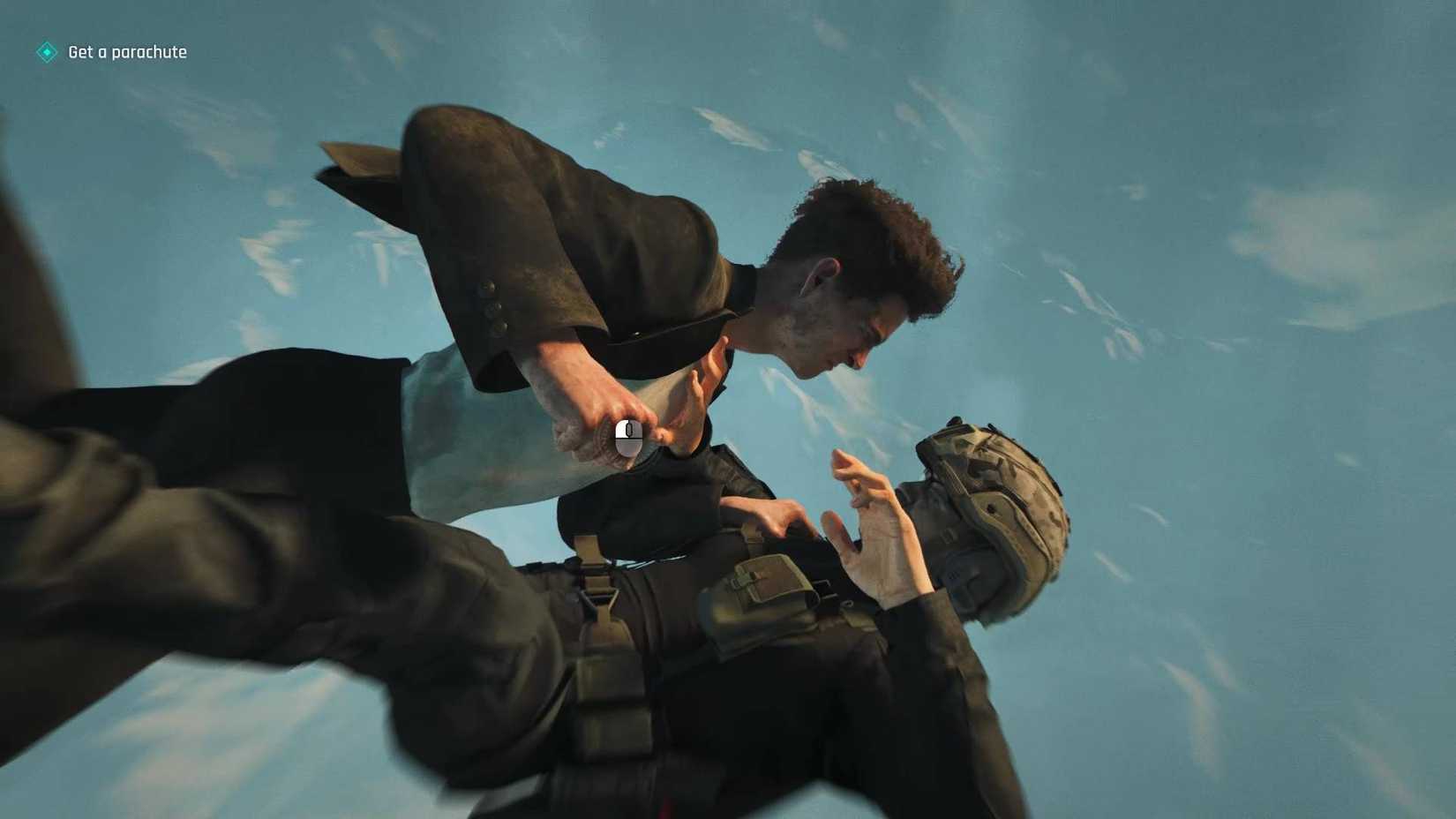 Image: IO Interactive via Polygon
It doesn't shy away from truly epic set-pieces either; the ones that make Bond feel more like a superhero than a real man. Unfortunately, as visually impressive as they are, they rely a little too much on a gaming trope we should really be past by now: quick-time events (QTEs). It's a mechanic that was criticized years ago for its lack of interactivity for the player, and ultimately, they're almost always better off as straight cutscenes.
Pre-release chat around how 007 First Light will play has mostly drawn comparisons to two games: Hitman, of course, given IO's pedigree and the spy-themed similarities between Bond and Agent 47; and Uncharted, which the aforementioned epic set-pieces and over-the-top, unrealistic feats feel directly inspired by. Folks, those reads were bang on the money. You don't need to play First Light to know what it'll feel like to play. The way the two styles of third-person action blend together isn't entirely seamless — the game's biggest chapters typically follow a format where the first half is all about blending in and gathering information, followed by stealth combat, culminating in an adrenaline-fueled chase or boss fight — but the airtime for each is fairly even.
Hitman fans will feel at home in those slower-paced sections, because it's in IOI's DNA. Swap Agent 47's barcoded bald dome and signature suit for young Bond's thick head of hair and stylish attire, and the two are practically identical. Only you don't always have a specific target to take down like in Hitman; here, you're just gathering information by sneaking into areas you shouldn't and blagging your way through conversations by acting like you belong.
First Light's runtime will clock in at around 20 hours, give or take, for most players, but it can end up considerably higher if you take the time to immerse yourself in your surroundings. Some conversations between NPCs can be eavesdropped on to provide hints, but there are plenty more that serve no bearing except for world building and to make it feel alive. They succeed.
At a luxury resort in Vietnam, I spent at least three minutes watching the most insufferable, pompous man alive fail (hilariously) to charm two sunbathing women from the side of a pool. At a prestigious chess tournament in Slovakia, I listened to — and corrected — a couple discussing the origins behind the winner's trophy. So much attention and detail has been paid to areas that most players may not ever see, and much like the supporting cast, the quality of voice acting for these unnamed NPCs is top tier.
In these more open levels, there are different rules of engagement, depending on where you are. If you duck into a storeroom behind a bar, for example, you're in a restricted area. If you're spotted, you'll be escorted out, with no other penalties. However, if you enter an area where you're considered to be trespassing, you can either comply once spotted, bluff your way out of a sticky situation, or engage in combat. This is fisticuffs only though: you can only employ lethal force once you're given a license to kill, aka when the enemy tries to kill you first.
 Image: IO Interactive via Polygon
It's apt for Bond's character, but it means the levels aren't quite as sandboxy as those in Hitman. There is plenty to find and discover, including various keys you can pickpocket and four-digit codes to unlock doors and safes, all for collectible rewards (including legacy items that true Bond fans will adore), but in terms of progressing the story, you're usually limited to just a couple of routes. The biggest design flaw here is that when you're being as stealthy as possible, sometimes you will need to take down guards. If another NPC sees the body, they'll react, but unlike in Hitman, you cannot move bodies, let alone hide them. It limits your options considerably, and makes initiating any form of violence a last resort.
As a character, Bond has never been shy about killing when he has to, but he's not quite a pathological murderer. He opts for non-lethal methods when possible, and this is true in First Light too; all stealth sections are possible to complete without even resorting to violence, let alone knocking someone out. They're tremendously tricky on the intended difficulty level though, so chances are on your first playthrough, you'll leave a trail of bodies in your wake.
There are a number of forced license to kill sections though, where letting rip is the only option. This third-person, moving from one piece of cover to the next, taking down hordes of enemies as a lone ranger, is lifted straight from the Uncharted playbook; Bond's been to the Nathan Drake school of combat (or more likely, the other way around, given Bond's prestige). As a result, gunplay is crisp and clicking on heads is, as always, incredibly satisfying. Movement is still a tad clunky, however, likely thanks to it using Hitman's Glacier engine, where fluidity and smoothness isn't as vital.
 Image: IO Interactive via Polygon
Weapons aren't the only tool at your disposal, and this is where a third comparison must be made: Watch Dogs. The Q-Watch, which grants Bond the ability to hack electronic devices from range for a distraction, deploy a smoke grenade, and fire a nausea-inducing dart at targets, amongst others, all make it feel like Ubisoft’s tech-focused open-world series. These gadgets are useful in both stealth and combat alike, especially when you need to urge a security guard away from their post or pickpocket someone who's preoccupied with puking into the nearest trash can.
Boss fights occur a few times throughout, and they all follow the same format too: You're the weaker, disadvantaged combatant and you must evade your foe while using the Q-Watch to lay traps and catch them unawares. It's overly formulaic, and feels unsuitable for Bond to find other human enemies where the only way he can best them is to, essentially, play dirty.
A Bond game would also be remiss without driving sections, but much like Daniel Craig in Skyfall when he returns from retirement, these are a miss. Each one is very much on-rails, there's little sense of speed, and it isn't until much later in the game that you're able to use a vehicle with any cool weaponry, something Bond films are iconic for.
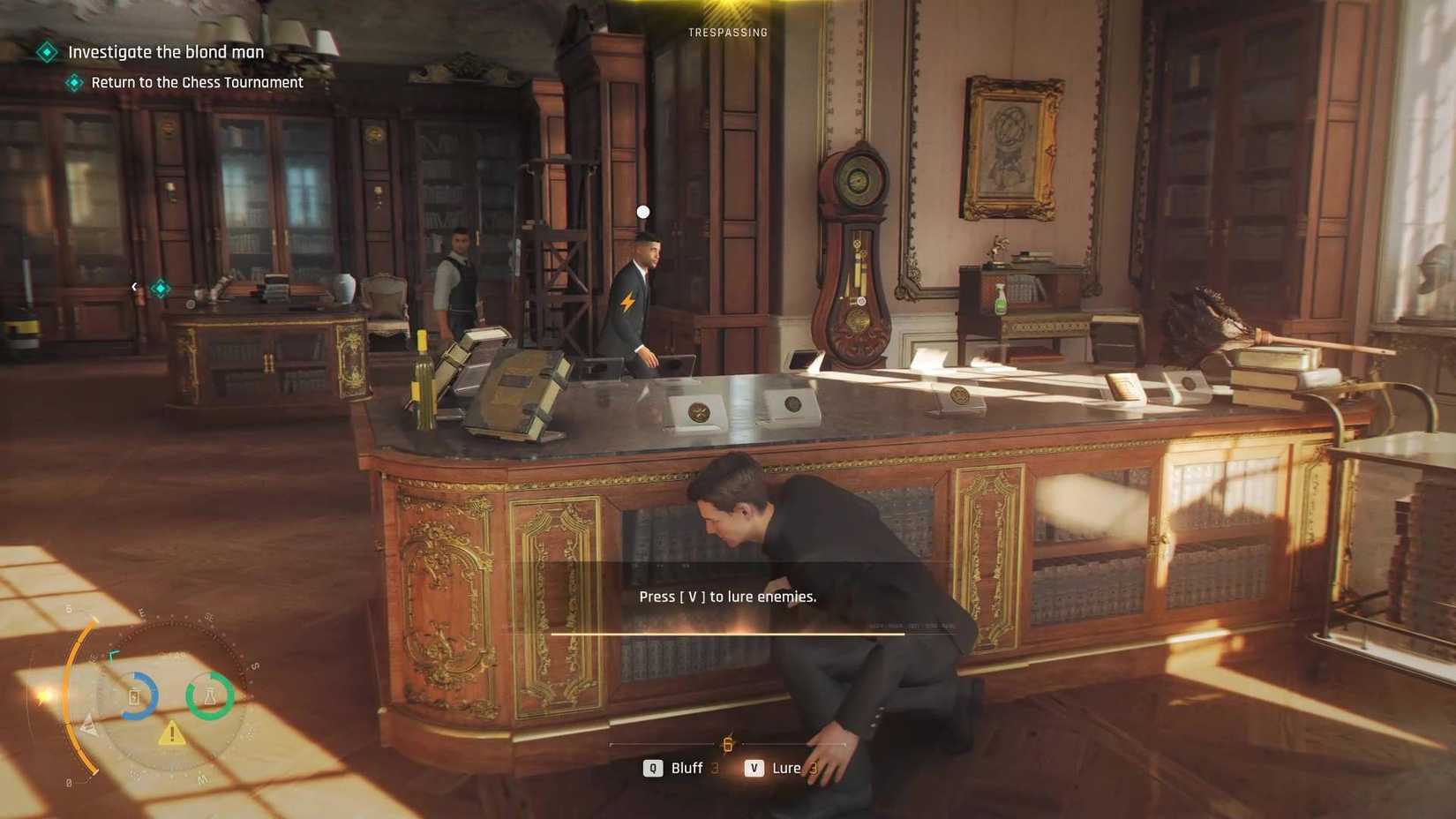 Image: IO Interactive via Polygon
There are other minor flaws throughout: I misled a bartender by requesting a very specific bottle of wine so he'd go and fetch it and leave the entry to the stockroom unguarded, but even when he returned, there was no dialogue to acknowledge the fact he either couldn't find it, or the fact Bond had disappeared. If you use the puke-causing dart on a guard, despite them being uncontrollably sick, they'll immediately recover if they see you take out another foe. And even though there are plenty of moments when it's implied Bond is in a state of urgency, you can walk off and explore with no time pressure.
007 First Light is an incredibly shiny, well-polished game that truly lives up to its name. In fact, it's tough to argue against it being the best Bond game of all time. That doesn't mean it isn't flawed, however, and I spent the opening third wondering exactly when it was going to properly kick into motion. I wish it leant more into its Hitman side, with more solutions for each level, and rewarded exploration with more than just world-building, as neat as that is. As an incredibly solid foundation for a sequel, however? It's an absolute blast.
 Interview
Why 007 First Light completely upends the character of James Bond
'Everybody has an opinion about this guy' — including developer IO Interactive




 English (US) ·